Wondering if Acadia National Park winter is worth visiting? Short answer: absolutely, but it’s a completely different experience than summer.
I’ll be straight with you—my first winter in Acadia National Park caught me off guard. I showed up in January thinking “how cold could Maine really be?” with a regular winter jacket and sneakers. Mistake. Big mistake. I lasted about 20 minutes on the carriage roads before retreating to my car with numb toes and a bruised ego.
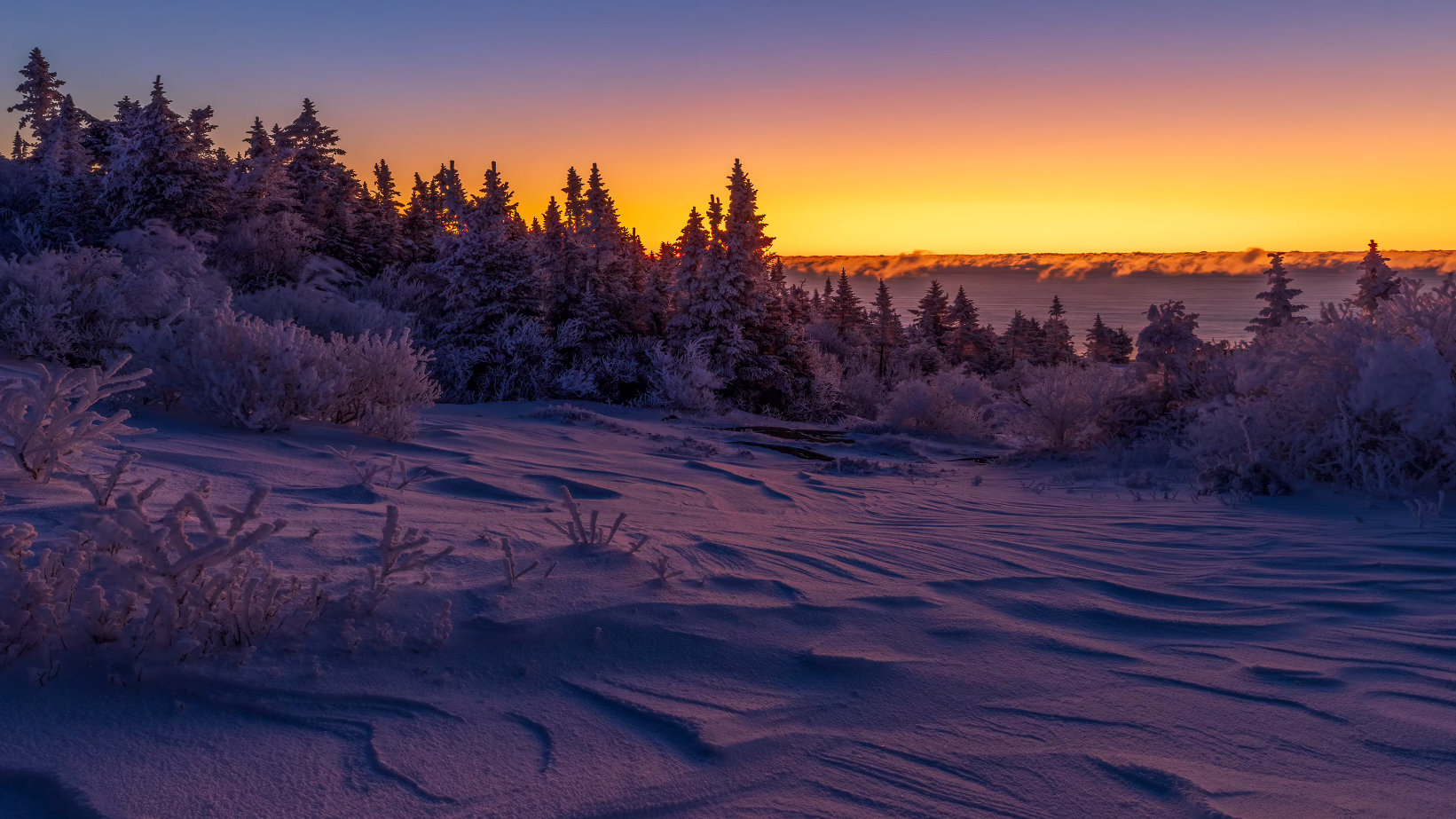
But once I came back properly prepared? Winter Acadia became one of my favorite places. The summer crowds vanish. The park transforms into this quiet, frozen landscape that feels almost otherworldly. You get the trails mostly to yourself, and the views—especially after fresh snow—are stunning in a way that summer can’t match.
Table of Contents
Is Acadia National Park Open in the Winter?
Yes, Acadia National Park in the winter stays open year-round, but with major limitations.
What’s open:
- Park Loop Road (partially—more on this below)
- Carriage roads for cross-country skiing and snowshoeing
- Most hiking trails (if you can reach them)
- Jordan Pond area
- Visitor centers (limited hours)
What’s closed:
- Cadillac Mountain Summit Road (closed December-mid April)
- Park Loop Road from Sieur de Monts to Jordan Pond House (closed December-mid April)
- Sand Beach parking area
- Most campgrounds (except Blackwoods with limited sites)
- Some facilities and restrooms
The park doesn’t close, but winter essentially gives you about 60% access compared to summer. You’ll need to plan around these closures.

What Winter Actually Feels Like Here
Let’s talk real temperatures because “Maine winter” means something specific.
Average winter temps:
- December: 20-35°F (feels like 10-20°F with wind)
- January: 15-30°F (coldest month, can drop below 0°F)
- February: 15-32°F (still brutal, occasional warm spells)
- March: 25-40°F (starting to thaw, but snow still possible)
The wind is what gets you. Acadia sits right on the Atlantic, and that coastal wind cuts through regular winter clothes like they’re not even there. I’ve felt colder at 25°F on Cadillac Mountain than I have at 5°F inland without wind.
Snow accumulation varies wildly. Some winters dump 60+ inches, others barely hit 30 inches. The coast gets less snow than inland Maine, but what falls tends to stick around with those cold temps.
Why Visit Acadia National Park Winter?
The crowds disappear
- Summer Acadia sees 10,000+ visitors daily. Winter? Maybe a few hundred on busy weekends. You can hike popular trails like Jordan Pond Loop and see maybe 3-4 other people the entire time. That level of solitude in a national park feels rare these days.
- I’ve stood at Thunder Hole in January with ice formations covering the rocks and not seen another soul for 20 minutes. In July, you’re shoulder-to-shoulder with 50 people trying to get the same photo.
Winter landscapes are different
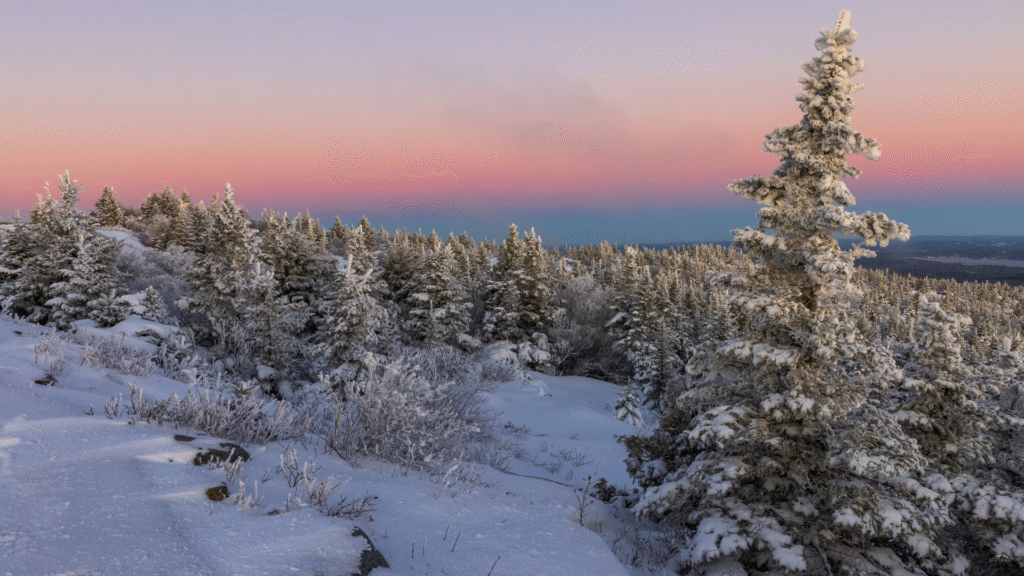
- Frozen Acadia National Park Waterfall. Ice formations along the coastline. Snow-covered granite peaks. Bare trees that let you see views normally hidden by summer foliage. The park looks completely different, and if you’re into photography, the winter light is incredible—soft, long shadows even midday.
It’s challenging in a good way
- Winter hiking requires real skill and preparation. You’re not just walking—you’re navigating ice, testing snow depth, reading weather. It feels more like an actual outdoor adventure than a casual summer stroll.
Cheaper and easier logistics
- Bar Harbor empties out. Hotels that cost $300 in summer drop to $80-120 in winter. Restaurants have tables available. You don’t need reservations six months out. If you’re on a budget, winter Acadia makes way more sense.
What You Can Actually Do in Winter
Cross-country skiing and snowshoeing
The 45 miles of carriage roads become winter trails once snow covers them. These graded gravel paths are perfect for cross-country skiing—relatively flat, well-marked, peaceful.
I prefer snowshoeing because you can venture off the carriage roads onto hiking trails. The Witch Hole Pond loop is beautiful in winter—about 3 miles, easy terrain, chances to see deer and foxes in the snow.
Cadence Sports in Bar Harbor rents both skis and snowshoes if you don’t own gear. Expect $20-30 per day for rentals.
Winter hiking
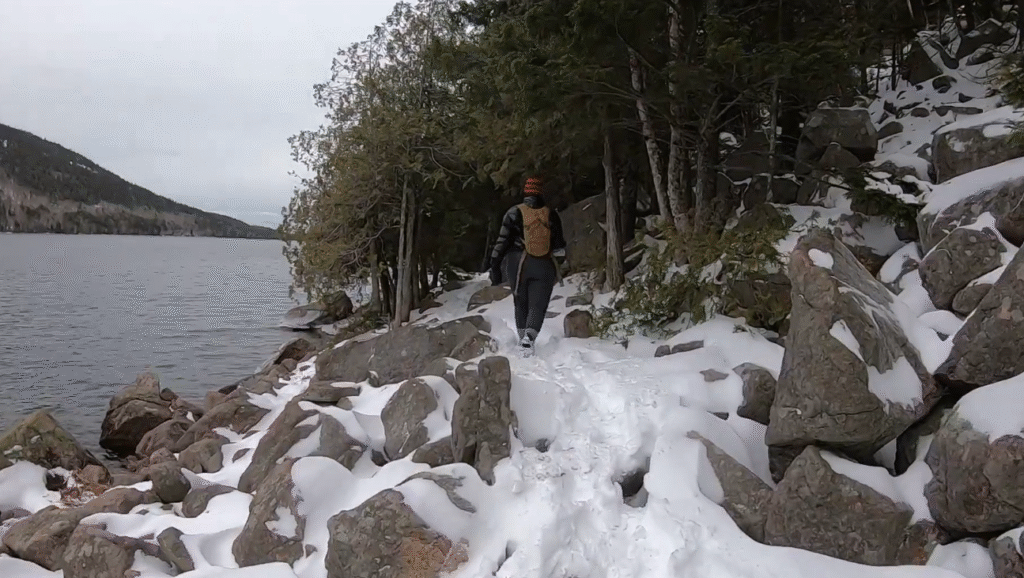
Most trails stay accessible if you’re equipped properly. Microspikes are non-negotiable—the trails get icy, and regular boots will have you sliding around dangerously.
Good winter hikes:
- Jordan Pond Loop (3 miles, mostly flat, stunning when frozen)
- Ocean Path (2 miles, easy, incredible ice formations on the coastline)
- Gorham Mountain (1.8 miles round trip, moderate, views without the Cadillac crowds)
- Bubble Rock (1 mile, short climb, less crowded than summer)
Skip these in winter:
- Precipice Trail (closed November-April for ice)
- Beehive Trail (too dangerous with ice)
- Any trail requiring ladders or iron rungs
Wildlife watching
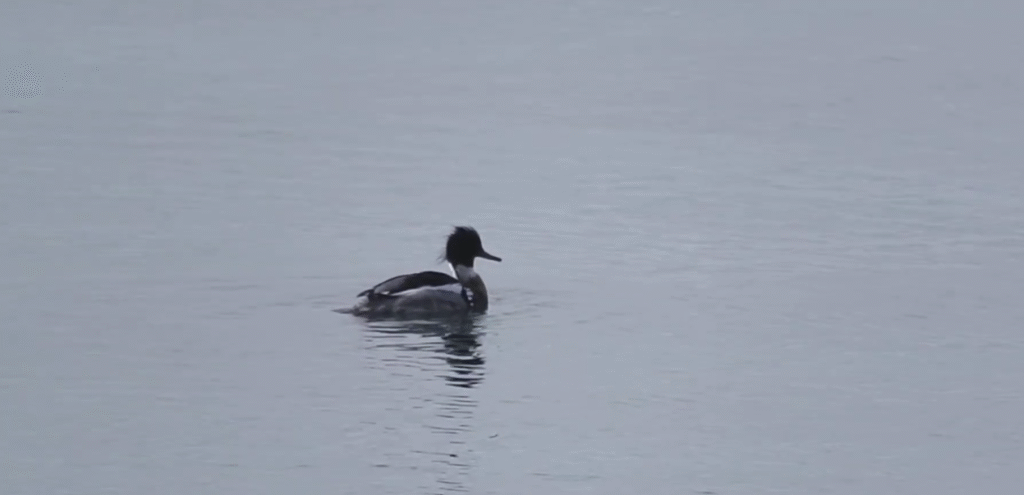
Winter brings animals closer to roads and trails because deep snow makes traveling harder for them. I’ve seen more deer, foxes, and winter birds in January than I ever spotted in summer.
Bald eagles winter along the coast here. Bring binoculars and watch the harbors—you’ll often spot them perched on rocks or flying over the water hunting.
Sunrise without the crowds
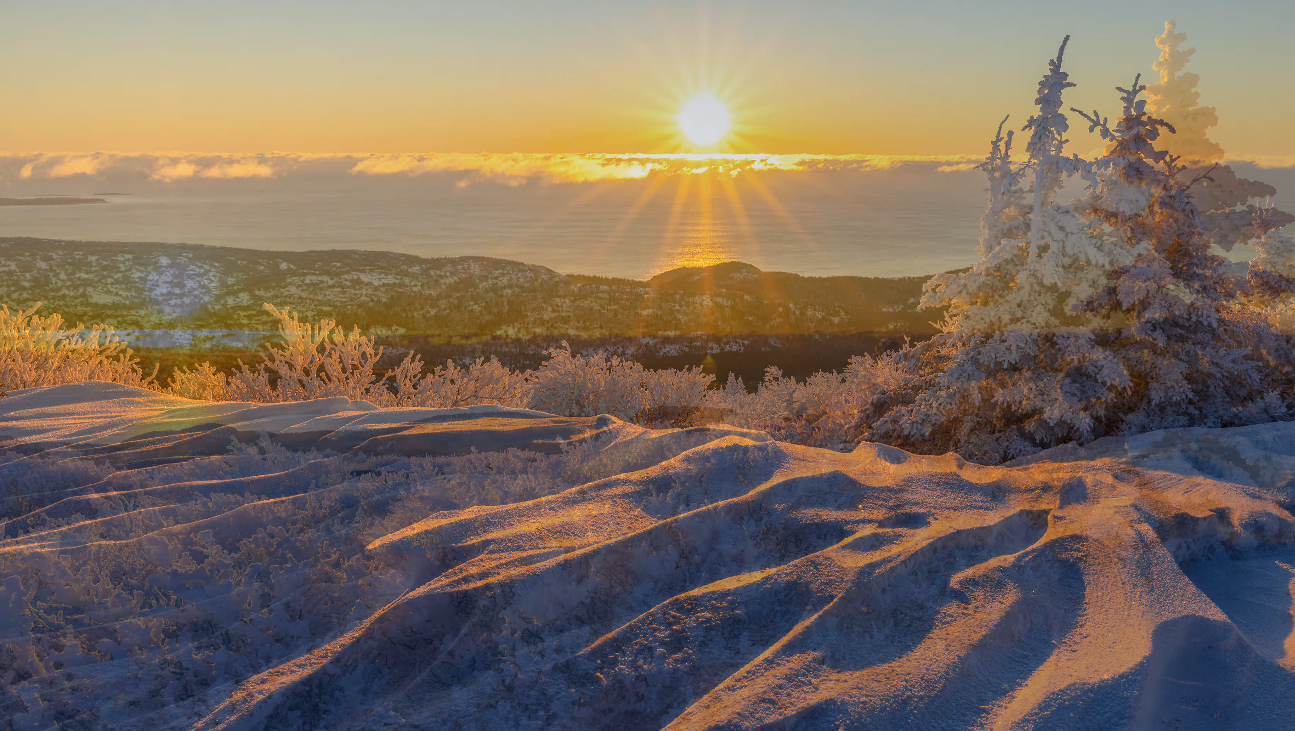
You can’t drive up Cadillac Mountain in winter, but you can still catch sunrise from other spots. Sand Beach parking might be closed, but Ocean Drive stays partially open and offers gorgeous sunrise views over the Atlantic.
Or hike Champlain Mountain in the dark (with headlamps) for sunrise from the summit. It’s work, but you’ll likely have the peak to yourself—something impossible in summer.
What You Absolutely Need to Bring
Don’t show up unprepared like I did. Winter in Acadia National Park requires real winter gear:
Essential clothing:
- Insulated winter jacket (not a regular fall jacket)
- Waterproof outer layer
- Thermal base layers top and bottom
- Warm hat that covers your ears
- Insulated gloves (bring backup pair)
- Wool socks (cotton will make your feet cold and miserable)
- Waterproof winter boots rated to at least 0°F
Traction gear:
- Microspikes for icy trails (absolute must-have)
- Snowshoes if snow is deep
- Trekking poles for balance on ice
Safety items:
- Headlamp with extra batteries (gets dark by 4:30 PM)
- Emergency blanket
- Fire starter
- Extra food and water (water bottles can freeze—I use insulated ones)
- Fully charged phone
- Offline maps (cell service is spotty)
Don’t bother bringing:
- Regular sneakers (useless here)
- Cotton anything (holds moisture, makes you colder)
- Summer rain jacket (not warm enough)
Where to Stay for Winter Visits
Most summer accommodations close, but you’ve got options:
Bar Harbor (limited but available):
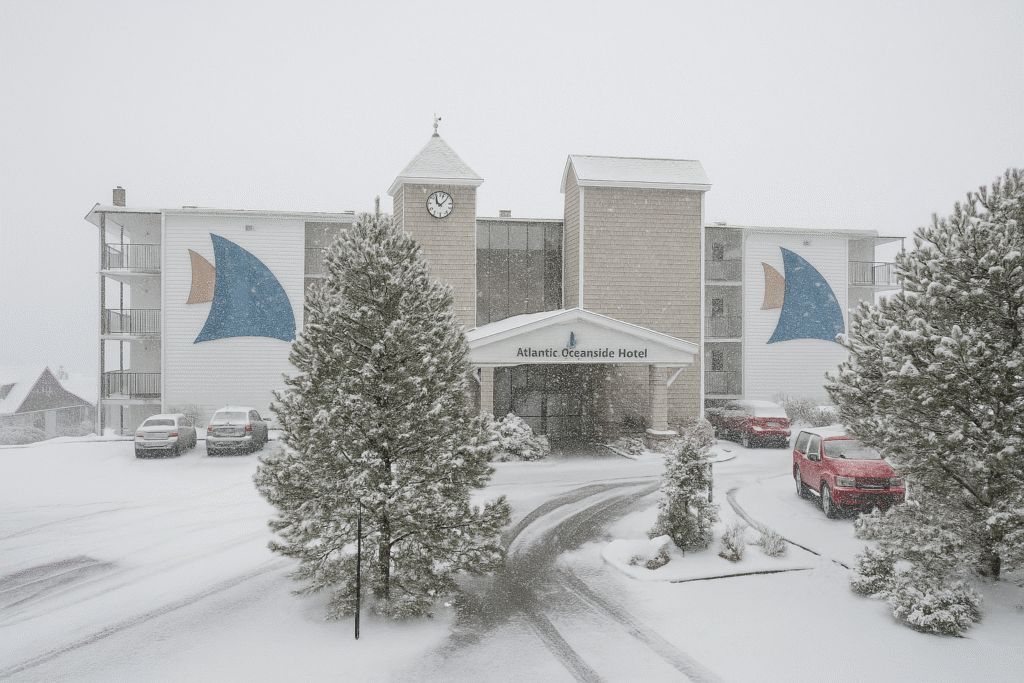
- Several hotels stay open year-round with drastically reduced rates
- Atlantic Oceanside and Wonder View Inn typically stay open
- Expect $80-150 per night versus $250-400 in summer
Campgrounds:
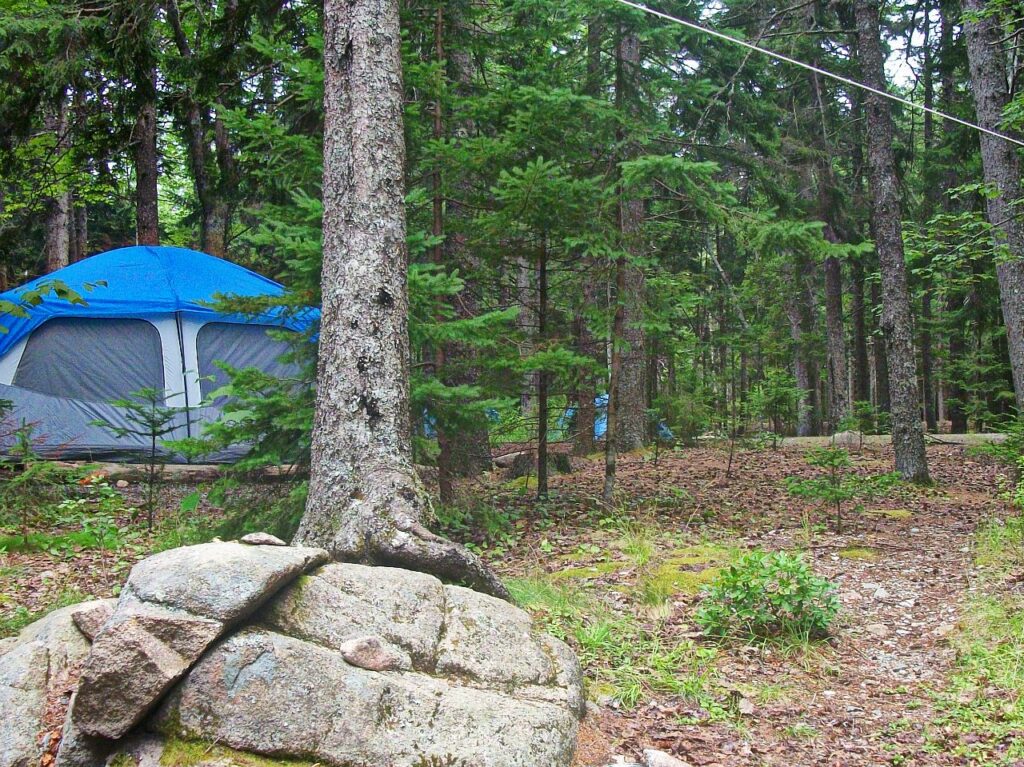
- Blackwoods Campground keeps a few sites open for winter camping
- You’ll need serious cold-weather gear (we’re talking rated for 0°F)
- No water or facilities—winter camping here is expert-level only
Nearby towns:
- Ellsworth (20 minutes away) has more options and slightly cheaper rates
- More restaurants and stores stay open compared to Bar Harbor
For most people, I’d suggest staying in Bar Harbor and day-tripping into the park. Winter camping in Maine is no joke.
Acadia National Park winter Safety Reality Check
Acadia National Park in the winter can be dangerous if you’re not careful:
- Hypothermia is real: Temps feel colder than they are because of wind. You can get hypothermia even at 35°F if you’re wet and windy. Watch for shivering, confusion, slurred speech.
- Ice is everywhere: Trails, parking lots, rocks near the water—everything gets icy. I’ve watched people slip and fall hard on what looked like just wet pavement. Wear microspikes anytime you’re on trails.
- Daylight is short: Sunset hits around 4:00-4:30 PM in January. That’s not much time if you start a hike late. I got caught in the dark once on Champlain Mountain—not fun navigating rocky trail with just a headlamp.
- Cell service is spotty: Don’t rely on your phone for navigation or emergencies. Download offline maps and tell someone where you’re going.
- Weather changes fast: Clear morning can turn into whiteout conditions by afternoon. Check forecasts, but also watch the sky and know when to turn back.
- You’re more isolated: In summer, if something goes wrong, other hikers are nearby. In winter, you might be the only person on a trail. That changes the risk calculation.
Best Time for Acadia National Park winter Visits
Not all winter months in Acadia deliver the same experience. If you’re planning when to visit, the best time to go to Acadia National Park varies dramatically depending on whether you want peak winter conditions or something more manageable.
December
- Short days are the biggest challenge—sunset hits around 4 PM, which doesn’t leave much hiking time. Snow coverage is hit-or-miss this early. Some years you’ll find perfect conditions, other years it’s just cold and brown. Holiday weeks bring some crowds back as locals and tourists visit for the quieter season.
- Not my favorite month honestly. You get winter’s challenges without the reliable snow that makes it worthwhile.
January-February
- This is peak Acadia National Park winter. Coldest temperatures, deepest snow, and the fewest people you’ll ever see here. If you want the true winter experience—empty carriage roads perfect for cross-country skiing, frozen coastline, absolute solitude on the trails—these months deliver.
- But they’re also the hardest. We’re talking single-digit temps some mornings, brutal wind chills, and serious cold that tests your gear and your patience. You need to be comfortable with genuine winter conditions, not just “it’s a bit chilly” winter.
March
- Sweet spot territory. Days stretch longer—sunset pushes toward 6 PM by late March—giving you actual time to explore. Temperatures start moderating into the 25-40°F range, though mornings still freeze hard. Snow conditions are often perfect because there’s been all winter for accumulation, but it’s not quite melting season yet.
- You get winter scenery—frozen ponds, snow-covered peaks, ice formations—without risking frostbite every time you step outside. This is when I usually recommend people try winter in Acadia National Park if they’re new to it.
Early April
- Technically still winter in terms of park operations (Cadillac Summit Road stays closed, some facilities remain shut), but weather becomes much more manageable. Temps hit 35-50°F on decent days. Snow’s melting but still present on trails and shaded areas.
- Good compromise month if you want winter solitude and empty trails without the extreme cold. You’ll need microspikes for lingering ice, but you won’t need the full arctic gear setup that January demands.
The park starts transitioning toward spring, so you catch this in-between moment—not quite winter, not quite spring. Some people love this transitional period. I find it a bit muddy and slushy, but the lack of crowds and milder temps make up for it.
If you’re considering visiting during other seasons, check out our complete guide on the best time to go to Acadia National Park which covers spring, summer, and fall conditions in detail. Each season offers completely different experiences, and understanding all of them helps you pick what matches your preferences.
Acadia National Park winter Food and Supplies
Bar Harbor in winter:
Most summer restaurants close, but some stay open year-round:
Jordan’s Restaurant (80 Cottage St)
- Classic Maine diner since 1976 with worn booths and locals reading newspapers at the counter. Their lobster stew is loaded with actual meat, breakfast runs $8-12, and the warm atmosphere feels like stepping into someone’s kitchen after a cold hike. Cash only, so hit the ATM first.
Side Street Café (49 Rodick St)
- Still the breakfast champion with their Maine wild blueberry pancakes worth planning your morning around. Winter hours drop to weekends only January-March, and the tiny space fills fast even in cold weather. Arrive right at 7:30 AM opening or wait outside in the cold.
Geddy’s (19 Main St)
- Reliable pub with solid fish and chips and clam chowder after a cold day exploring. Not fancy, just cozy wooden booths and food that hits right when you’re tired. They don’t rush you out, so you can sit and thaw out properly.
Groceries:
Hannaford Supermarket (86 Cottage St, Bar Harbor) stays open all winter—stock up here before heading into the park. Grab breakfast supplies, trail snacks, and extra food because your body burns way more calories in the cold. I bonked hard on Champlain Mountain once with just one granola bar—bring more than you think you need.
Bring more snacks than you think you need. Your body burns extra calories trying to stay warm, and you’ll get hungrier faster than summer hiking.
Is Acadia National Park Winter Worth It?
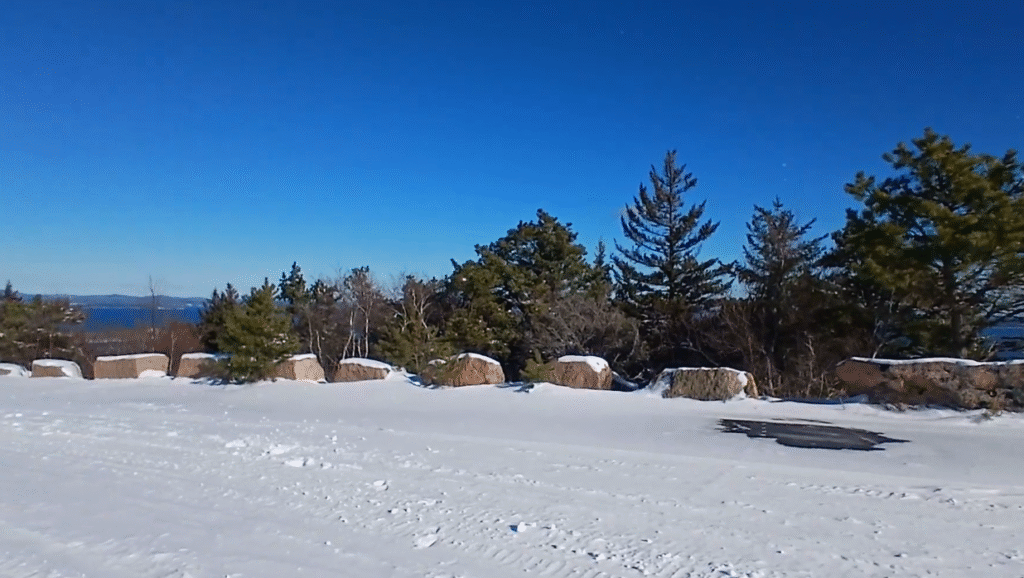
Here’s my honest take: winter in Acadia National Park isn’t for everyone.
Skip it if you:
- Hate cold weather and can’t get comfortable in it
- Don’t want to invest in proper winter gear
- Prefer accessible, easy experiences
- Get nervous about outdoor challenges
- Have mobility issues (ice makes everything harder)
It’s perfect if you:
- Love solitude and hate crowds
- Appreciate winter landscapes and photography
- Enjoy the challenge of winter conditions
- Want to experience Acadia in a completely different way
- Are comfortable with outdoor winter activities
I wouldn’t recommend this as your first visit to Acadia—come in summer or fall first to learn the park layout. Then return in winter once you know your way around.
But if you’re already comfortable winter hiking and want to see what Acadia looks like when it’s frozen and empty? It’s genuinely special. That quiet, that solitude, those ice formations on the coastline—you won’t find that in summer.
Just dress warm, bring the right gear, respect the conditions, and know your limits. Winter Acadia rewards preparation and punishes carelessness. Do it right, and you’ll understand why some of us prefer the park this way.
Pack those microspikes. Bring extra gloves. And maybe reconsider the sneakers.
Is Acadia National Park winter Right for You?
Acadia National Park winter isn’t the easy version of this park. It’s colder, darker, and demands real preparation. But that’s exactly why some of us love it.
I’ve visited Acadia maybe 15 times now—half in summer, half in winter. Summer’s beautiful, don’t get me wrong. But winter feels different. It feels earned. Standing on a frozen Jordan Pond with nobody else around, watching your breath fog up in the cold air, hearing absolute silence except for wind through bare trees—that’s not something you get when the park’s packed with tourists.
The crowds that make summer Acadia frustrating? Gone. The expensive hotels? Suddenly affordable. The trails you couldn’t enjoy because of bottlenecks? Yours alone.
But you pay for that solitude with cold toes, short daylight, and real risk if you mess up. This isn’t Instagram winter where everything’s pretty and manageable. Acadia National Park in the winter is legitimate Maine winter—harsh, unforgiving, and occasionally brutal.
Come prepared or don’t come at all. Bring microspikes, layers, and realistic expectations. Know your limits and respect the weather.
If you do it right though? You’ll understand why winter might actually be the best time to see this park. Just maybe skip the sneakers this time.
Frequently Asked Questions About Acadia National Park Winter
Yes, the park stays open year-round, but Cadillac Mountain Summit Road and parts of Park Loop Road close December through mid-April. Most trails remain accessible with proper winter gear.
Absolutely, if you’re prepared for cold and love solitude. You’ll get empty trails, stunning frozen landscapes, and hotel rates drop from $300 to $80. Just bring serious winter gear—this isn’t casual visiting.
Yes, typically 30-60 inches per season. Snowfall varies each year, and the coastal location means less snow than inland Maine, but enough for cross-country skiing and snowshoeing on the carriage roads.
Occasionally during strong solar storms, but it’s rare this far south. Acadia sits below the typical aurora viewing zone. Your best bet is checking aurora forecasts and heading to dark areas like Schoodic Peninsula during major solar events.
Insulated winter jacket, thermal layers, waterproof boots rated to 0°F, wool socks, warm hat, and insulated gloves. Most critical: microspikes for icy trails. The coastal wind makes it feel 10-15 degrees colder than the actual temperature.