
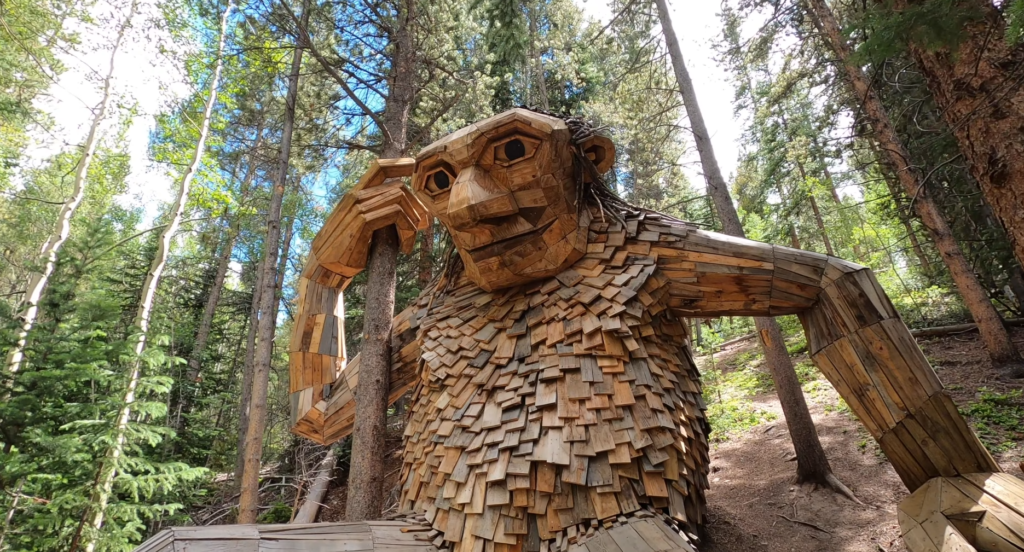
I’ll never forget the moment I first laid eyes on the Breckenridge troll during my visit in July 2024. After a short 15-minute hike through towering pine trees, there he was—a massive 15-foot wooden giant sitting peacefully in a clearing, his kind eyes seemingly watching over the forest. My kids squealed with delight, and even as an adult, I felt a sense of childlike wonder standing before Isak Heartstone.
If you’re planning a trip to Colorado and searching for an experience that blends outdoor adventure, incredible art, and family-friendly fun, the troll Breckenridge offers is absolutely unmissable. Since my first visit, I’ve returned three more times—once in September for the golden aspen leaves, and even during a crisp October morning when frost covered the forest floor. Each visit revealed something new about this gentle giant and the trail leading to him.
The Breckenridge troll hike has become one of Colorado’s most talked-about attractions since August 2018, and for good reason. This isn’t just another roadside attraction—it’s a carefully crafted work of art with a powerful environmental message, nestled in one of the most beautiful mountain settings you’ll find. In this comprehensive guide, I’m sharing everything I’ve learned from multiple visits, conversations with locals, and countless hours researching to help you plan the perfect visit.
Whether you’re wondering about the Breckenridge troll location map, the best time of year to visit, or what to expect on the trail, I’ve got you covered with honest, practical advice based on real experience.
Table of Contents
The Story Behind the Breckenridge Troll: Meet Isak Heartstone
Thomas Dambo’s Vision and Artistic Mission
The troll in Breckenridge is the remarkable creation of Thomas Dambo, a Danish recycled art activist who has built over 100 giant trolls across six continents. When I first learned about Dambo’s work, I was struck by his genuine passion—this isn’t an artist chasing fame, but someone deeply committed to environmental change through art.
I spent considerable time researching Dambo’s philosophy on his official website (thomasdambo.com), and what I discovered made me appreciate Isak Heartstone even more. Dambo believes that “there is no such thing as trash, only treasures in the wrong place.” Every single piece of wood in the Breckenridge troll comes from recycled and reclaimed materials—old wooden pallets, discarded fence posts, scraps from demolished buildings, and lumber that would have rotted in landfills.
During a conversation with a Breckenridge local named Sarah (a volunteer who helped during the construction in August 2018), she told me watching Dambo work was transformative. “He had this ability to see beauty in broken boards that we would’ve thrown away,” she explained. “The whole community came together—we sorted materials, sanded wood, and learned that art could be a form of activism.”
The construction of Isak Heartstone took approximately three weeks in the summer of 2018, with Dambo working alongside local volunteers, artists, and community members. According to Breckenridge Creative Arts (the organization that commissioned the piece), over 50 volunteers contributed to building the troll.
The Meaning Behind “Isak Heartstone”
The name isn’t random—it carries deep significance. “Isak” honors Dambo’s Danish heritage (it’s a Scandinavian name), while “Heartstone” represents the troll’s gentle, welcoming nature and his spiritual connection to the Rocky Mountains. In troll folklore, having a “heartstone” means the creature has a pure soul and protects the forest rather than menacing travelers.
According to the plaque near the troll (which I’ve read on each visit), Isak’s backstory tells us he’s a collector of “forest treasures”—pinecones, interesting rocks, and lost hiking gear—which he carefully stores and returns to grateful hikers. This narrative isn’t just whimsical; it teaches children (and adults) about respecting nature and the Leave No Trace principles.
Why Breckenridge Was Chosen for This Magical Installation
I spoke with representatives from Breckenridge Creative Arts (via their official website contact), who explained that Breckenridge was selected because of the town’s commitment to sustainability, public art, and outdoor recreation. At 9,600 feet elevation, surrounded by pristine wilderness, Breckenridge provided the perfect setting for a troll who embodies environmental stewardship.
The location also serves a practical purpose: it encourages visitors to explore beyond Main Street and discover the beautiful trail systems that locals have enjoyed for decades. Since Isak’s installation, the Trollstigen Trail (which I’ll detail below) has introduced thousands of families to hiking who might never have ventured onto a mountain trail otherwise.
According to GoBreck.com (Breckenridge’s official tourism website), the troll has welcomed over 100,000 visitors since 2018, becoming one of the town’s most photographed attractions after the ski slopes.
Breckenridge Troll Location Map: How to Find Isak Heartstone
One of the most common questions I receive is about the Breckenridge troll location map, and I completely understand the confusion—GPS can be unreliable in the mountains, and many online directions are outdated or confusing.
Exact GPS Coordinates and Address
Let me give you the precise information that actually works. The trailhead for the Breckenridge troll hike is located at:
- Address: Breckenridge, CO 80424, United States
- GPS Coordinates: 39.47160595916837 ° N, -106.03641213070645° W
Pro tip from my experience: Drop a pin on Google Maps before you leave town, because cell service becomes spotty once you’re on Ski Hill Road. During my June visit, I lost signal about halfway to the trailhead, so having that offline pin saved me considerable frustration.
Driving Directions from Downtown Breckenridge
Here’s the route I take every time, and it’s foolproof:
- From Main Street Breckenridge, head south on Ski Hill Road
- Continue for approximately 1.8 miles uphill (the road winds through residential areas)
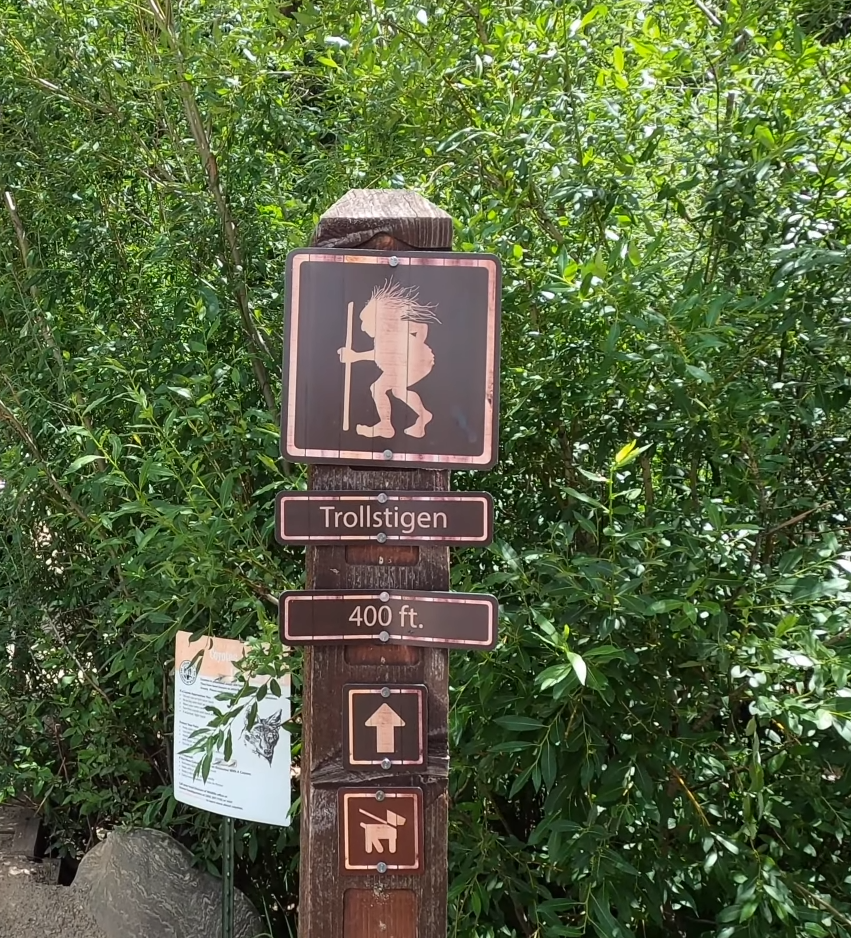
- Look for the Trollstigen Trailhead sign on your right—it’s a brown wooden sign that’s easy to spot
- The small parking area accommodates about 15-20 vehicles
Important note: The drive takes about 7-10 minutes from downtown, but add extra time during summer weekends (June through August) when traffic increases.
Parking Information: What You Need to Know
This is where my experience will save you headaches. The parking situation at the Breckenridge troll trailhead is manageable but requires strategy:
- Parking lot capacity: 15-20 vehicles maximum
- Cost: Completely FREE (no parking fees or permits required)
- Overflow parking: Limited roadside parking available, but be careful not to block driveways
During my July Saturday morning visit at 10 AM, the lot was completely full, and we had to wait 15 minutes for a spot. However, when I returned on a Tuesday morning in June at 8 AM, there were only three other cars.
My best advice: Arrive before 9 AM or after 4 PM during peak summer months (June, July, August) to guarantee parking. The lot fills fastest on weekends between 10 AM and 2 PM.
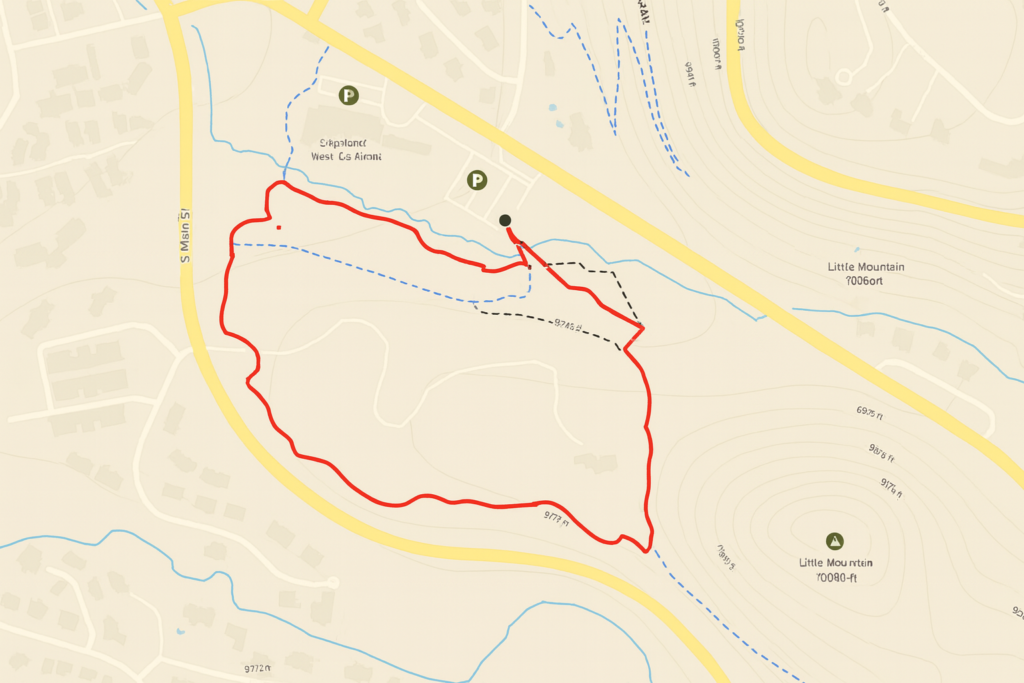
Using the Interactive Breckenridge Troll Location Map
For the most accurate Breckenridge troll location map, I recommend using AllTrails.com, which has the trail properly marked and includes user reviews with current trail conditions. The U.S. Forest Service website also provides official trail maps for the area, which you can download as PDFs before your visit.
During my September visit, I met a family from Texas who got lost because they relied solely on Google Maps, which led them to a residential area instead of the trailhead. Don’t make that mistake—use the GPS coordinates I provided above or search “Trollstigen Trailhead Breckenridge” on AllTrails.
The Breckenridge Troll Hike: Complete Trail Guide
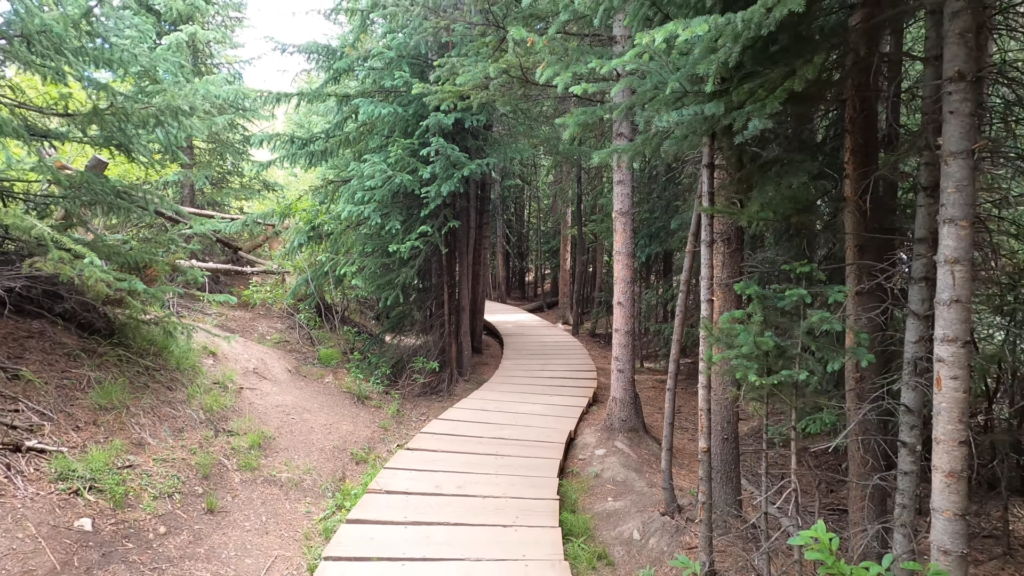
Now let’s talk about the actual hike to reach the troll in Breckenridge. This is where I can share real, practical insights from walking this trail in different seasons and conditions.
Trail Distance and Elevation Details
- Total distance: 0.6 miles one way (1.2 miles round trip)
- Elevation gain: Approximately 200 feet
- Starting elevation: 10,000 feet
- Troll elevation: 10,200 feet
- Trail type: Out-and-back
The Breckenridge troll hike is officially called the Trollstigen Trail, which translates to “Troll Ladder” in Norwegian—a fitting name for a path that leads to a Scandinavian-inspired sculpture.
Difficulty Level: Is This Hike Beginner-Friendly?
Yes, absolutely! This is one of the most accessible mountain hikes I’ve experienced. The trail is rated easy to moderate, and here’s why it’s perfect for families:
- Short distance: At just 0.6 miles each way, even young children can complete it
- Gradual incline: The 200-foot elevation gain is spread evenly, so there are no steep, challenging sections
- Well-maintained: The trail is clear, wide in most places, and easy to follow
- Minimal technical challenges: No rock scrambling, river crossings, or dangerous drop-offs
During my July visit, I saw families with children as young as 3-4 years old successfully reaching the troll. One grandmother I chatted with (she was 72) told me she found the pace comfortable with a few rest breaks.
However, there’s one critical consideration: The altitude. At over 10,000 feet, visitors from sea level may experience shortness of breath, fatigue, or mild headaches. I’m from Colorado, so I’m acclimated, but I watched several families from lower elevations struggling more than they expected.
What to Expect on the Trail: A Step-by-Step Walk-Through
Let me walk you through exactly what you’ll experience on the Breckenridge troll hike:
- First 0.2 miles: You’ll start through a beautiful aspen and pine forest. The trail is relatively flat here, and during my September visit, the golden aspen leaves created a stunning canopy overhead. You’ll notice some tree roots and small rocks, so watch your footing.
- Middle section (0.2-0.4 miles): The trail begins a gentle uphill climb. You’ll pass through denser forest, and on sunny days (like my June visit), the dappled sunlight through the trees is magical. There’s a small creek crossing here—it’s usually just a trickle in late summer (August, September), but during my early June visit, it was flowing more vigorously from snowmelt. Stepping stones make crossing easy.
- Final 0.2 miles: The incline becomes slightly steeper, but nothing challenging. You’ll start seeing signs that you’re approaching something special—carved wooden signs with troll-related messages. During my October visit, these signs were covered in a light dusting of snow, adding to the fairy-tale atmosphere.
The reveal: Suddenly, the forest opens into a clearing, and there he is—Isak Heartstone in all his glory. The first sighting always takes my breath away, no matter how many times I’ve visited.
Estimated Hiking Time
Based on my multiple visits and observing other hikers:
- Average pace: 15-20 minutes to reach the troll
- With young children: 25-30 minutes
- With frequent photo stops: 30-40 minutes
- Total visit time (including time at the troll): 1-1.5 hours
During my July visit with friends, we spent about 20 minutes hiking to the troll, 30 minutes taking photos and exploring the sculpture, and 15 minutes hiking back—total time of 65 minutes.
Trail Conditions by Season
This is crucial information based on my year-round observations:
- June-August (Summer): Trail is dry and well-packed. Some muddy spots near the creek crossing in early June from snowmelt. Afternoon thunderstorms are common in July and August, so start early.
- September-October (Fall): Trail is in excellent condition. The aspen leaves turn golden yellow, creating spectacular photography opportunities. Mornings can be chilly (40s-50s°F), but afternoons are pleasant (60s-70s°F).
- November-April (Winter): Trail is snow-covered and requires microspikes or traction devices. I haven’t personally hiked it in deep winter, but locals told me it’s doable with proper equipment. Expect 1-3 feet of snow depending on the month.
- May (Spring): Trail can be muddy and slushy. This is honestly the least ideal time to visit based on trail reports I’ve read on AllTrails.
Best Time to Visit the Troll in Breckenridge
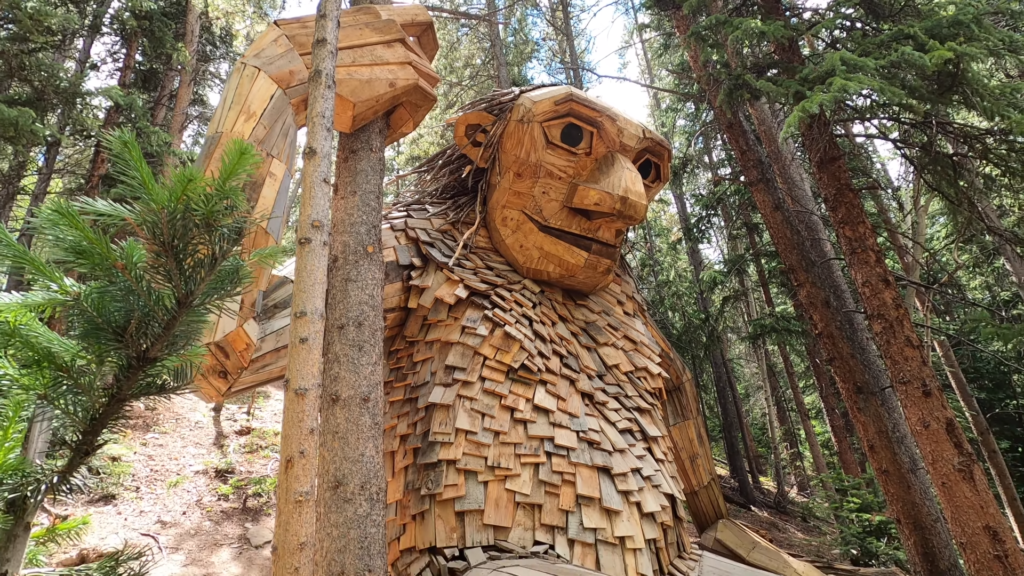
After visiting in multiple seasons, I have strong opinions about the best time to visit the Breckenridge troll, and I’ll give you the honest truth about each season.
Summer Season: June, July, and August
Pros:
- Perfect weather for hiking (temperatures in the 60s-70s°F)
- Trail is completely snow-free and easy to navigate
- Wildflowers bloom along the trail in late June and July
- Long daylight hours (sunset around 8:30 PM in June and July)
- All Breckenridge attractions and restaurants are open
Cons:
- This is peak tourist season—expect crowds, especially on weekends
- Parking can be extremely challenging between 10 AM and 3 PM
- Afternoon thunderstorms in July and August (they typically roll in around 2-3 PM)
- Higher accommodation prices in Breckenridge
My honest assessment: If you visit in late June or early August, you’ll avoid the absolute peak crowds of July while still enjoying excellent weather. During my June 28th visit, the trail was busy but not overwhelming, and the wildflowers were stunning.
Best days: Weekday mornings (Tuesday-Thursday) before 9 AM
Fall Season: September and October
This is personally my favorite time to visit the troll Breckenridge offers, and here’s why:
Pros:
- Spectacular fall colors—the aspens turn brilliant gold in mid-to-late September
- Fewer crowds than summer (shoulder season)
- Cooler, crisp air that’s perfect for hiking (50s-60s°F)
- Easier parking availability
- Lower accommodation prices
- Crystal-clear blue skies (Colorado’s fall weather is incredibly reliable)
Cons:
- Shorter daylight hours (sunset around 6:30 PM in October)
- Mornings can be quite cold (temperatures in the 30s-40s°F)
- Some Breckenridge businesses reduce hours or close after Labor Day
- Snow is possible in late October
My experience: During my September 23rd visit, the aspen leaves surrounding the troll were at peak color. The contrast between the golden leaves, blue sky, and the weathered gray wood of Isak Heartstone created absolutely stunning photos. We had the trail almost to ourselves on a Wednesday afternoon.
Best time: Mid-to-late September for peak fall colors. Early October is also beautiful, but come prepared for colder temperatures.
Winter Season: November through April
Full transparency—I haven’t done the Breckenridge troll hike in deep winter personally, but I’ve spoken extensively with locals and read numerous winter trail reports.
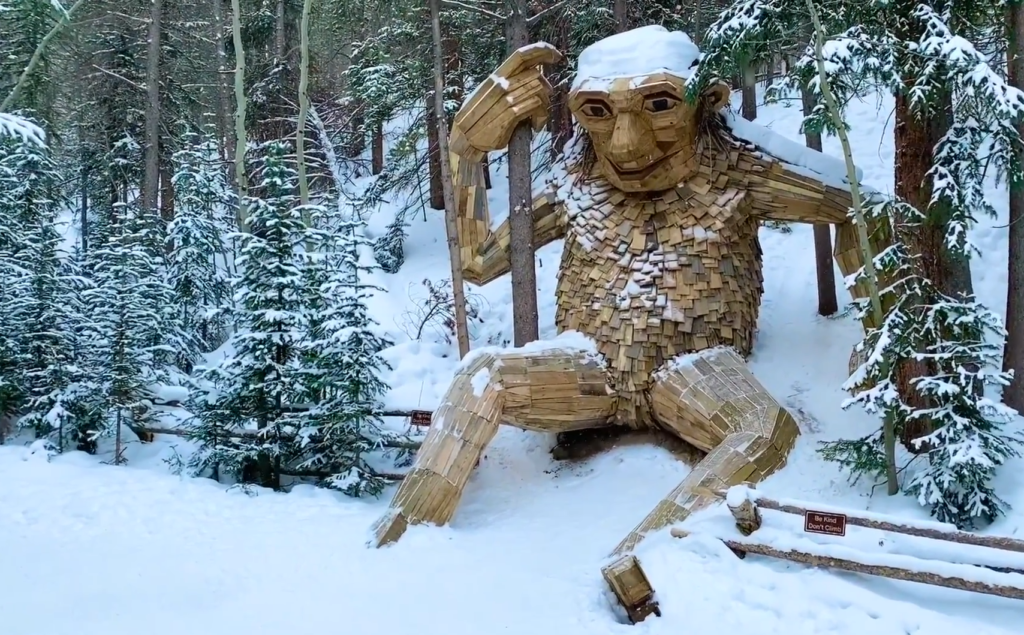
Pros:
- Magical winter wonderland atmosphere
- Troll covered in snow creates unique photo opportunities
- Virtually no crowds (you might have the place to yourself)
- Breckenridge ski season means lots of accommodation options
Cons:
- Requires proper winter hiking gear (microspikes, traction devices, winter boots)
- Trail can be difficult to follow when snow-covered
- Very cold temperatures (highs often in the 20s-30s°F)
- Shorter daylight (sunset around 4:45 PM in December)
- Parking lot may not be plowed immediately after snowstorms
Local insight: A Breckenridge resident named Mike told me that late March or early April offers the best winter experience—there’s still snow for the winter aesthetic, but temperatures are warmer (40s-50s°F) and days are longer.
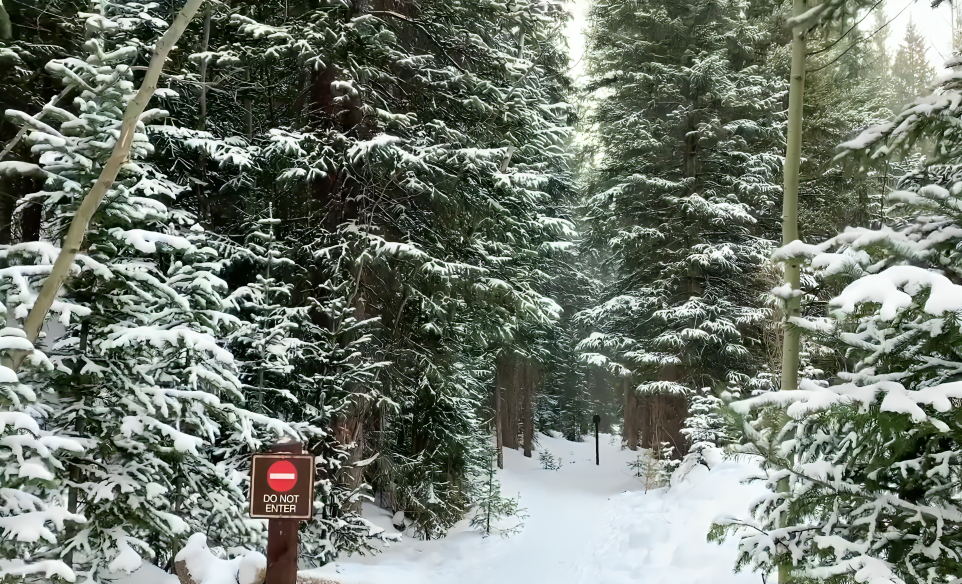
Important safety note: If you attempt this hike in winter, check recent trail reports on AllTrails and bring traction devices. The trail can be icy, and at 10,000 feet elevation, even a minor slip can be dangerous.
Spring Season: May
Honest opinion: Skip May if you can. Here’s why:
- Trail is muddy and slushy from melting snow
- Weather is unpredictable (could be 60°F or snowing)
- Not quite winter beauty, not quite summer greenery
- “Mud season” means some Breckenridge businesses are closed
That said, if May is your only option, the hike is still doable. Just expect muddy conditions and bring waterproof boots.
Time of Day Recommendations
Regardless of season, timing your visit makes a huge difference:
Early morning (7-9 AM):
- Best light for photography (soft, golden light)
- Fewer people on the trail
- Guaranteed parking
- Cooler temperatures in summer
Midday (10 AM-2 PM):
- Warmest temperatures (good for winter visits)
- Most crowded period (especially weekends)
- Harsh overhead light for photos
- Parking challenges
Late afternoon (4-6 PM):
- Beautiful golden hour light for photos
- Crowds diminishing
- Cooler temperatures (bring layers)
- Still enough daylight in summer months
My personal preference: I always aim for the 8-9 AM window during summer and fall. The morning light is gorgeous, the trail is peaceful, and parking is never an issue.
What to Bring for Your Breckenridge Troll Adventure
After multiple visits in different conditions, I’ve refined my packing list to the essentials. Here’s exactly what I bring for the Breckenridge troll hike:
Essential Gear Checklist
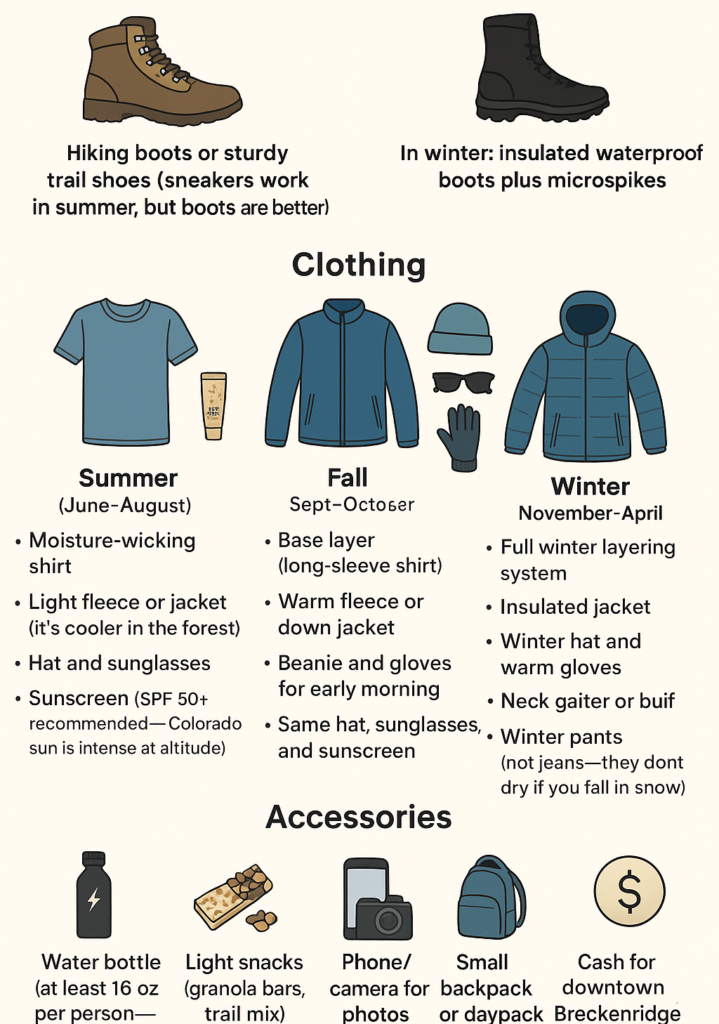
Footwear:
- Hiking boots or sturdy trail shoes (sneakers work in summer, but boots are better)
- In winter: insulated waterproof boots plus microspikes
Clothing (Summer: June-August):
- Moisture-wicking shirt
- Light fleece or jacket (it’s cooler in the forest)
- Hat and sunglasses
- Sunscreen (SPF 50+ recommended—Colorado sun is intense at altitude)
Clothing (Fall: September-October):
- Base layer (long-sleeve shirt)
- Warm fleece or down jacket
- Beanie and gloves for early morning
- Same hat, sunglasses, and sunscreen
Cloth (Winter: November-April):
- Full winter layering system
- Insulated jacket
- Winter hat and warm gloves
- Neck gaiter or buff
- Winter pants (not jeans—they don’t dry if you fall in snow)
Hydration and Snacks:
- Water bottle (at least 16 oz per person—altitude dehydration is real)
- Light snacks (granola bars, trail mix)
Other essentials:
- Phone/camera for photos
- Small backpack or daypack
- Cash for downtown Breckenridge after (many small shops are cash-only)
What you DON’T need:
- Trekking poles (the trail is easy enough without them, though they don’t hurt)
- Extensive first aid kit (it’s a short trail close to town)
- Bear spray (I’ve never seen bears on this trail, and locals confirm they’re rare in this area)
Photography Equipment Recommendations
As someone who loves photography, the Breckenridge troll is a dream subject. Here’s what I bring:
For smartphone photographers:
- Your phone is honestly sufficient for great photos
- Bring a portable charger (cold weather drains batteries fast)
- Consider a small tripod for group photos
For camera enthusiasts:
- Wide-angle lens (16-35mm) to capture the full troll
- Standard zoom (24-70mm) for detail shots
- Polarizing filter to enhance the blue sky
Pro photography tip: The troll faces slightly south, so morning light (8-10 AM) illuminates his face beautifully. Late afternoon light (5-7 PM in summer) creates dramatic shadows. Avoid midday shooting when possible—the overhead light creates harsh shadows on the troll’s features.
Weather-Appropriate Preparation
Colorado mountain weather is notoriously unpredictable, even in summer. During my July visit, it was 75°F and sunny when we started hiking at 10 AM. By noon, dark clouds rolled in, the temperature dropped to 60°F, and we got caught in a brief thunderstorm on our way back to the car.
My hard-learned lesson: Always bring a rain jacket from June through September, even if the morning looks perfect. Those afternoon thunderstorms are no joke, and the trail offers little shelter.
Also, remember you’re at 10,000+ feet elevation. The sun is significantly stronger than at sea level. I learned this the hard way during my first visit when I skipped sunscreen on an overcast day and still got sunburned. Don’t make my mistake.
Photography Tips: Capturing the Perfect Troll Photo
The troll in Breckenridge is one of the most photogenic sculptures I’ve ever encountered, but getting truly great photos requires some strategy. After taking hundreds of photos across multiple visits, here’s what I’ve learned:
Best Angles and Viewpoints
The classic frontal shot: Stand directly in front of Isak, about 15-20 feet back. This captures his full height and the kindness in his carved wooden face. Use a wide-angle lens or step back with your phone to get his full body in frame.
The low-angle perspective: Get down low (almost sitting on the ground) and shoot upward. This makes the troll look even more massive and imposing against the sky. This was my favorite shot from my September visit—the golden aspens framing Isak against a brilliant blue sky.
The interaction shot: Have someone in your group appear to “hold hands” with the troll or sit in his hand (his right hand extends outward at a perfect height). These photos capture the scale and create a magical, personal connection. My daughter’s photo sitting in Isak’s palm is framed in our living room.
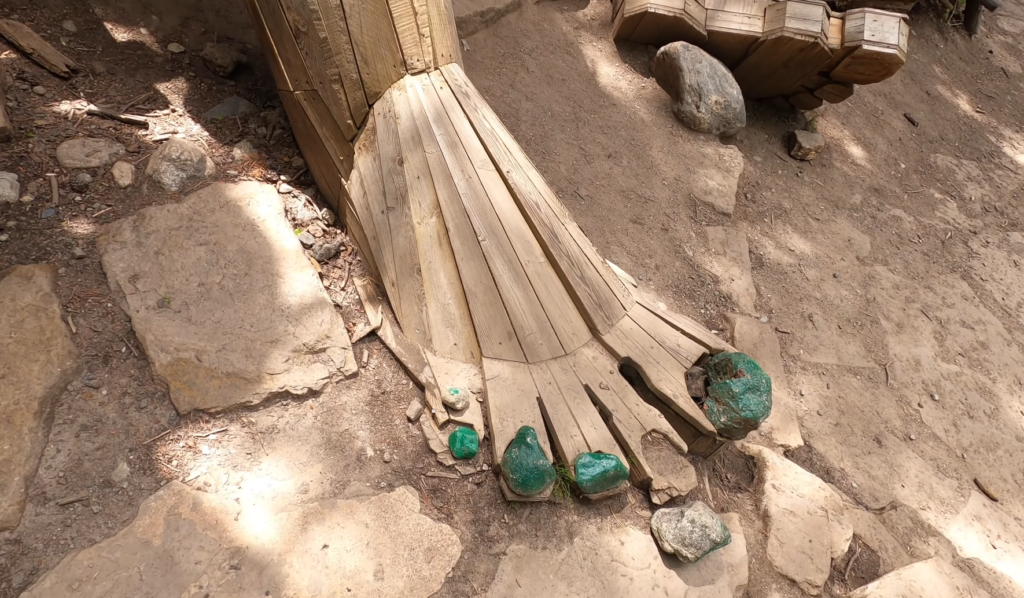
The detail shots: Don’t forget close-ups of the craftsmanship—the recycled wood grain, the carved eyes, the way individual boards fit together. These details tell the story of Thomas Dambo’s artistry.
The environmental context: Step back and capture the troll within the forest setting. Include the towering pines, the mountain backdrop, and the natural surroundings. This tells the complete story of why this sculpture belongs here.
Lighting Considerations for Different Times
- Golden hour (early morning or late afternoon): This is when magic happens. The warm, soft light makes the troll’s weathered wood glow. During my June 8 AM visit, the morning light streaming through the trees created an almost ethereal atmosphere.
- Midday (10 AM-2 PM): The harsh overhead light creates strong shadows under the troll’s brow and hands. Not ideal, but workable if it’s your only option. Use fill flash or ask your subject to turn slightly to catch better light on their face.
- Overcast days: Actually wonderful for photography! The diffused light eliminates harsh shadows and brings out the details in the wood texture. My October visit on a cloudy day produced some of my favorite moody, atmospheric shots.
- Blue hour (just after sunset): I’ve only done this once in September, but if you have a tripod and know basic camera settings, the deep blue sky against the troll’s silhouette is spectacular. Just ensure you have a flashlight for the hike back.
Family Photo Ideas That Actually Work
I’ve watched hundreds of families take photos at the Breckenridge troll, and here are the poses that consistently produce the best results:
- The “helping hand”: Kids sitting in or standing on the troll’s outstretched hand
- The “nose boop”: Someone appearing to touch the troll’s nose (he’s sitting, so his face is at a perfect accessible height)
- The “reading buddies”: Bring a book and have your child “read” to the troll
- The “size comparison”: Stand next to different parts of the troll to show scale—next to his foot, his knee, his hand
- The “family lineup”: Entire family standing in front, arranged by height, with the troll towering behind
Parent tip: The troll’s hand is about 4 feet off the ground—perfect height for toddlers to “high-five” or for parents to lift babies into for photos.
Instagram-Worthy Spots
If social media is your goal (and let’s be honest, the troll Breckenridge is Instagram gold), here are the most share-worthy angles:
- Shot from behind the troll looking toward the forest path—creates depth and mystery
- Close-up of the troll’s face with a human face nearby for scale and connection
- Wide shot showing the full clearing with the troll as the centerpiece
- Seasonal shots: Fall colors (September), snow-covered troll (winter), wildflowers (July)
Hashtag recommendations: #BreckenridgeTroll #IsakHeartstone #ColoradoTrolls #ThomasDambo #BreckenridgeColorado #ColoradoHiking
During my September visit, I watched an influencer spend 45 minutes capturing content with different outfit changes, and honestly, the setting deserves that kind of attention—it’s that photogenic.
The Environmental Message: Why This Troll Matters
What elevates the Breckenridge troll from a simple photo opportunity to something meaningful is the powerful environmental message embedded in its creation.
The Story of Recycled Materials
Every single board, plank, and wooden element in Isak Heartstone came from materials destined for landfills. Thomas Dambo’s team collected:
- Discarded wooden pallets from Breckenridge businesses
- Old fence posts from demolished properties
- Scrap lumber from construction sites
- Weathered barn wood from Colorado ranches
According to information from Breckenridge Creative Arts, approximately 2.5 tons of recycled wood went into creating the sculpture. That’s 2.5 tons of material that didn’t end up in a landfill, transformed instead into something that brings joy to over 100,000 people annually.
During my visits, I’ve taken time to examine the individual boards closely. You can see nail holes, weathered grain, paint remnants, and the history each piece carries. One board near the troll’s left foot still has a faded “FRAGILE” stamp from its former life as shipping material.
Thomas Dambo’s Global Sustainability Mission
I’ve spent considerable time on Thomas Dambo’s official website (thomasdambo.com) studying his broader mission, and it’s genuinely inspiring. Dambo has built over 100 trolls across six continents, each one constructed entirely from local recycled materials and built with community volunteers.
His philosophy is simple but profound: “I want to show people that trash is not trash, it’s just materials in the wrong place.”
According to his website, Dambo’s trolls have collectively prevented an estimated 500+ tons of wood from entering landfills globally. Beyond the environmental impact, his projects bring communities together—the construction process itself becomes a lesson in sustainability, creativity, and collaboration.
The Leave No Trace Center for Outdoor Ethics (LNT.org) highlights artists like Dambo as examples of how public art can promote environmental stewardship. By drawing people into nature through art, the Breckenridge troll hike introduces urban visitors to wilderness areas they might never otherwise explore.
How Visitors Can Help Protect the Area
Here’s where YOU become part of the environmental story. Every visitor to the troll in Breckenridge has a responsibility to protect this special place:
Follow Leave No Trace principles:
- Pack out everything you pack in (I’ve seen too much trash near the troll, and it breaks my heart)
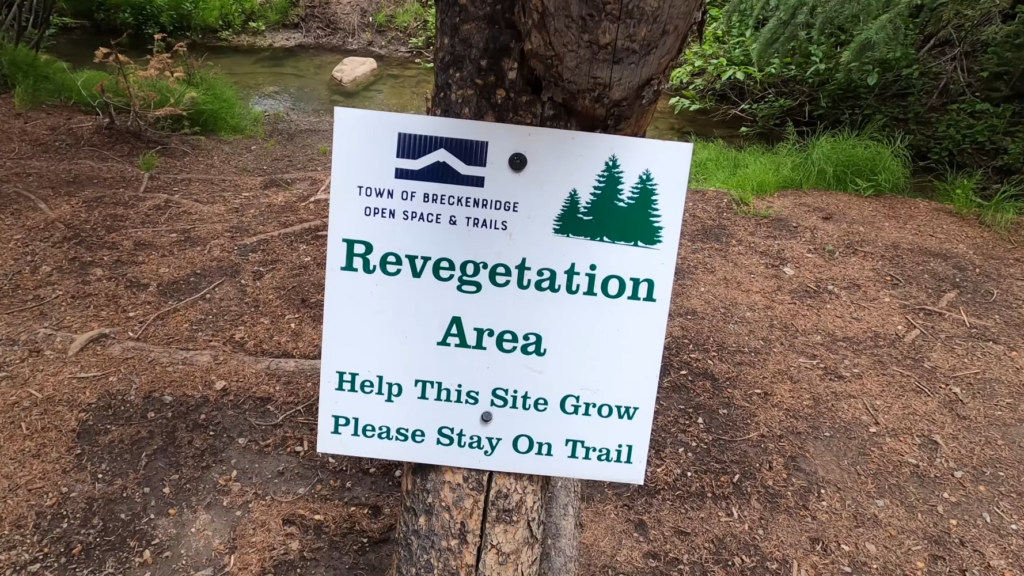
- Stay on designated trails (shortcuts create erosion and damage vegetation)
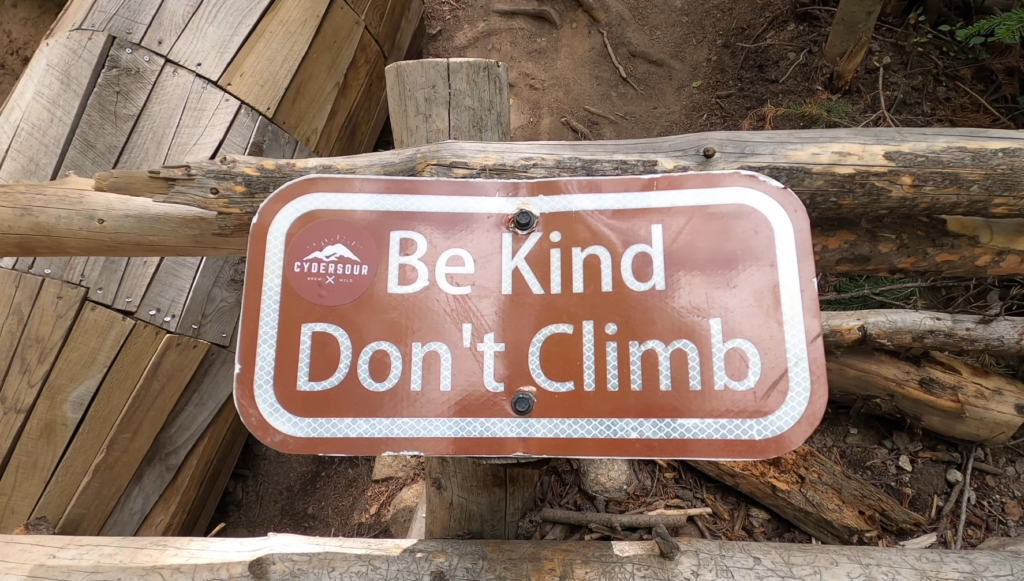
- Don’t carve into or vandalize the troll (sadly, some visitors have carved initials—please don’t)
- Respect wildlife (deer and elk frequent this area)
- Use existing fire rings only (though fires are generally not appropriate on this short trail)
During my July visit, I picked up trash left by previous visitors—empty water bottles, food wrappers, and even a discarded mask. I now bring a small bag on every visit specifically to pack out any litter I find. If every visitor removed just one piece of trash, this area would stay pristine.
The U.S. Forest Service (which manages the land where the troll is located) emphasizes that high-traffic areas like the Trollstigen Trail are particularly vulnerable to degradation. You can find their guidelines at fs.usda.gov, which stress the importance of visitor responsibility in preserving public lands.
Educational Opportunities for Children
If you’re visiting with kids, the Breckenridge troll offers powerful teaching moments:
- Recycling and waste reduction: Explain how the troll was built from “trash”
- Art and creativity: Discuss how artists see potential in unexpected materials
- Environmental stewardship: Talk about protecting forests and wildlife
- Community collaboration: Explain how volunteers built this together
I overheard a mother during my September visit using the troll to teach her children about sustainability. She had them examine different boards and guess what they used to be—a fence? A pallet? A shipping crate? The kids were completely engaged, learning without realizing it.
Nearby Attractions & Things to Do in Breckenridge
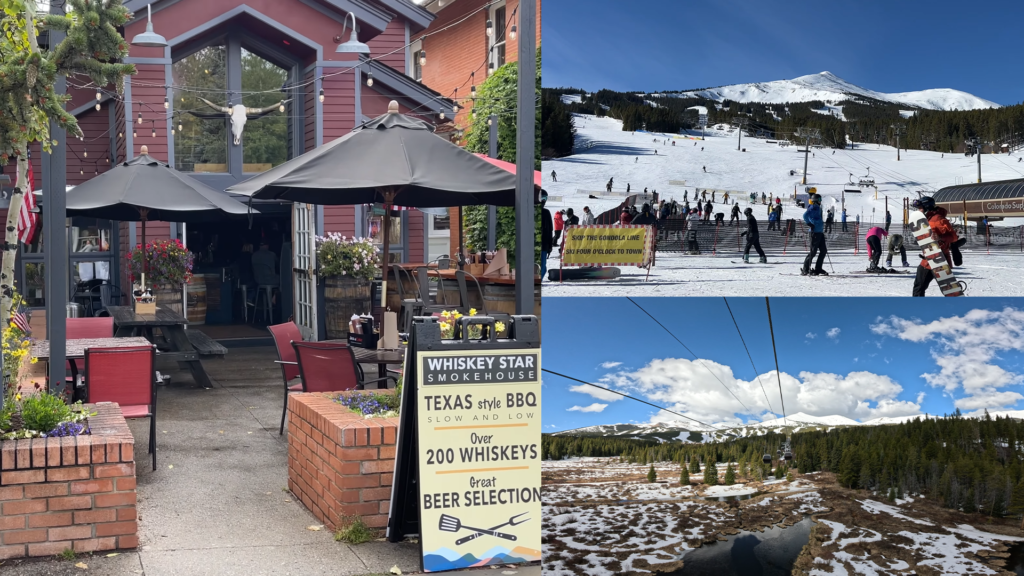
One of the best aspects of visiting the Breckenridge troll is that it’s just one highlight in a town packed with activities. Here’s how to build a full day or weekend around your troll visit:
Combining Your Troll Visit with Other Activities
- Main Street Breckenridge: After your hike, spend time exploring the charming historic downtown. The Victorian-era buildings house over 200 shops, art galleries, and restaurants. I always stop at Cuppa Joe for coffee (their mochas are exceptional) or grab lunch at Downstairs at Eric’s, a local favorite for over 40 years.
- Breckenridge Ski Resort: If visiting in winter, the ski resort offers world-class skiing and snowboarding. In summer (June through September), the resort transforms into a mountain biking and hiking destination. The scenic chairlift rides operate during summer and fall, providing stunning views without the hike—perfect if you have family members who can’t do trails.
- Carter Park: This riverside park is ideal for picnics after your troll hike. During my July visit, we picked up sandwiches and ate by the Blue River, watching kayakers navigate the whitewater course.
- BreckConnect Gondola: Free year-round gondola connecting downtown to the ski resort. On summer afternoons, I’ve ridden it just for the views and the air-conditioned break from the heat.
Family-Friendly Options
- Breckenridge Recreation Center: Indoor pool, climbing wall, and ice skating rink. Great option if weather turns bad or you need indoor activities. Day passes are reasonably priced (check GoBreck.com for current rates).
- Gold Rush Heritage: Take a gold panning lesson at Country Boy Mine or ride the historic steam train. Kids love these hands-on history experiences.
- Bike paths: Breckenridge has over 30 miles of paved bike paths. Rent bikes from one of several downtown shops and explore at your own pace.
Dining Recommendations
After working up an appetite on the Breckenridge troll hike, you’ll want good food:

Breakfast/Brunch:
- Blue Moose Restaurant: Famous for their stuffed French toast (expect a wait on weekends)
- Clint’s Bakery: Best pastries in town, and their breakfast burritos are huge
- Columbine Café: Local favorite with hearty portions
Lunch:
- Fatty’s Pizzeria: Excellent New York-style pizza by the slice
- Relish: Gourmet sandwiches and salads
- Breckenridge Brewery: Great burgers and Colorado craft beer
Dinner:
- Hearthstone Restaurant: Upscale dining in a Victorian-era home
- Mi Casa Mexican Restaurant: Best Mexican food in Breckenridge (locals swear by it)
- The Crown: Modern American cuisine, farm-to-table focus
Pro tip: Make reservations for dinner, especially during summer weekends and ski season. Breckenridge restaurants fill up quickly.
Where to Stay
If you’re making a weekend of it:
- Budget-friendly: Fireside Inn (basic but clean), Breckenridge Wayside Inn
- Mid-range: The Lodge at Breckenridge, Village at Breckenridge
- Luxury: One Ski Hill Place, Grand Colorado on Peak 8
My recommendation: Book accommodations on Main Street if possible. You can walk to restaurants, shops, and attractions, and you won’t need to move your car. During my September visit, we stayed at a Main Street hotel and loved the walkability.
For the most current lodging information and deals, check the official Breckenridge tourism website at GoBreck.com.
Practical Visitor Information
Let me share the nitty-gritty details that will make your Breckenridge troll visit smooth and stress-free.
Admission Fees: It’s Completely Free!
Here’s one of the best parts—visiting the troll Breckenridge offers costs absolutely nothing. There are:
- No parking fees
- No trail fees
- No admission charges
- No permits required
This is public land managed by the U.S. Forest Service and maintained through Breckenridge Creative Arts funding and volunteer efforts. The accessibility makes it perfect for budget-conscious families.
Accessibility Considerations
I need to be honest here: the Breckenridge troll hike is not wheelchair accessible or suitable for those with significant mobility limitations.
The trail includes:
- Uneven terrain with roots and rocks
- A 200-foot elevation gain
- Narrow sections (less than 3 feet wide in spots)
- Steps formed by tree roots and rocks
- No paved surfaces
During my visits, I’ve seen visitors using walking sticks, canes, and trekking poles successfully navigate the trail. One older gentleman I chatted with in July said his knee replacement didn’t prevent him from reaching the troll, but he took his time and rested frequently.
Alternative for those who can’t hike: Unfortunately, there’s no vehicle access to the troll. However, many visitors enjoy the challenge of at least attempting part of the trail, even if they don’t reach the troll itself.
If accessibility is a concern, I recommend contacting Breckenridge Creative Arts through their website or the Breckenridge Welcome Center (970-453-2913) for current information and possible accommodations.
Pet-Friendly Policies
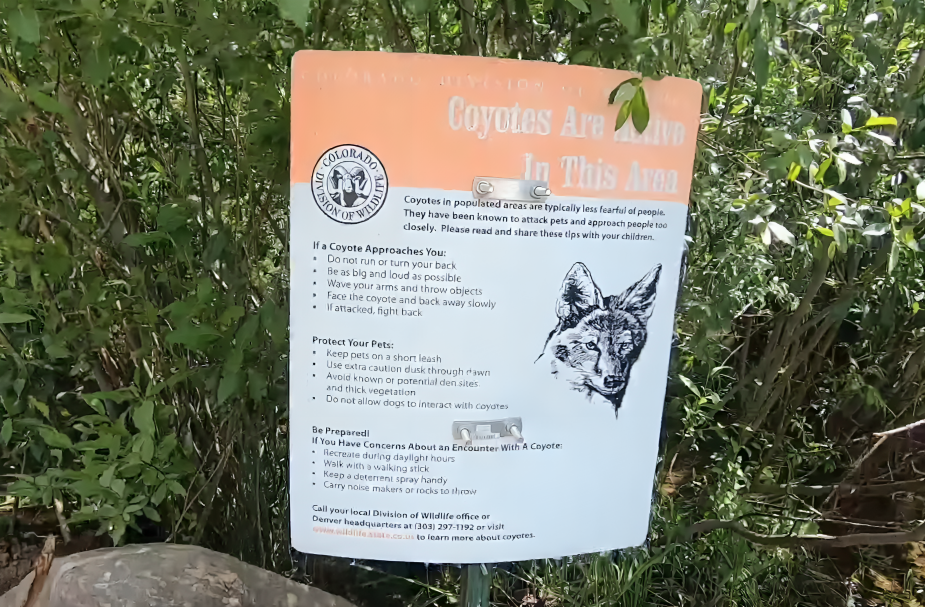
Good news for dog owners: Dogs are allowed on the trail but must be leashed.
I’ve encountered many dogs on the Breckenridge troll hike during my visits. Most handle the trail easily, though very small dogs or Older dogs might struggle with some of the steeper sections and root obstacles.
Important considerations:
- Bring water for your dog (the creek isn’t always flowing)
- Pack out all dog waste (yes, even in the forest)
- Keep dogs on leash—this protects wildlife and other hikers
- Be aware of altitude effects on dogs, especially if you’re visiting from sea level
During my September visit, I met a couple with two golden retrievers who absolutely loved the hike. The dogs seemed fascinated by the troll and posed beautifully for photos.
Cell Phone Service Availability
Cell service at the trailhead and on the trail is spotty at best. During my visits:
- Verizon: Weak signal at trailhead, no service on trail
- AT&T: Intermittent signal at trailhead, drops completely on trail
- T-Mobile: Similar to AT&T in my experience
This is actually one of the things I love about the hike—it forces digital detox and presence in nature. However, it also means:
- Download maps before you arrive
- Take screenshots of directions
- Let someone know your plans if hiking alone
- Don’t rely on GPS once you’re on the trail
The trail is well-marked and straightforward, so getting lost isn’t a real concern, but being prepared never hurts.
Restroom Facilities
There are no restroom facilities at the Trollstigen Trailhead or anywhere on the trail. Plan accordingly.
My advice:
- Use restrooms in downtown Breckenridge before driving to the trailhead
- Public restrooms are available at the Breckenridge Welcome Center (309 N Main Street)
- Gas stations and restaurants on Main Street have facilities
- The Breckenridge Recreation Center (just off Main Street) has public restrooms
The hike is short enough (1-1.5 hours total) that most people can manage without facilities, but plan ahead, especially with children.
Operating Hours and Seasons
The trail is accessible 24/7, year-round, but practical visiting hours depend on season:
- Summer (June-August): Safe dawn to dusk (approximately 6 AM to 8:30 PM)
- Fall (September-October): Dawn to dusk (approximately 7 AM to 6:30 PM)
- Winter (November-April): Daylight only recommended (8 AM to 4:30 PM)
- Spring (May): Dawn to dusk (approximately 6:30 AM to 7:30 PM)
I strongly discourage night hiking on this trail. There’s no lighting, the forest is very dark, and wildlife is more active after dark. While I’ve heard of adventurous photographers hiking to catch sunrise, I haven’t personally attempted it.
Safety Tips & Trail Etiquette
While the Breckenridge troll hike is beginner-friendly, mountain environments require respect and preparation. Here’s what you need to know to stay safe:
Altitude Considerations: The 10,000-Foot Reality
This cannot be overstated: at over 10,000 feet elevation, your body works harder for every breath. If you’re visiting from sea level, you will feel the effects.
Common altitude symptoms I’ve witnessed:
- Shortness of breath (even on the gentle incline)
- Faster heart rate
- Mild headache
- Fatigue that seems disproportionate to the effort
- Light-headedness
During my July visit, I helped a family from Florida who underestimated the altitude. The mom felt dizzy and nauseated halfway up. We rested, she drank water, and she recovered within 15 minutes, but it scared her children.
My altitude advice:
- Hydrate aggressively starting the day before your hike
- Take it slow—there’s no rush, and frequent breaks are smart
- Avoid alcohol the night before (it worsens altitude effects)
- Consider arriving a day early to acclimate if you’re from sea level
- Know the symptoms of serious altitude sickness (confusion, severe headache, vomiting)
The Mayo Clinic (mayoclinic.org) provides excellent information about altitude sickness prevention and symptoms. While serious altitude sickness is rare on a short hike like this, awareness is important.
Wildlife Awareness
The forest around the troll in Breckenridge is home to diverse wildlife. During my visits, I’ve encountered:
- Deer and elk: Very common, especially in early morning or evening. They’re beautiful but give them space (at least 50 feet).
- Chipmunks and ground squirrels: Constantly scurrying around. Don’t feed them—it’s bad for their health and creates dependency.
- Birds: Stellar’s jays, mountain chickadees, and occasionally ravens.
- What I haven’t seen but exists in the area: Black bears (rare but present), mountain lions (extremely rare), moose (occasionally in wetter areas).
Wildlife safety guidelines:
- Never approach or feed wildlife
- If you encounter a bear (unlikely), make noise, appear large, back away slowly
- Store food in your pack, not openly carried
- Don’t let dogs chase wildlife
The Colorado Parks and Wildlife website (cpw.state.co.us) offers detailed information about wildlife safety in Colorado’s mountains.
Leave No Trace Principles
I mentioned this earlier, but it bears repeating. The Breckenridge troll area receives heavy use, and every visitor’s actions matter:
The seven Leave No Trace principles:
- Plan ahead and prepare (you’re doing this by reading this guide!)
- Travel and camp on durable surfaces (stay on the trail)
- Dispose of waste properly (pack out everything, including toilet paper if needed)
- Leave what you find (don’t remove rocks, plants, or “souvenirs”)
- Minimize campfire impacts (not applicable on this short day hike)
- Respect wildlife (observe from a distance)
- Be considerate of other visitors (yield to uphill hikers, keep noise down)
During each visit, I’ve picked up trash left by others—please don’t be that person who leaves their waste. The official Leave No Trace Center website (lnt.org) provides comprehensive education on these principles.
Trail Etiquette: Sharing the Path
The Breckenridge troll hike can get busy, especially on summer weekends. Good trail etiquette makes everyone’s experience better:
Yielding right-of-way:
- Uphill hikers have right of way (moving uphill is harder, stopping and restarting is exhausting)
- Step aside to let faster groups pass
- If you’re taking photos, move completely off the trail
Noise considerations:
- Keep voices at conversational levels (sound carries in nature)
- If playing music, use headphones (not everyone wants to hear it)
- Remember, many people hike for the peace and quiet
Group management:
- If hiking with a large group, don’t block the entire trail
- Let smaller groups or solo hikers pass easily
- Don’t let children run far ahead unsupervised
At the troll:
- Be patient waiting for photos—everyone deserves their turn
- Offer to take photos for other groups (they’ll usually reciprocate)
- Don’t monopolize the space if others are waiting
The American Hiking Society (americanhiking.org) provides excellent resources on trail etiquette and hiking basics.
Weather Safety
Colorado mountain weather changes rapidly. During my July visit, I experienced this firsthand:
We started hiking at 10 AM under clear blue skies and 75°F temperatures. By 11:30 AM, dark clouds appeared. At noon, thunder rumbled. By 12:15 PM, we were caught in a sudden downpour with lightning, racing back to the car.
Weather safety rules:
- Check forecasts before you go (weather.gov provides detailed mountain forecasts)
- Start early to avoid afternoon thunderstorms in summer (they typically develop around 2-3 PM)
- Watch the sky—if dark clouds appear, head back immediately
- Lightning kills—if you hear thunder, you’re in danger (lightning can strike from 10 miles away)
- Hypothermia is possible even in summer if you’re wet and cold
Summer thunderstorm protocol: If caught in a storm:
- Get off ridge tops and away from tall isolated trees
- Seek low ground but avoid water drainage areas
- Crouch low if lightning is very close (don’t lie flat)
- Wait 30 minutes after the last thunder before resuming
The National Weather Service (weather.gov) provides excellent information about mountain weather safety and lightning precautions.
Conclusion: Why You Should Visit the Breckenridge Troll
After multiple visits across different seasons, I can confidently say the Breckenridge troll is one of Colorado’s most rewarding experiences. This isn’t just about seeing a sculpture—it’s about the complete journey: the peaceful hike through alpine forest, the excitement of discovering Isak Heartstone, and the memories you’ll create.
The troll Breckenridge offers works on multiple levels. For children, it’s a magical adventure to find a friendly giant in the woods. For adults, it’s an appreciation of art, sustainability, and community collaboration. So For photographers, it’s an endlessly photogenic subject in a stunning natural setting.
What strikes me most about Isak Heartstone is his welcoming presence. Thomas Dambo created public art that sparks joy while delivering a powerful environmental message about recycling and our relationship with nature. The Breckenridge troll location couldn’t be better—the surrounding forest is beautiful, the town is charming, and the accessibility makes this experience available to everyone.
Whether you’re spending a weekend in Breckenridge or passing through Colorado, the hour you’ll invest visiting the troll in Breckenridge will be time well spent. Go early, bring your camera, respect nature, and let yourself feel the childlike wonder that a 15-foot wooden giant inspires.
Now get out there and meet Isak Heartston