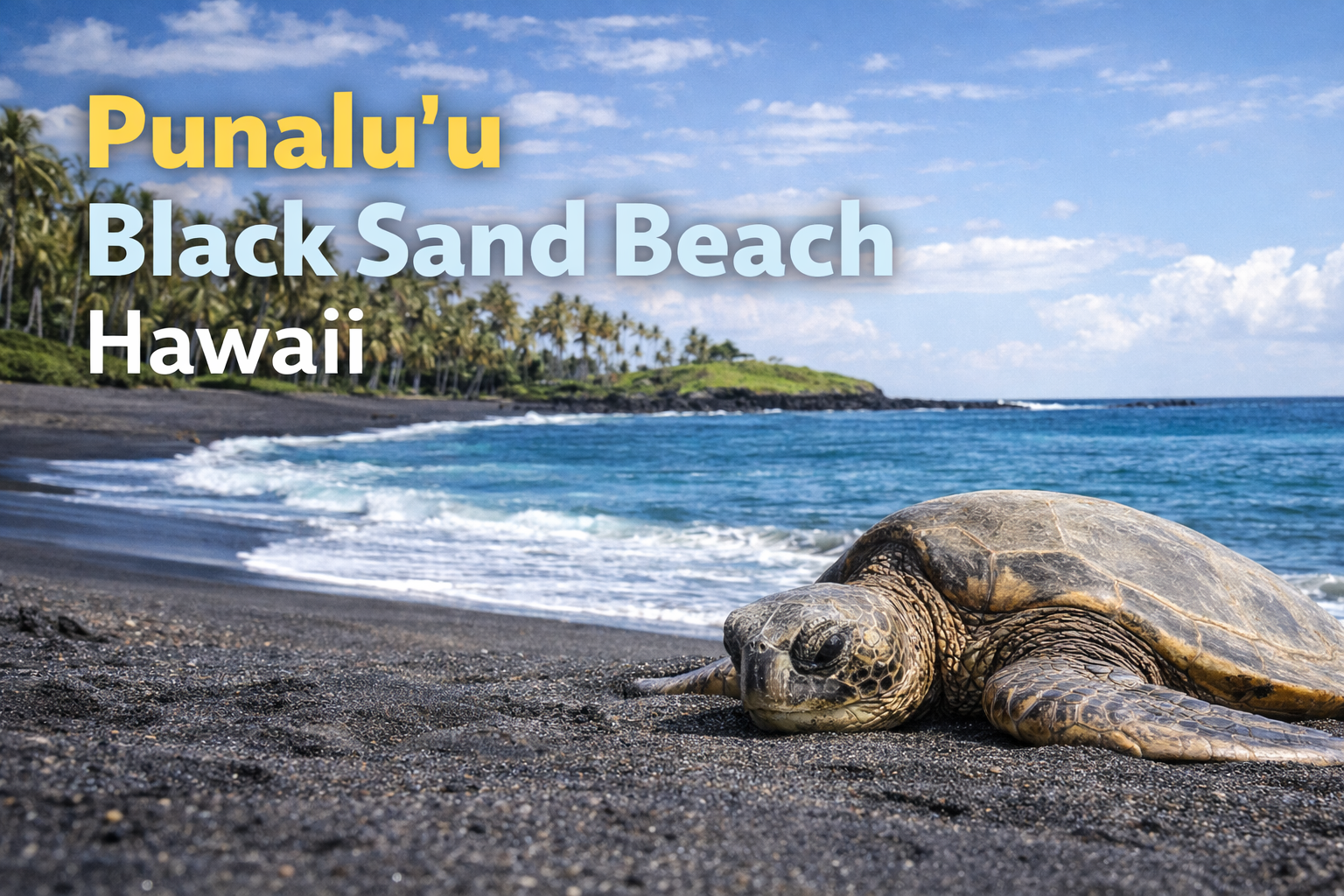
I still remember the moment I pulled into the parking lot at Punaluu Black Sand Beach hawaii and thought, “Wait, is the sand actually black?”
It was. Completely, utterly, impossibly black—like someone had spread crushed obsidian along the shore. And there, sprawled across this dark canvas like they owned the place, were three massive Hawaiian green sea turtles just… napping in the sun.
That’s Punalu’u Beach Big Island in a nutshell: dramatic volcanic black sand meets one of Hawaii’s most reliable spots for seeing endangered sea turtles in the wild. Located on the southeastern coast about an hour from both Kona and Hilo, this beach offers something genuinely special—and unlike the remote hike to Green Sand Beach or the windswept cliffs of Ka Lae South Point, Punalu’u is actually easy to reach, with real facilities and plenty of parking.
Punaluu Black Sand Beach isn’t trying to be Instagram-perfect. The sand gets scorching hot by midday, the ocean can be rough, and yes, you’ll need to keep your distance from those turtles (it’s federal law). But if you want to experience one of Hawaii’s most unique volcanic beaches, see Hawaiian honu in their natural habitat, and understand why black sand beaches are so rare and remarkable, this is your spot.
Let me share everything I’ve learned about visiting Punalu’u Beach, from the best times to see turtles to why you absolutely cannot take that black sand home as a souvenir.
Table of Contents
Why Punaluu Black Sand Beach is One of Hawaii’s Most Unique Beaches
How Black Sand Forms: The Volcanic Story
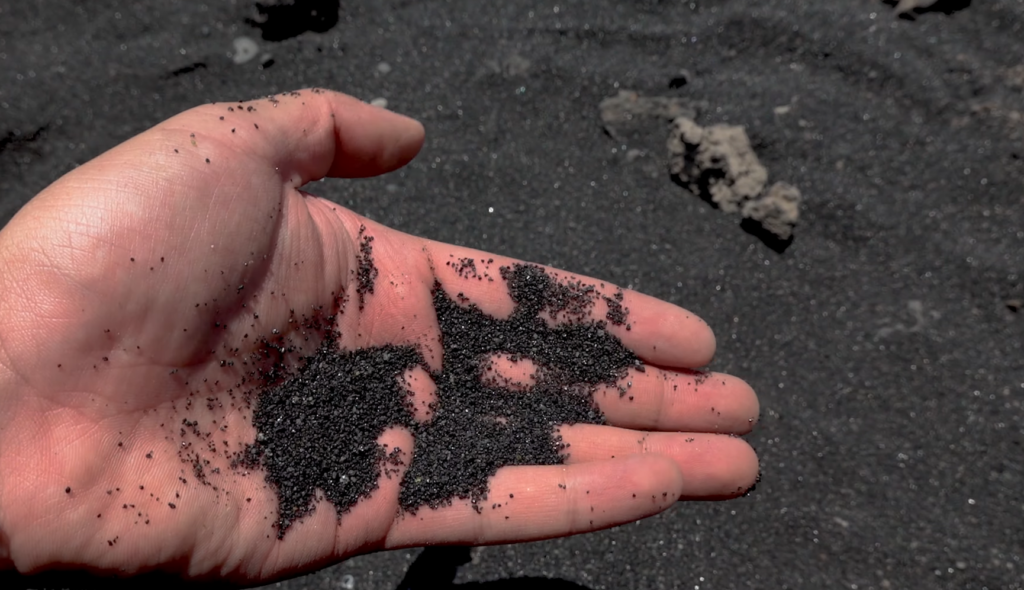
Punaluu Black Sand Beach didn’t just appear naturally over millions of years like most beaches. This sand has a violent, fascinating origin story.
When molten lava from Hawaii’s volcanoes flows into the ocean, the extreme temperature difference causes it to shatter explosively. According to the United States Geological Survey (USGS), this process—called “thermal granulation”—creates tiny fragments of volcanic glass and basalt that eventually become black sand.
But here’s what makes Punalu’u special: the sand here is remarkably fine and pure. Unlike rocky volcanic beaches where you’re walking on chunky lava fragments, Punalu’u’s sand has been ground down by wave action over centuries into a surprisingly soft, almost powdery consistency. It’s still black basalt—rich in iron and magnesium—but it’s been refined by the ocean into something that actually feels like sand.
The result? A beach that’s genuinely, dramatically black. Not dark gray. Not charcoal. Black.
Freshwater Springs: A Hidden Feature
Here’s something most visitors don’t know about Punalu’u Beach Big Island: beneath the black sand and in several spots along the shoreline, freshwater springs bubble up from underground aquifers.
You can actually see these freshwater seeps creating lighter patches in the ocean near shore, especially at low tide. Ancient Hawaiians knew about these springs and used them as freshwater sources. Today, these springs serve another important purpose—they’re one reason Hawaiian green sea turtles love this beach so much.
The combination of warm black sand (which absorbs heat from the sun), protected bay, and freshwater makes Punalu’u an ideal resting spot for turtles that spend most of their time in the open ocean.
Why Black Sand Beaches Are Rare
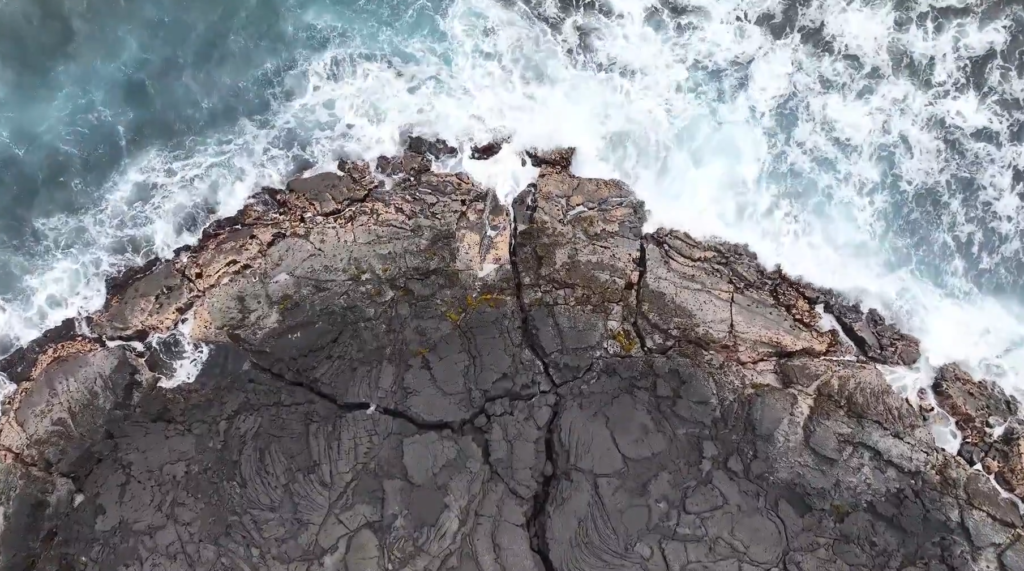
While Hawaii has several black sand beaches, they’re actually quite rare globally. Black sand requires:
- Active volcanic activity (or recent geological history)
- Ocean access for lava to hit water
- Wave action to pulverize the lava into sand
- Time for the beach to accumulate and stabilize
Punaluu Black Sand Beach hawaii checks all these boxes. The Big Island is geologically young and volcanically active, creating perfect conditions for black sand formation. According to Hawaii Volcanoes Observatory, the island continues to grow as Kilauea volcano adds new land.
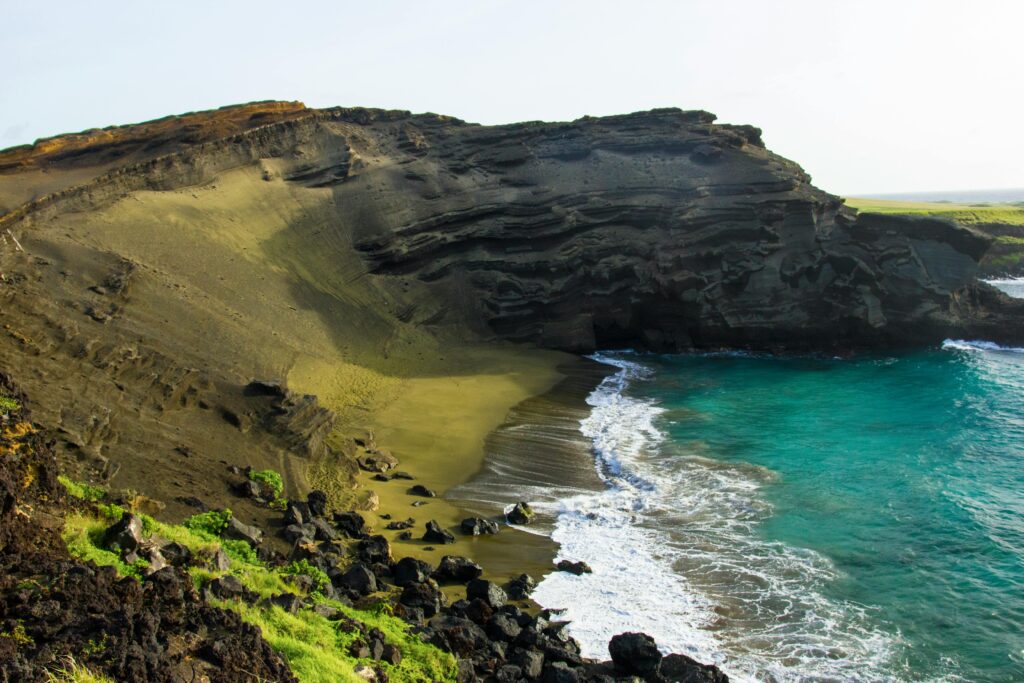
Compare this to the rare Green Sand Beach Hawaii with its olivine crystals, and you start to appreciate just how geologically diverse the Big Island’s coastline really is.
Seeing Hawaiian Green Sea Turtles (Honu) at Punalu’u Beach
Why Turtles Love Punalu’u Beach
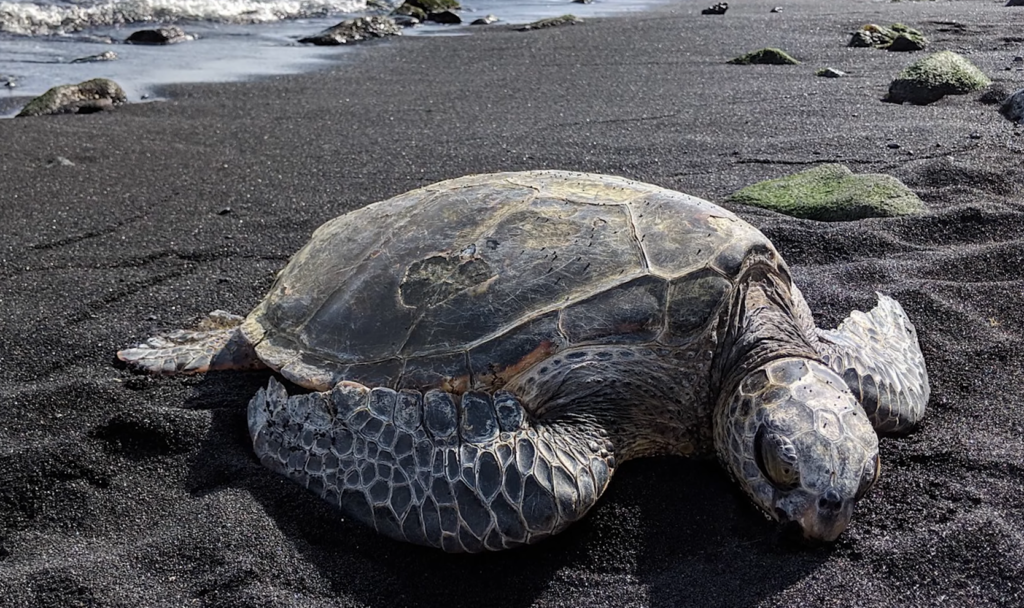
Let’s be honest: the sea turtles are the main reason most people visit Punalu’u Beach, and for good reason. Hawaiian green sea turtles—called honu in Hawaiian—frequent this beach more reliably than almost any other easily accessible beach in Hawaii.
But why here specifically?
The black sand is key. Volcanic black sand absorbs and retains heat from the sun much more effectively than light-colored sand. For cold-blooded sea turtles that spend hours in the cool ocean, hauling out onto warm black sand is like us climbing into a heated blanket after a cold swim. It helps them thermoregulate and rest.
According to NOAA Fisheries, Hawaiian green sea turtles need to bask regularly to maintain body temperature and aid digestion. The combination of Punalu’u’s warm sand, protected bay (which offers easier access for turtles), and those freshwater springs creates a turtle paradise.
Best Times to See Turtles at Punalu’u
I’ve visited Punaluu Black Sand Beach hawaii at different times, and turtle sightings are pretty consistent, but timing does matter.
Early Morning (7:00-10:00 AM) ⭐ BEST TIME
- Turtles often rest on shore overnight and into early morning
- Fewer crowds means less disturbance
- Cooler sand makes walking easier for you
- Better light for photography
Late Afternoon (3:00-6:00 PM) ⭐ GOOD ALTERNATIVE
- Turtles return to shore before evening
- Fewer daytime visitors
- Beautiful lighting as sun lowers
- Sand has cooled slightly
Midday (11:00 AM-2:00 PM) ⚠️ LESS RELIABLE
- Most crowded time
- Extremely hot sand (painful for barefoot walking)
- Turtles may stay in cooler water
- Harsh lighting for photos
Year-Round Presence:
Unlike some wildlife that’s seasonal, Hawaiian green sea turtles visit Punalu’u year-round. You have about a 70-80% chance of seeing at least one turtle during your visit, regardless of season. Early morning visits probably push that to 90%+.
💬 Guest Review by Heather
“The black sand was really cool to see and there’s a good chance you’ll see turtles. There’s free parking and a lifeguard on duty. About halfway down the beach there’s a giftshop with a variety of items for sale.”TripAdvisor Rating: ⭐⭐⭐⭐ 4.5/5 (1,864+ reviews)
👉 Read more on TripAdvisor
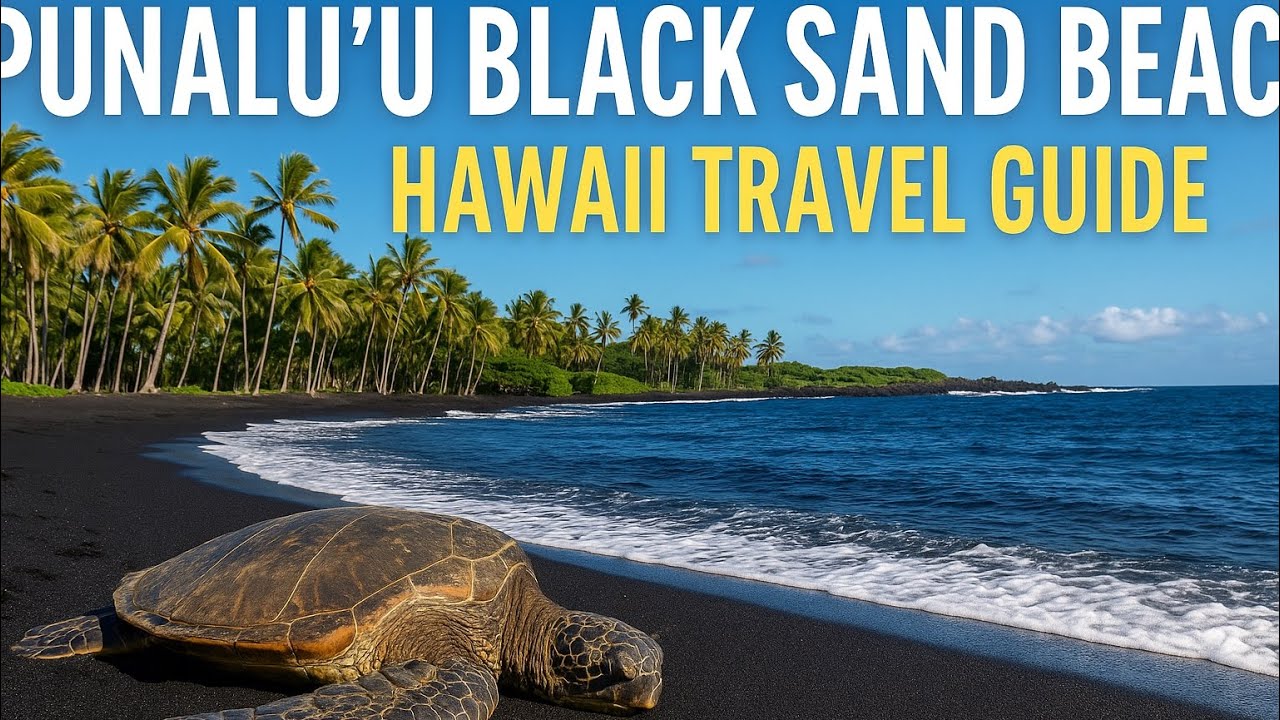
Watch video Punaluʻu Black Sand Beach
Federal Laws & Critical Viewing Etiquette
Here’s where things get serious. Hawaiian green sea turtles are federally protected endangered species, and the laws around them aren’t suggestions—they carry real consequences.
The 20-Foot Rule:
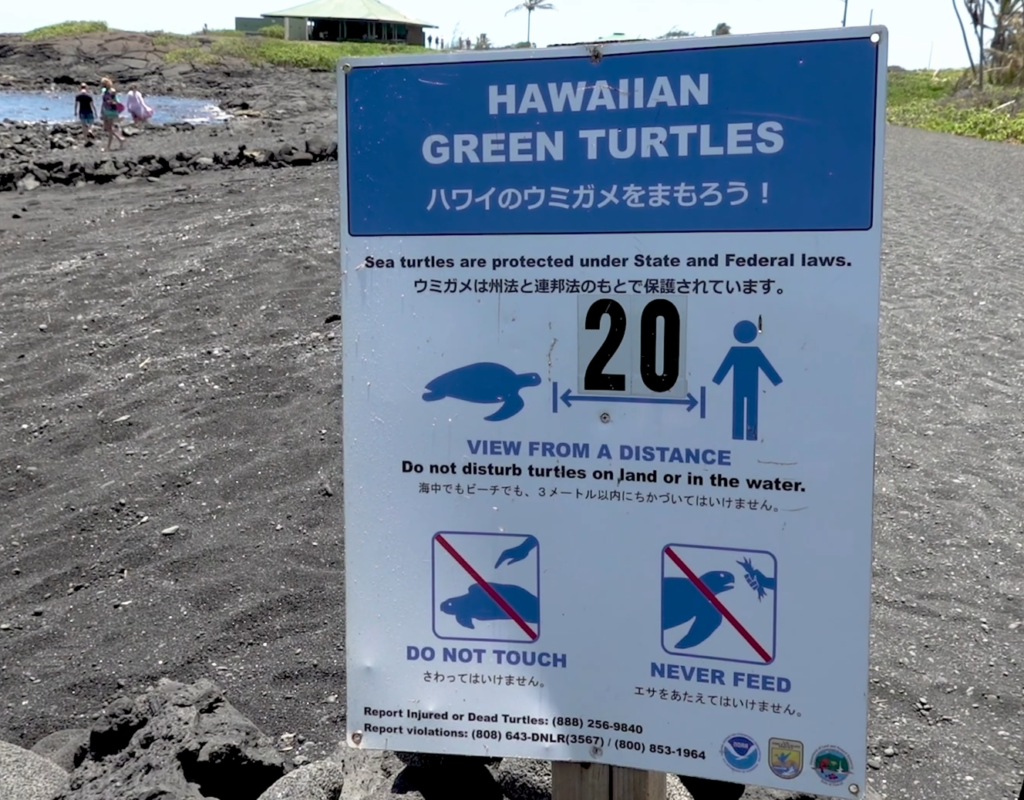
According to NOAA’s Marine Turtle Conservation Act, you must maintain a minimum 20-foot (6-meter) distance from all sea turtles, whether they’re on land or in the water. This isn’t approximate—it’s a strict federal requirement.
What You Absolutely Cannot Do:
❌ Touch or ride turtles (yes, people have tried)
❌ Feed turtles (alters natural behavior)
❌ Chase or disturb resting turtles
❌ Block their path to/from the ocean
❌ Make loud noises or sudden movements
❌ Encircle or surround them for photos
❌ Use flash photography at close range
Penalties Are Severe:
Violations of the Endangered Species Act can result in:
- Fines up to $100,000 per violation
- Potential jail time (up to one year)
- Civil penalties and legal costs
According to Hawaii Department of Land and Natural Resources, enforcement officers regularly patrol Punalu’u Beach and do issue citations. I’ve personally seen rangers measuring distances when tourists got too close.
Respectful Turtle Viewing:
✅ Stay at least 10 feet away – Use your phone’s zoom for photos
✅ Observe quietly – Speak in low voices
✅ Give them space – If a turtle is moving toward the water, step aside
✅ Don’t litter – Turtles can mistake trash for food
✅ Use reef-safe sunscreen – Chemical sunscreens harm marine life
✅ Educate others – Politely inform those who don’t know the rules
What If a Turtle Approaches You?
Sometimes turtles swim near people or walk past them on the beach. If this happens, stay still and let the turtle pass. You’re not violating the law if the turtle approaches you—you just can’t approach it.
The beach often has volunteers from local conservation groups who help educate visitors and ensure turtles aren’t disturbed. They’re friendly and happy to answer questions—take advantage of their knowledge.
Where is Punaluu Black Sand Beach Located?
Exact Location and Regional Context
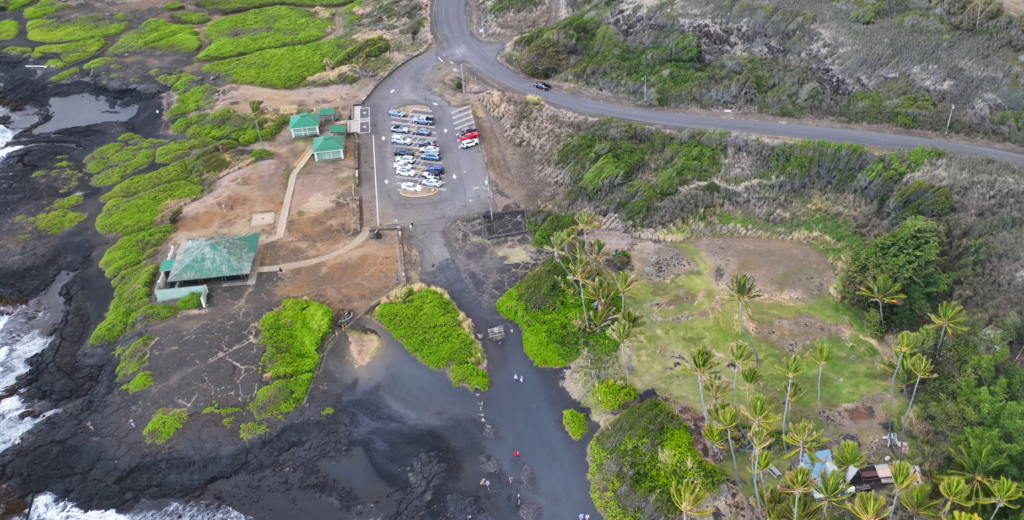
Punalu’u Black Sand Beach sits on the southeastern shore of the Big Island in the Ka’u district, making it an ideal stop between major destinations.
- GPS Coordinates: 19.135585330003035, -155.50489727975173
- Address: Punaluʻu Beach, Hawaii, United States
Distance from Major Points:
- From Kailua-Kona: 60 miles southwest (1.5 hours via Highway 11)
- From Hilo: 45 miles south (1 hour via Highway 11)
- From Hawaii Volcanoes National Park: 30 miles south (40 minutes)
- From Naalehu (nearest town): 8 miles north (10 minutes)
This strategic location makes Punalu’u Beach Big Island a perfect break if you’re driving the southern route between Kona and Hilo, or if you’re exploring the Ka’u coast along with Green Sand Beach (25 miles south) and Ka Lae South Point (30 miles south).
How to Get to Punaluu Black Sand Beach Hawaii
From Kailua-Kona:
- Take Highway 11 South through Kealakekua, Captain Cook, and Honaunau
- Continue through South Kona and into Ka’u district
- Pass through Ocean View and continue south
- Look for the Punalu’u Beach Park sign on your left (ocean side) between mile markers 55 and 56
- Turn left into the parking area
From Hilo:
- Take Highway 11 South past Keaau
- Continue through Kurtistown, Mountain View, and Glenwood
- Pass Hawaii Volcanoes National Park entrance
- Continue south through Pahala
- Look for Punalu’u Beach Park sign on your right (ocean side) between mile markers 55 and 56
- Turn right into the parking area
Road Conditions:
Highway 11 is well-maintained and suitable for all vehicles. Unlike the rough access to Green Sand Beach or the narrow road to Ka Lae, Punalu’u is completely accessible by any car, including compact rentals.
Parking:
The beach has a paved parking lot with approximately 30-40 spaces. Parking is completely free. The lot can fill up during peak hours (10 AM – 2 PM), especially on weekends and when cruise ships are in port. Arrive early for guaranteed parking.
Accessibility:
The parking lot is level and paved, making Punalu’u Black Sand Beach one of the most accessible beaches on the Big Island. There’s a short, relatively flat path from parking to the beach—much easier than the challenging hike required for Green Sand Beach.
Can You Swim at Punalu’u Black Sand Beach Hawaii? Safety Guide
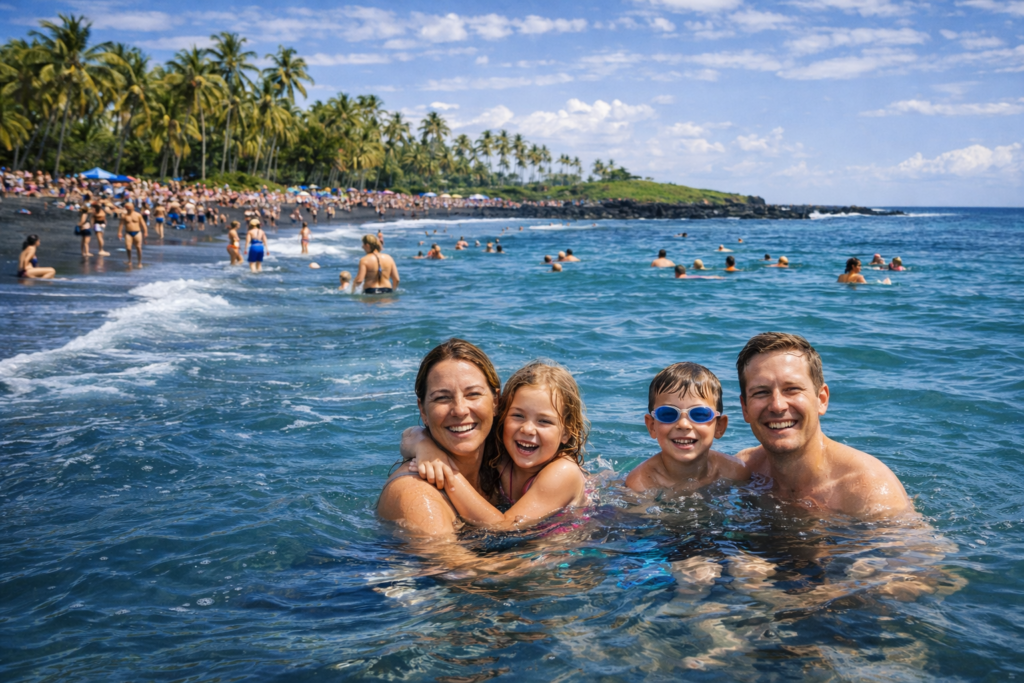
Swimming Conditions: What to Expect
I’ll be straight with you: Punalu’u Beach is safer for swimming than remote beaches like Green Sand Beach or the ocean at Ka Lae, but it’s still not a calm, beginner-friendly pool.
The beach sits in a semi-protected bay, which does offer some shelter from open ocean swells. On calm days, especially during summer, swimming can be quite pleasant. But ocean conditions change quickly, and this is still the Pacific Ocean—it demands respect.
Water Entry:
The black sand beach slopes gradually into the water, making entry easier than rocky beaches. However, be aware that:
- Sharp lava rocks are scattered underwater, especially near the edges
- The sand gets deep quickly – It’s not a shallow wading beach
- Currents can be strong near the rocky points on either side
- Waves can be powerful during winter months or stormy conditions
When Swimming is Safest
Summer Months (May-October) ⭐ BEST SEASON
- Generally calmer ocean conditions
- Smaller waves and lighter surf
- More predictable weather
- Warmer water temperatures
Winter Months (November-April) ⚠️ MORE CHALLENGING
- Larger north Pacific swells arrive
- Stronger currents and bigger waves
- More variable conditions
- Swimming often not advisable
According to National Weather Service Honolulu, the south-facing Ka’u coast receives significant winter swells that can make swimming dangerous at Punalu’u Beach Big Island.
Always check current conditions before entering:
- Look at the ocean for 10 minutes before swimming
- Watch waves—if you see large sets, stay out
- Check Hawaii Beach Safety for current conditions
- Ask locals or other swimmers about conditions
Swimming Safety Guidelines
Safe Swimming Practices:
- Stay in the center of the bay – Avoid rocky areas on the sides
- Never turn your back on the ocean – Watch for incoming waves
- Swim with others – Use the buddy system
- Don’t go out far – Stay within standing depth if you’re not a strong swimmer
- Wear water shoes – Protect feet from sharp rocks
- Exit if conditions change – Don’t hesitate to get out
Hazards to Watch For:
⚠️ No lifeguards – You’re completely on your own
⚠️ Sharp underwater rocks – Lava fragments can cut feet
⚠️ Rip currents – Can form near the rocky points
⚠️ Sudden waves – Rogue waves happen on all Hawaiian beaches
⚠️ Sea urchins – Black spiky creatures hiding in rocks
Not Recommended For:
- Non-swimmers or weak swimmers
- Young children (unless closely supervised in very calm conditions)
- Anyone unfamiliar with ocean swimming
- Days with visible large waves or strong winds
My honest assessment: Punalu’u is swimmable on calm days if you’re a competent ocean swimmer and respect the conditions. But if you’re looking for safe, easy swimming, head to one of the Big Island’s protected beach parks like Hapuna or Spencer Beach Park instead. Come to Punalu’u for the turtles and the stunning black sand—treat swimming as a bonus if conditions are right.
What Facilities Are Available at Punalu’u Beach?
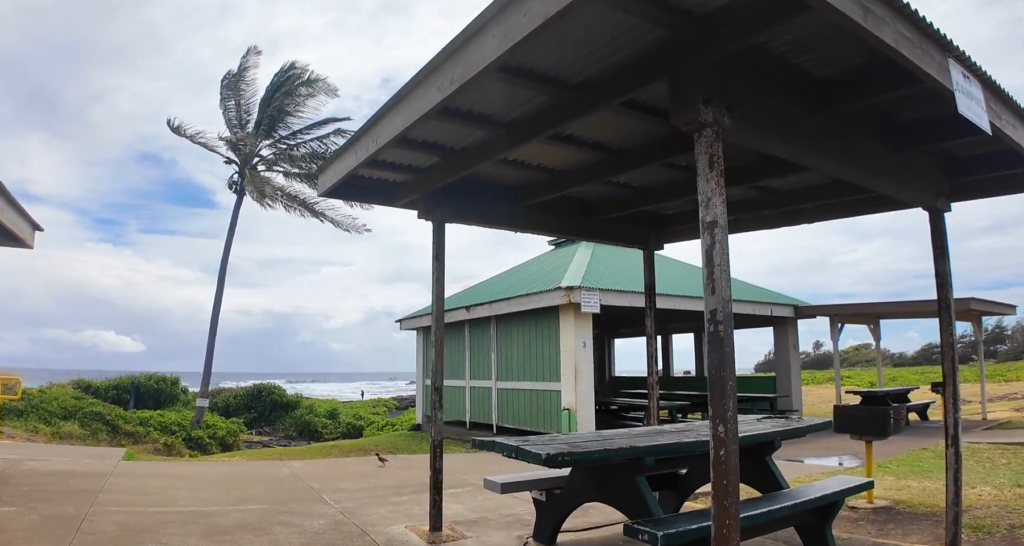
One of the biggest differences between Punaluu Black Sand Beach Hawaii and remote spots like Green Sand Beach or Ka Lae is the actual facilities. Here’s what you’ll find:
Available Facilities:
- Restrooms – Basic but functional public restrooms near parking
- Outdoor showers – Cold water rinse stations for washing off sand/salt
- Picnic pavilions – Several covered pavilions with tables (first-come, first-served)
- Parking lot – Paved, free parking for 30-40 vehicles
- Beach access path – Short walk from parking to sand
What’s NOT Available:
❌ No lifeguards – No emergency services on site
❌ No food or drink vendors – Bring your own supplies
❌ No beach equipment rentals – Bring your own gear
❌ No shade on the beach – Palm trees provide limited shade
❌ No changing rooms – Use restrooms for changing
Nearest Services:
- Naalehu (8 miles north): Gas, groceries, restaurants, ATM
- Pahala (12 miles north): Additional services
- Emergency services: 911, but response time will be 20-30 minutes minimum
Pro tip: The picnic pavilions are perfect for escaping the intense midday sun. The black sand gets scorchingly hot by noon—walking barefoot can actually burn your feet. I learned this the hard way. The pavilions offer shade for cooling off between beach visits.
Pack a cooler with lunch and spend a few hours here comfortably. Just remember to pack out all your trash—there are trash cans, but practice leave-no-trace principles.
Best Time to Visit Punalu’u Black Sand Beach
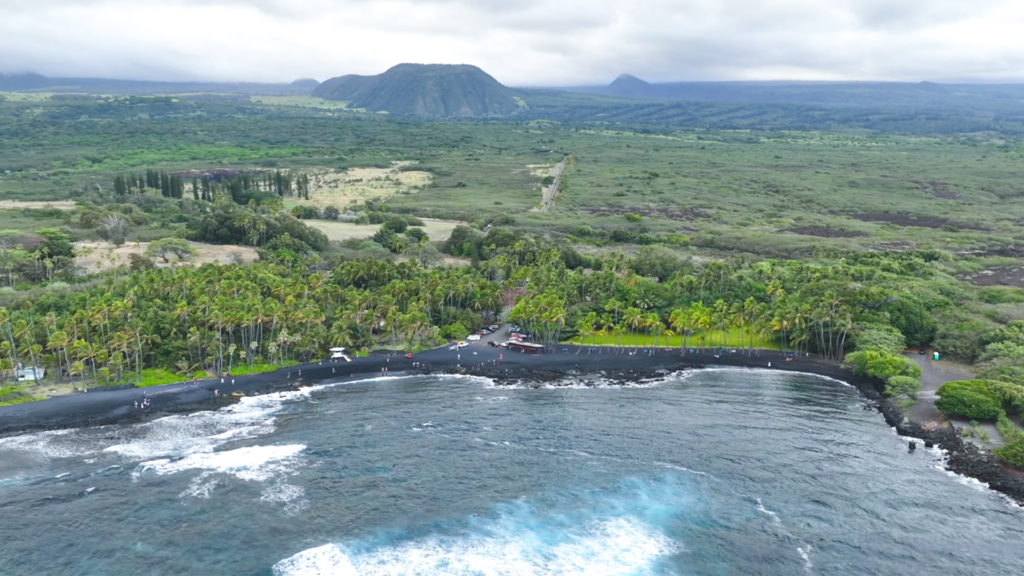
Time of Day
Early Morning (7:00-9:00 AM) ⭐ BEST TIME
- Highest chance of seeing sea turtles (80-90%)
- Cool sand—comfortable barefoot walking
- Fewer crowds—often have beach to yourself
- Beautiful soft morning light for photography
- Easier parking availability
Late Afternoon (3:00-5:00 PM) ⭐ GOOD ALTERNATIVE
- Turtles return to shore
- Sand has cooled from peak heat
- Golden hour lighting for stunning photos
- Most daytime crowds have left
- Peaceful atmosphere
Midday (10:00 AM-2:00 PM) ⚠️ MOST CHALLENGING
- Peak crowds—tour buses and day-trippers
- Scorching hot sand (genuinely painful barefoot)
- Harsh overhead light washes out photos
- Turtles may avoid the hottest hours
- Parking lot often full
Best Season
Summer (May-October):
- Calmer ocean for swimming
- More consistent weather
- Gentler trade winds
- Best overall conditions
Winter (November-April):
- Bigger waves (dramatic but dangerous)
- More variable weather
- Occasional rain showers
- Still excellent for turtle viewing (just not swimming)
According to data from National Weather Service, the Ka’u coast is one of the drier regions of the Big Island year-round, so even winter visits are usually pleasant.
Avoiding Crowds
Punalu’u Black Sand Beach is popular, but strategic timing helps:
Least Crowded:
- Weekday mornings (Monday-Thursday, 7-9 AM)
- Shoulder seasons (April-May, September-October)
- Early/late in the day
Most Crowded:
- Weekends and holidays
- Midday hours (10 AM-2 PM)
- When cruise ships dock in Kona or Hilo
- Peak summer (July-August)
Insider tip: If you’re combining Punalu’u with Green Sand Beach and Ka Lae South Point, visit Punalu’u first thing in the morning (7-8 AM), then drive south to Ka Lae/Green Sand Beach for your hike. By the time you return late afternoon, Punalu’u will have cleared out and you can stop again for sunset.
Photography Tips for Punalu’u Black Sand Beach
Capturing the Black Sand
The dramatic contrast at Punalu’u creates incredible photo opportunities, but black sand presents unique challenges.
Best Lighting Conditions:
Golden Hour (Early Morning or Late Afternoon) ⭐ BEST
- Side lighting brings out sand texture
- Warm tones contrast beautifully with black sand
- Softer shadows
- Ocean sparkles gorgeously
Overcast Days ⭐ GREAT FOR COLOR
- Even lighting eliminates harsh shadows
- Black sand shows rich, deep color
- Excellent for capturing detail
- No squinting turtles (if photographing wildlife)
Avoid Midday Sun:
- Harsh overhead light creates extreme contrast
- Black sand can look washed out or too dark
- Difficult exposure balance
- Heat haze affects distant shots
Sea Turtle Photography (Legal & Respectful)
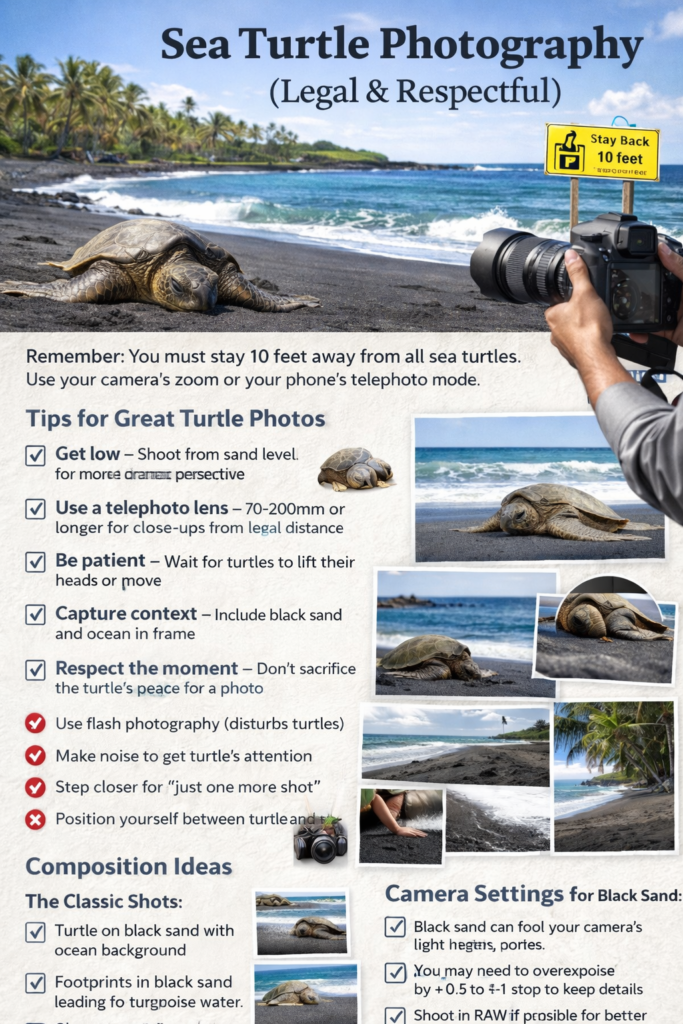
Remember: You must stay 20 feet away from all sea turtles. Use your camera’s zoom or your phone’s telephoto mode.
Tips for Great Turtle Photos:
- Get low – Shoot from sand level for more dramatic perspective
- Use a telephoto lens – 70-200mm or longer for close-ups from legal distance
- Be patient – Wait for turtles to lift their heads or move
- Capture context – Include black sand and ocean in frame
- Respect the moment – Don’t sacrifice the turtle’s peace for a photo
Never:
❌ Use flash photography (disturbs turtles)
❌ Make noise to get turtle’s attention
❌ Step closer for “just one more shot”
❌ Position yourself between turtle and ocean
Composition Ideas
The Classic Shots:
- Turtle on black sand with ocean background
- Footprints in black sand leading to turquoise water
- Palm trees framing the beach (shoot from under the trees)
- Close-up sand texture showing the fine volcanic grains
- Wave washing over black sand (use fast shutter speed)
- Comparison shot – Your hand or foot next to black sand showing color
Camera Settings for Black Sand:
- Black sand can fool your camera’s light meter
- You may need to overexpose by +0.5 to +1 stop to keep details
- Shoot in RAW if possible for better editing flexibility
- Check your histogram—watch for clipped shadows
What to See Near Punalu’u Black Sand Beach
Green Sand Beach (Papakōlea) – 25 Miles South
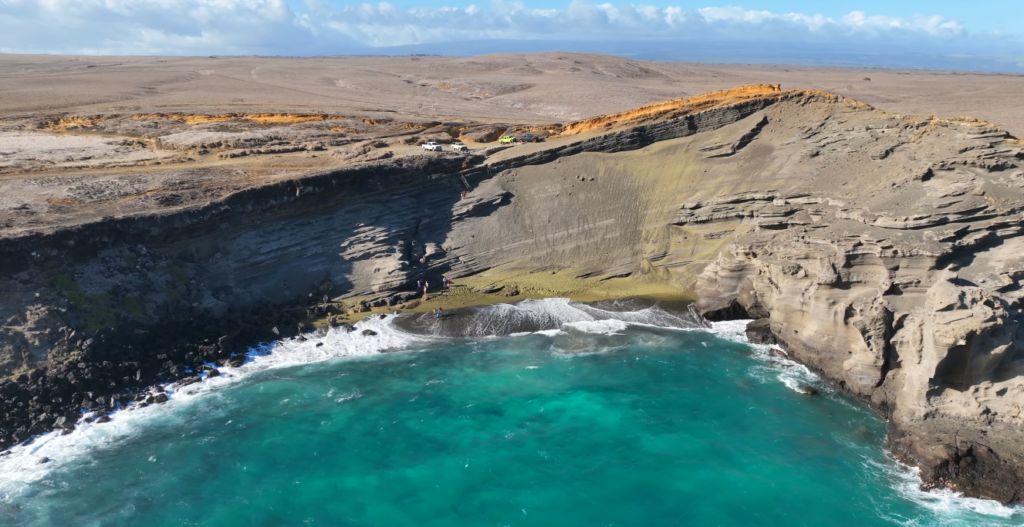
Create an unforgettable “colored sand tour” by combining Punalu’u’s jet-black volcanic sand with the rare olive-green sand at Green Sand Beach Hawaii.
The contrast is genuinely remarkable—from pure black basalt to green olivine crystals. These two beaches represent completely different geological processes and offer totally different experiences.
- Distance: 25 miles (40 minutes south on Highway 11)
- Difficulty: Moderate to challenging 2.5-mile hike required
- Time needed: 3-4 hours total (hiking + beach time)
For complete details on visiting Green Sand Beach, including step-by-step hiking directions, what to bring, safety considerations, and cultural significance, check out our comprehensive Green Sand Beach guide.
Ka Lae South Point – 30 Miles South
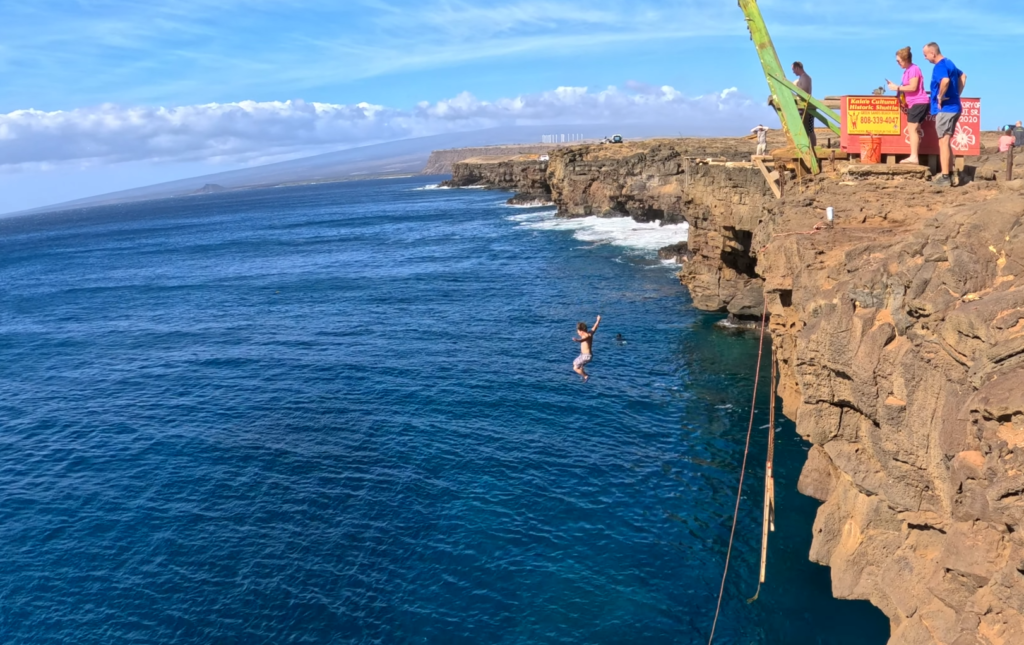
The southernmost point in the United States is just 30 miles from Punalu’u Beach Big Island, making it easy to visit both in one day.
Ka Lae offers dramatic cliff views, ancient canoe mooring holes, cliff jumping (watch only—don’t try it), and serves as the trailhead for hiking to Green Sand Beach.
- Distance: 30 miles (50 minutes south)
- Time needed: 45 minutes to 1 hour for Ka Lae itself
See our complete Ka Lae South Point guide for directions, what to see, and how to combine it with Green Sand Beach.
Hawaii Volcanoes National Park – 30 Miles North
One of Hawaii’s most spectacular attractions is less than an hour from Punalu’u.
Top attractions:
- Kilauea Caldera viewpoints
- Thurston Lava Tube
- Steam vents and sulfur banks
- Crater Rim Drive
- Active lava viewing (when erupting)
Entrance fee: $30 per vehicle (valid 7 days)
Time needed: 4-6 hours minimum (full day recommended)
Distance: 30 miles (40-45 minutes north)
Learn more at National Park Service – Hawaii Volcanoes
Naalehu Town – 8 Miles North
The southernmost town in the United States offers essential services and local charm:
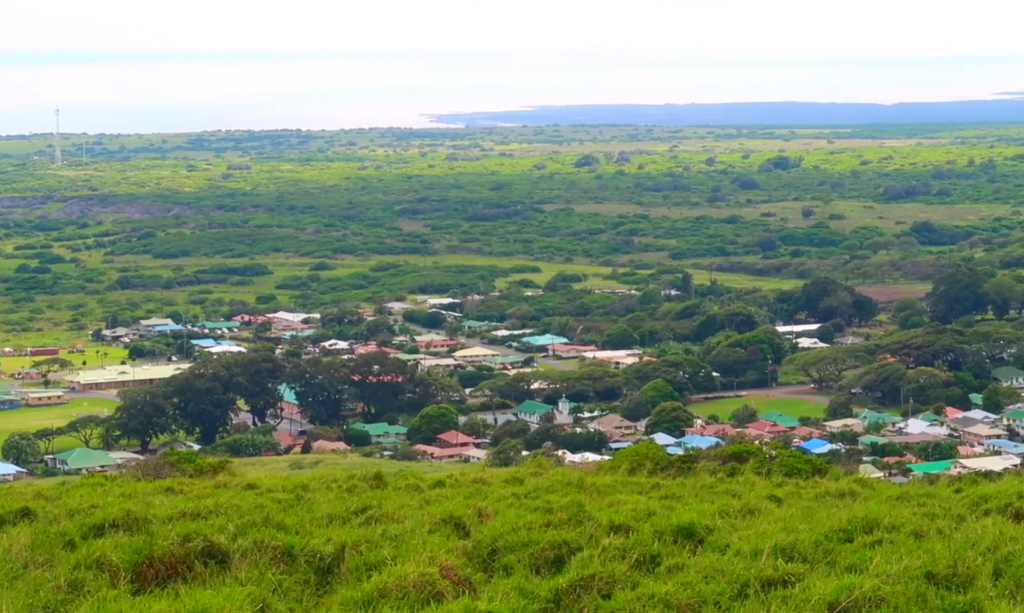
The southernmost town in the United States offers essential services and local charm:
- Gas stations – Last fuel before remote southern areas
- Hana Hou Restaurant – Famous for their liliko’i (passion fruit) bars and malasadas
- Grocery store – Snacks, drinks, supplies
- Restrooms and services
Pro tip: Stop in Naalehu before visiting Punalu’u to use restrooms, get snacks, and fuel up if needed.
Sample Day Itinerary: The Ultimate Ka’u Coast Tour
The Perfect Colored Beaches Day:
- 7:00 AM – Depart Kona or Hilo
- 8:30 AM – Arrive at Punalu’u Black Sand Beach
- 8:45 AM – See turtles, explore black sand, photograph (1.5 hours)
- 10:15 AM – Drive to Ka Lae/Green Sand Beach
- 11:00 AM – Explore Ka Lae South Point cliffs (45 min)
- 11:45 AM – Begin hike to Green Sand Beach
- 12:30 PM – Arrive at Green Sand Beach, swim, explore, photograph
- 2:00 PM – Hike back to parking
- 2:45 PM – Stop in Naalehu for late lunch
- 4:00 PM – Return to Punalu’u for afternoon turtle viewing and sunset
- 5:30 PM – Drive back to accommodations
This itinerary gives you three completely unique beaches in one incredible day.
Conservation & Protecting Punalu’u Beach
Why You Cannot Take Black Sand
I need to be crystal clear about this: Taking sand from Punalu’u Black Sand Beach is illegal and harmful.
Legal Consequences:
Under Hawaii Revised Statutes §205A-44, removing sand, rocks, coral, or other beach materials is prohibited by state law. Violations can result in:
- Fines up to $100,000
- Criminal charges
- Civil penalties
According to Hawaii Department of Land and Natural Resources, enforcement is taken seriously, and tourists have been prosecuted for taking sand.
Environmental Impact:
The black sand at Punalu’u took thousands of years to accumulate through volcanic activity and wave erosion. It’s not being replenished at the same rate it’s being lost to:
- Natural ocean erosion
- Visitors taking sand (even small amounts add up)
- Storm damage
When people take sand, the beach literally shrinks, and the unique ecosystem that depends on it—including those sea turtles—suffers.
Cultural Disrespect:
In Hawaiian culture, taking natural elements from sacred places is considered kapu (forbidden/taboo). It shows profound disrespect for:
- The land (aina)
- Hawaiian cultural heritage
- Future generations
Pele’s Curse:
Hawaiian folklore warns that taking lava rocks, sand, or other natural items from Hawaii brings bad luck or Pele’s curse (Pele is the volcano goddess). While this is legend rather than fact, Hawaii’s postal service receives hundreds of packages annually from tourists mailing back stolen sand and rocks, along with letters describing the misfortunes they experienced.
The Right Way to Remember:
- ✅ Take unlimited photos – Free and legal
- ✅ Collect memories – The experience is the true souvenir
- ✅ Buy local crafts – Support Hawaiian artisans
- ✅ Share your stories – Inspire others to visit respectfully
Reef-Safe Sunscreen Requirement
Hawaii has banned certain sunscreens that harm coral reefs and marine life. When visiting Punalu’u Beach Big Island:
Required: Use reef-safe, mineral-based sunscreen
- Look for zinc oxide or titanium dioxide
- Avoid oxybenzone and octinoxate (now illegal in Hawaii)
Why it matters: Chemical sunscreens wash off swimmers and harm:
- Coral reefs
- Sea turtles
- Fish and marine ecosystems
Recommended brands: Raw Elements, Stream2Sea, Blue Lizard (mineral versions)
Leave No Trace at Punalu’u
Punalu’u has facilities, but conservation still depends on visitor responsibility:
✅ Pack out all trash – Use provided trash cans or take it with you
✅ Don’t feed wildlife – Not turtles, not fish, not birds
✅ Stay on paths – Don’t trample vegetation
✅ Use bathrooms properly – Keep facilities clean for others
✅ Don’t move rocks or disturb habitat
✅ Keep noise levels down – Respect the peaceful atmosphere
Essential Tips & What to Bring to Punalu’u Black Sand Beach
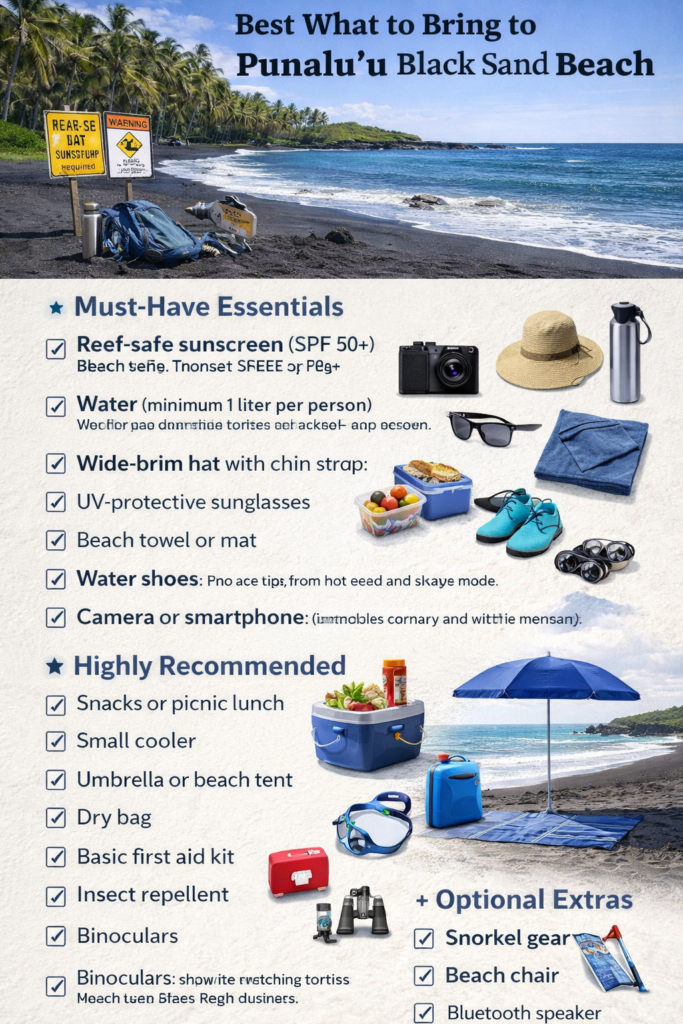
Packing List
Absolutely Essential:
- Reef-safe sunscreen (SPF 50+) – Required and reapply frequently
- Water – At least 1 liter per person
- Hat with chin strap – Wind can be strong
- Sunglasses with UV protection
- Beach towel or mat
- Water shoes – Sharp rocks underwater
- Camera or smartphone – You’ll want photos
Highly Recommended:
- Snacks or picnic lunch – No food available
- Cooler if staying several hours
- Umbrella or beach tent – Limited natural shade
- Dry bag – Protect electronics from sand/water
- First aid basics – Band-aids, antiseptic
- Insect repellent – Mosquitoes in grassy areas
- Binoculars – Great for watching turtles from legal distance
Optional:
- Snorkel gear (if ocean is calm and you’re experienced)
- Beach chair
- Bluetooth speaker (keep volume respectful)
- Books or magazines for relaxing
What to Wear
For Beach Activities:
- Swimsuit (worn under clothes for convenience)
- Light, breathable clothing
- Cover-up or rash guard (sun protection)
- Flip-flops or sandals (sand gets hot!)
- Water shoes for ocean entry
Pro tip: Bring an extra t-shirt to sit on if you want to rest on the hot black sand—it gets genuinely scorching by midday.
Conclusion: Experience Hawaii’s Black Sand Paradise
Look, I’ve been to a lot of beaches. White sand, pink sand, even that famous green sand after a sweaty hike. But Punalu’u? It hits different.
Maybe it’s the way that jet-black sand looks against water so blue it seems Photoshopped. Or maybe it’s watching a 200-pound honu lumber onto shore like they’re coming home after a long day, completely unbothered by the humans gawking respectfully from 10 feet away.
Here’s what nobody tells you: “accessible” Hawaiian beaches are usually code for “overcrowded tourist trap.” Not Punalu’u. Yes, there’s actual parking and real bathrooms—hallelujah—but the moment you step onto that volcanic sand, you’re not thinking about conveniences. You’re thinking, “Holy hell, this is actually real.”
The deal Punalu’u offers is simple: Show some respect, get something unforgettable. Keep your distance from endangered turtles. Leave the black sand where it belongs (seriously, don’t be that person). Check the surf conditions. Honor the locals who’ve fished here for generations.
What you get back? A beach experience that feels authentic, not manufactured. No admission fees, no velvet ropes, no guided tour schedules. Just you, ancient geology, and creatures that have been doing their thing here since long before Hawaii became the 50th state.
Pack reef-safe sunscreen, bring a decent zoom lens, and prepare yourself. Because when that first turtle hauls itself onto the black sand while you’re standing there, camera ready, respectful distance maintained—that’s when you’ll get it.
This isn’t just another beach stop. It’s the real Hawaii, unfiltered.
Mahalo, and enjoy the show.
FAQ About Punaluu Black Sand Beach, Hawaii
The most famous black sand beach is Punaluu Black Sand Beach, located on the Big Island of Hawaii.
Yes, Blacks Beach in San Diego, California remains a popular clothing-optional beach.
Punaluu formed from lava flowing into the ocean, creating its iconic black sand, and it has long been a nesting site for Hawaiian green sea turtles.
It’s on the southeastern coast of the Big Island, near the town of Naalehu.
Yes, visitors often spot Hawaiian green sea turtles (honu) resting on the sand or swimming nearby.