
Three hours into my drive from Kona, following a road that seemed to lead absolutely nowhere, I started questioning my life choices. But then I reached Ka Lae South Point, and everything changed.
The wind hit me first—hard enough to make me grab the car door for balance. Then I saw the cliffs. Forty feet of sheer volcanic rock dropping into ocean so impossibly turquoise I actually stopped and stared. This was it: the southernmost point in the entire United States, and it looked nothing like the polished Hawaii I’d imagined.
Ka Lae South Point isn’t trying to impress tourists. There are no visitor centers or paved paths here—just raw, windswept cliffs where ancient Hawaiians once launched canoes into the unknown, where locals still cliff jump into dangerous currents (absolutely wild to watch), and where the Pacific Ocean stretches endlessly toward Antarctica.
But here’s what nobody told me about Ka Lae South Point Big Island: it’s not just a destination. It’s a starting point. After exploring the dramatic cliffs and hand-carved fishing holes, I discovered that this remote spot is actually the gateway to something even more remarkable—Green Sand Beach Hawaii, one of only four green sand beaches on Earth. The trail starts right here at Ka Lae, leading 2.5 miles along the coast to a beach where olivine crystals create sand that genuinely looks green.
That day, I visited both Ka Lae South Point and Green Sand Beach, and honestly? It became the most memorable day of my entire Big Island trip. The combination of standing at America’s southern edge and then hiking to see rare green sand created an experience that felt completely different from typical Hawaiian tourism.
Let me walk you through everything you need to know about visiting Ka Lae South Point Hawaii—from what to expect at the cliffs themselves to how to make the journey to Green Sand Beach, because trust me, you’ll want to do both.
Table of Contents
What Makes Ka Lae South Point Special?
The Southernmost Point in the United States
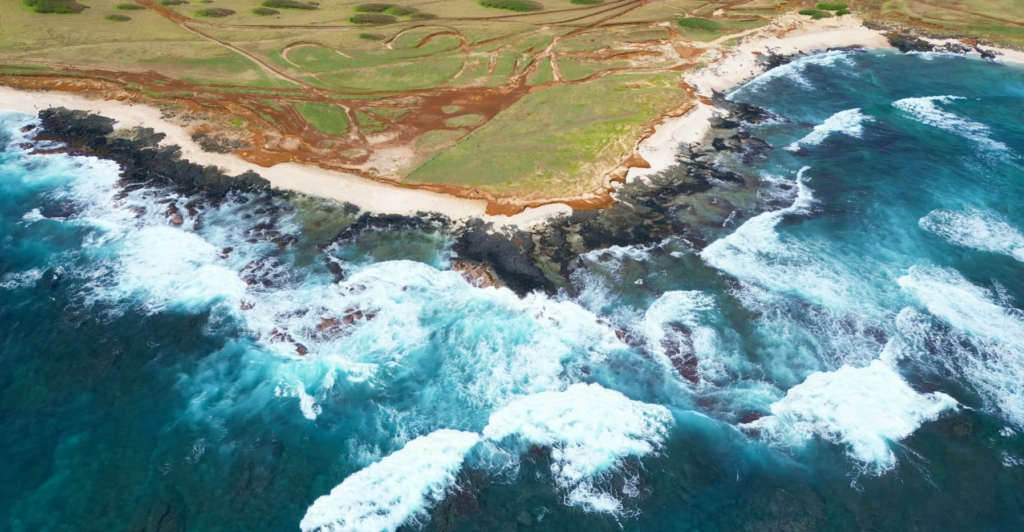
Let’s start with the obvious: Ka Lae is the southernmost point of the United States, extending further south than even Key West, Florida. The actual coordinates are 18.9° N latitude, making this rocky promontory closer to the equator than any other U.S. mainland location.
Standing at the edge, you’re looking out at thousands of miles of open Pacific Ocean with nothing between you and Antarctica except water. It’s a humbling, almost dizzying perspective that makes you appreciate just how remote Hawaii truly is.
Ancient Hawaiian Navigation Hub
But Ka Lae is far more than a geographical curiosity. In Hawaiian, “Ka Lae” simply means “the point,” and for ancient Polynesians, this was one of the most significant locations in all of Hawaii.
Archaeological evidence suggests that Ka Lae may have been one of the earliest Polynesian settlement sites in Hawaii, with some estimates dating habitation back to as early as 750 AD. According to the Smithsonian Institution, this area shows some of the oldest radiocarbon-dated evidence of human presence in the Hawaiian Islands.
Ancient Hawaiian fishermen carved canoe mooring holes directly into the lava rock along the cliffs—holes you can still see today. These hand-drilled depressions, some several feet deep, allowed fishermen to secure their canoes against the powerful currents that sweep past the point. The precision and effort required to create these holes speaks to the importance of fishing grounds here.
Where Spirits Depart
In Hawaiian spiritual belief, Ka Lae South Point holds special significance as leina a ka ‘uhane—a “jumping off place for spirits.” Ancient Hawaiians believed that after death, spirits would travel to Ka Lae and leap from the cliffs into the ocean, beginning their journey to the afterlife in the ancestral homeland of Kahiki (likely referring to Tahiti or the broader South Pacific).
This spiritual dimension adds a layer of reverence to the landscape that visitors should respect. You’re not just at a scenic overlook—you’re standing on sacred ground.
Where is Ka Lae Located? Getting to South Point
Location and Route
Ka Lae Big Island is located in the Ka’u district on the southern coast, approximately:
- 60 miles (2.5-3 hours) southwest of Kailua-Kona
- 65 miles (3+ hours) south of Hilo
- 12 miles off Highway 11 via South Point Road
- GPS Coordinates: 18.914138242968814, -155.6832045091097
- Address: Hawaii 96772, USA
Driving Directions from Kona:
- Take Highway 11 South through the towns of Captain Cook and Naalehu
- Between mile markers 69 and 70, look for South Point Road (also called Kalae Road)
- Turn onto South Point Road—a single-lane paved road
- Drive 12 miles to the end (about 20-25 minutes)
- You’ll reach a parking area at the cliff edge
Road Conditions:
The road to Ka Lae is paved but narrow, with several single-lane sections where you’ll need to pull over if another car approaches. The route passes through open ranch land, and you might encounter wandering cattle. Drive carefully, especially in windy conditions.
According to Hawaii County’s road maintenance department, South Point Road is generally well-maintained, though occasional potholes can develop.
Important: There are no facilities along this 12-mile road—no gas stations, restrooms, or services. Come prepared.
What to See and Do at Ka Lae South Point
The Dramatic Coastal Cliffs
The first thing that strikes you at Ka Lae Hawaii is the sheer power of the landscape. Volcanic cliffs drop 40-50 feet straight down into churning turquoise waters. The coastline here is raw and unprotected—there are no guardrails, no barriers, just ancient lava rock and endless ocean.
The strong currents that flow past Ka Lae are legendary. Ocean water sweeps westward along the coast with incredible force, and you can actually see the current lines in the water from above. This is not a place for casual swimming—the ocean here demands respect.
Photography tip: The cliffs are most dramatic in late afternoon light when the sun illuminates the water’s multiple shades of blue and green.
Cliff Jumping Platform (Watch, Don’t Jump)
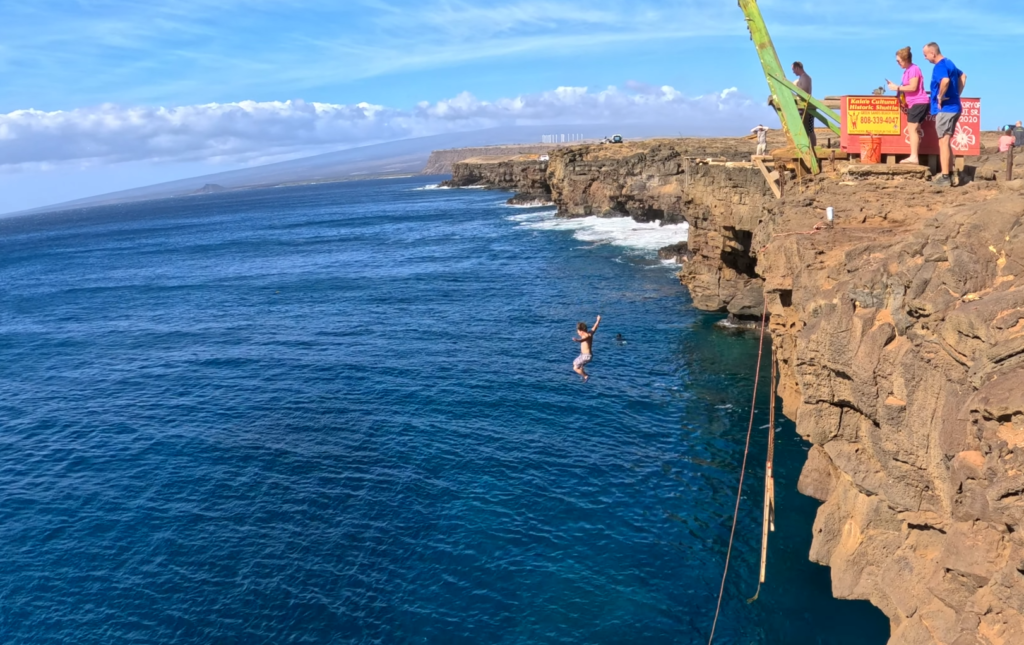
One of the most photographed features at Ka Lae South Point is the cliff jumping platform—a weathered wooden structure extending from the cliff edge where local daredevils leap 40+ feet into the ocean below.
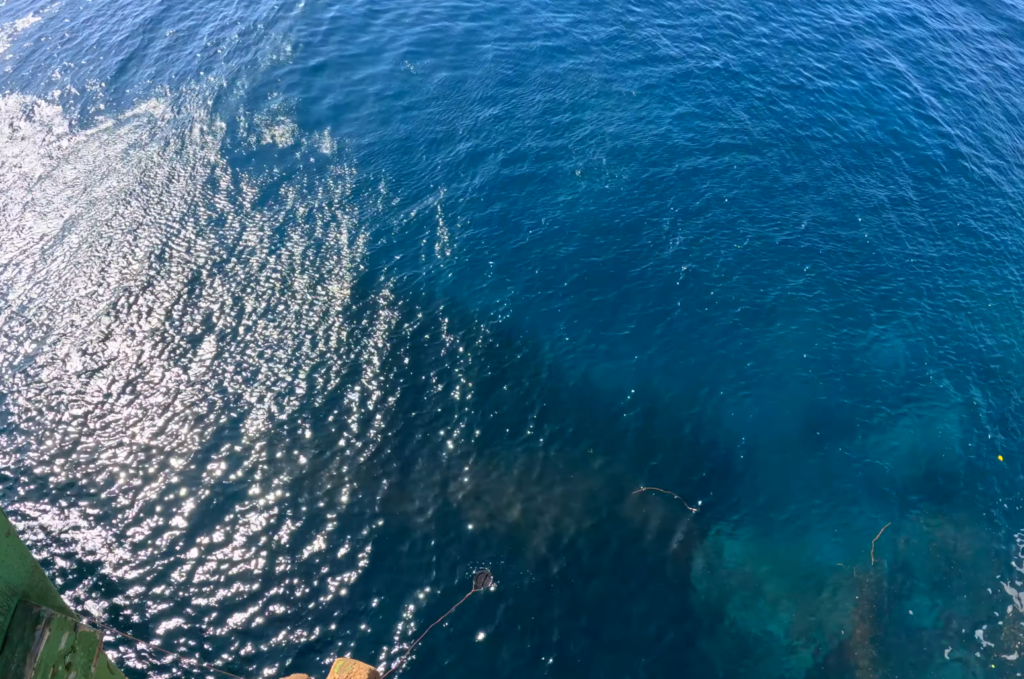
Let me be direct: This is for experienced locals only. Here’s why you should watch, not participate:
- 40+ foot drop into moving water
- Powerful currents immediately sweep jumpers westward
- Getting back up requires climbing a rope ladder while fighting current
- No emergency services nearby—help is 45+ minutes away
- Serious injuries have occurred, including drownings
According to Hawaii Department of Health, several drownings and serious injuries at Ka Lae have been attributed to underestimating the ocean conditions.
Local residents who jump here have done so for years and understand the currents, timing, and technique. As a visitor, enjoy watching from above, but resist the temptation to join in. The risk simply isn’t worth it.
Ancient Canoe Mooring Holes
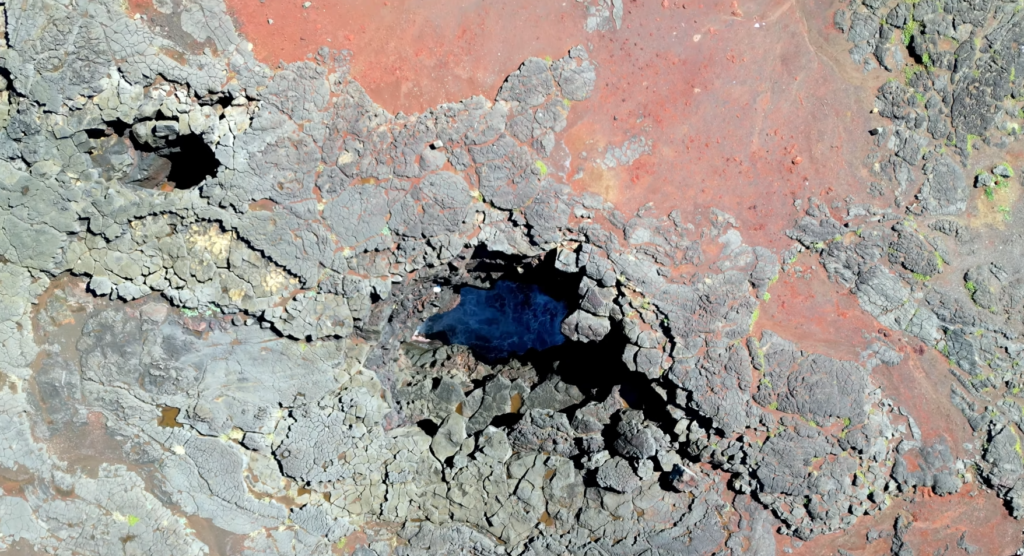
Scattered along the cliff edge, you’ll find dozens of canoe mooring holes carved into the lava rock by ancient Hawaiian fishermen. These hand-drilled holes, some 2-3 feet deep, are remarkable examples of traditional Hawaiian ingenuity.
Fishermen would secure ropes through these holes to anchor their canoes against the strong currents while fishing the productive waters offshore. The effort required to create these holes—using only stone tools and patience—is staggering.
Respectful viewing: These are archaeological sites. Look and photograph, but don’t touch, climb on, or otherwise disturb them. According to Hawaii Historic Preservation, damaging archaeological features can result in significant fines.
Wind Farm and Renewable Energy
As you drive toward Ka Lae, you’ll notice the Pakini Nui Wind Farm—a collection of wind turbines that harness the area’s relentless trade winds. Ka Lae is one of the windiest places in Hawaii, with winds frequently exceeding 20-30 mph.
The wind farm, operated by Tawhiri Power LLC, generates renewable electricity for the Big Island grid. While some find the turbines visually distracting, others appreciate the juxtaposition of ancient and modern Hawaiian resourcefulness—both using the elements (wind and ocean) to sustain life.
The constant wind is something to prepare for: bring a hat with a strap, secure loose items, and be careful near cliff edges where gusts can be surprisingly powerful.
Fishing Platforms and Local Culture
You’ll often see local fishermen at Ka Lae South Point, perched on platforms built over the water or casting from the rocks. Fishing here is both tradition and livelihood, continuing practices that stretch back centuries.
The waters off Ka Lae are exceptionally productive, with deep ocean currents bringing nutrients and fish close to shore. Respect local fishermen by:
- Staying clear of their lines and platforms
- Not walking in front of active fishing spots
- Being quiet and unobtrusive
- Never touching or moving fishing equipment
This is their workspace and cultural practice. A respectful “aloha” and friendly distance go a long way.
Boat Ramp and Harbor
Near the main parking area, you’ll find a small boat ramp where local fishermen launch boats into the ocean. Watching boats navigate the swells and currents here is impressive—it requires skill and experience to time the entry and exit correctly.
The “harbor” is simply a break in the cliffs, not a protected marina. On rough days, launching or retrieving boats can be genuinely dangerous.
Visiting Green Sand Beach from Ka Lae
Your Gateway to Papakōlea Beach
One of the main reasons visitors come to Ka Lae Big Island is to access the famous Green Sand Beach Hawaii (Papakōlea Beach), one of only four green sand beaches in the world. The parking area at South Point serves as the trailhead for the 2.5-mile hike to this unique destination.
The beach gets its distinctive olive-green color from olivine crystals (semi-precious peridot gems) eroded from the surrounding volcanic cinder cone. It’s a geological marvel worth the challenging hike.
From Ka Lae to Green Sand Beach:
- Distance: 2.5 miles (4 km) each way
- Time: 45-60 minutes hiking each way
- Terrain: Exposed coastal road, no shade
- Difficulty: Moderate to challenging due to heat and wind
Essential tips for the hike:
- Start early morning (before 8 AM) to avoid peak heat
- Bring 2-3 liters of water per person
- Wear sturdy hiking shoes, not flip-flops
- Apply sunscreen generously and reapply often
- Pack out all trash—leave no trace
For a complete guide to visiting Green Sand Beach Hawaii, including detailed hiking directions, safety tips, what to expect at the beach, and cultural significance, check out our comprehensive Green Sand Beach guide for all the information you need.
Best Time to Visit Ka Lae Hawaii
Time of Day
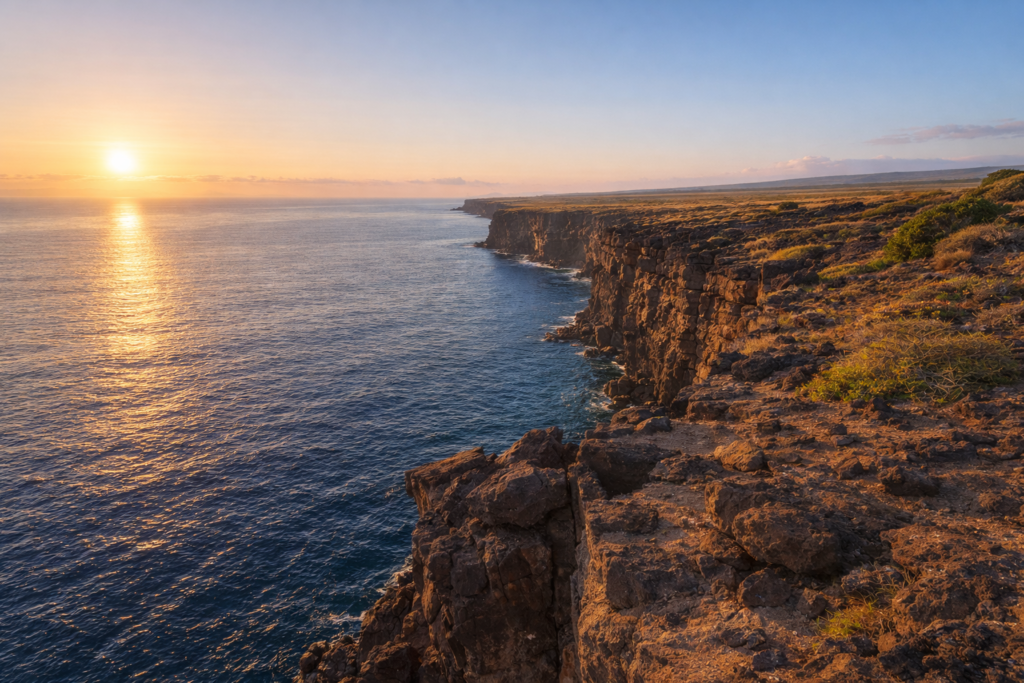
Early Morning (7:00-9:00 AM) ⭐ BEST TIME
- Cooler temperatures before the heat builds
- Softer light for photography
- Fewer visitors
- Calmer winds (relatively speaking)
- Best if you’re hiking to Green Sand Beach afterward
Late Afternoon (3:00-5:00 PM) ⭐ GOOD FOR PHOTOGRAPHY
- Beautiful golden hour lighting
- Dramatic shadows on cliffs
- Spectacular sunset potential
- Winds may intensify
Midday (10:00 AM-2:00 PM) ⚠️ MOST CHALLENGING
- Intense sun exposure
- Highest temperatures
- Strongest winds
- Harsh light for photos
Best Season
Ka Lae South Point is accessible year-round, but conditions vary:
Summer (May-October):
- Calmer ocean conditions
- More consistent weather
- Less rain
- Better for photography
Winter (November-April):
- Bigger ocean swells
- More dramatic wave action
- Occasional rain showers
- More variable conditions
According to the National Weather Service, Ka’u district is one of the drier regions of the Big Island, but winter months see increased rainfall and rougher ocean conditions.
Avoiding Crowds:
Ka Lae is far less crowded than typical tourist attractions, but you can ensure an even quieter visit by:
- Visiting on weekdays (Monday-Thursday)
- Arriving early morning or late afternoon
- Avoiding cruise ship days (when ships dock in Kona)
- Choosing shoulder seasons (April-May, September-October)
What to Bring and Safety Considerations
Essential Items
For Ka Lae Visit:
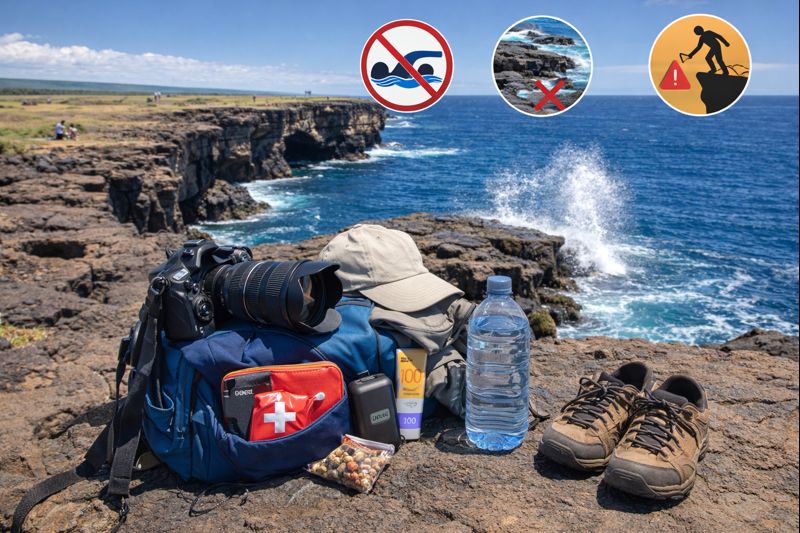
- Water – At least 1 liter, more if hiking to Green Sand Beach
- Sun protection – Sunscreen (SPF 50+), hat, sunglasses
- Sturdy shoes – Lava rock is sharp and uneven
- Light jacket or windbreaker – Wind can be intense
- Camera – Incredible photo opportunities
- Snacks – No food available for 12+ miles
Optional but Helpful:
- Binoculars for whale watching (winter months)
- Portable phone charger (limited cell service)
- First aid kit basics
- Trash bag (pack out everything)
Critical Safety Guidelines
Cliff Safety:
- Stay back from edges – No guardrails, wind gusts are powerful
- Watch children closely – Cliffs are dangerous
- Don’t climb on structures – Fishing platforms are not for tourists
- Never turn your back on the ocean – Rogue waves can sweep cliffs
Ocean Safety:
❌ Don’t swim here – Currents are extremely dangerous
❌ Don’t jump from cliffs – Leave that to experienced locals
❌ Don’t walk on wet rocks – Slippery and hazardous
General Precautions:
- Tell someone your plans and expected return time
- Check weather forecast before driving out
- Start with a full tank of gas
- Bring cell phone but don’t rely on service
- Be prepared to be completely self-sufficient
Cultural Respect and Conservation
Sacred Land and Archaeological Sites
Ka Lae Hawaii is not just a scenic viewpoint—it’s a deeply significant cultural and spiritual site for Native Hawaiians. As visitors, we have a responsibility to treat this place with reverence.
Respectful practices:
- Use the Hawaiian name Ka Lae (not just “South Point”)
- Don’t disturb canoe mooring holes or archaeological features
- Don’t build rock stacks or cairns
- Speak quietly and move respectfully
- Don’t litter—pack out everything
- Stay on established paths
Hawaiian cultural practitioners may visit Ka Lae for spiritual purposes. If you encounter ceremonies or rituals, maintain a respectful distance and don’t photograph without permission.
Leave No Trace Principles
Ka Lae South Point has minimal facilities, which means conservation depends entirely on visitor responsibility:
- Pack out all trash – Including cigarette butts and food wrappers
- Don’t leave offerings – Unless you’re Hawaiian and practicing cultural traditions
- Don’t feed wildlife – Not feral cats, not birds
- Stay on established paths – Don’t create new trails across fragile lava fields
- Don’t take rocks or artifacts – Leave everything as you found it
According to Hawaii Department of Land and Natural Resources, removing natural or cultural resources is illegal and can result in fines up to $25,000.
Photography Tips for Ka Lae Big Island
Best Shots to Capture
The Cliff Edge Panorama:
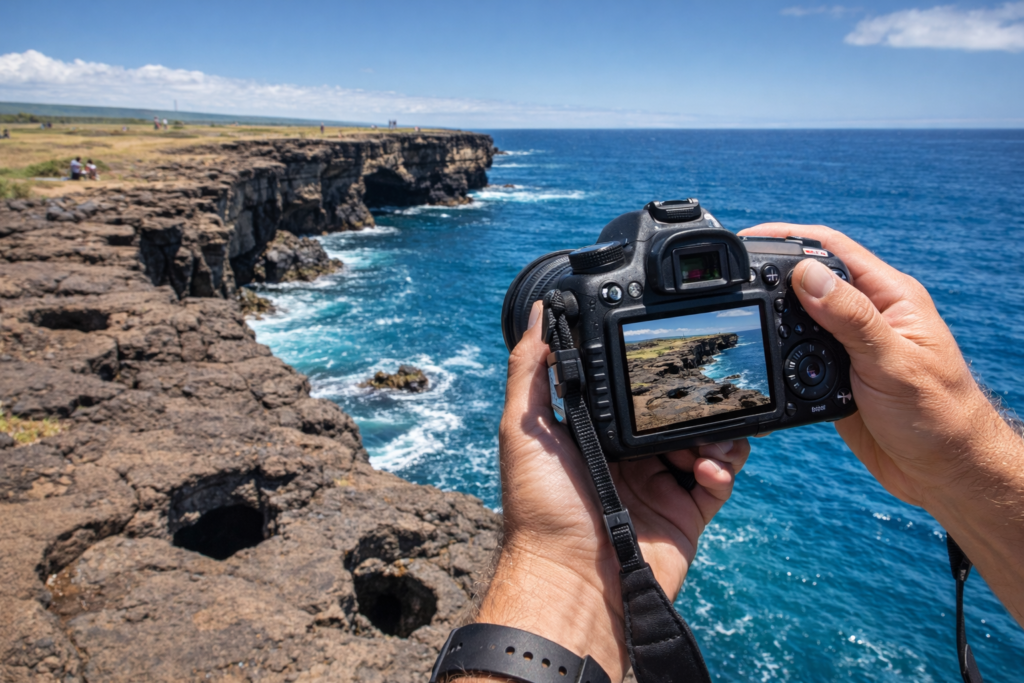
- Wide-angle shot showing the dramatic cliff line and ocean
- Best in late afternoon with side lighting
- Include wind turbines for context
- Use a polarizing filter to enhance water colors
Canoe Mooring Holes:
- Close-up detail shots showing the carved depressions
- Tell the story of ancient Hawaiian ingenuity
- Best with directional light to show depth and texture
Cliff Jumping Platform:
- Capture the rickety ladder and platform structure
- Include the massive drop to the ocean below
- If locals are jumping, photograph respectfully from a distance
Ocean and Currents:
- Long exposure to show water movement
- Capture the visible current lines in the water
- Emphasize the power and color variations
Wind Farm:
- Wide landscape including turbines and coastline
- Silhouettes at sunset
- Motion blur of spinning blades
Photography Considerations
Wind Management:
The persistent wind at Ka Lae creates challenges:
- Use a sturdy tripod or brace against rocks
- Protect your camera from blowing dust
- Keep lens caps secured
- Watch for flying debris
Safety While Shooting:
- Never get so focused on a shot that you forget cliff safety
- Don’t lean over edges for better angles
- Watch your footing on uneven lava rock
- Secure all equipment—the wind can grab loose items
Nearby Attractions and Day Trip Planning
Green Sand Beach (Papakōlea) – 2.5 Miles
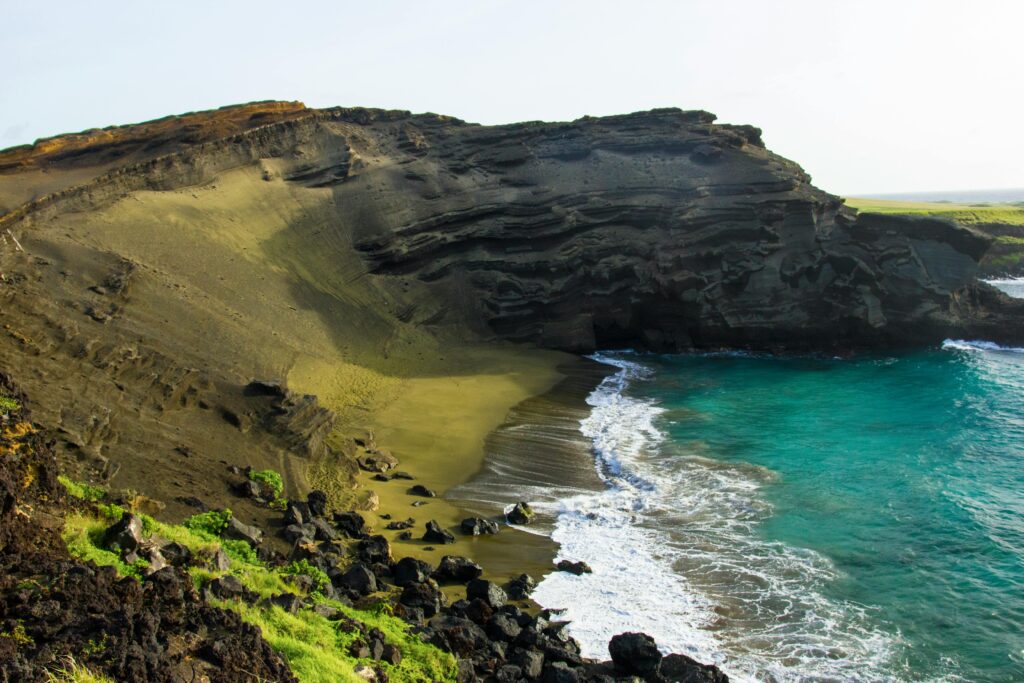
As mentioned earlier, Ka Lae serves as the starting point for the hike to Green Sand Beach Hawaii. This is the main attraction for most visitors who make the journey to South Point.
- Time needed: 3-4 hours total (hiking and beach time)
For complete details on visiting Green Sand Beach, including step-by-step hiking directions, what to bring, swimming safety, and cultural significance, see our full Green Sand Beach guide.
Punalu’u Black Sand Beach – 25 Miles North
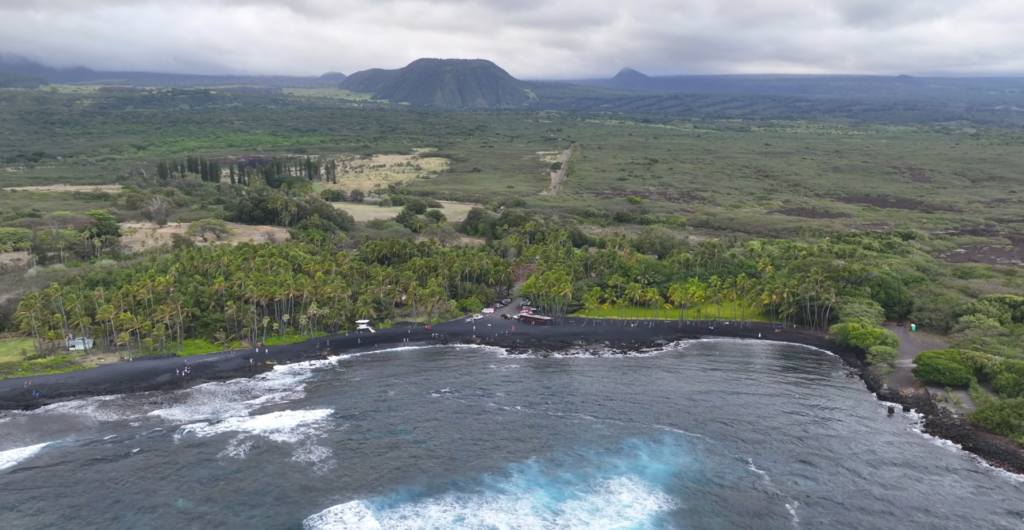
Create a “colorful beaches” day by combining Ka Lae with Punalu’u Black Sand Beach, where jet-black volcanic sand meets turquoise water and Hawaiian green sea turtles (honu) frequently rest on shore.
- Distance: 25 miles (40 minutes north on Highway 11)
- Time needed: 1-2 hours
- Facilities: Restrooms, picnic areas, easier access
Remember: Federal law requires maintaining a 10-foot distance from sea turtles.
Naalehu Town – 12 Miles North
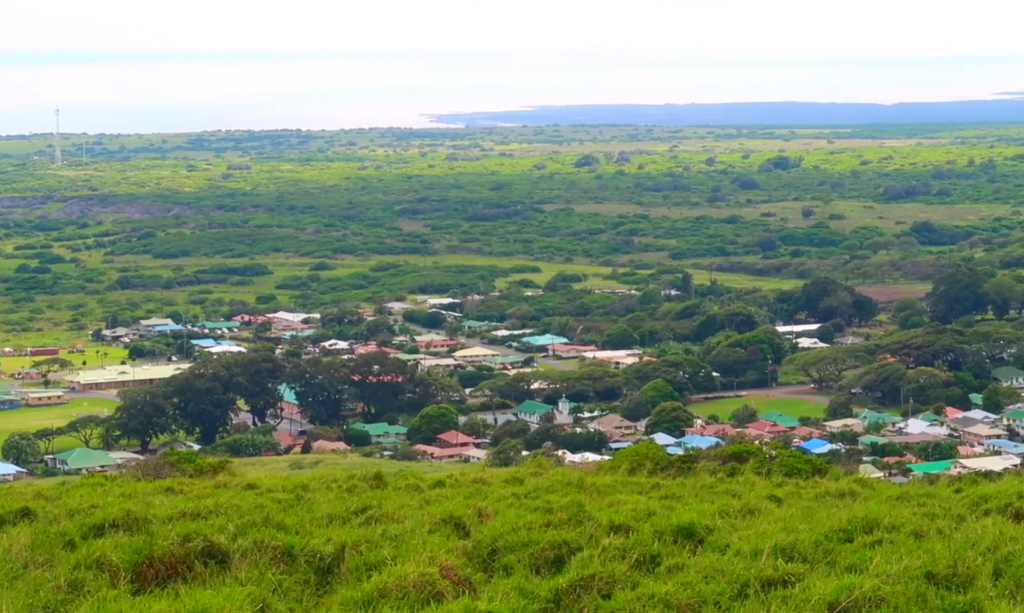
The small town of Naalehu is the closest community to Ka Lae Big Island and offers:
- Gas stations – Last fuel before South Point
- Restaurants – Hana Hou Restaurant (famous for their malasadas)
- Supplies – Small grocery store
- Restrooms – Public facilities
Pro tip: Stop in Naalehu before driving to Ka Lae. Use restrooms, get snacks and water, and fuel up. There’s nothing available once you turn onto South Point Road.
Sample Day Itinerary
The Perfect Ka Lae & Green Sand Beach Day:
- 7:00 AM – Depart Kona, stop for breakfast/supplies
- 9:00 AM – Stop in Naalehu (gas, restrooms, snacks)
- 9:30 AM – Arrive at Ka Lae parking area
- 9:45 AM – Explore Ka Lae cliffs, mooring holes, views (45 min)
- 10:30 AM – Begin hike to Green Sand Beach
- 11:15 AM – Arrive at Green Sand Beach, explore, swim, photograph
- 1:00 PM – Hike back to parking area
- 2:00 PM – Drive to Punalu’u Black Sand Beach (packed lunch)
- 2:45 PM – Explore black sand beach, watch sea turtles
- 4:00 PM – Return drive to Kona with stops at scenic overlooks
- 6:30 PM – Arrive back in Kona
Conclusion: Experience the Edge of America
Ka Lae—whether you know it as South Point, the southernmost point in the United States, or simply as the gateway to Green Sand Beach Hawaii—offers something increasingly rare in our modern world: an authentic, unfiltered encounter with natural power and cultural depth.
Standing at these windswept cliffs, you’re not just checking off a geographical superlative. You’re standing where ancient Hawaiian navigators once stood, where spirits were believed to leap toward the afterlife, where the Pacific Ocean demonstrates its raw, unstoppable force against volcanic rock that’s been here for millennia.
Ka Lae Big Island doesn’t cater to tourists with sanitized experiences and gift shops. Instead, it demands something from you: respect, preparation, and a willingness to experience Hawaii on its own terms. The wind will mess up your hair. The sun will test your sunscreen. The currents will remind you that nature doesn’t compromise.
But in return, you’ll get something invaluable: a genuine connection to a place that matters—geologically, culturally, spiritually.
Whether you’re here as a stepping stone to the rare Green Sand Beach, or simply to stand at the southern edge of America and contemplate the vast Pacific, Ka Lae Hawaii will stay with you long after you’ve left.