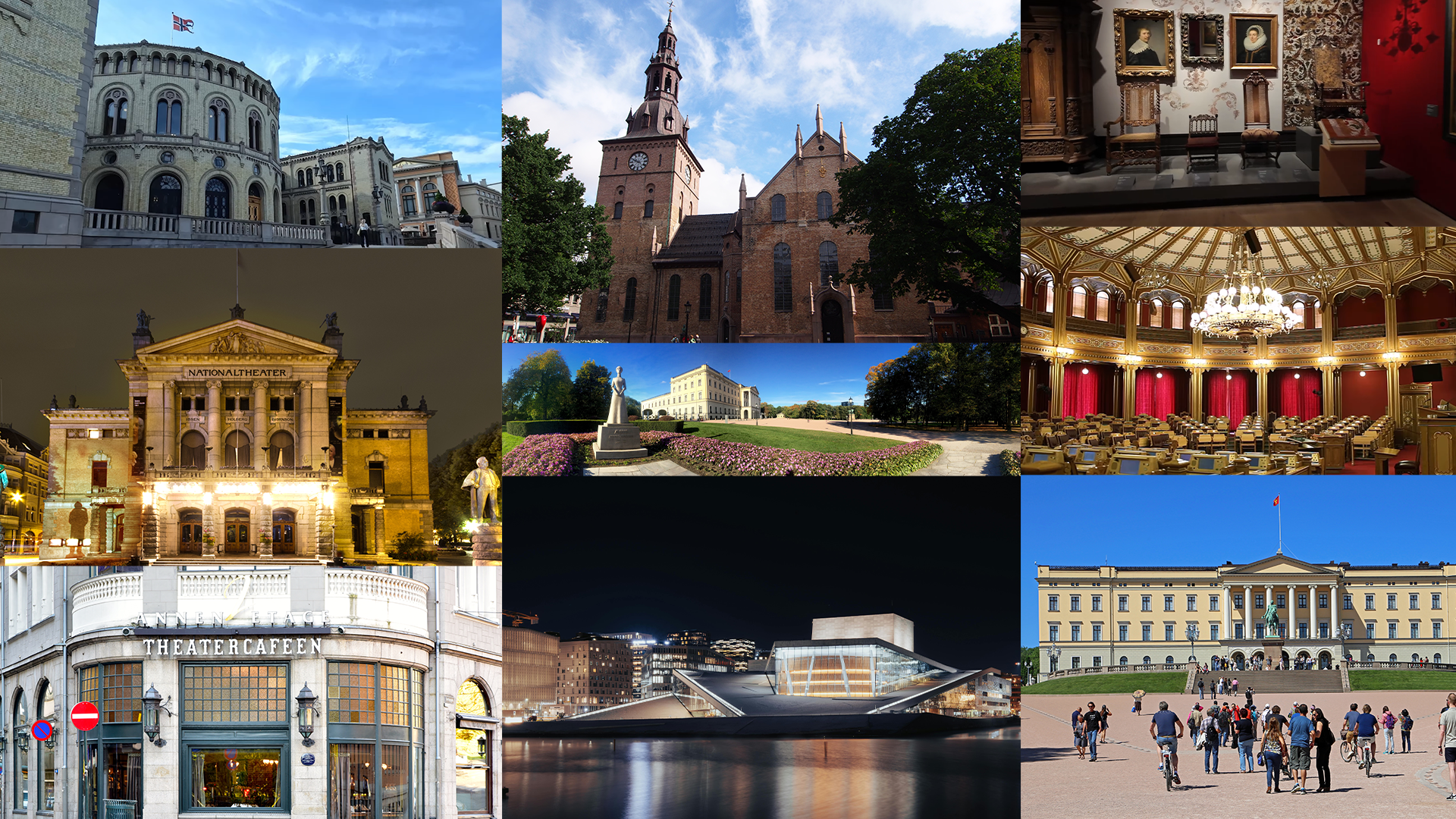
I’ll be honest with you—when I first heard about Karl Johans gate, Oslo, Norway, I thought it was just another European shopping street. Boy, was I wrong. During my August 2025 visit to Oslo, Norway’s largest and most vibrant city, I spent three days exploring this legendary boulevard, and it completely changed how I see Norway’s capital. This isn’t just a street where you buy souvenirs and grab coffee. It’s where Norwegian history happened, where Oslo’s heart beats loudest, and where you’ll actually understand what makes this Scandinavian nation so special.
Karl Johans gate stretches nearly one kilometer through central Oslo, connecting the majestic Royal Palace on one end to Oslo Central Station on the other. Named after King Karl Johan who ruled Norway from 1818 to 1844, this tree-lined boulevard has been Norway’s main stage for over 170 years. Today, it’s where 700,000 Oslo residents and millions of tourists intersect daily—and trust me, there’s magic in that collision.
What struck me most wasn’t the grand buildings or expensive shops (though both are impressive). It was watching a street musician play Edvard Grieg outside the National Theatre at sunset, while locals sat on park benches eating ice cream, completely unbothered by the tourists photographing everything around them. That’s karl johans gate oslo in a nutshell—historic, beautiful, and refreshingly real.
This guide shares everything I discovered during my time there, including the spots locals actually care about, the tourist traps to avoid, and why this street deserves at least half a day of your Oslo adventure.
Table of Contents
Why This Street Matters: More Than Just History
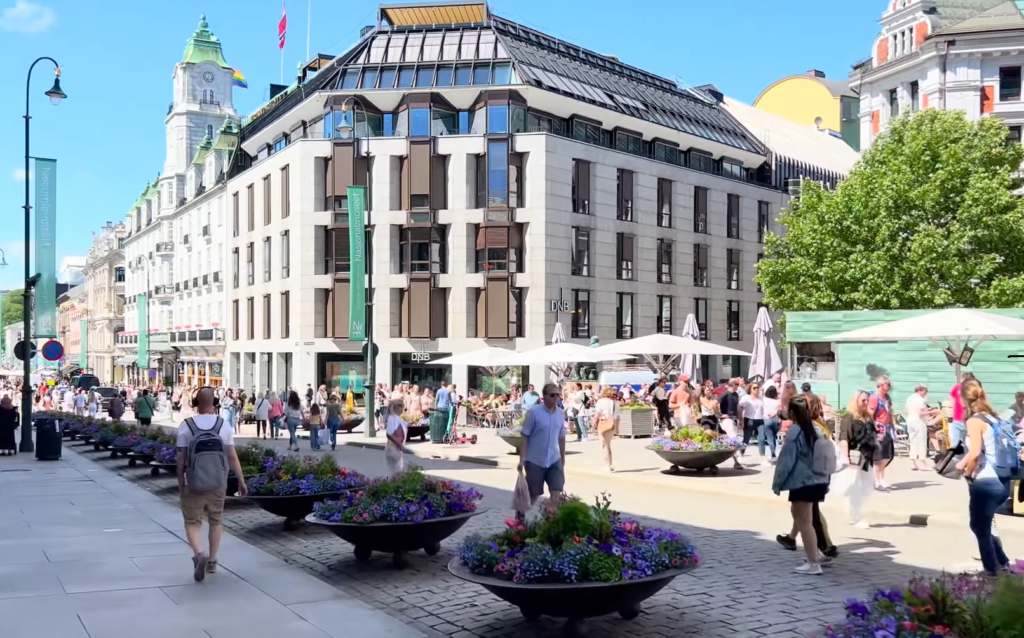
Here’s something most guidebooks won’t tell you: Karl Johans gate is essentially Norway’s living room. Every major moment in modern Norwegian history played out on this street. Independence from Sweden in 1905? Celebrated here. Liberation from Nazi occupation in 1945? Hundreds of thousands gathered here. The annual May 17th National Day parade that Norwegians obsess over? It marches straight down this boulevard toward the Royal Palace.
The street takes its name from King Karl XIV Johan, who was actually born Jean Bernadotte in France and served as one of Napoleon’s marshals before somehow ending up as King of Sweden and Norway. That wild backstory alone tells you something about Norwegian history—it’s never quite what you expect.
Originally called Øvre Slotsgade (Upper Palace Street), it was renamed in 1852 to honor the king who transformed Oslo from a provincial town into a real capital city. In the 1840s, architect Hans Linstow—the same guy who designed the Royal Palace—created an ambitious plan to build a boulevard that could rival Copenhagen and Stockholm. And it worked.
Between 1840 and 1900, karl johans gate norway became lined with neoclassical buildings housing Norway’s most important institutions. The University of Oslo, the National Theatre, the Grand Hotel—they all chose this address, and that wasn’t accidental. Being on Karl Johans gate meant you mattered.
I met a local historian named Bjørn at a café who put it perfectly: “You cannot understand Norway without understanding this street. It’s where we celebrate, where we protest, where we become Norwegian together.” After walking it multiple times, I get what he meant. The street isn’t just scenery—it’s woven into Norwegian identity.
The Complete Walk: What to See From Palace to Station
Karl Johans gate naturally divides into three sections, each with distinct character. Understanding these helps you plan your visit and not miss the good stuff hidden between the obvious landmarks.
Upper Section: The Royal Quarter
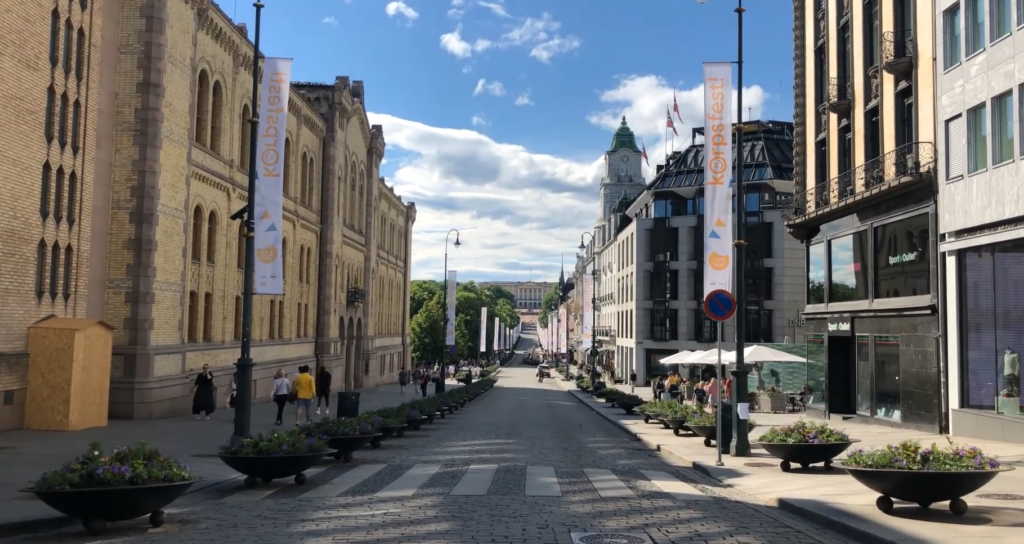
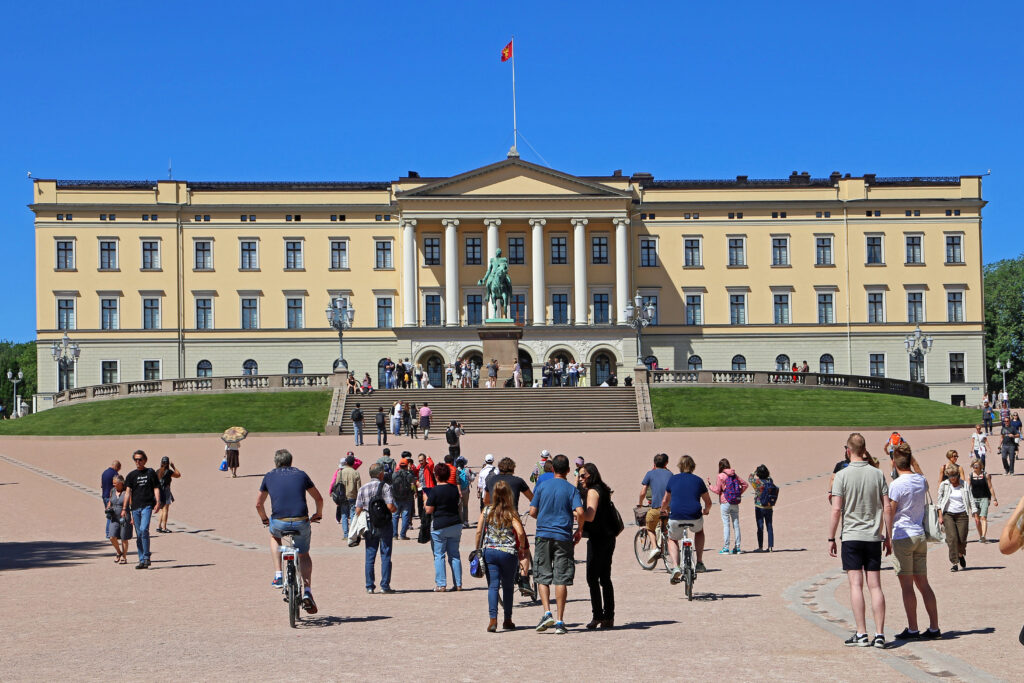
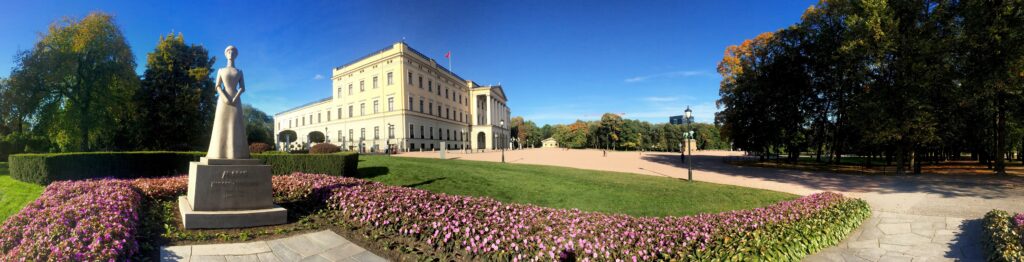
Starting at the Royal Palace, you’re surrounded by parkland and elegance. This section feels spacious and calm compared to the bustling lower street. The palace itself, built between 1825-1849, sits at the end like a yellow exclamation point. If you’re there at 1:30 PM, catch the changing of the guard—it’s less touristy than you’d think, and actually quite moving.
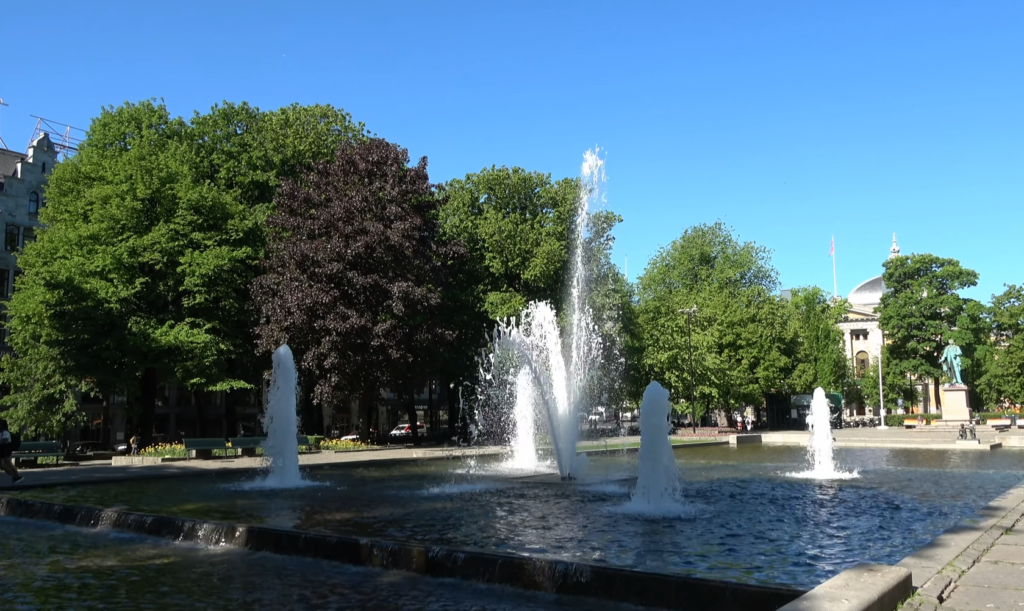
Studenterlunden park runs parallel here, and I spent a wonderful afternoon watching university students study under trees while Older couples fed birds. This is where you see local Oslo being quietly itself. The benches are perfect for people-watching or just decompressing from travel.
One hidden gem: the small plaza in front of the palace has a statue of Queen Maud. Most tourists rush past it toward the palace, but it’s worth a moment—she was a British princess who became Norway’s queen in 1905 when Norway gained independence.
Middle Section: The Cultural Heart
This is where karl johans gate oslo norway explodes with energy. Partially pedestrianized, this section houses the heavy hitters: Parliament (Stortinget), the National Theatre, and the University of Oslo’s historic buildings.
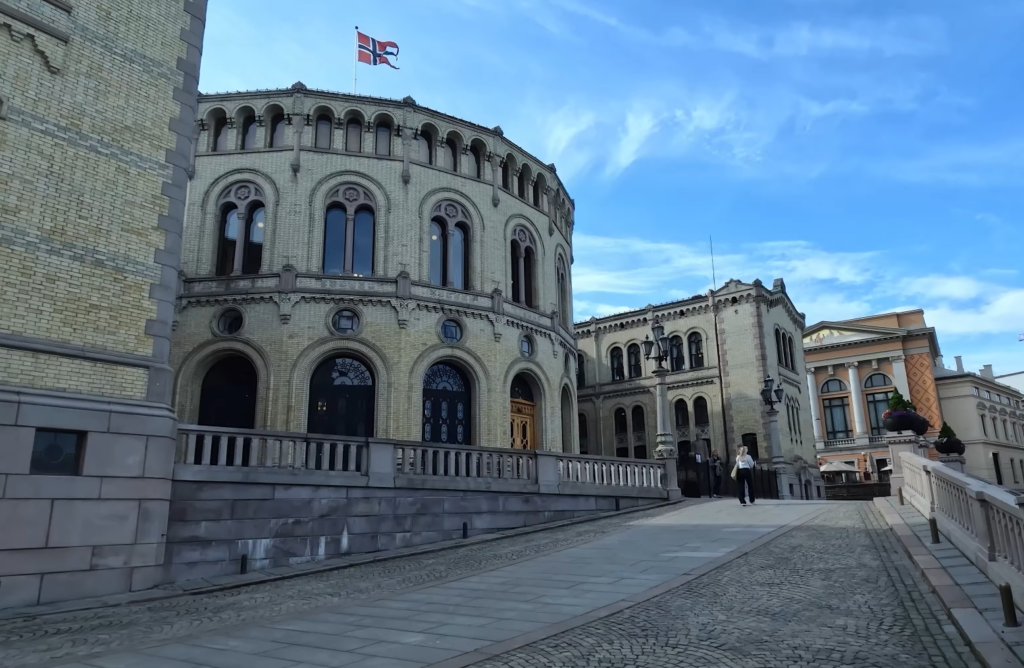
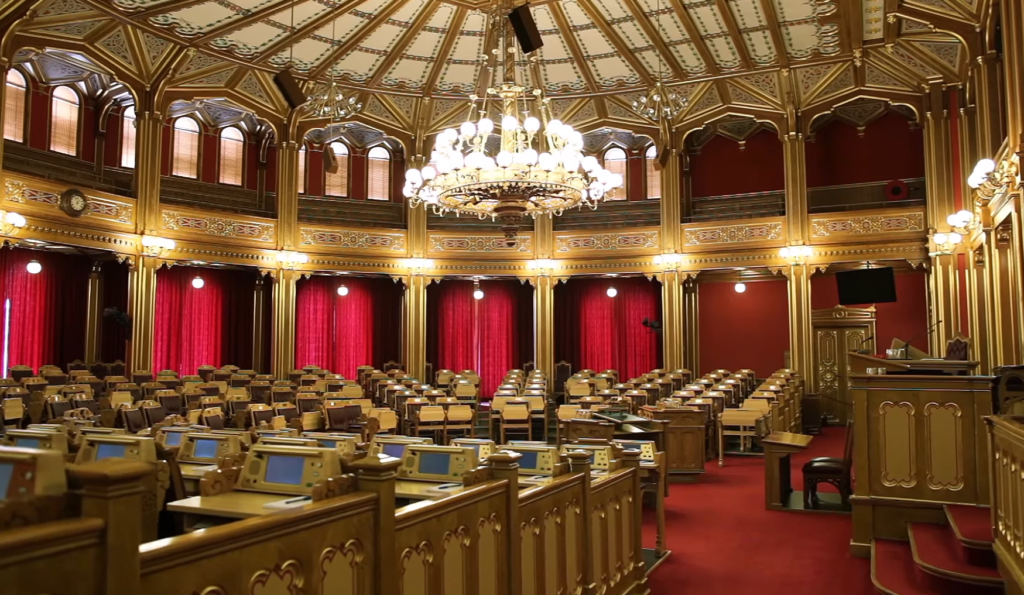
The Parliament building isn’t just impressive architecture (though it is—that red brick and granite combination is striking). It symbolizes Norwegian democracy. You can actually tour inside if you book ahead through the official Stortinget website, and seeing where laws are debated gives you perspective on how seriously Norwegians take transparency in government.
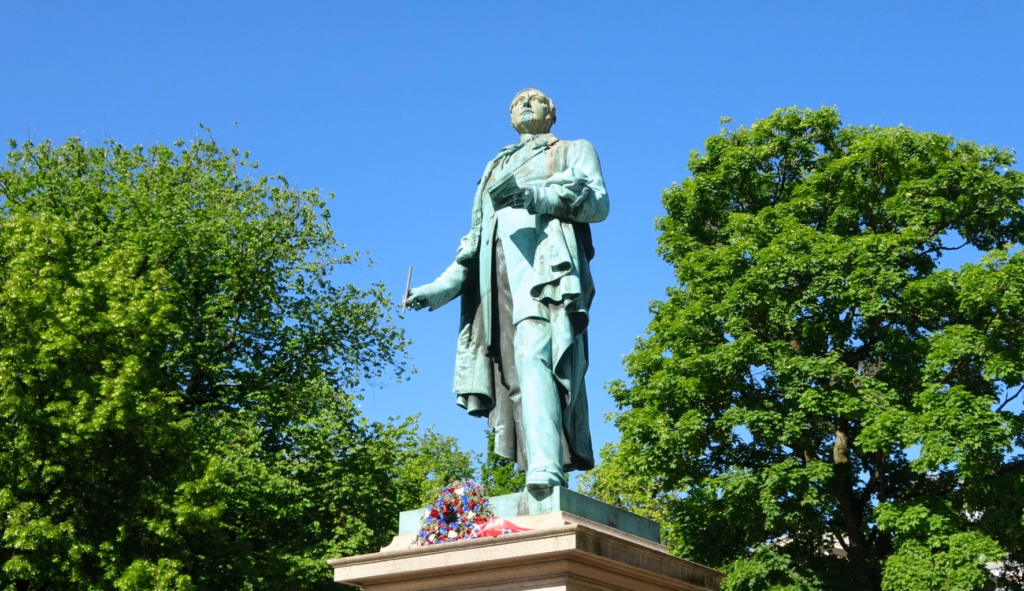
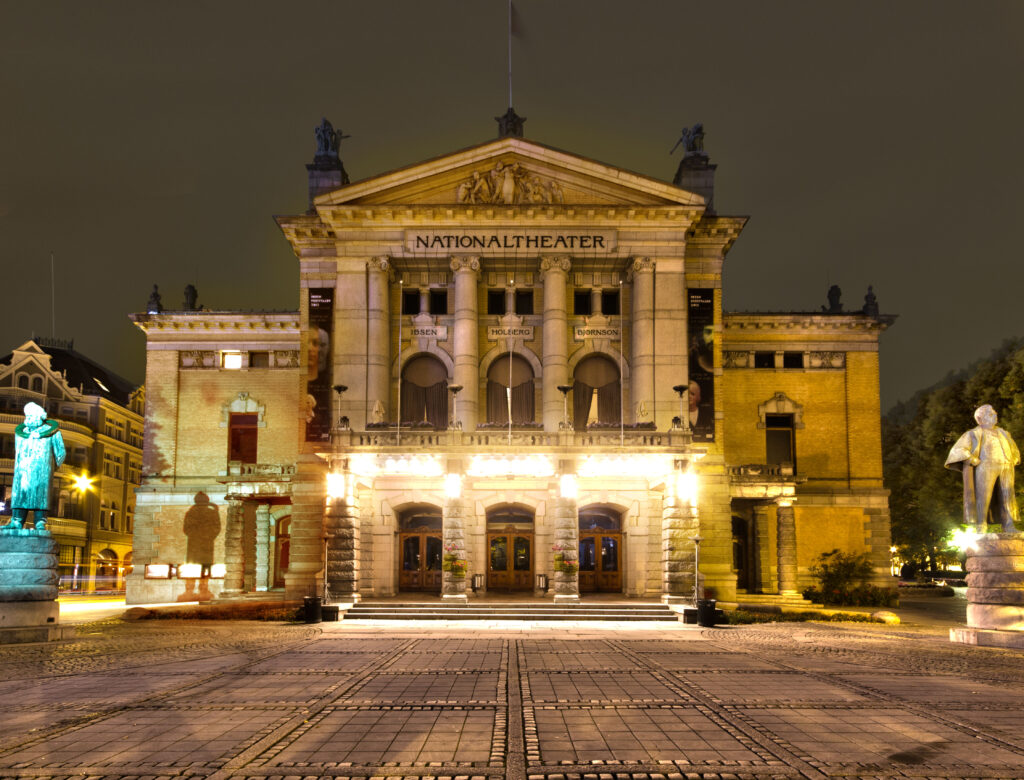
The National Theatre, opened in 1899, has statues of Henrik Ibsen and Bjørnstjerne Bjørnson flanking the entrance—Norway’s two literary giants staring down the street. Even if you don’t catch a show, the Art Nouveau interior is worth peeking into during the day.
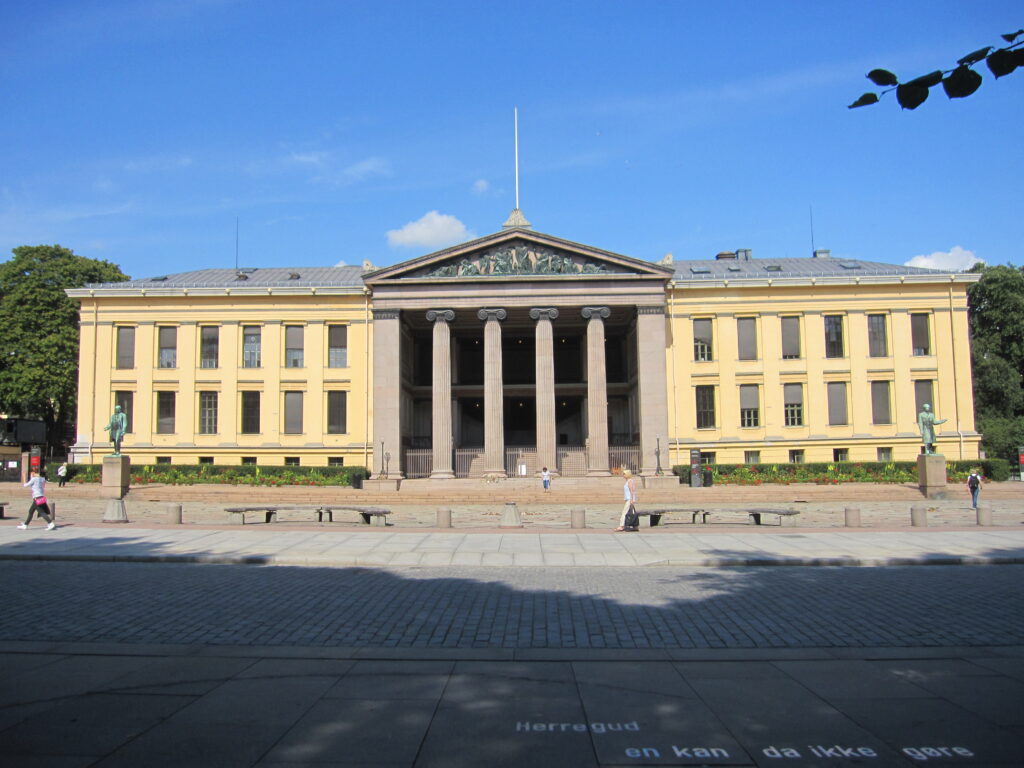
University Square opens onto the street here, creating a natural gathering space. During my visit, this section buzzed with life—outdoor cafés packed with people, street musicians performing, the energy infectious. This is karl johans gate oslo showing off.
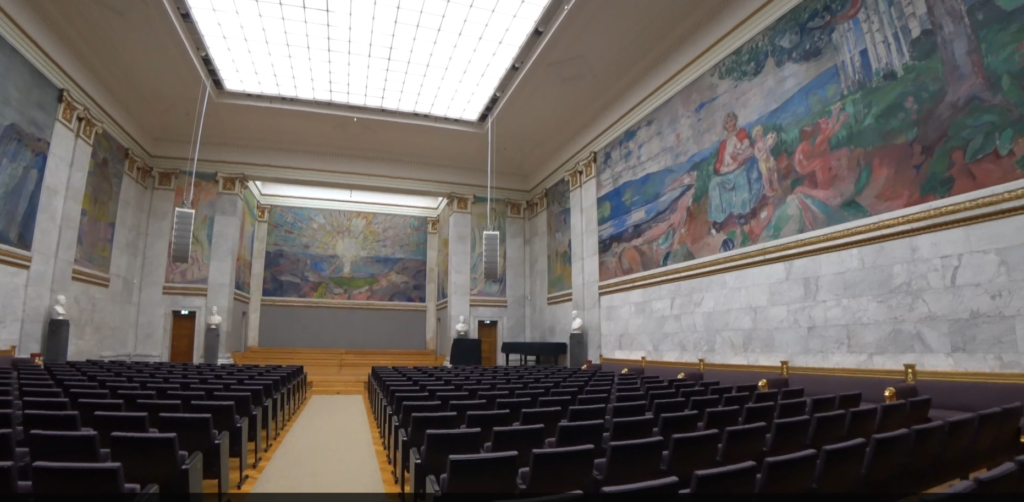
Pro tip: The Aula (University Great Hall) contains Edvard Munch murals that are criminally underrated. They’re open to visitors in summer and occasionally year-round. Standing beneath Munch’s “The Sun” mural is more powerful than seeing “The Scream” in a crowded museum—fight me on this.
Lower Section: Commercial Energy
The lower section is fully pedestrianized and transforms into pure urban buzz. This is Oslo’s premier shopping district, and foot traffic here can be intense.
International chains dominate—H&M, Zara, Cubus (Norwegian affordable fashion), and dozens more. But between the chains, Norwegian specialty shops sell everything from traditional sweaters to modern Scandinavian design.
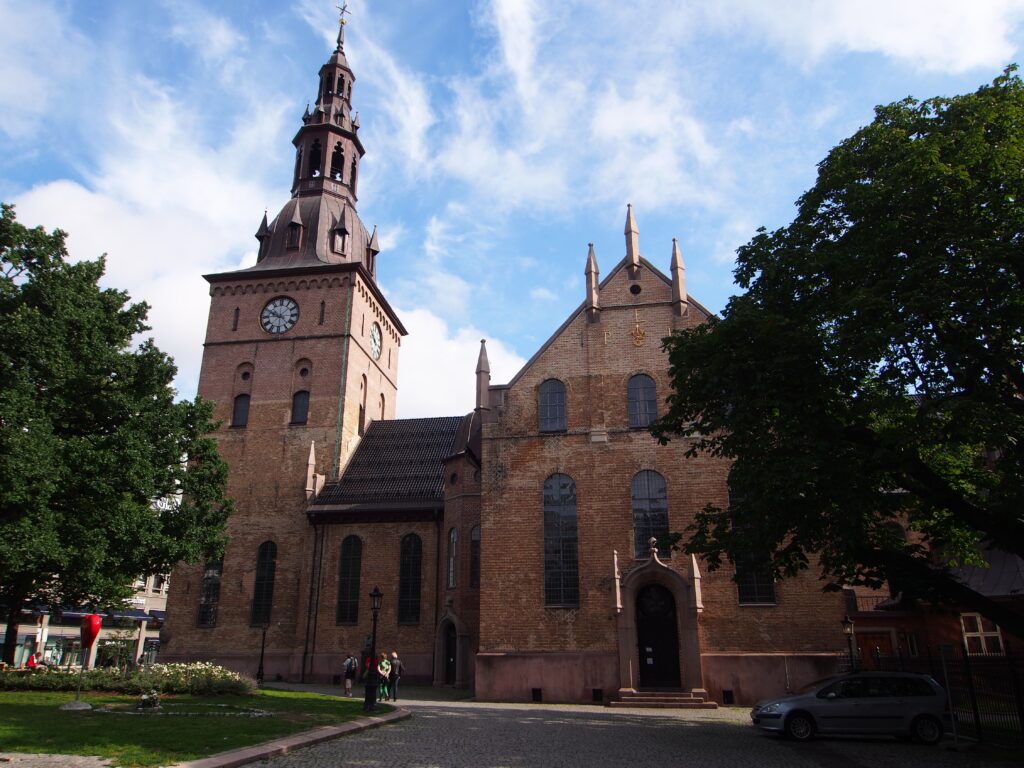
Oslo Cathedral, built in 1697, provides a serene counterpoint to the commercial chaos. Step inside for 15 minutes—the baroque interior, especially the ornate altar, offers a breather from the sensory overload outside.
The street ends at Oslo Central Station, Norway’s busiest transport hub. The modern glass-and-steel building replaced the old station in 1980 and serves as most visitors’ first Oslo impression.
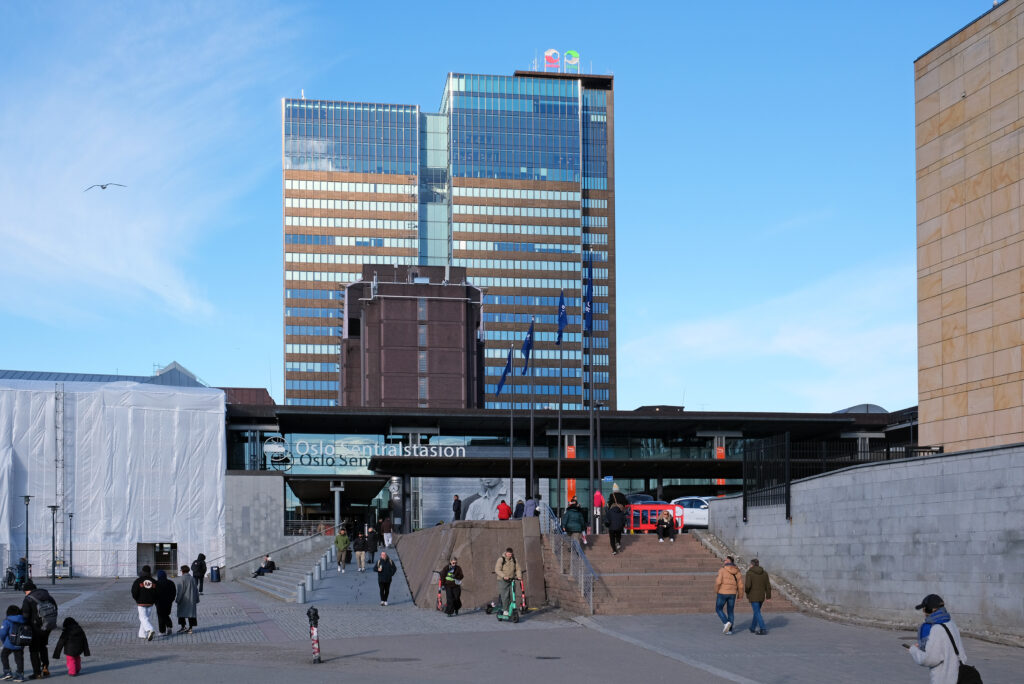
I walked the entire length multiple times, and each section rewarded different moods. Morning in the upper section felt contemplative. Midday in the middle section felt culturally alive. Evening in the lower section felt cosmopolitan and energetic. Give yourself time for all three.
Architecture That Tells Norway’s Story
The buildings along Karl Johans gate aren’t just pretty—they’re a visual history lesson in Norwegian ambition and identity.
The Grand Hotel: Where Ibsen Ate Lunch Every Day
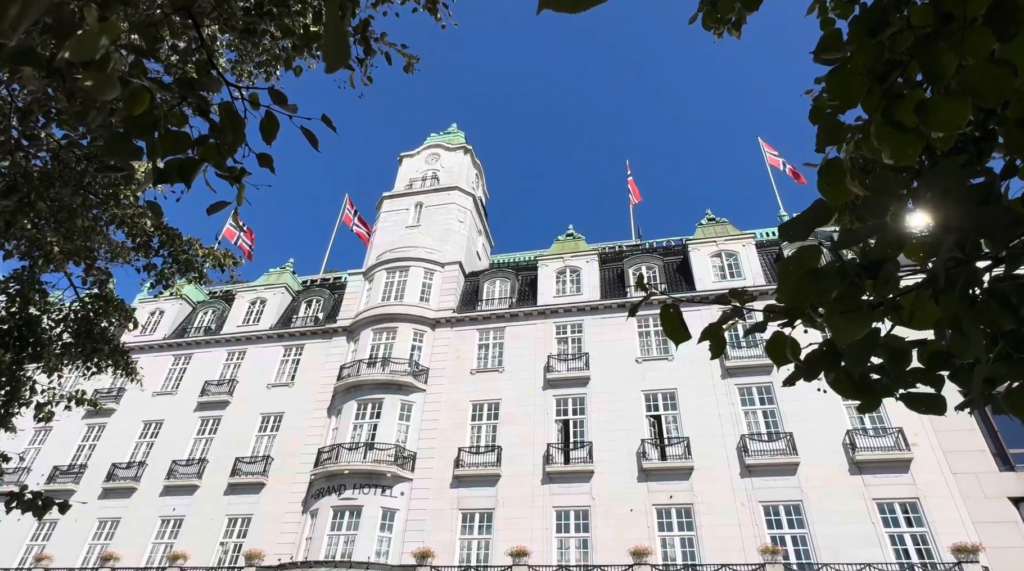
The Grand Hotel, opened in 1874, is more than accommodation—it’s a Norwegian institution. Henrik Ibsen ate lunch here daily at the same table (now preserved behind glass in the Grand Café). Every Nobel Peace Prize laureate stays here and waves to crowds from the balcony. That’s not tourism—that’s tradition.
The neo-renaissance facade screams 19th-century European ambition. Even if you’re not dropping $400+ per night on a room, grab coffee at the Grand Café. The interior—crystal chandeliers, high ceilings, period furniture—transports you to the golden age of grand hotels. I spent an hour there just absorbing atmosphere, and it was worth every kroner.
The Parliament Building: Democracy Made Visible
Stortinget (the Parliament) combines Norwegian rose granite with brick in a style that was distinctly Scandinavian in 1866. The circular central hall topped with a glass dome literally symbolizes transparency—a core Norwegian value.
I took a guided tour (free but book weeks ahead), and our guide Kari explained how the building’s layout reflects Norway’s political system. The debate chamber sits at the heart, accessible to public galleries—democratic transparency made architectural. After the tour, watching politicians arrive for work felt different. This wasn’t just a building—it was democracy functioning.
University Buildings: Academic Elegance
The University of Oslo’s yellow neoclassical buildings dominate University Square. The main building, Domus Media, has proportions that just feel right—like someone calculated beauty and got it perfect.
Don’t miss the Aula. Edvard Munch’s murals here, especially “The Sun,” rank among his finest work. Unlike in museums, these aren’t behind glass or roped off—they’re integrated into the space. Munch intended them for this room, and experiencing them here feels authentic in a way museum visits can’t match.
The Details Most Tourists Miss
After the second day, I stopped looking at storefronts and started looking up. The 19th-century buildings along karl johans gate norway have incredible details: cast-iron balconies with intricate patterns, sculptural decorations around windows, varying rooflines creating visual rhythm, original storefronts preserved beneath modern signage.
I spent an entire afternoon just photographing architectural details. The ornamental work demonstrates craftsmanship that built Oslo—and reminds you that before mass production, people cared deeply about beauty in everyday spaces.
Shopping Smart: Norwegian Treasures vs Tourist Traps
Karl Johans gate oslo offers shopping ranging from genuinely special to aggressively mediocre. Here’s how to tell the difference:
Worth Your Money
- Dale of Norway (near University Square) sells authentic Norwegian wool sweaters. These aren’t souvenirs—they’re Norwegian-made, traditional patterns, built to last decades. I bought a classic Setesdal pattern sweater for 3,200 NOK ($290), and the staff explained the regional history behind each design. Expensive? Yes. Worth it? Absolutely.
- Norway Designs specializes in Norwegian handicrafts, glasswork, and home goods. This is where you find gifts that actually came from Norway, not generic “Oslo” items manufactured in China. Prices are high but fair for quality.
- Heimen Husflid (just off Karl Johans gate) sells traditional Norwegian crafts including bunad (traditional costumes) and hand-knitted items. This cooperative, established in 1891, represents authentic Norwegian craft tradition. Even if you don’t buy anything, browsing teaches you about Norwegian textile heritage.
- Norli Libris bookstores have excellent English sections with books about Norwegian history, culture, and nature. I picked up several books that deepened my understanding of Norway far more than any museum visit.
Skip These
International fashion chains (H&M, Zara) cost 20-40% more than in the UK or US due to Norway’s high cost structure. Unless you desperately need something, buy these brands at home.
Generic “Viking” souvenir shops selling troll figurines and plastic horned helmets—most products are manufactured in Asia. If you want Norwegian souvenirs, go to the shops mentioned above or Glasmagasinet department store.
Shopping Reality Check
Norway is expensive. That’s not negotiable. A Dale of Norway sweater costs $290. A nice Norwegian design item costs $80-200. Coffee costs $5. Accept this early, budget accordingly, and focus on Norwegian-made items that justify the premium. Buying mass-market stuff you can get anywhere doesn’t make sense at Norwegian prices.
Tax-free shopping helps—keep receipts and use Tax Free service at the airport to reclaim 25% VAT on purchases over 315 NOK.
Where to Actually Eat Well
Eating on Karl Johans gate requires strategy. Tourist traps are abundant, good value is scarce, but genuinely excellent options exist if you know where to look.
Worth the Splurge
Grand Café (inside the Grand Hotel) where Ibsen ate daily. Yes, it’s expensive (200-350 NOK/$18-32 per dish), but the historical atmosphere and solid Norwegian-French cuisine justify one visit. My open-faced shrimp sandwich—piled absurdly high with fresh North Sea shrimp—was genuinely excellent.
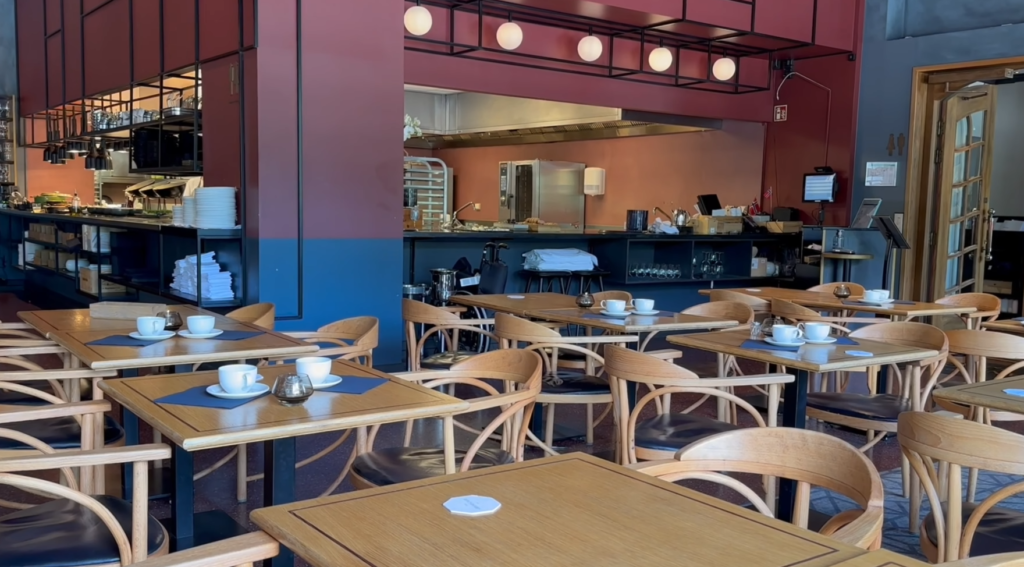
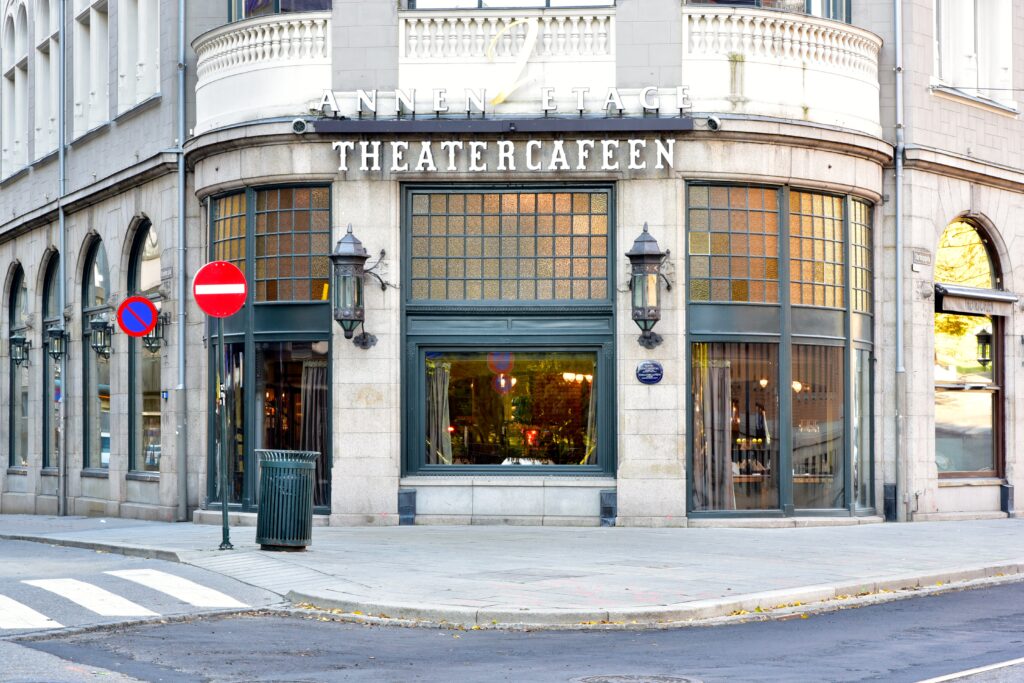
Theatercaféen (attached to the National Theatre) offers Vienna-style café culture in Art Nouveau splendor. Traditional dishes like fårikål (lamb and cabbage stew) done well. Main courses run 300-450 NOK ($27-41), but the experience—not just the food—makes it worthwhile.
Solid Everyday Options
Kaffebrenneriet and Espresso House (Norwegian chains) serve excellent coffee and pastries. Cappuccino costs about 50 NOK ($4.50), but quality matches any specialty coffee shop. Norwegians take coffee seriously—these aren’t just caffeine dispensaries.
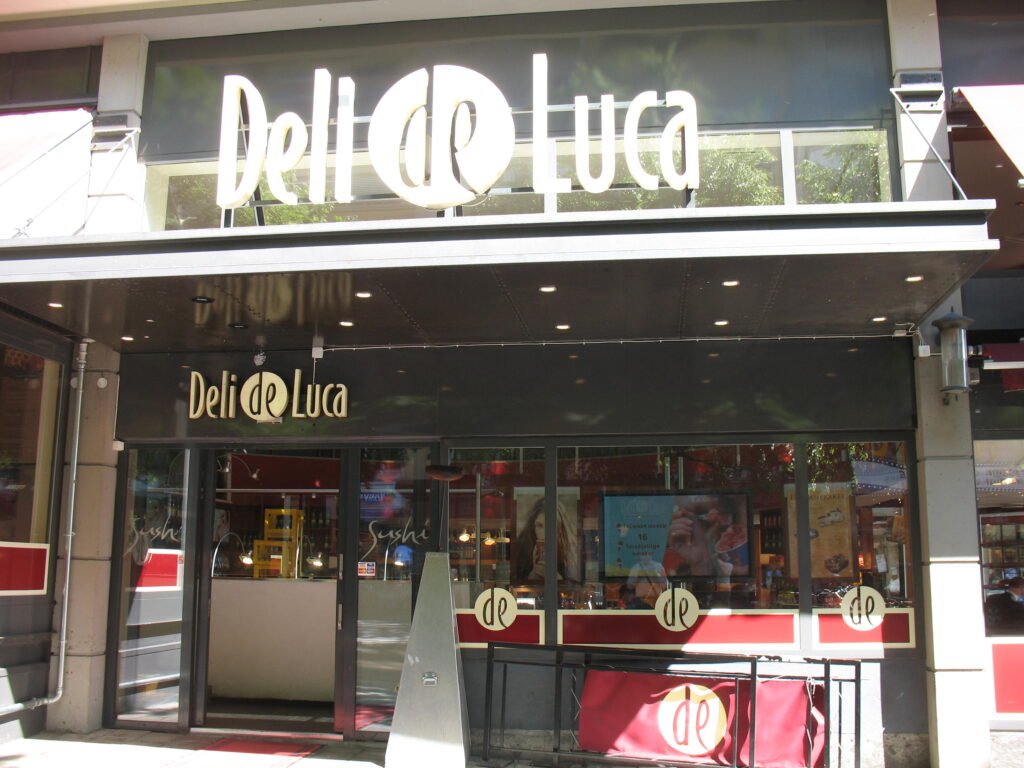
Deli de Luca offers decent sandwiches, salads, and coffee at reasonable prices (80-150 NOK/$7-14). They’re open late, which is rare in early-closing Oslo.
Peppes Pizza delivers reliable pizza in a country where good pizza is surprisingly hard to find. Large pizza costs 250-350 NOK ($23-32)—expensive by international standards but reasonable for Norway.
What to Avoid
Restaurants with multilingual menus, photos of food, and aggressive outdoor promoters generally offer mediocre food at inflated prices. I learned this the hard way—a bland “Norwegian salmon” dinner for 350 NOK that tasted nothing like the excellent salmon I had elsewhere.
Money-Saving Strategy
Lunch specials (11:30 AM-3:00 PM) offer same food as dinner, 30-40% cheaper. Grocery stores like Kiwi near Karl Johans gate sell excellent sandwiches for 60-100 NOK. Always ask for tap water (kranvann—it’s free and excellent) instead of paying 70 NOK for bottled water.
The café culture on karl johans gate oslo norway is real and lovely. Sitting outside with coffee, watching Oslo pass by, is one of the street’s great pleasures. Budget 50-70 NOK for coffee, 100-150 NOK for light lunch, 250-400 NOK for dinner, and accept that Norway won’t be cheap.
Museums and Culture Worth Your Time
Karl Johans gate provides access to several of Oslo’s premier cultural institutions:
The National Museum
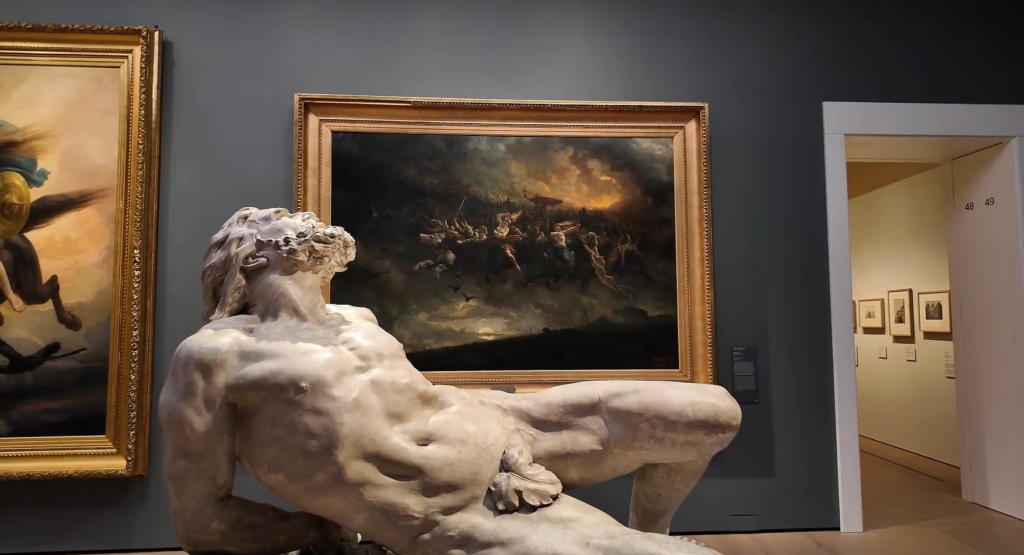
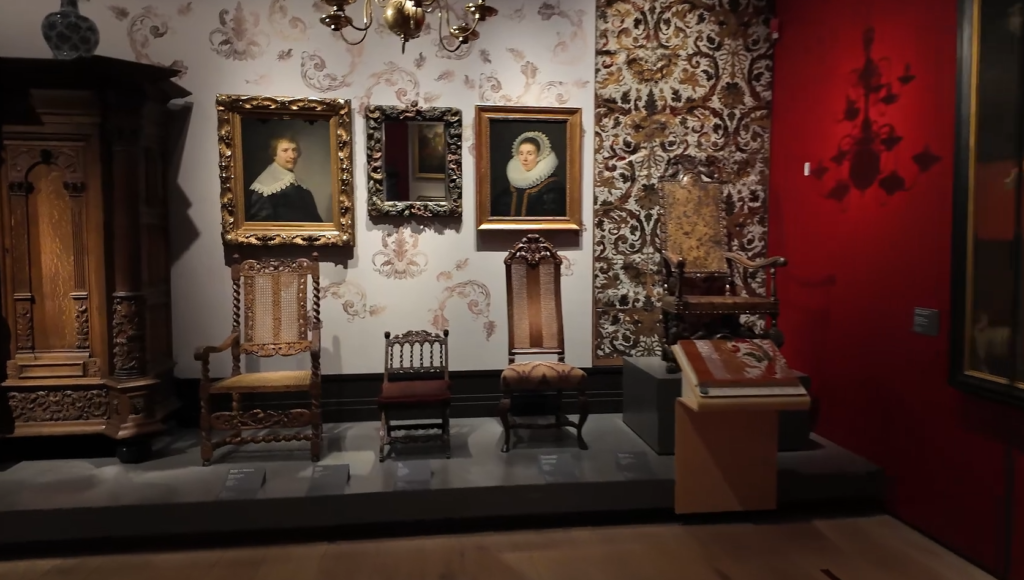
Opened in 2022 one block from Karl Johans gate, the National Museum is Northern Europe’s largest art museum. It houses Norway’s most important art collection including Edvard Munch’s “The Scream.”
I spent four hours here and barely scratched the surface. The building itself—Norwegian architects Kleihues + Schuwerk—feels both monumental and intimate. The rooftop Light Hall offers 360-degree Oslo views that alone justify admission.
- Cost: 200 NOK ($18) adults, free under 18
- Time needed: Minimum 3 hours
- Book online to skip queues
Historical Museum
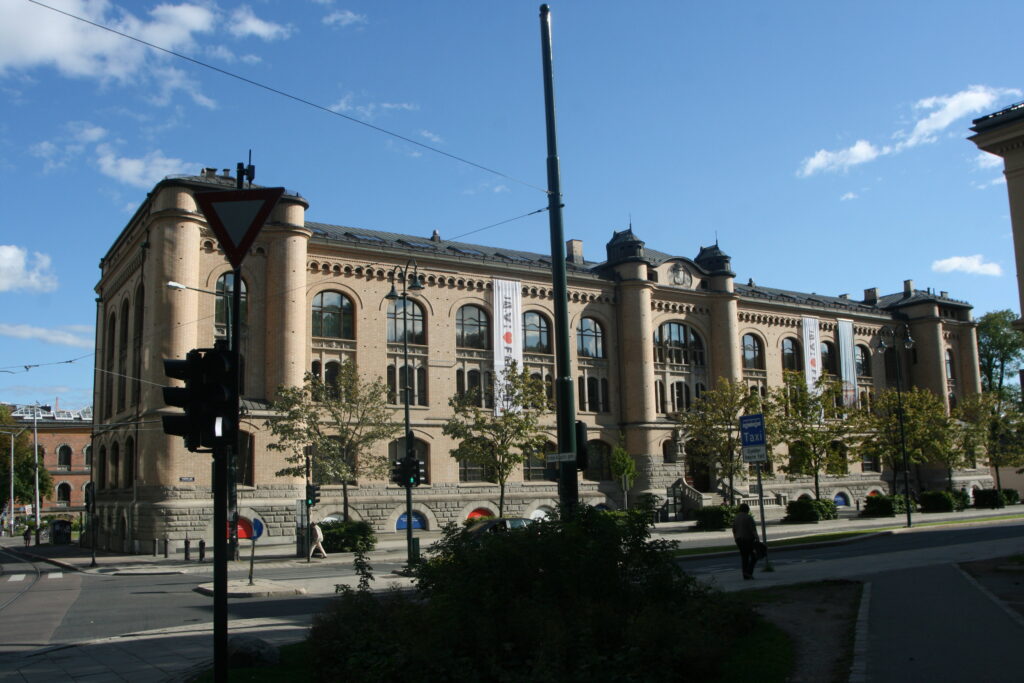
Located at the University right on Karl Johans gate, the Historical Museum covers Norwegian history from Stone Age through medieval period. The Viking Age exhibition showcases authentic artifacts that bring the era alive.
Entry is more affordable (100 NOK/$9), and the museum is smaller—perfect if you have 90 minutes but not half a day.
National Theatre
Attending a performance at Nationaltheatret connects you to Norwegian artistic heritage. Productions are usually in Norwegian, but many classics transcend language. I saw Ibsen here—even without understanding every word, the staging was captivating.
Tickets range 250-600 NOK ($23-55). The theatre’s interior is open for viewing during daytime even without attending performances.
The cultural offerings around karl johans gate oslo provide depth beyond shopping and sightseeing. Budget time for at least one major museum—you’ll leave with much deeper appreciation for Norwegian culture.
When to Visit for the Best Experience
Karl Johans gate offers wildly different experiences by season. For comprehensive seasonal planning across Norway, check the official Visit Norway seasonal guide. Choose based on your priorities:
Summer (June-August): Peak Everything
- Pros: 18+ hours of daylight, warmest weather (15-25°C/59-77°F), outdoor café season, street performers, vibrant energy, everything open with extended hours.
- Cons: Most crowded, highest prices, many locals vacation elsewhere, some authentic atmosphere diminishes as tourists dominate.
My August visit was peak season. The endless daylight was magical—strolling at 10 PM in bright sunshine felt surreal. But crowds, especially in the lower shopping section, sometimes overwhelmed.
Spring (April-May): Sweet Spot
- Pros: National Day celebrations (May 17th—unmissable), warming weather, locals excited after winter, cherry blossoms in Studenterlunden, fewer tourists, reasonable prices.
- Cons: Unpredictable weather (could be 5°C or 20°C/41-68°F), some rain.
May might be ideal—you get National Day, decent weather, and avoid peak crowds.
Fall (September-October): Underrated
- Pros: Beautiful fall colors, comfortable temperatures (10-15°C/50-59°F), fewer tourists, lower prices, locals back from holidays, cultural season begins.
- Cons: Shortening days, increasing rain, some outdoor attractions close.
Winter (November-March): Brave Souls
- Pros: Christmas markets and lights (magical), Norwegian winter culture, lowest prices, authentic local atmosphere, winter sports nearby.
- Cons: Very short days (6 hours in December), cold (-5 to -15°C/23-5°F), many outdoor activities impossible.
Winter shouldn’t be dismissed. The Christmas lights period (mid-November through Christmas) is genuinely magical. Experiencing how Norwegians thrive in cold and darkness is fascinating. Just dress warmly—seriously warmly.
Time of Day
- Early morning (6-9 AM): Quiet, peaceful photographs, few shops open
- Midday (10 AM-3 PM): Peak activity, best for getting things done
- Late afternoon/evening (4-8 PM): Locals finishing work, café culture peaks
- Night (after 9 PM): Quieter, still safe and well-lit, good for peaceful walks
The “best” time for karl johans gate norway depends on you. I’d suggest May or September for optimal balance. But every season offers something special.
Essential Tips You Won’t Find in Guidebooks
Here’s practical stuff I learned the hard way:
Money Reality
Norway is nearly cashless—cards accepted everywhere, many places refuse cash. Foreign transaction fees may apply, so check with your bank. ATMs exist but are unnecessary.
Tipping isn’t expected—service charges are included. Round up or leave 5-10% for exceptional service, but it’s not required like in the US.
“Note: All prices are indicative and may change based on season, availability, or establishment policy. Confirm current rates locally before visiting.”
Getting There
- Oslo Central Station sits at Karl Johans gate’s eastern end—arrive by train or airport express, you’re already there.
- Metro stations: Stortinget (middle section) and Nationaltheatret (upper section, connects to trains and airport express)
Explore the Karl Johans gate’s Location on Google Map
Walking from Oslo Central Station to Royal Palace takes 20 minutes—the whole street is walkable.
Accessibility
Middle and lower sections are fully pedestrianized and wheelchair accessible. Upper section has wide sidewalks. All curbs have dropped crossings. Terrain is completely flat—easy for mobility concerns.
Safety
Karl Johans gate is extremely safe. Oslo’s low crime rates aren’t a myth. Use normal urban awareness about pickpockets in crowds, but I never felt unsafe, even late at night.
Weather Preparation
Norwegian weather changes quickly. Even in summer, bring:
- Light rain jacket (waterproof)
- Layers (temperature swings are common)
- Comfortable walking shoes
- Sun protection (summer sun is strong)
Winter requires serious gear—insulated jacket, warm boots, gloves, hat. Don’t underestimate Norwegian cold.
Language
Most Norwegians speak excellent English. Karl Johans gate oslo norway is entirely navigable in English—menus, signs, staff all accommodate English speakers.
Learn a few words anyway:
- Hei (Hi)
- Takk (Thanks)
- Unnskyld (Excuse me)
Toilets
Public toilets are scarce and often cost 20 NOK. Better options: shopping centers like Oslo City (free), museums (free with admission), cafés (buy coffee for access).
Free WiFi
Most cafés and shopping centers offer free WiFi. Coverage isn’t comprehensive, but you’ll manage.
Connecting to Oslo’s Other Must-See Spots
Karl Johans gate makes an excellent hub for exploring Oslo:
Nearby Attractions
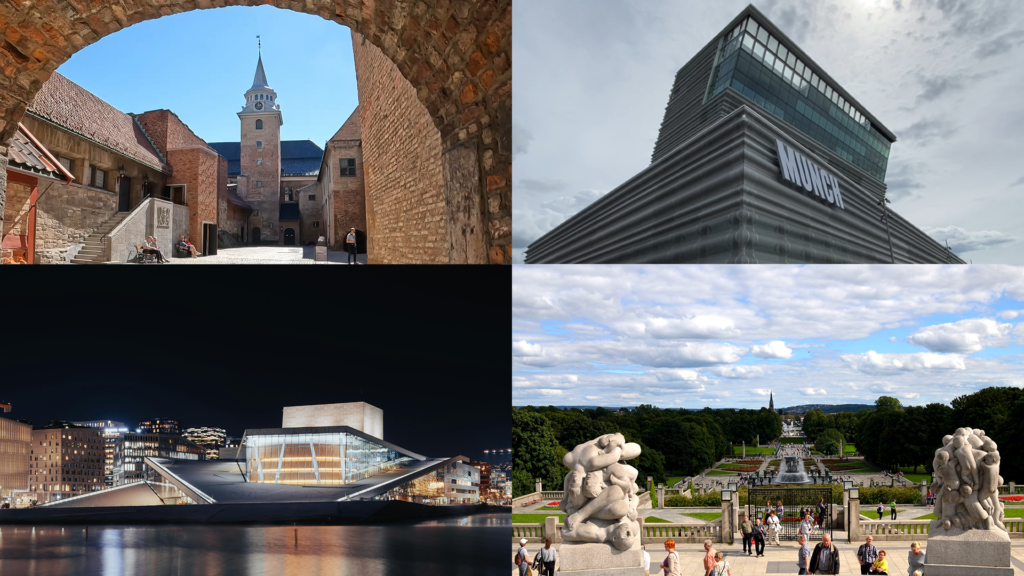
- Opera House: 10-minute walk from eastern end—stunning modern architecture, free rooftop access
- Akershus Fortress: 15-minute walk—medieval fortress with excellent views
- Oslo Fjord: 10-minute walk—waterfront walks, island ferries
- Munch Museum: 15 minutes by metro—spectacular new building with extensive collection
- Vigeland Park: 20 minutes by tram—world’s largest sculpture park by single artist
Sample Itineraries
- Half Day (4-5 hours): Royal Palace → walk full length → Parliament → National Theatre → Cathedral → coffee break → browse shops → lunch
- Full Day (7-8 hours): Morning Karl Johans gate walk → National Museum (3-4 hours) → coffee break → Historical Museum or Parliament tour → dinner at Theatercaféen → evening stroll
Multi-Day Integration:
Day 1: Karl Johans gate + National Museum + Opera House
Day 2: Vigeland Park + Nobel Peace Center + Akershus Fortress
Day 3: Munch Museum + Oslo Fjord + Grünerløkka neighborhood
The metro and tram from Nationaltheatret and Stortinget stations connect you to Oslo’s entire city within 30 minutes. Karl johans gate oslo works best as your anchor—you’ll cross it multiple times, using it as reference while exploring.
Why This Street Actually Matters
After spending serious time on Karl Johans gate, I realized it’s not about any single building or attraction. It’s about how a street can compress a nation’s character into one walkable kilometer.
The way 19th-century architecture frames modern Scandinavian life. How history and contemporary culture coexist comfortably. How a single street can encapsulate Norwegian values: democratic transparency in Parliament’s design, cultural pride in the National Theatre, educational commitment in university buildings, royal tradition at the palace, modern egalitarian society in how everyone shares the space equally.
Karl Johans gate isn’t perfectly preserved like some European historic streets—it’s living, changing, working. You’ll see modern chains in 19th-century buildings. Teenagers skateboarding past statues of dead kings. Italian espresso drunk while viewing Norwegian neoclassical architecture. This isn’t contradiction—it’s Norway adapting while honoring its past.
For Oslo visitors, walk karl johans gate norway on your first day to understand the city’s layout. Return throughout your visit. Walk it on your last evening to reflect. The street rewards both quick visits and deep exploration.
I could have spent three more days discovering details I missed. That’s the mark of a truly great public space—inexhaustible interest regardless of time invested.
Whether you’re a history enthusiast, shopping lover, cultural explorer, or someone who appreciates great urban spaces, karl johans gate oslo norway delivers. Just remember to look up from shop windows occasionally. Pause at cafés rather than rushing. Observe Norwegians around you living daily life on this extraordinary street that belongs to everyone.
That’s the real magic—for one kilometer through central Oslo, you get to be part of
FAQ
Karl Johans gate is Oslo’s main street, famous for shopping, historic buildings, cafés, street performers, and the walk from Oslo Central Station to the Royal Palace.
Yes, Karl Johans gate is one of the best places to experience Oslo’s city life, landmarks, restaurants, and local culture all in one walk.
Karl Johans gate is widely considered the most famous street in Oslo and a must-see for first-time visitors.
Karl Johans gate is easy to reach by public transport—just stop at Oslo Central Station or Nationaltheatret, both located along the street.
Along Karl Johans gate, you’ll find the Royal Palace, National Theatre, Parliament building, shops, cafés, and historic architecture.