
Imagine standing on a beach where the sand glimmers in shades of olive green, sparkling under the Hawaiian sun like scattered emeralds along the shore. This isn’t a fantasy—it’s Green Sand Beach, one of only four green sand beaches in the entire world, and it’s waiting for you on the Big Island of Hawaii.
Also known as Papakōlea Beach or Mahana Beach, this stunning natural wonder sits tucked away at the southern tip of the Big Island, where ancient volcanic forces have created something truly extraordinary. The green color comes from olivine crystals—semi-precious gems also known as peridot—that have been eroded from the surrounding volcanic cinder cone and concentrated along the shoreline.
But here’s the thing: reaching this magical beach isn’t as simple as pulling up to a parking lot. It requires effort, preparation, and respect for both the land and Hawaiian culture. In this comprehensive guide, I’ll walk you through everything you need to know about visiting Green Sand Beach Big Island—from how to get there and what to expect, to the best times to visit and essential safety tips that could make or break your experience.
Whether you’re planning your first trip to Hawaii or you’re a seasoned island explorer, this guide will give you the insider knowledge you need to make your green sand beach hike memorable, safe, and absolutely worth it.
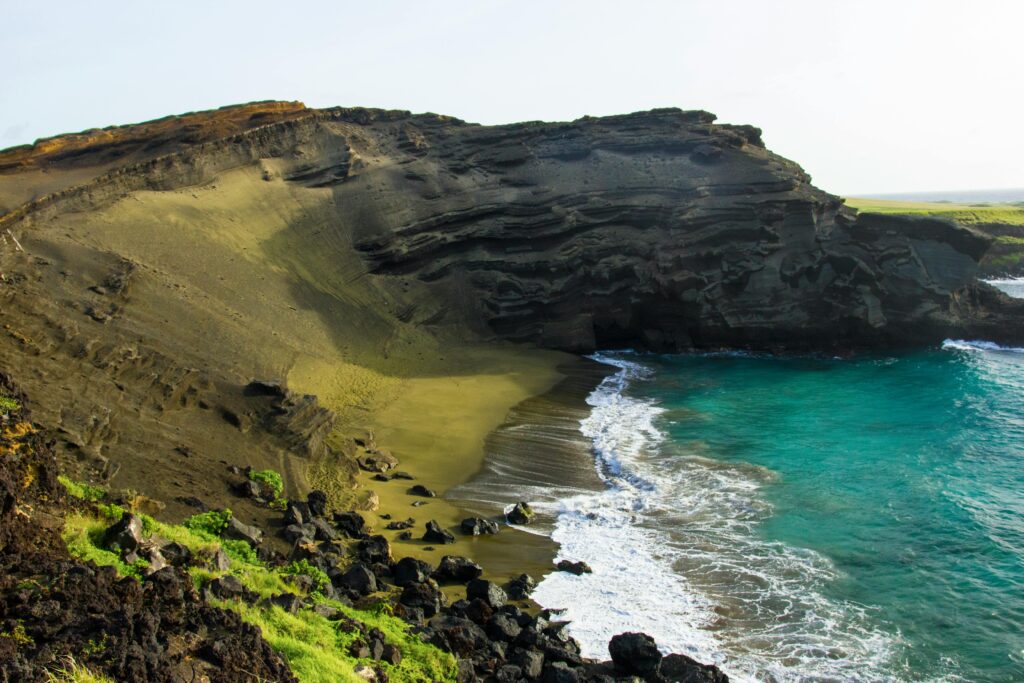
Table of Contents
What Makes Green Sand Beach Special? Understanding the Rare Olivine Phenomenon
The Science Behind the Green Sand
Green Sand Beach isn’t just another pretty shoreline—it’s a geological marvel that took thousands of years to create. The beach sits within a collapsed volcanic cinder cone called Pu’u Mahana (or Pu’u o Mahana), which last erupted approximately 49,000 years ago during the Pleistocene epoch.
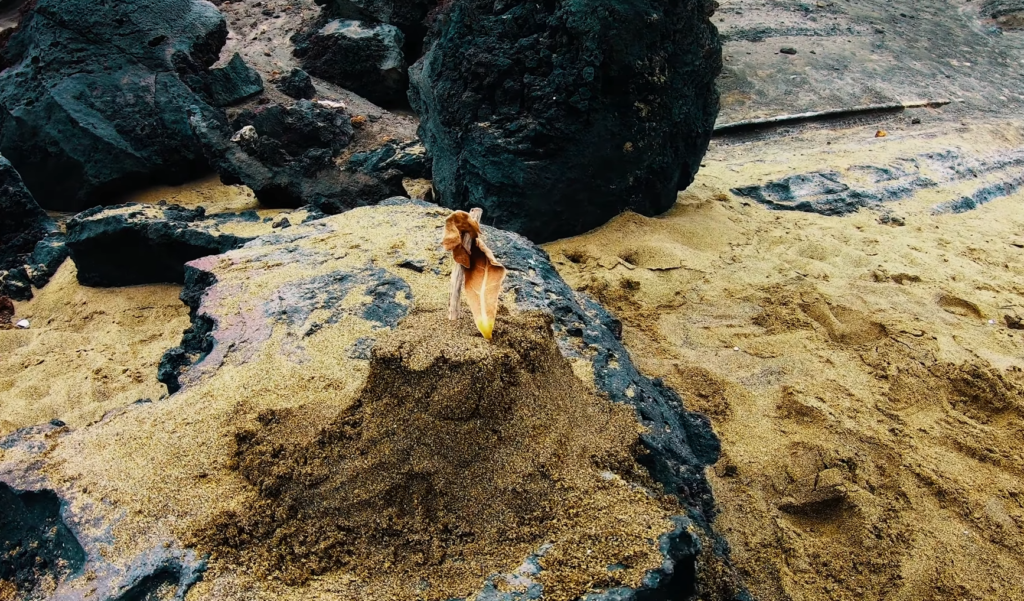
Here’s what makes it so special: The sand gets its distinctive green color from olivine, a silicate mineral rich in iron and magnesium. When volcanic lava cools rapidly, olivine crystals form within the basaltic rock. Over millennia, the powerful Pacific Ocean waves have eroded the cinder cone, releasing these dense olivine crystals while washing away lighter materials like coral and shell fragments.
According to the United States Geological Survey (USGS), olivine is heavier than typical beach sand, which is why it accumulates in concentrated deposits at Papakōlea Beach rather than being swept away by ocean currents. The result? A beach that shimmers in shades ranging from olive to deep forest green, especially when wet.
One of Only Four in the World
What makes Green Sand Beach Hawaii even more remarkable is its rarity. Only four green sand beaches exist on our planet:
- Papakōlea Beach (Big Island, Hawaii)
- Talofofo Beach (Guam)
- Punta Cormorant (Floreana Island, Galápagos)
- Hornindalsvatnet (Norway)
This scarcity makes your visit to Green Sand Beach Big Island not just a Hawaiian adventure, but a chance to witness one of Earth’s most unusual geological phenomena.
Watch The video green sand beach

Where is Green Sand Beach Located? Finding Papakōlea on the Big Island
Exact Location and Regional Context
Green Sand Beach is located in the Ka’u district on the southernmost tip of the Big Island of Hawaii, near South Point (Ka Lae)—the southernmost point of the United States. The beach is remote, sitting approximately:
- 2.5 to 3 hours southwest from Kailua-Kona
- 3+ hours south from Hilo
- 60 miles from Hawaii Volcanoes National Park
- GPS Coordinates: 18.93709768214302, -155.64646169249423
- Location: Naalehu, HI 96772, United States
The beach is part of Hawaii County public land, and while it’s not a state park, it’s accessible to the public through a challenging hike or local shuttle services.
How to Reach the Trailhead
To get to the Green Sand Beach trailhead, you’ll need to drive to South Point:
- From Kailua-Kona: Take Highway 11 south for approximately 50 miles
- From Hilo: Take Highway 11 southwest for about 65 miles
- Look for South Point Road (Kalae Road) between mile markers 69 and 70
- Turn onto South Point Road and drive 12 miles to the end
- You’ll reach a parking area near the boat ramp and South Point cliffs
The parking area is free, but it can fill up during peak hours. This is where your green sand beach hike begins.
How to Get to Green Sand Beach: Your Complete Access Guide
Understanding Your Options
Getting to Papakōlea Beach requires covering approximately 2.5 miles (4 kilometers) from the parking area to the beach. You have two main options:
- Hiking (recommended and free)
- Local shuttle services (unofficial, controversial, but available)
Let me break down both options so you can make an informed decision.
Option 1: Hiking to Green Sand Beach (Recommended)
The Route:
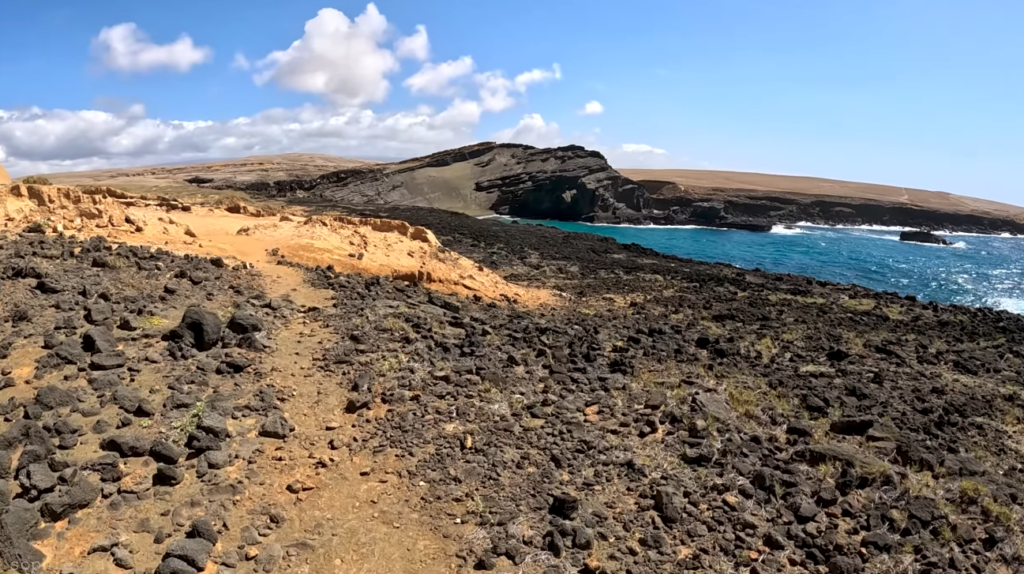
The green sand beach hike follows an old 4WD road along coastal cliffs. While the path is generally well-defined, it’s important to know what you’re getting into:
- Distance: 2.5 miles (4 km) one way, 5 miles (8 km) round trip
- Estimated Time: 45-60 minutes each way (90-120 minutes round trip)
- Elevation Change: Minimal (approximately 100 feet), but you’ll descend to the beach at the end
- Difficulty Level: Moderate to Challenging
Why is it challenging?
This isn’t your typical nature trail. Here’s what makes the green sand beach hike demanding:
- No shade whatsoever – You’re exposed to intense Hawaiian sun the entire way
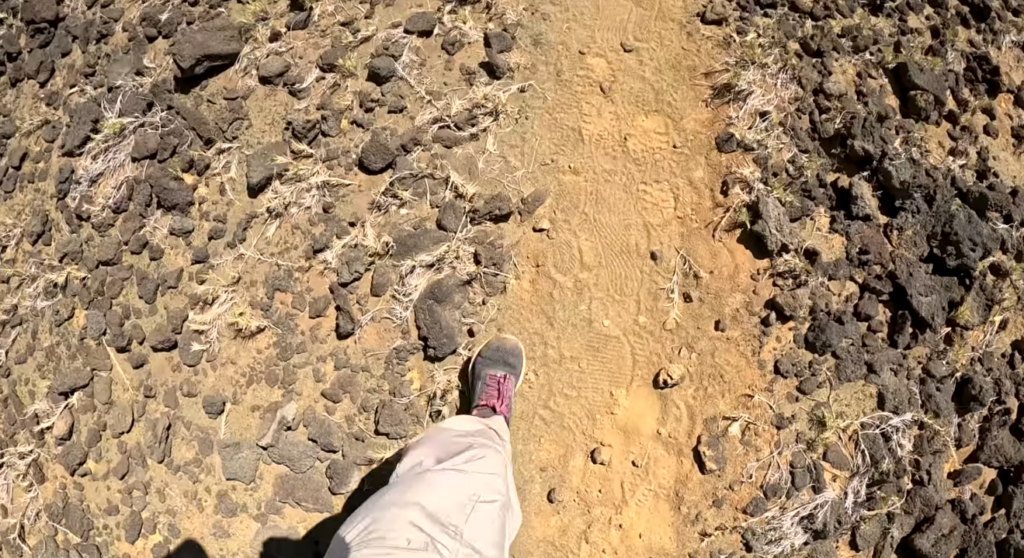
- Rocky, uneven terrain – The path is rough volcanic rock and packed dirt
- Strong winds – The coastal location means persistent, sometimes powerful winds
- Heat exposure – Temperatures regularly exceed 85-90°F (29-32°C)
- No facilities – No water fountains, restrooms, or emergency services along the route
Step-by-Step Hiking Directions:
- Start at the parking area near the boat ramp
- Follow the dirt road heading east along the coastline
- Stay on the main path – You’ll see the ocean to your left (north)
- Pass by the wind turbines on your right
- Continue straight when you see faint side paths
- Look for the cinder cone – After about 2 miles, you’ll spot the distinctive reddish-brown Pu’u Mahana cinder cone
- Follow the path toward the cone as it curves left
- Descend carefully – There’s a steep, loose trail down to the beach
Pro Tips for the Hike:
- Start early (before 8 AM) to avoid the hottest part of the day
- Bring at least 2 liters of water per person – This is non-negotiable
- Wear sturdy hiking shoes – Not flip-flops or sandals
- Use sunscreen generously and reapply every hour
- Wear a wide-brimmed hat and sunglasses
- Take breaks – There are no prizes for rushing
- Download offline maps – Cell service is spotty or nonexistent
According to Hawaii County’s official guidelines, hiking is the recommended and safest way to access Green Sand Beach.
Option 2: Local Shuttle Services (The Controversy)
When you arrive at the South Point parking area, you’ll likely encounter local residents offering shuttle rides to Papakōlea Beach in their 4WD vehicles.
The Facts:
- Cost: Typically $20-30 per person round trip (cash only)
- Time: About 15-20 minutes each way
- Vehicles: Usually pickup trucks with bench seating in the bed
The Controversy:
Here’s where it gets complicated. Hawaii County officially discourages these shuttle services for several reasons:
- Safety concerns – Accidents have occurred on the rough road
- Environmental impact – Multiple vehicles contribute to erosion
- Insurance issues – These are unlicensed, unregulated services
- Cultural concerns – Some native Hawaiians view the commercialization as disrespectful
According to reports from Hawaii News Now, county officials have attempted to restrict these services, but enforcement remains challenging due to property ownership complexities.
My Honest Take:
While these shuttles exist and many tourists use them, I strongly recommend hiking for several reasons:
- You’ll have a better experience – The journey is part of the adventure
- It’s safer – You control your pace and decisions
- It’s free – Save your money for other Big Island adventures
- It’s more respectful – Both to the land and local concerns
- You’ll feel accomplished – There’s something special about earning that view
However, if you have mobility issues, health conditions, or physical limitations, the shuttle might be your only realistic option. In that case, negotiate the price beforehand, confirm they’ll wait for you, and understand the risks involved.
Why You Cannot Drive Your Own Vehicle
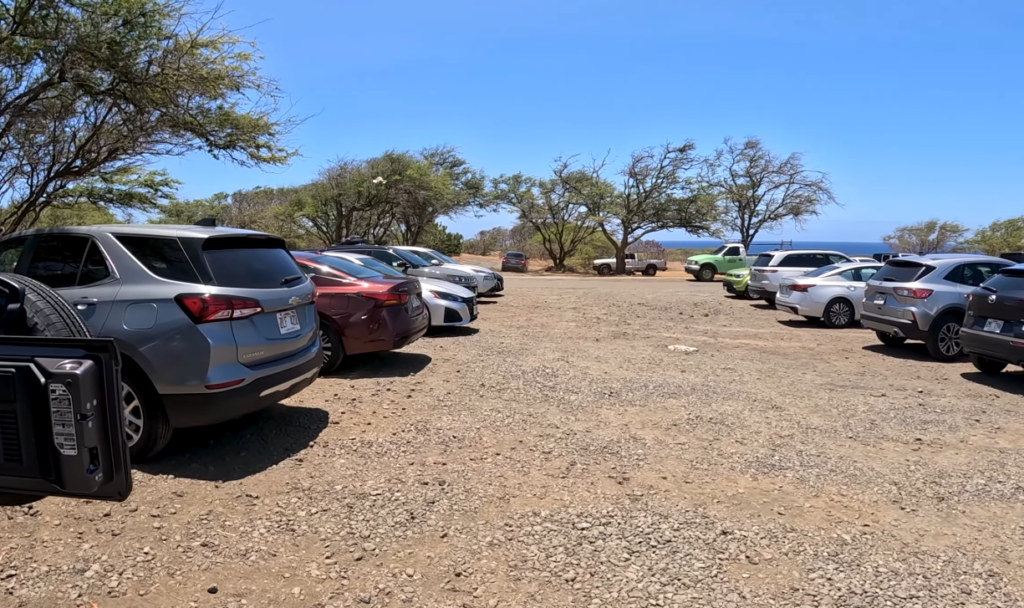
You might wonder: “Can I just drive to Green Sand Beach myself?”
The answer is no, and here’s why:
- Hawaii County regulations prohibit private vehicles beyond the parking area
- The road is extremely rough – Regular cars will get damaged
- Even with 4WD, you risk getting stuck
- You could be fined – County enforcement does patrol occasionally
- Environmental protection – Limiting vehicle traffic helps preserve the area
According to Hawaii Department of Land and Natural Resources (DLNR), unauthorized vehicle access can result in citations and fines.
What to Expect When You Arrive at Green Sand Beach
First Impressions: The Descent
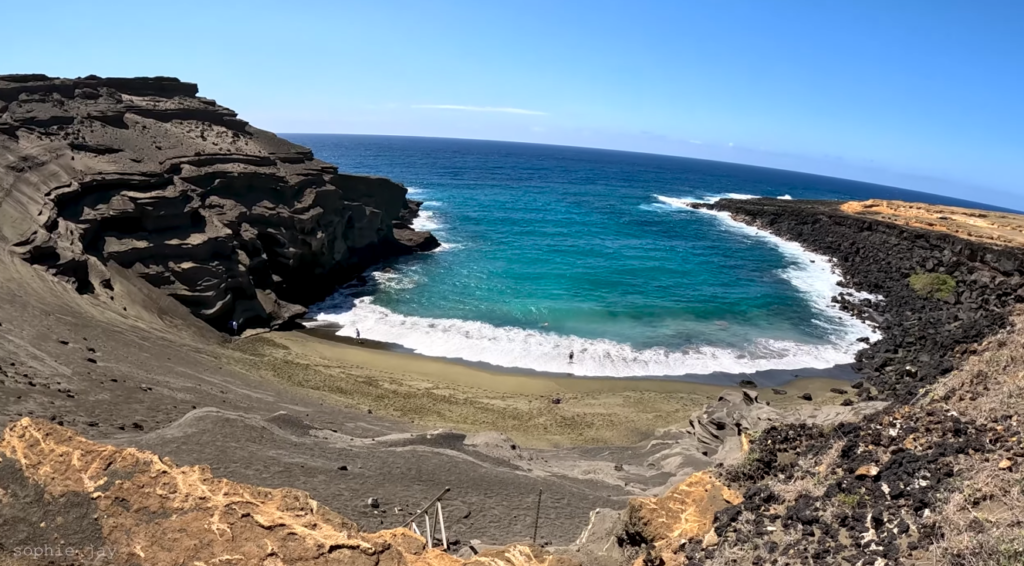
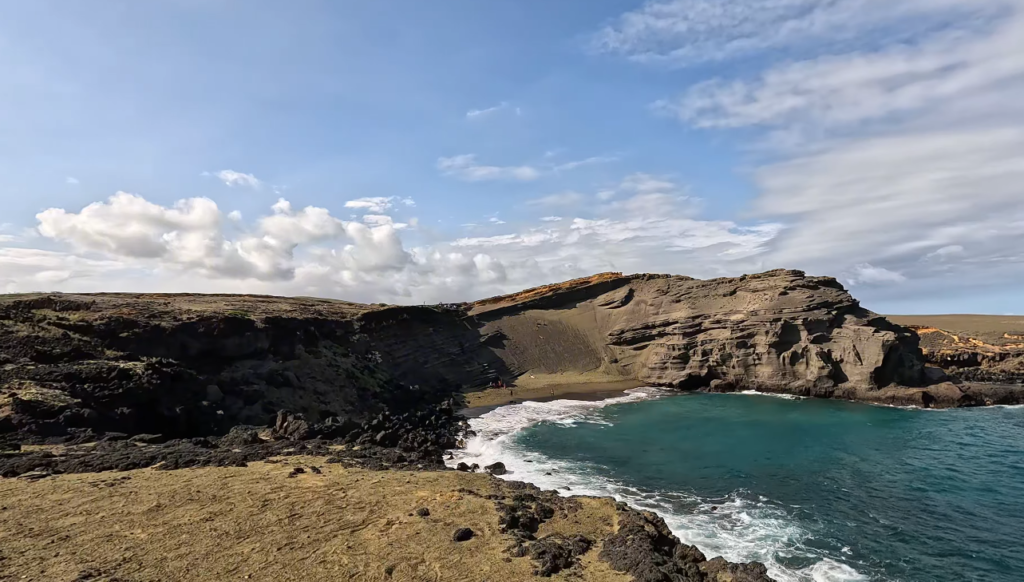
After your hike, you’ll reach an overlook where you can see Papakōlea Beach nestled in its protected cove below. The view is breathtaking—a crescent of green sand surrounded by dark volcanic rock and turquoise waters.
Getting down to the beach requires navigating a steep, loose path down the inside of the cinder cone. This descent is:
- Approximately 100-150 feet in elevation
- Very steep in places (30-40 degree angle)
- Loose volcanic rock and sand – Easy to slip
- No handrails or stairs – Just a worn path
Safety tip: Take your time going down, and remember that going back up will be even more challenging when you’re tired from your visit.
The Beach Itself: Managing Expectations
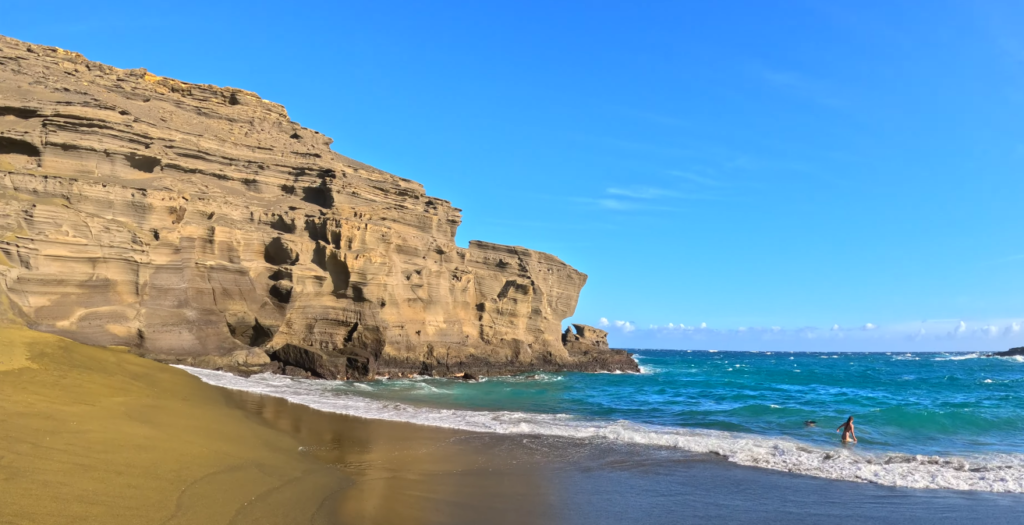
Let me be honest with you: Green Sand Beach is stunning, but it’s important to have realistic expectations.
Size and Layout:
- Small beach – Only about 300 feet (90 meters) wide
- Curved cove protected by cliffs on three sides
- Rocky areas mixed with sand
- Limited space – Can feel crowded with 20-30 people
The Green Color:
Here’s something many guidebooks don’t tell you: The sand is green, but it’s not neon or fluorescent. The color is:
- Subtle olive to forest green – Not bright lime
- Most visible when wet – Especially at the water’s edge
- Looks darker when dry – More brown-green
- Best seen in close-up – From a distance, it might look grayish
Photography tip: Get close to the sand and wet it slightly to capture the true green color. Shoot during late afternoon when the sun is lower for the best color saturation.
Swimming and Ocean Conditions at Papakōlea Beach
Can you swim at Green Sand Beach? Yes, but with important caveats.
Ocean Conditions:
The waters at Papakōlea Beach can be:
- Strong currents – Especially near the rocky points
- Powerful shore break – Waves crash directly on the sand
- Surge conditions – Water rushes in and out forcefully
- Rocky entry – Sharp volcanic rocks in many areas
Safety Considerations:
- No lifeguards – You’re completely on your own
- No emergency services nearby – Help is 45-60 minutes away minimum
- Cell service is unreliable – Can’t call for help easily
- Strong swimmers only – This is not a beginner-friendly swimming spot
According to Hawaii Beach Safety, Green Sand Beach experiences dangerous conditions during winter months (November-April) when North Pacific swells arrive.
My Best Swimming Advice:
- Summer months (May-October) generally offer calmer conditions
- Stay in the protected center of the cove, away from rocky edges
- Wade rather than swim if you’re uncertain
- Watch the waves for at least 10 minutes before entering
- Never turn your back on the ocean
- Use the buddy system – Don’t swim alone
Honestly? Most visitors enjoy wading in the shallows, feeling the unique green sand between their toes, and taking photos rather than serious swimming. That’s perfectly fine—the beach itself is the main attraction.
What Facilities Are Available? (Spoiler: None)
Green Sand Beach is completely undeveloped, which means:
- ❌ No restrooms or portable toilets
- ❌ No showers or rinse stations
- ❌ No changing facilities
- ❌ No food or water vendors
- ❌ No trash cans (pack out everything)
- ❌ No shade structures or shelters
- ❌ No lifeguards or emergency services
- ❌ No cell phone coverage (usually)
This remote, undeveloped nature is part of what makes Papakōlea Beach special, but it also means you need to be completely self-sufficient.
Best Time to Visit Green Sand Beach
Time of Day: When Should You Go?
Early Morning (7:00-9:00 AM) ⭐ BEST TIME
- Cooler temperatures – More comfortable hiking
- Fewer crowds – More likely to have the beach to yourself
- Better lighting for photography
- Calmer ocean conditions typically
- Easier parking at the trailhead
Late Afternoon (3:00-5:00 PM) ⭐ GOOD ALTERNATIVE
- Beautiful golden hour light for photos
- Slightly cooler than midday
- Fewer hikers on the trail
- You can time sunset at nearby South Point afterward
Midday (10:00 AM-2:00 PM) ⚠️ AVOID IF POSSIBLE
- Intense heat – Temperatures peak
- Maximum sun exposure – Highest UV index
- Most crowded – Peak visitor hours
- Harsh lighting for photos
Best Season to Visit Green Sand Beach Big Island
Green Sand Beach is accessible year-round, but conditions vary significantly:
Summer (May-October) ⭐ BEST SEASON
- Calmer ocean conditions – Better for swimming
- More consistent weather – Less rain
- Gentler trade winds
- Generally safer for families
Winter (November-April) ⚠️ MORE CHALLENGING
- Bigger waves – North Pacific swells arrive
- Stronger currents – Swimming can be dangerous
- More wind – Makes hiking more difficult
- Occasional rain – Path can be muddy
According to National Weather Service Honolulu, the Ka’u coast receives most of its rainfall between November and March, though it remains one of Hawaii’s drier regions overall.
Pro Tip: Check the Hawaii Beach Safety Website before your visit for current ocean conditions and safety warnings.
Avoiding Crowds
Green Sand Beach is less crowded than famous beaches like Hapuna or Waikiki, but it still gets busy:
Busiest Times:
- Weekends and holidays
- Cruise ship days (when ships dock in Kona)
- Peak tourist season (December-March, June-August)
- Midday hours (10 AM-2 PM)
Quietest Times:
- Weekdays (Monday-Thursday)
- Early mornings (before 8 AM)
- Shoulder seasons (April-May, September-October)
Insider tip: If you arrive at the parking area and see 15+ cars, consider visiting Punalu’u Black Sand Beach first and coming back later in the afternoon.
Essential Tips and What to Bring to Green Sand Beach
The Ultimate Packing List
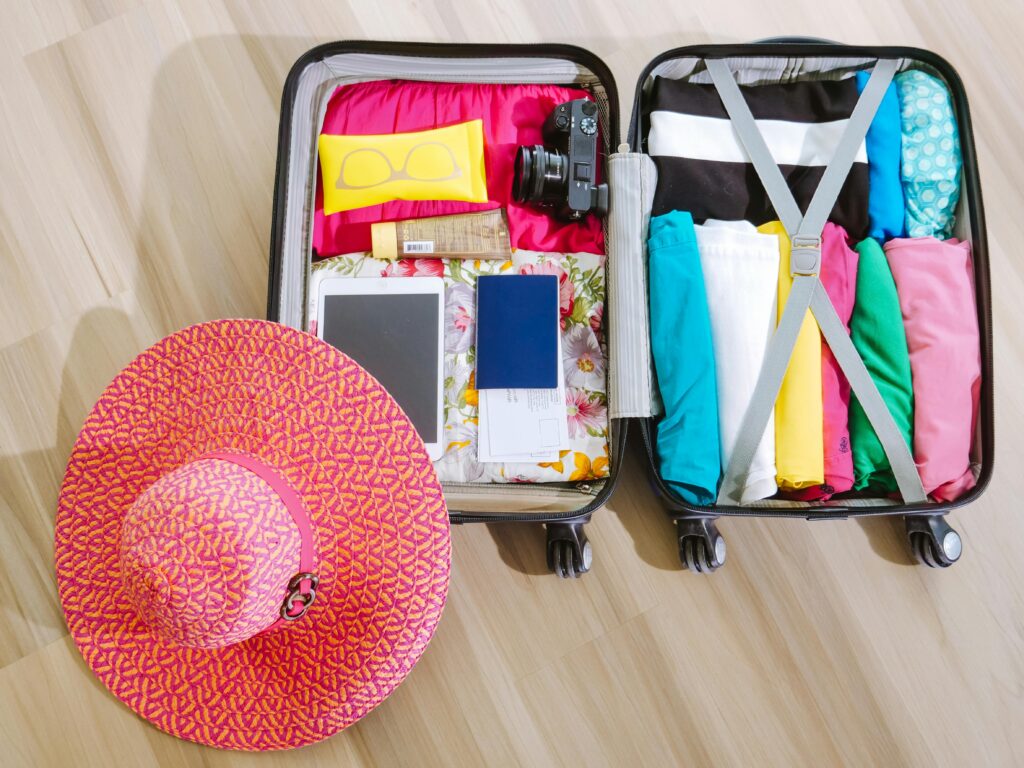
Absolutely Essential:
- ✅ Water (2-3 liters per person) – This is life-or-death important in Hawaiian heat
- ✅ Sun protection (SPF 50+ reef-safe sunscreen) – Reapply every hour
- ✅ Wide-brimmed hat – Protects face, neck, and ears
- ✅ Sunglasses with UV protection
- ✅ Sturdy closed-toe hiking shoes – Not sandals or flip-flops
- ✅ Electrolyte snacks – Trail mix, energy bars, fruit
- ✅ First aid kit – Band-aids, antiseptic, pain relievers
Highly Recommended:
- ✅ Lightweight long-sleeve shirt – UV protection without overheating
- ✅ Hiking backpack – Keeps hands free
- ✅ Swimsuit (worn under clothes for convenience)
- ✅ Beach towel or quick-dry travel towel
- ✅ Dry bag – Protect phone, keys, wallet from sand and water
- ✅ Camera or smartphone (in waterproof case)
- ✅ Reusable trash bag – Practice “leave no trace”
- ✅ Trekking poles – Especially helpful for the descent to the beach
Optional But Nice:
- Portable phone charger
- Snorkel gear (if conditions are calm and you’re experienced)
- Lightweight beach chair or blanket
- Biodegradable soap for rinsing off
- Small umbrella for shade
Critical Safety Tips
Before You Go:
- Check the weather forecast – Weather.gov
- Tell someone your plans – When you’re leaving, expected return time
- Download offline maps – Google Maps offline or AllTrails app
- Check ocean conditions – Hawaii Beach Safety
- Start with a full tank of gas – Limited services in Ka’u
During the Hike:
- Pace yourself – This isn’t a race
- Take water breaks every 15-20 minutes
- Watch for heat exhaustion symptoms – Dizziness, nausea, excessive fatigue
- Stay on the main path – Don’t create new trails
- Be wind-aware – Strong gusts can knock you off balance near cliffs
At the Beach:
- Never turn your back on the ocean – Rogue waves happen
- Don’t climb on slippery rocks
- Respect the area – No trash, no graffiti
- Watch children closely – Dangerous conditions for kids
- Don’t take sand – It’s illegal and culturally disrespectful
For the Return Hike:
- Save energy – The hike back is harder than you think
- Climb back up from the beach before you’re exhausted
- Start back early enough – Don’t get caught at dusk
- Reapply sunscreen – You’re still exposed
According to Hawaii State Department of Health, dehydration and heat-related illness are the most common problems at Green Sand Beach. Don’t underestimate Hawaiian sun exposure!
Respecting Papakōlea: Cultural Significance and Conservation
The Hawaiian Name and Cultural Importance
Papakōlea (pronounced “pah-pah-KOH-leh-ah”) is the authentic Hawaiian name for this beach. The name roughly translates to “plover flats,” referring to the native plover birds that once frequented the area.
In Hawaiian culture, this land holds significance as part of Ka Lae (South Point), which ancient Hawaiians believed to be a jumping-off point for spirits departing to the afterlife. The area contains numerous archaeological sites, including:
- Fishing shrines (ko’a)
- Canoe mooring holes carved into lava rock
- Heiau (temple) remnants
Respectful visiting practices:
- Use the Hawaiian name Papakōlea when referring to the beach
- Don’t disturb any stacked rocks (ahu) or cultural sites
- Walk softly and speak quietly if you encounter cultural practitioners
- Recognize that you’re a guest on land with deep cultural meaning
Why You Should NEVER Take Sand
Let me be crystal clear: Taking sand from Green Sand Beach is illegal, unethical, and harmful.
Legal Consequences:
Under Hawaii Revised Statutes §205A-44, removing sand, rocks, or other natural resources from Hawaii beaches is illegal. Violators can face:
- Fines up to $100,000
- Potential jail time
- Civil penalties and restitution costs
According to Hawaii Department of Land and Natural Resources, enforcement is taken seriously, especially at rare beaches like Papakōlea.
Environmental Impact:
The olivine sand at Green Sand Beach took 49,000 years to accumulate. When visitors take sand:
- The beach shrinks – It’s not being replenished
- Erosion accelerates – Protective sand layers are removed
- The ecosystem suffers – Unique beach habitat is destroyed
- Future visitors lose – The beach degrades for everyone
Cultural Disrespect:
In Hawaiian culture, taking natural elements from sacred places is considered kapu (taboo). It shows disrespect for:
- The land (aina)
- Hawaiian ancestors and their descendants
- The spirit of aloha (respect and caring)
Hawaiian legend also warns that taking sand brings bad luck or Pele’s curse (Pele being the volcano goddess). While this is folklore, the underlying message is clear: respect the land.
The Right Way to Remember:
- Take photos – Unlimited and perfectly legal
- Collect memories – The experience itself is the souvenir
- Support local artisans – Buy locally made jewelry with ethically sourced olivine
- Tell others – Share the beauty without taking from it
Leave No Trace Principles
Papakōlea Beach has no facilities, which means conservation depends entirely on visitor responsibility:
- Pack out everything you pack in – Including toilet paper if necessary
- Don’t leave food scraps – They attract invasive species
- Stay on established paths – Don’t create new trails
- Don’t build rock cairns – They damage habitat and confuse hikers
- Use reef-safe sunscreen – Protects coral reefs downstream
- Don’t feed wildlife – Not birds, not sea turtles, nothing
Photography Tips: Capturing the Magic of Green Sand Beach
Best Photography Times and Lighting
Golden Hour (Late Afternoon) ⭐ BEST LIGHT
- 45-60 minutes before sunset gives warm, soft light
- The green sand appears more vibrant with side-lighting
- Dramatic shadows highlight the cinder cone texture
- Ocean sparkles beautifully
Overcast Days ⭐ GREAT FOR COLOR
- Diffused light eliminates harsh shadows
- Green color is more saturated without bright sun glare
- Better for close-up sand photography
Avoid Midday Sun:
- Harsh overhead light washes out the green color
- Extreme contrast makes exposure difficult
- Heat haze can blur distant shots
Essential Shots to Capture
The Classic Overlook:
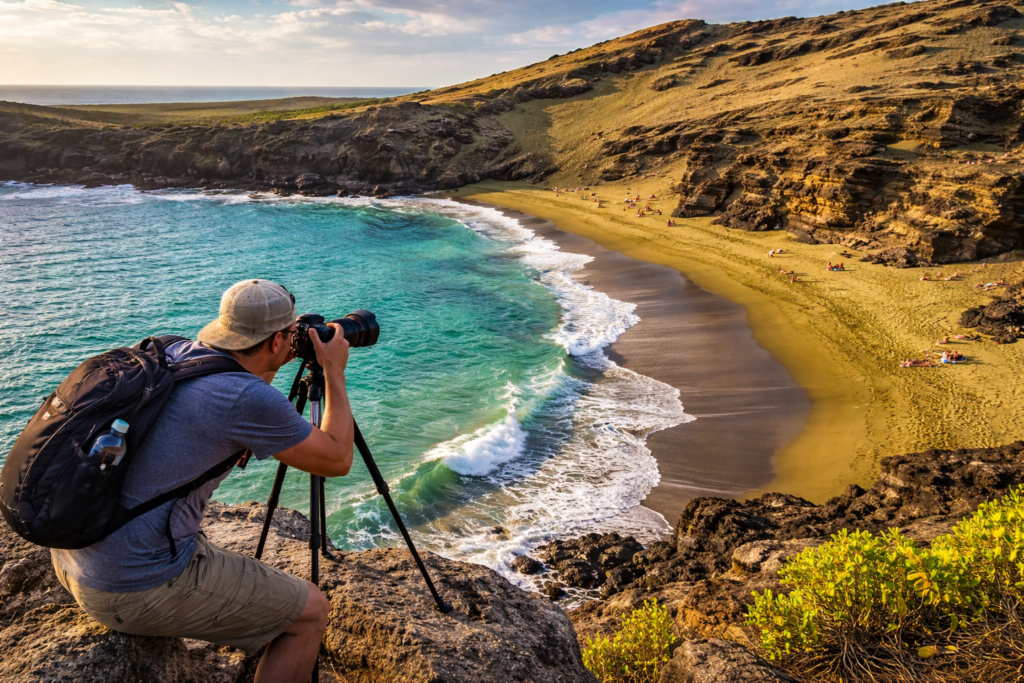
- From the rim of the cinder cone looking down
- Shows the entire beach in its natural setting
- Wide-angle lens recommended (16-35mm)
- Include surrounding cliffs for context
Close-Up Sand Detail:
- Macro photography of wet olivine crystals
- The green color is most visible in close-ups
- Get low – Shoot at sand level for best results
- Wet a small area to enhance color (just a splash of water)
The Dramatic Descent:
- Looking down the steep trail to the beach
- Shows the adventure aspect of reaching this beach
- Include a person for scale and human interest
Ocean and Sand Together:
- Water washing over green sand
- Turquoise water contrasts with olive sand
- Use fast shutter speed (1/500 or faster) to freeze wave action
Drone Photography Considerations
Green Sand Beach offers stunning aerial views, but there are important rules:
Legal Requirements:
- Register your drone with FAA if over 0.55 lbs (249g)
- Follow Part 107 rules or recreational guidelines
- Respect no-fly zones – Check B4UFLY app
Best Practices:
- Fly during permitted hours – Check current regulations
- Don’t disturb other visitors – Noise and privacy concerns
- Be aware of wind – Very strong gusts at the coast
- Maintain line of sight
- Don’t fly over people
Recommended Shots:
- Overhead view showing the perfect green crescent
- Pull-back reveal starting at beach level, rising to show full coastline
- Follow the hiking trail from above to show the journey
What Else to See Near Green Sand Beach: Complete Your Ka’u Adventure
South Point (Ka Lae) – 10 Minutes Away
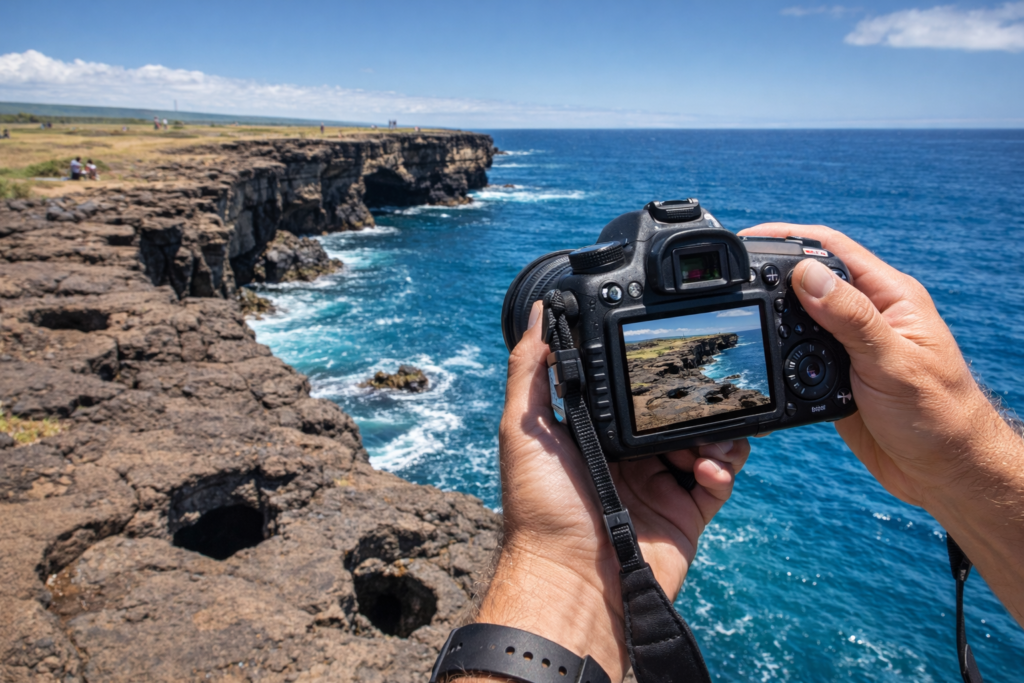
Before or after Green Sand Beach, spend time exploring Ka Lae, the southernmost point in the United States.
Highlights:
- Cliff jumping platform – Local daredevils leap from 40-foot cliffs (not recommended for tourists)
- Ancient canoe mooring holes – Drilled by early Hawaiian navigators
- Wind farm – Unique photo opportunity
- Dramatic coastal views – Unobstructed Pacific vistas
- Fishing platform – Watch locals fishing with traditional methods
Time needed: 30-60 minutes
Punalu’u Black Sand Beach – 30 Minutes North
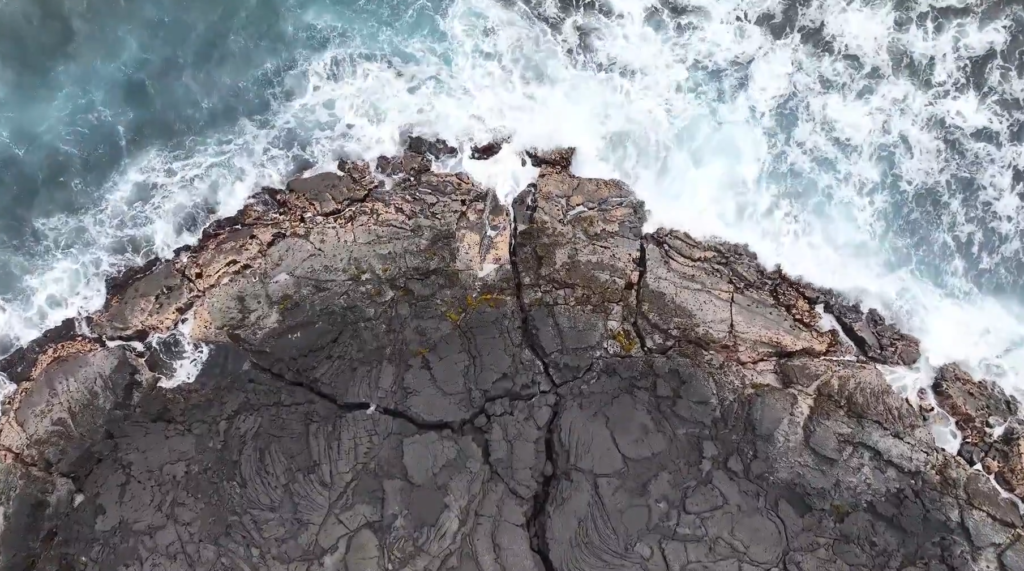
Create a “sand color tour” by combining green sand with black sand in one day.
Why visit Punalu’u:
- Jet-black volcanic sand beach
- Hawaiian green sea turtles (honu) frequently bask on shore
- Easier access – Right off Highway 11
- Better facilities – Restrooms, picnic areas, easier swimming
- Coconut palm grove for shade
Important: Maintain 10-foot distance from sea turtles – it’s federal law.
- Time needed: 1-2 hours
- Distance from Green Sand Beach: 25 miles (40 minutes)
Hawaii Volcanoes National Park – 1.5 Hours Away
If you’re spending multiple days in Ka’u, Hawaii Volcanoes National Park is a must-visit.
Top attractions:
- Kilauea Caldera – Active volcanic crater
- Thurston Lava Tube – Walk through a massive lava cave
- Steam Vents and sulfur banks
- Crater Rim Drive – Scenic loop with multiple overlooks
- Devastation Trail – See 1959 eruption aftermath
- Entrance fee: $30 per vehicle (valid for 7 days)
- Time needed: 4-6 hours minimum (full day recommended)
- Distance from Green Sand Beach: 60 miles (1.5 hours)
Learn more at National Park Service – Hawaii Volcanoes
Kona Coffee Farms – 1 Hour Northwest
On your way back to Kailua-Kona, stop at world-famous Kona Coffee farms.
Recommended farms with tours:
- Greenwell Farms – Free tours and tastings
- Mountain Thunder Coffee Plantation – Comprehensive tours
- Kona Joe Coffee – Unique trellis-grown coffee
Time needed: 1-2 hours per farm
Sample Day Itinerary
The Perfect Green Sand Beach Day:
- 6:30 AM – Depart from Kona
- 9:00 AM – Arrive at South Point parking area
- 9:15 AM – Begin hike to Papakōlea Beach
- 10:00 AM – Arrive at Green Sand Beach, explore, swim, photograph
- 12:00 PM – Hike back to parking area
- 1:00 PM – Drive to Punalu’u Black Sand Beach (pack lunch)
- 1:30 PM – Picnic lunch at Punalu’u
- 2:00 PM – Explore black sand beach, watch sea turtles
- 3:30 PM – Drive toward Kona, stop at coffee farm
- 4:30 PM – Coffee farm tour and tasting
- 6:00 PM – Return to Kona
Conclusion: Your Green Sand Beach Adventure Awaits
Green Sand Beach – whether you call it Papakōlea, Mahana Beach, or simply the most unique beach you’ve ever visited – represents something special in our increasingly developed world. It’s a place where nature’s patient artistry over 49,000 years has created something rare and beautiful, and where that beauty still requires effort, respect, and adventure to experience.
The 2.5-mile hike along the windswept Ka’u coast isn’t just a means to an end – it’s part of what makes standing on that olive-green sand so meaningful. You’ve earned this view. You’ve respected the land enough to approach it on its own terms. And you’re standing in one of only four places on Earth where this phenomenon exists.
As you plan your visit to Green Sand Beach Big Island, remember these key points:
✅ Prepare properly – Water, sun protection, sturdy shoes are non-negotiable
✅ Start early – Beat the heat and the crowds
✅ Hike if possible – It’s free, safer, and more rewarding
✅ Respect the culture – Use the Hawaiian name Papakōlea
✅ Leave no trace – Pack out everything, take nothing but photos
✅ Stay safe – Know your limits, watch the ocean, hike with others
Whether you’re a seasoned Big Island explorer or planning your first Hawaiian adventure, Papakōlea Beach offers an experience that combines natural wonder, physical challenge, cultural significance, and the simple joy of discovering something extraordinary.
The olivine crystals beneath your feet represent millennia of volcanic activity and ocean erosion – but your memories of this place will be timeless.
Ready to visit? Check current conditions, pack your bag, lace up your hiking shoes, and get ready for one of Hawaii’s most rewarding beach adventures. The green sand is waiting.
Mahalo (thank you) for reading, and enjoy your journey to one of the world’s most remarkable beaches!


1 comment
Such important 🎯 message shared