
When I first stepped onto the smooth pebbles of Punta Rata Beach, I understood immediately why Forbes named it one of the world’s ten most beautiful beaches. The turquoise water was so transparent I could count fish swimming around my feet, and the iconic Brela Stone—a tiny island crowned with a resilient pine tree—rose majestically from the Adriatic just meters from shore. But here’s what the glossy brochures won’t tell you: this paradise comes with challenges that every visitor needs to know about before they go.
After speaking with dozens of travelers who’ve visited Punta Rata Beach Brela Croatia and experiencing it myself, I’m sharing everything you need to know to make your visit truly memorable. This isn’t just another beach guide filled with generic descriptions. This is the honest, practical information you actually need, from the best time to arrive (hint: before 9 AM if you value your sanity) to the parking situation that catches thousands of visitors off guard every summer.
Table of Contents
Why Punta Rata Beach Deserves Its World-Famous Reputation
Punta Rata Beach isn’t famous by accident. In 2004, Forbes magazine recognized it as the sixth most beautiful beach in the world and ranked it number one in Europe. This wasn’t some sponsored listicle—it was a genuine recognition of a beach that combines extraordinary natural beauty with remarkable water clarity.
The beach has maintained its Blue Flag certification for years, a designation awarded only to beaches meeting the highest standards for water quality, environmental management, and safety. The beach and its surrounding pine forest received protection status in 1964, establishing it as a recognized natural preservation area on the Makarska Riviera, ensuring that the natural landscape remains pristine for future generations.
Understanding Blue Flag Certification:
This internationally recognized eco-label requires beaches to meet at least 30 strict criteria across four categories. For water quality specifically, beaches must pass rigorous testing for escherichia coli and intestinal enterococci bacteria levels, with samples taken regularly throughout the bathing season. The certification also mandates zero industrial or sewage waste affecting the area, proper waste management systems, environmental education programs, comprehensive safety measures, and accessible facilities. This certification assures visitors that Punta Rata Beach maintains excellent water quality standards verified through consistent monitoring.
What Makes It Genuinely Special
Crystal-Clear Adriatic Waters
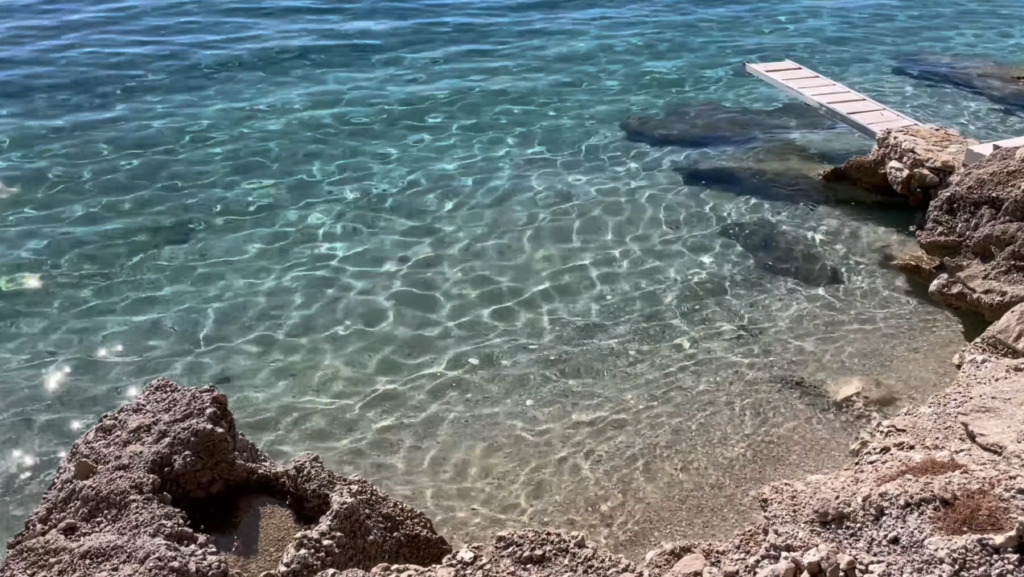
- The water at Punta Rata Beach Croatia isn’t just clear—it’s so transparent that visitors consistently describe it as swimming in a giant aquarium. The distinctive turquoise and azure shades create that postcard-perfect Mediterranean look that makes Croatia’s coastline legendary.
The Perfect Pebble Beach
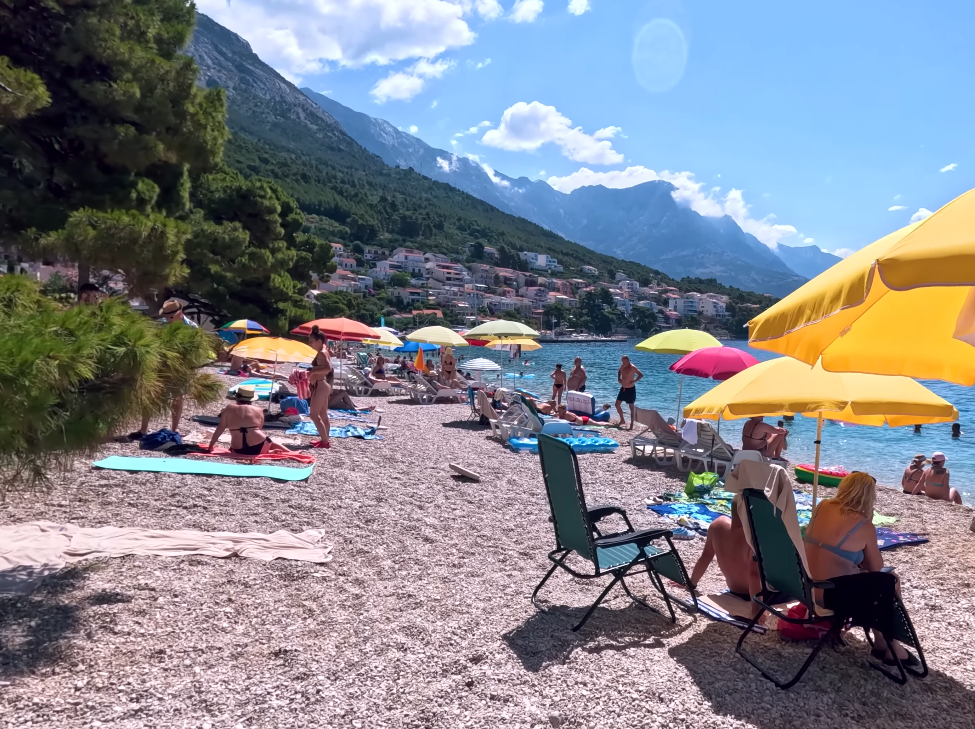
- Unlike rough rocky shores, Punta Rata features smooth, white pebbles that are comfortable to walk on. The pebbles naturally filter the water, contributing to the exceptional clarity that sandy beaches can’t match.
Natural Pine Forest Shade
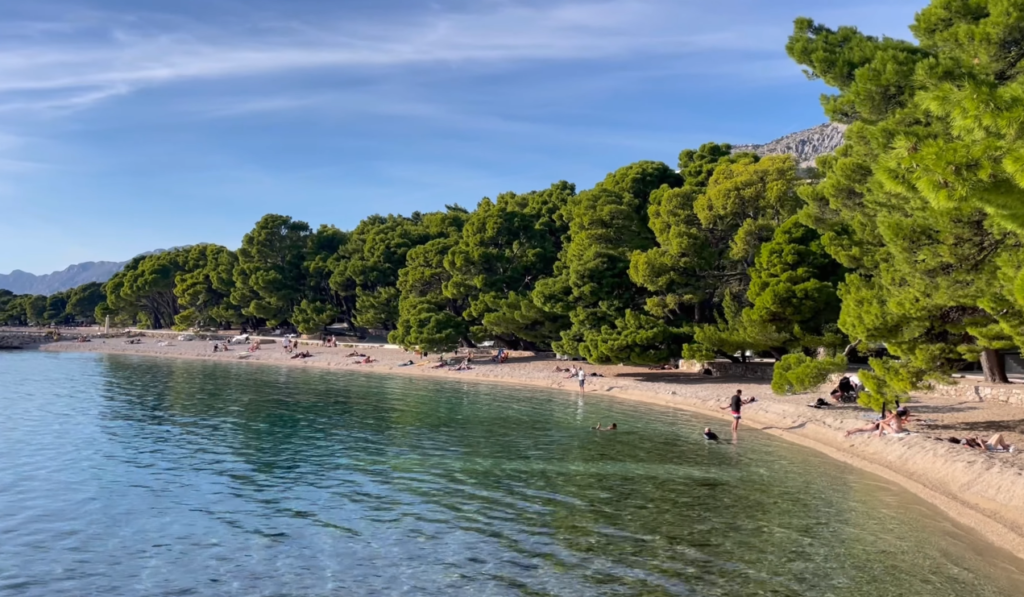
- Dense Aleppo pine forests descend from the Biokovo Mountain right down to the waterline, creating natural shaded areas. These aren’t planted decorations—they’re part of an ancient Mediterranean forest ecosystem that makes the beach feel refreshingly cool even on scorching summer days.
The Iconic Brela Stone
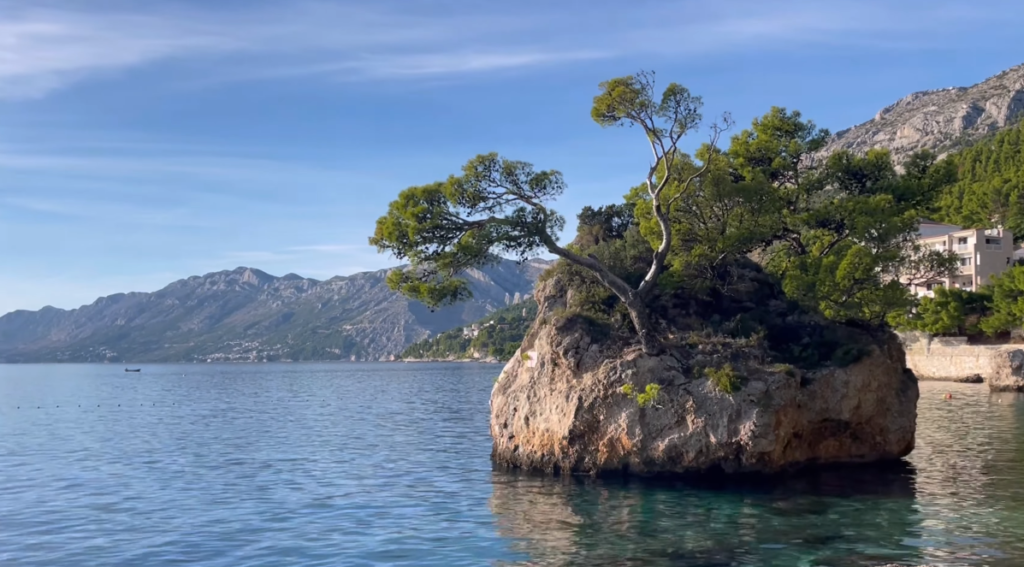
- This small rocky islet topped with a pine tree has become the symbol of Croatia itself. It appears on promotional materials, postcards, and even graced Croatian postage stamps in 1990. Swimming out to photograph it from up close is practically a rite of passage.
The Reality Check: What Visitors Really Experience
Here’s where I give you the honest truth that turns a potentially frustrating visit into a genuinely enjoyable one. Punta Rata Beach Brela is spectacularly beautiful, but its fame creates real challenges during peak season.
The Crowd Situation
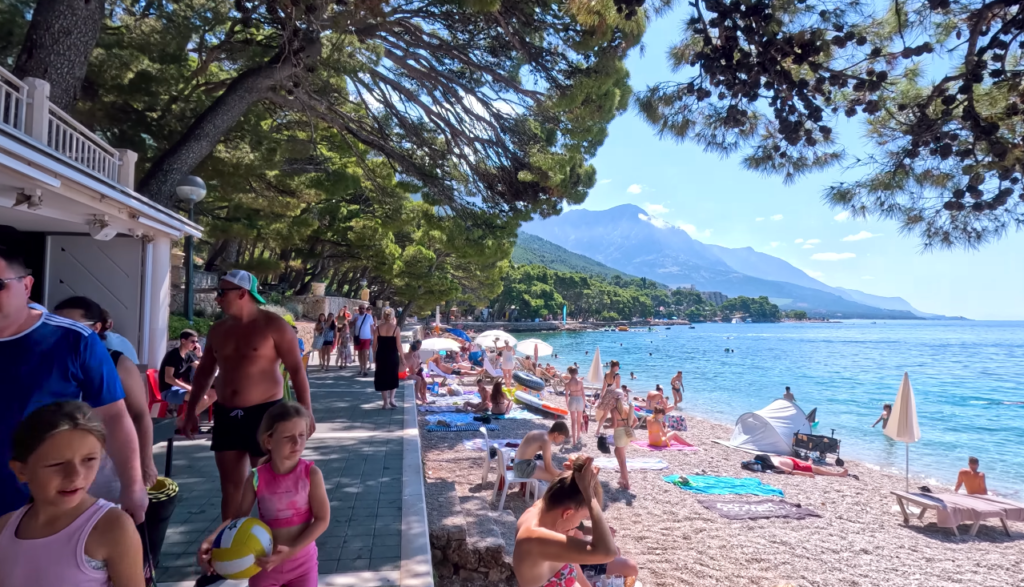
During July and August, the beach transforms from a peaceful paradise into what multiple visitors describe as “packed” and “overwhelming.” One experienced traveler put it bluntly: “After 10:00 AM it gets packed with lots of people on the beach and in the water.” Another noted, “Beautiful but totally overcrowded in August. Hard to even find a place to lay your towel.”
This isn’t exaggeration. The beach’s world-famous status means thousands of tourists specifically seek it out. Croatia welcomed a record 21.3 million visitors in 2024, with the Makarska Riviera (where Brela and Punta Rata are located) being one of the most popular coastal destinations alongside Istria and Split-Dalmatia County. The Adriatic region alone accounted for over 103 million overnight stays in 2024. On peak summer days at Punta Rata, finding a comfortable spot—especially in the coveted shade under the pine trees—becomes genuinely difficult if you arrive late.
The Deep Water Factor
One important consideration: the sea gets quite deep within just a few meters from the beach. For confident swimmers, this is perfect. For families with young children or inexperienced swimmers, this requires extra vigilance. Some visitors specifically recommend nearby beaches with more gradual depths for families with small kids.
Location and How to Get There
Punta Rata Beach is located in Brela, a charming coastal town on the Makarska Riviera in the Split-Dalmatia County of Croatia. This stretch of coastline is renowned as one of the most beautiful sections of the entire Croatian Adriatic.
Tourism Context
Brela, with a permanent population of just 1,626 residents (2021 census), transforms during peak summer season as part of Croatia’s massive tourism industry. In 2024, Croatia recorded 21.3 million total visitor arrivals and 108.7 million overnight stays, with tourism accounting for 26.4% of the country’s GDP. The Makarska Riviera, where Brela is located, consistently ranks among the top coastal destinations, with visitors specifically drawn to Punta Rata’s world-famous beach. In 1968, Brela was even crowned “Champion of Adriatic” for high achievements in tourist activity, a recognition that preceded Punta Rata’s later Forbes ranking.
Geographic Context
- Distance from Split: Approximately 50 kilometers (31 miles) south along the coastal road
- Distance from Makarska: About 15 kilometers (9 miles) north
- Distance from Dubrovnik: Approximately 180 kilometers (112 miles), roughly 3.5 hours by car
- Position: Southwestern part of Brela, extending into the Adriatic Sea
Getting There from Split Airport
By Car (Highly Recommended):
The scenic coastal route from Split to Brela takes about 50 minutes to 1 hour. Here’s the crucial advice from experienced travelers: Don’t take the highway if you have time. The coastal road (Jadranska Magistrala) offers breathtaking views of the Adriatic, picturesque villages, and stunning mountain scenery that makes the journey as memorable as the destination.
Pro Tip: Plan a stop in Omiš along the way. This historic pirate town at the mouth of the Cetina River canyon is worth at least a half-day visit.

By Bus: Regular bus services connect Split and Brela. The journey takes approximately 1-1.5 hours and costs around €5-7. Buses run frequently during summer months. However, once in Brela, you’ll have limited transportation options, which is why most travelers prefer having a car.
By Taxi or Transfer: Private transfers from Split Airport to Brela cost approximately €60-80. This can be a good option if you’re traveling as a group and want to avoid parking hassles at the beach.
Finding the Beach
Once in Brela, Punta Rata Beach is well-signposted. It’s located about 800 meters from the town center. A scenic waterfront promenade connects multiple beaches, making it easy to walk between them.
Important Navigation Note: Several visitors report that Google Maps navigation can be unreliable in this specific area, particularly regarding coastal access roads. The satellite view is more helpful for identifying parking areas and beach access points than turn-by-turn directions.
The Iconic Brela Stone (Kamen Brela)
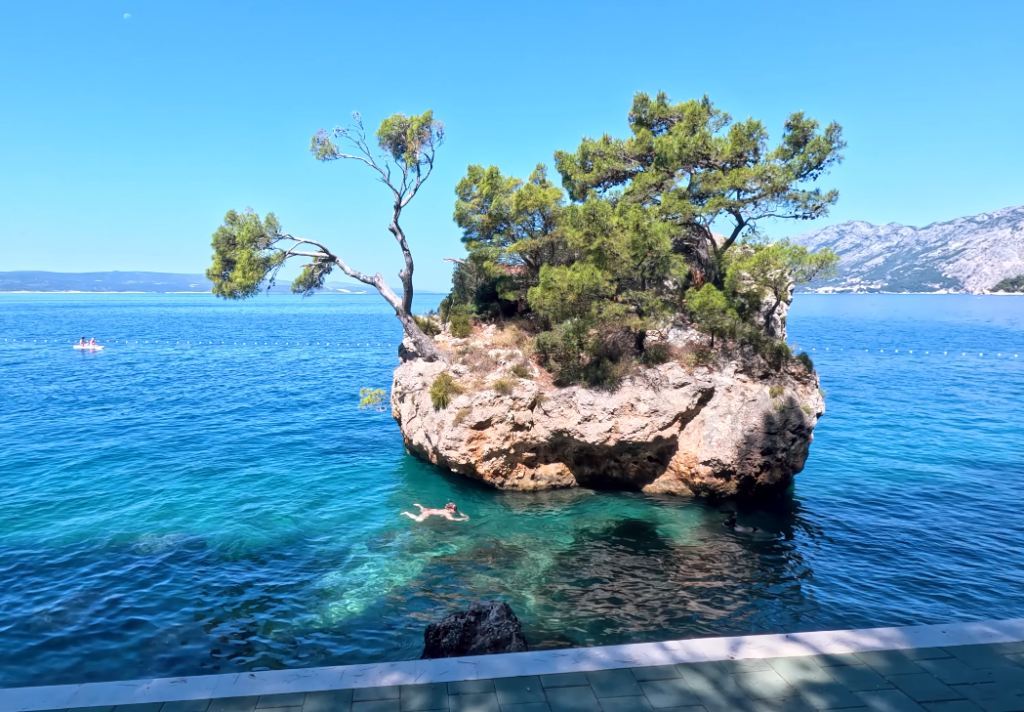
The Brela Stone (Kamen Brela in Croatian) is more than just a photogenic rock—it’s the defining symbol of this entire coastline. This small rocky islet, crowned with a resilient Aleppo pine tree, has become one of the most recognizable landmarks in Croatia.
Why It’s So Special
Historical Significance: The Brela Stone appeared on Croatia’s postage stamps in 1990, cementing its status as a national symbol. It represents the remarkable resilience of Mediterranean nature—a tree that somehow thrives on a bare rock surrounded by the sea.
Photographic Icon: This formation appears on countless postcards, travel guides, and promotional materials for Croatia. Capturing your own photo with the Brela Stone is practically mandatory, and swimming out to it provides unique perspectives that showcase its remarkable position.
Natural Wonder: The rock’s unique shape, according to local lore, resulted from ancient geological formations shaped by millennia of waves and weathering. The pine tree’s ability to grow and flourish in such an unlikely spot makes it a symbol of strength and endurance.
Getting to the Rock
The Brela Stone sits just offshore at the western end of Punta Rata Beach, easily visible from the shore. It’s a short swim for confident swimmers—perhaps 30-50 meters depending on the tide. The water depth increases gradually, making it accessible for most people comfortable in the water.
Swimming Around It: One of the best experiences at Punta Rata is swimming around the Brela Stone and viewing the beach from this offshore perspective. The water is typically calm, and the rocky base of the formation offers excellent snorkeling opportunities with clear views of fish and underwater vegetation.
Cliff Jumping: Near the main Brela Stone, there’s another rock formation that serves as a popular cliff diving spot. The maximum height is about 6 meters, and it’s used by both locals and adventurous tourists. Always check the water depth and watch others first before attempting any jumps.
Beach Features and What Makes It Special
Beach Composition and Length
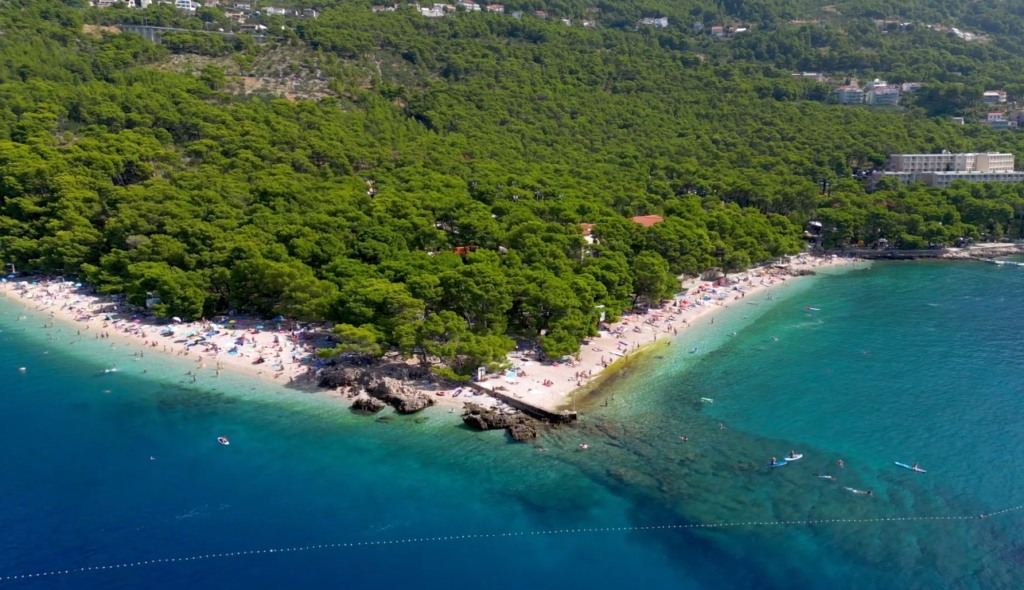
Punta Rata Beach extends for approximately 400 meters along the coastline as a natural promontory extending into the Adriatic Sea, providing substantial space despite the crowds during peak season. The beach surface consists of smooth, white pebbles—these aren’t the sharp, uncomfortable rocks found at many Croatian beaches, but rather naturally polished stones that are relatively comfortable to walk on barefoot.
Beach Capacity Context: While exact daily capacity numbers aren’t officially published, the beach can accommodate several thousand visitors across its 400-meter length. However, the most desirable areas (shaded spots under pine trees and prime waterfront locations) fill quickly during peak season, typically by 9-10 AM. The broader Brela coastline extends over 7 kilometers with multiple connected beaches, offering alternative spots when Punta Rata reaches capacity.
Pro Tip: Many visitors still recommend water shoes, especially for extended walking or entering the water. Children particularly benefit from beach shoes as the pebbles can be uncomfortable for sensitive feet.
Water Quality and Characteristics
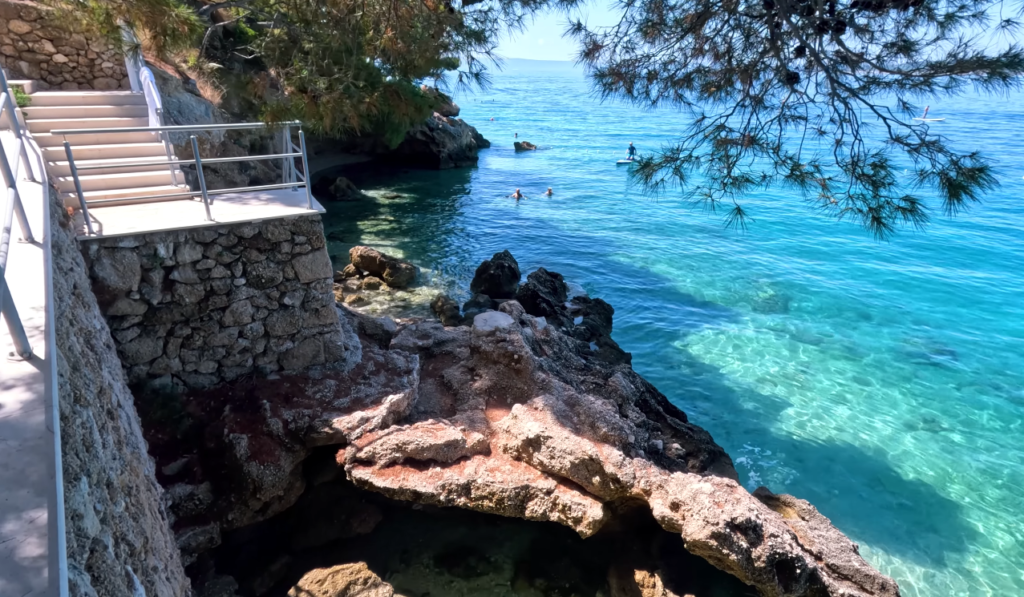
Exceptional Clarity: The water transparency at Punta Rata is genuinely remarkable. Visitors consistently report being able to see fish swimming around their legs and clearly view the pebbled bottom even in deeper areas. This clarity results from the pebble beach composition (which naturally filters sediment) and the protected status of the area.
Verified Water Quality Standards: As a Blue Flag certified beach, Punta Rata undergoes regular water quality testing throughout the bathing season. Samples are analyzed for bacterial levels (E.coli and intestinal enterococci) to ensure they meet “Excellent” water quality ratings under international standards. The beach consistently achieves these top ratings, confirming that the crystal-clear appearance is backed by scientifically verified purity. Water quality results are posted regularly, and the beach maintains zero tolerance for industrial or sewage-related discharges affecting the swimming area.
Depth: The water becomes quite deep relatively quickly, within just a few meters from the beach. This makes it ideal for swimming and snorkeling but requires supervision for children and less confident swimmers.
Temperature: During summer months (June-September), water temperatures typically range from 22-26°C (72-79°F), comfortably warm for extended swimming.
Wave Conditions: The beach is generally protected from strong waves, though mild surf can occur during windy conditions. Most days feature calm, gentle waters perfect for families and water activities.
The Pine Forest Element
One of Punta Rata’s most beloved features is the dense Aleppo pine forest that extends right down to the beach. These aren’t manicured park trees—they’re part of the ancient Mediterranean forest ecosystem descending from Biokovo Mountain.
- Natural Shade: The pine canopy creates extensive shaded areas, eliminating the need for beach umbrellas for those who arrive early enough to claim a spot. The shade remains cool even during peak afternoon heat.
- Aromatic Experience: The pine scent mixing with sea air creates a distinctively Mediterranean atmosphere that visitors remember long after leaving.
- Wildlife: You might spot squirrels in the pine trees, adding to the natural charm of the setting.
Scenic Surroundings
The beach offers spectacular views in multiple directions:
- The Adriatic Sea: Endless blue waters stretching to the horizon
- Biokovo Mountain: The dramatic mountain range rising behind the beach creates a stunning backdrop
- Nearby Islands: Views of Brač and Hvar islands are visible on clear days
- Coastal Path: A scenic walking trail connects Punta Rata with neighboring beaches, offering elevated viewpoints perfect for photography
Facilities and Amenities In Punta Rata Beach Croatia
Despite being in a protected natural area, Punta Rata Beach Brela Croatia offers comprehensive facilities that make it comfortable for full-day visits.
Available Facilities
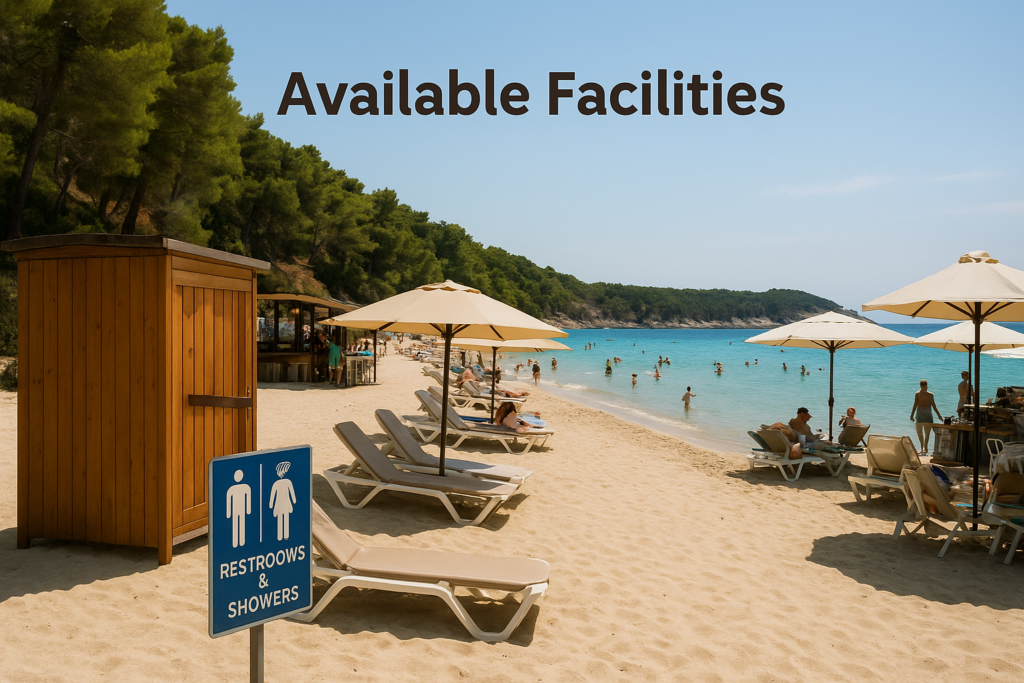
- Restrooms and Showers: Free public toilets and freshwater showers are available along the beach. During peak season, expect queues at busy times.
- Sun Loungers and Umbrellas: Beach bed rentals are available for approximately €10-15 per day for a set (two loungers and umbrella). However, many visitors prefer bringing their own towels and claiming spots under the natural pine shade, which is free.
- Changing Rooms: Basic changing facilities are provided, though these can be rudimentary and crowded during peak hours.
- Beach Bars and Cafes: Multiple bars and cafes line the waterfront, offering drinks, ice cream, snacks, and light meals. Expect typical beach pricing (€3-5 for drinks, €8-12 for simple meals).
- Food and Snack Stands: Various vendors sell fast food, sandwiches, fresh fruit, and cold drinks. The quality is generally acceptable but not exceptional—this is tourist beach food.
Nearby Services
Within walking distance along the promenade and in nearby Brela, you’ll find:
- Restaurants: Several quality restaurants serving fresh seafood and traditional Croatian cuisine
- Souvenir Shops: Typical tourist shops selling beach accessories, postcards, and Croatian souvenirs
- Small Supermarkets: For stocking up on snacks, drinks, and beach essentials
- ATMs and Currency Exchange: Available in Brela town center
Accessibility
The beach has made efforts toward accessibility, with some designated parking spaces for people with disabilities. However, the pebble surface and natural terrain can still present challenges for wheelchairs and mobility devices. The coastal promenade offers easier access than the beach itself.
- Family Facilities: The beach ensures safety with professional lifeguards on duty throughout the day during summer season, providing peace of mind for families.
- Dog-Friendly: Dogs are allowed on the beach, making it suitable for travelers bringing their pets. Be considerate of other beachgoers and clean up after your pet.
Water Activities and Things to Do in Punta Rata Beach Croatia
Punta Rata Beach Croatia offers much more than just sunbathing and swimming. The crystal-clear waters and protected marine environment create ideal conditions for various water activities.
Swimming and Snorkeling
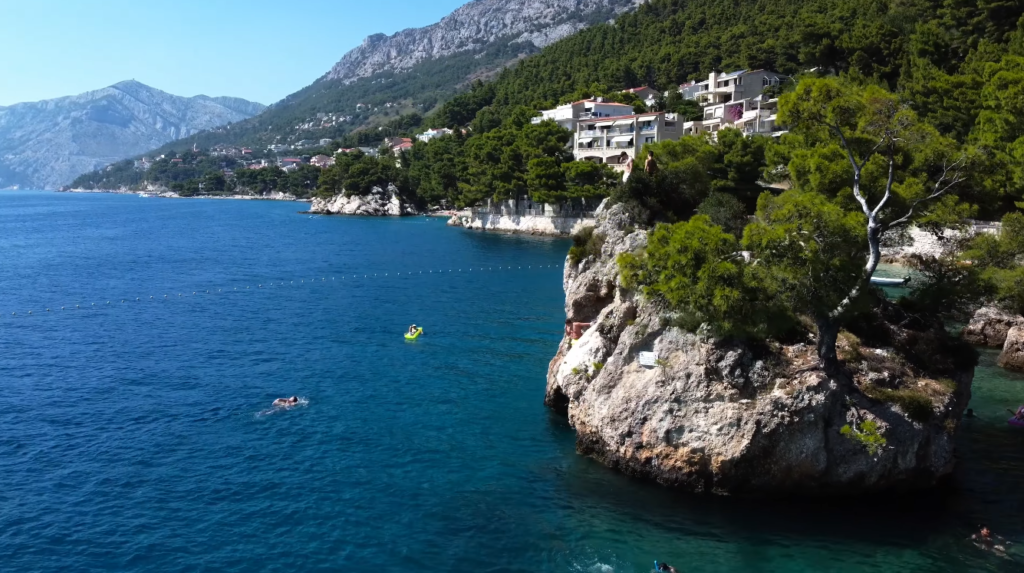
Swimming: The calm, clear waters make swimming an absolute pleasure. The gradual depth increase (though it happens relatively quickly) provides comfortable swimming conditions for anyone confident in the water.
Snorkeling: This is where Punta Rata truly excels. The beach offers nearby snorkeling opportunities, particularly around the rocky areas and the Brela Stone formation. The water clarity allows you to observe Mediterranean fish species, sea urchins, and underwater vegetation. The rocky seafloor creates interesting underwater topography worth exploring.
Pro Tip: Bring your own snorkeling gear if possible. While some vendors rent equipment, having your own ensures better fit and hygiene.
Water Sports
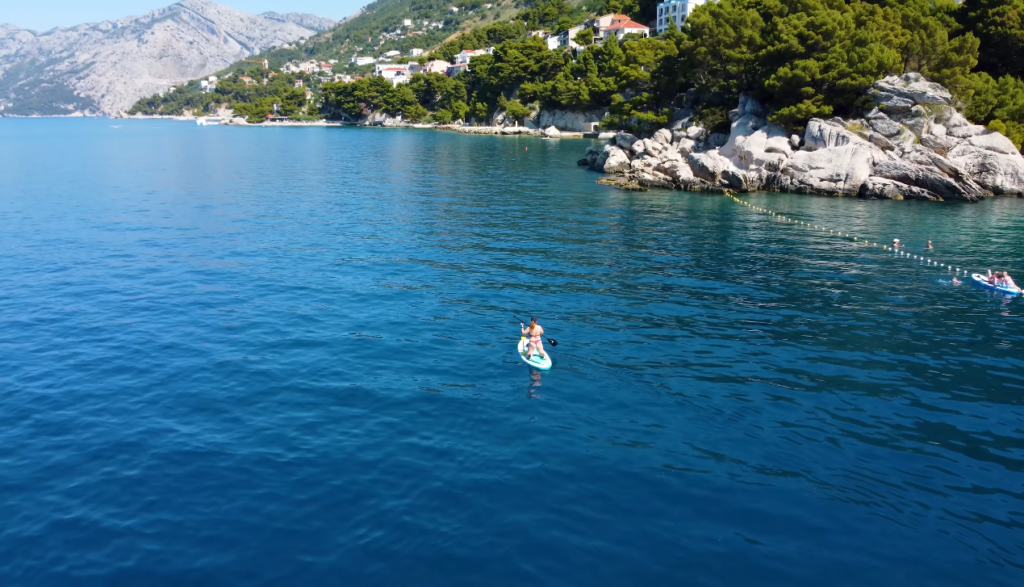
Punta Rata is a water sports lover’s paradise, offering jet-skiing, parasailing, kayaking, and canoeing opportunities. Equipment rental shops operate along the beach during summer months.
Kayaking: Particularly popular for exploring the coastline and viewing hidden coves inaccessible by land. Kayak rentals are available from Brela Kayak, operating from both Punta Rata Beach and Soline Harbor. They also offer guided tours showcasing the best coastal spots.
Stand-Up Paddleboarding (SUP): The generally calm waters make this an enjoyable activity, offering a different perspective of the coastline and the Brela Stone.
Cliff Jumping: Near the Brela Stone, a rock formation serves as an informal cliff jumping spot with a maximum height of about 6 meters. Always exercise caution and check water depth before jumping.
Beach Activities
- Beach Volleyball: Beach volleyball is among the activities available, with nets set up in designated areas.
- Children’s Play Area: A playground complete with inflatable slides and trampolines is available, keeping younger children entertained.
- Photography: The Brela Stone provides countless photo opportunities. Sunrise and sunset offer particularly stunning lighting conditions, and the rock formation creates a distinctive foreground for coastal photography.
Coastal Walking
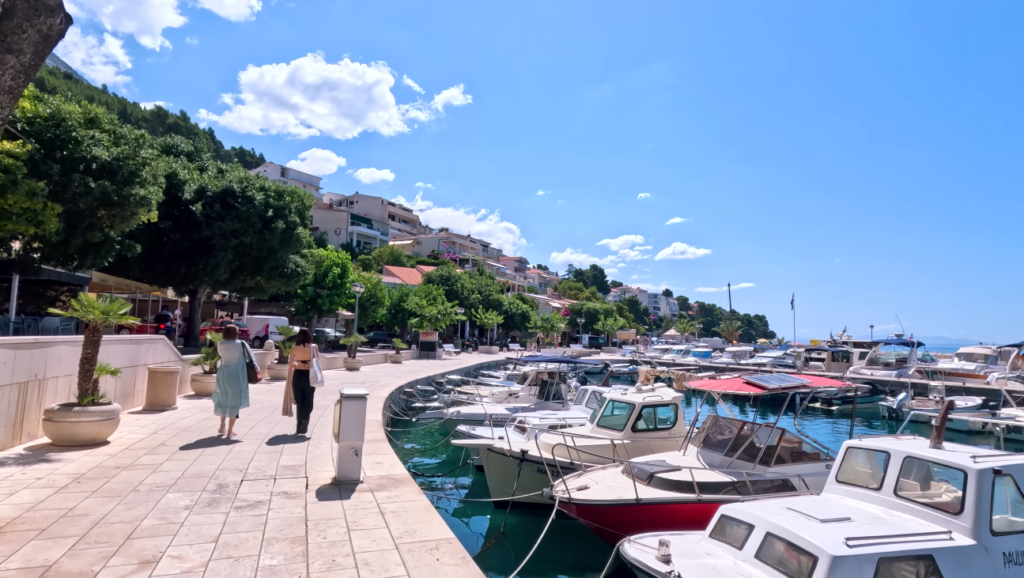
The scenic promenade connecting Punta Rata with other Brela beaches offers beautiful walks with sea views, pine forest shade, and access to quieter coves. This is particularly enjoyable during early morning or late afternoon when temperatures cool down.
Best Time to Visit (This Makes or Breaks Your Experience)
Timing your visit to Punta Rata Beach Croatia correctly is absolutely critical to your enjoyment. Here’s the honest breakdown based on extensive visitor feedback.
Seasonal Timing
Peak Season (July-August): This is when the beach is at its most crowded and most expensive. Water temperatures are warmest (24-26°C), weather is consistently sunny, but the beach can feel genuinely overcrowded. Temperatures often exceed 30°C (86°F) during these months.
Shoulder Season (May-June and September-October): These months offer pleasantly warm temperatures averaging around 20-25°C (68-77°F). In May, water temperatures start around 18°C (64°F), while in September they remain warm at about 23°C (73°F). These periods see significantly fewer tourists, more affordable accommodation, and a more relaxed atmosphere.
Best Overall Timing: Late spring (May to June) and early autumn (September to October) are ideal for visiting. You’ll enjoy pleasant weather suitable for swimming and beach activities, but with manageable crowds and better prices.
Off-Season (November-April): The beach remains beautiful but water is cold for swimming. This period suits those interested in hiking, coastal walks, and enjoying the scenery without beach activities.
Daily Timing (Critical During Summer)
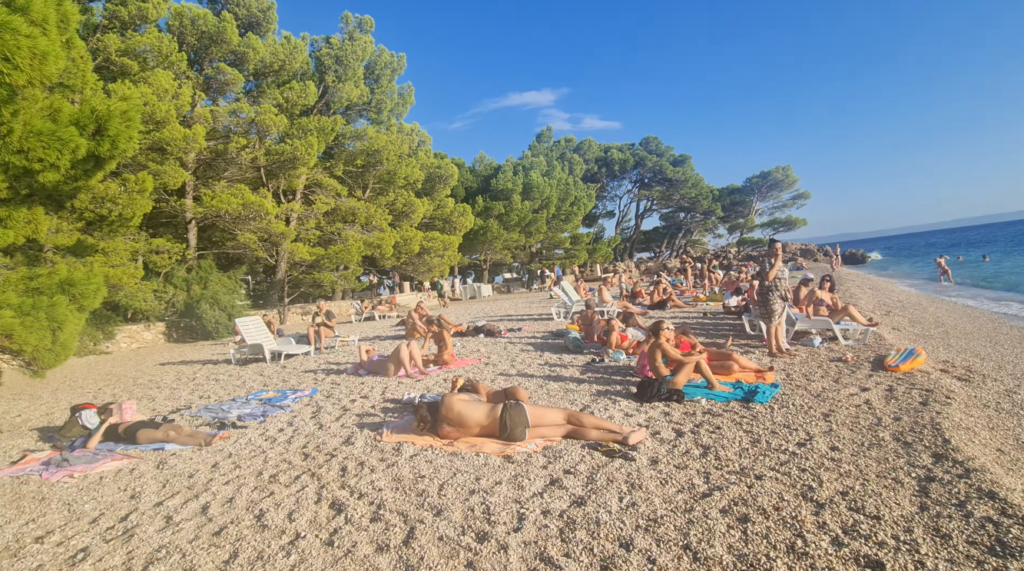
This is where the difference between a wonderful and frustrating experience really lies:
Early Morning (7:00-9:00 AM): This is the golden window. Visitors strongly suggest arriving early (before 9 or 10 AM) to secure a good spot, especially if you want shade. One regular visitor explained: “I prefer coming early (8 AM) and leaving at noon, so during that time it’s bearable.”
At this time, you’ll find:
- Available parking spaces
- Choice of beach locations including shaded spots under pines
- Peaceful atmosphere perfect for photos
- Cooler temperatures for comfortable setup
Mid-Morning (9:00-11:00 AM): The beach starts filling up. After 10:00 AM it gets packed with lots of people on the beach and in the water. Parking becomes challenging, and finding a good spot requires luck and patience.
Midday-Afternoon (11:00 AM-4:00 PM): Peak crowds, maximum heat, challenging parking, and limited space. Unless you’re already established, this is the least enjoyable arrival time during summer.
Late Afternoon-Evening (4:00 PM-sunset): Crowds begin thinning as families leave. Late afternoon visits offer a quieter vibe. The softer light creates beautiful conditions for photography, though you’ll lose the prime shaded spots.
Weekday vs. Weekend
- Weekdays: Generally less crowded than weekends, though the difference is less pronounced during peak summer when the beach is busy every day.
- Weekends and Croatian Holidays: Expect maximum crowds as locals from Split, Zagreb, and surrounding areas join international tourists.
The Parking Challenge: What You Must Know
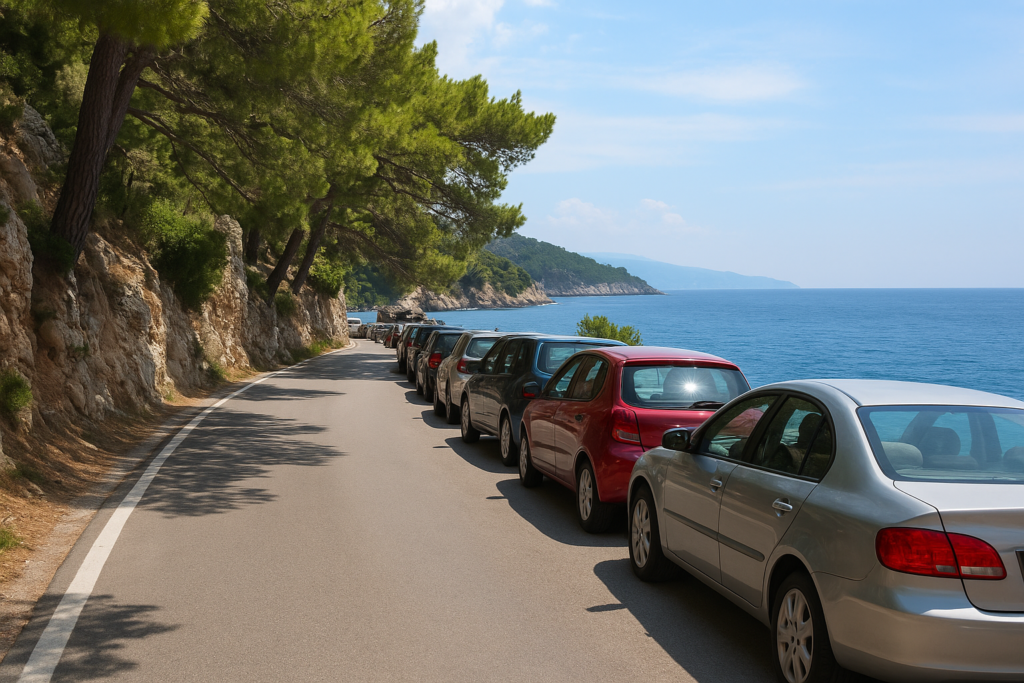
The parking situation at Punta Rata Beach Croatia is consistently mentioned as the single biggest frustration by visitors. Understanding this beforehand will save you considerable stress and money.
The Harsh Reality
Parking near the beach is limited and can be quite expensive. Visitors have reported high hourly or daily rates. Here’s what you need to know:
Official Parking Rates:
- Hourly rate: €3-4 per hour
- Daily ticket: €20-25
- Payment methods: Cash preferred, though some accept cards
Capacity Issues: The official parking lot holds approximately 50 vehicles. During peak season, this fills completely by 9:00-9:30 AM on most days. Once full, you have limited options.
Explore parking car Brela On Google map
The Parking Enforcement Situation
Multiple visitors report confusing or uncomfortable experiences with parking enforcement. Some visitors have reported negative experiences with parking attendants, describing them as aggressive.
Some travelers have encountered:
- Unofficial parking areas with unclear pricing
- Attendants collecting money for what appears to be private land
- Confusion about whether spaces are legal parking spots
- Inconsistent pricing between official and unofficial areas
Important Advice: Only park in clearly marked, official parking areas with visible signage and established payment systems. If approached by individuals collecting parking fees in unmarked areas, exercise caution.
Alternative Parking Strategies
Park Further Away and Walk: Several parking areas exist 10-15 minutes walking distance from the beach. These are typically less expensive or even free during off-peak season. The coastal promenade makes the walk pleasant.
Public Transportation: During summer, consider taking a bus or taxi to the beach, avoiding parking entirely. This is particularly sensible if you’re staying in nearby Brela or Makarska.
Stay Within Walking Distance: If you’re planning to spend significant time at Punta Rata, consider accommodation within walking distance. This eliminates parking stress entirely and allows you to arrive early before crowds.
Bicycle: Some travelers successfully use bicycles, though be aware that bike lanes are limited and you’ll share the road with vehicles.
Parking in Low Season
During low season parking is free at many areas around the beach. If visiting between October and May, parking challenges are minimal.
Where to Stay Near Punta Rata Beach
Choosing accommodation near Brela Punta Rata Beach significantly enhances your experience, allowing you to arrive early before crowds and return throughout the day.
Top Hotels (Closest to the Beach)
Bluesun Hotel Soline
Located a mere hundred meters from Punta Rata, this is a modern, multi-storey building skillfully decorated and seamlessly integrated into the local landscape. The hotel features a shady garden, outdoor swimming pool with relaxation area, dining room with magnificent sea views, sun terrace, spa with indoor pool, modern fitness room, sports fields, and areas for billiards, darts, and mini-golf. The hotel offers a massive breakfast buffet. This is the most convenient option for beach access.
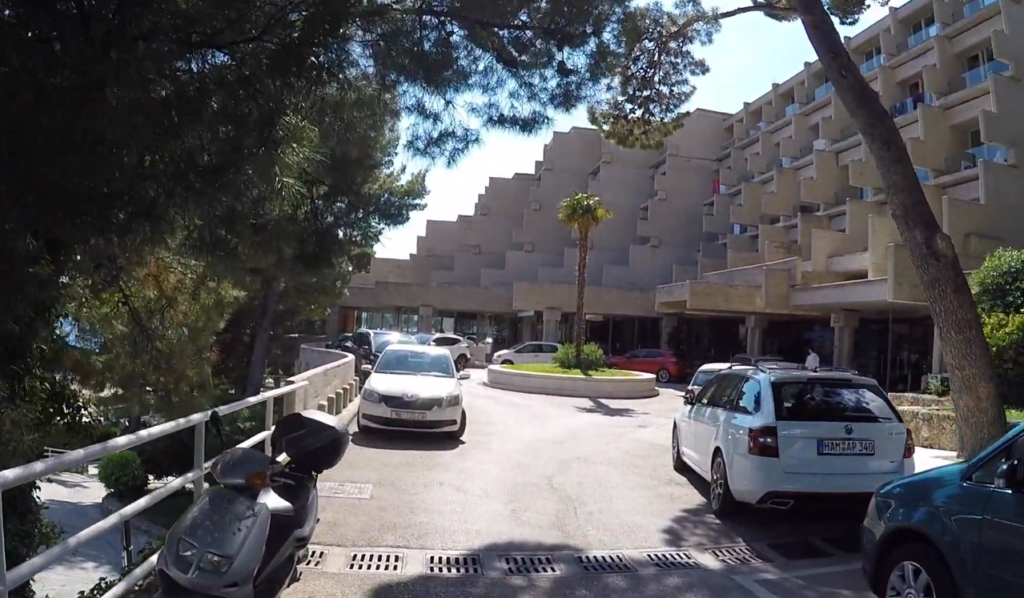
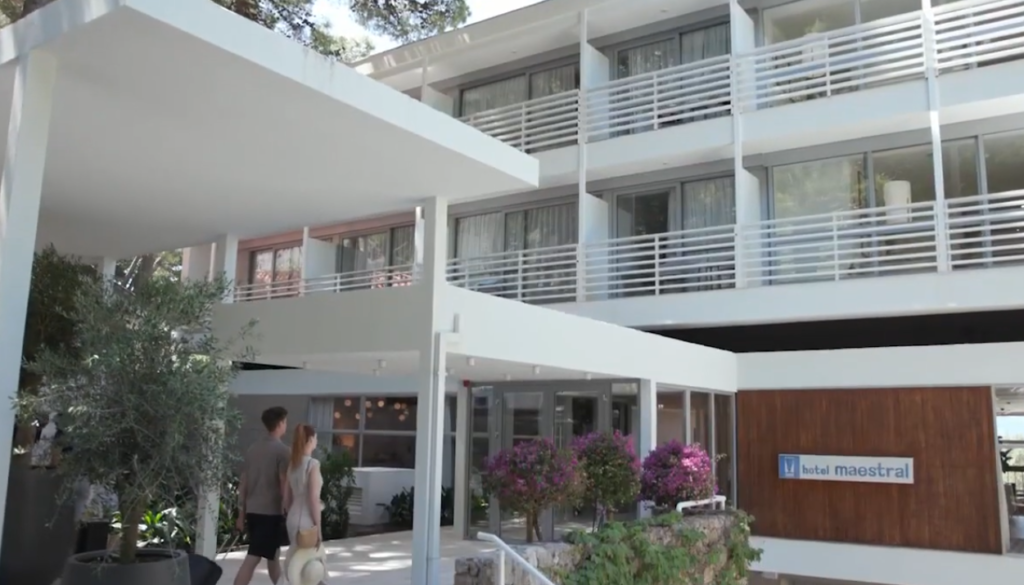
Bluesun Hotel Maestral
Located on the eastern side of Punta Rata, near the Brela Stone. Offers beautiful sea views, modern facilities, and direct beach access. Popular with families and couples seeking comfort and convenience.
Bluesun Hotel Marina
Another nearby option within the Bluesun chain, offering similar standards and proximity to the beach.
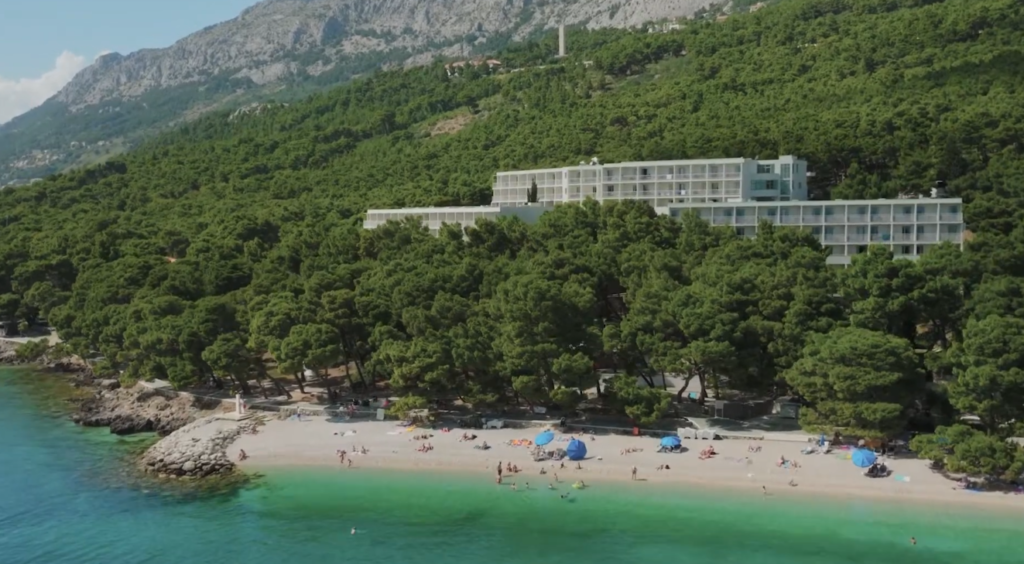
Apartments and Self-Catering
- Apartments Near Podrace Beach: Podrace Beach is adjacent to Punta Rata, connected by the coastal promenade. Apartments in this area offer excellent value, being just minutes from Punta Rata while typically being quieter and more affordable. Many feature sea views and kitchenettes for self-catering.
- Villa Loznica: Directly on the waterfront with easy access to restaurants and shops. Ideal for those wanting to be right on the water with apartment-style independence.
- Villa Paulina: Features a pool and sea views, within short walking distance to the beach. Offers balance between resort-style amenities and apartment flexibility.
Guesthouses and Budget Options
Brela town center (800 meters from the beach) offers numerous family-run guesthouses and pensions providing authentic local experience at more affordable rates. The walk to Punta Rata along the promenade is pleasant and takes 10-15 minutes.
Accommodation Strategy
- Book Early: During July and August, accommodation near Punta Rata fills months in advance. Book by March-April for summer visits.
- Consider Neighboring Areas: Brela extends several kilometers along the coast. Staying slightly further from Punta Rata (but still in Brela) often provides better value while maintaining beach access via the coastal promenade.
- Walking Distance Priority: If you plan to spend significant time at Punta Rata, prioritize walking distance over other amenities. This makes the most difference to your experience.
Nearby Attractions Worth Exploring
While Punta Rata Beach Croatia is undoubtedly the main attraction, the surrounding area offers numerous worthwhile experiences.
Other Brela Beaches
Podrace Beach
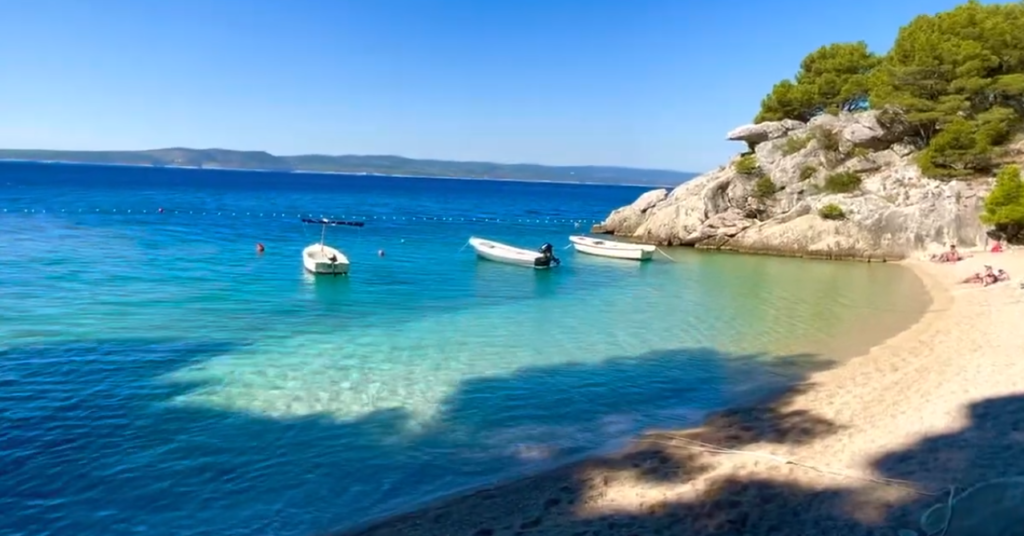
Located immediately adjacent to Punta Rata, connected by promenade. This beautiful cove features fantastic water color and free showers, with a promenade communicating with Punta Rata’s famous rock. Many visitors actually prefer Podrace for its slightly less crowded atmosphere while maintaining similar natural beauty.
Soline Beach
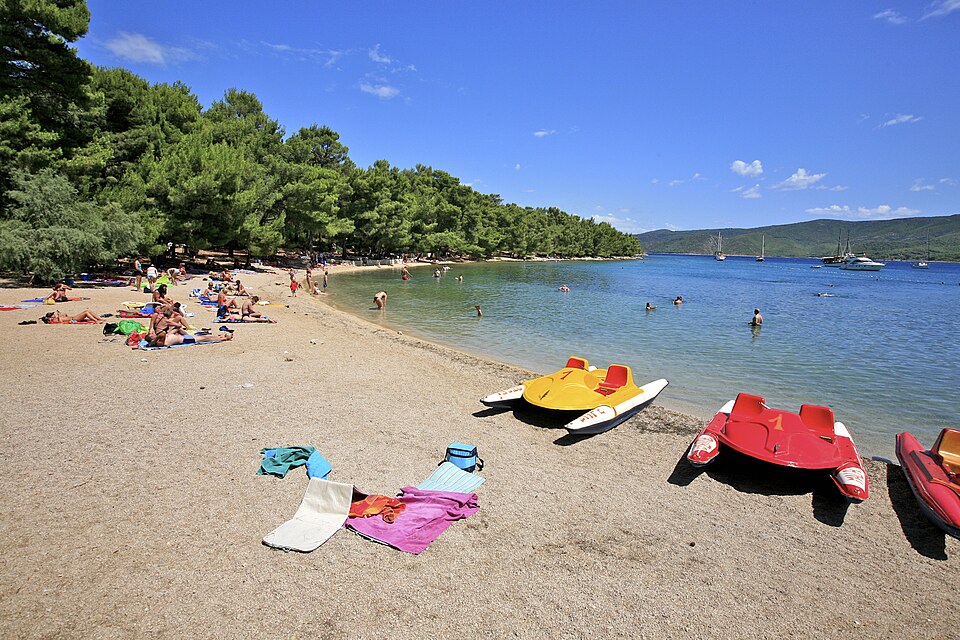
Located near the harbor, this beach features the Bluesun Hotel Soline’s facilities and tends to be somewhat less crowded than Punta Rata.
Jakirusa Beach
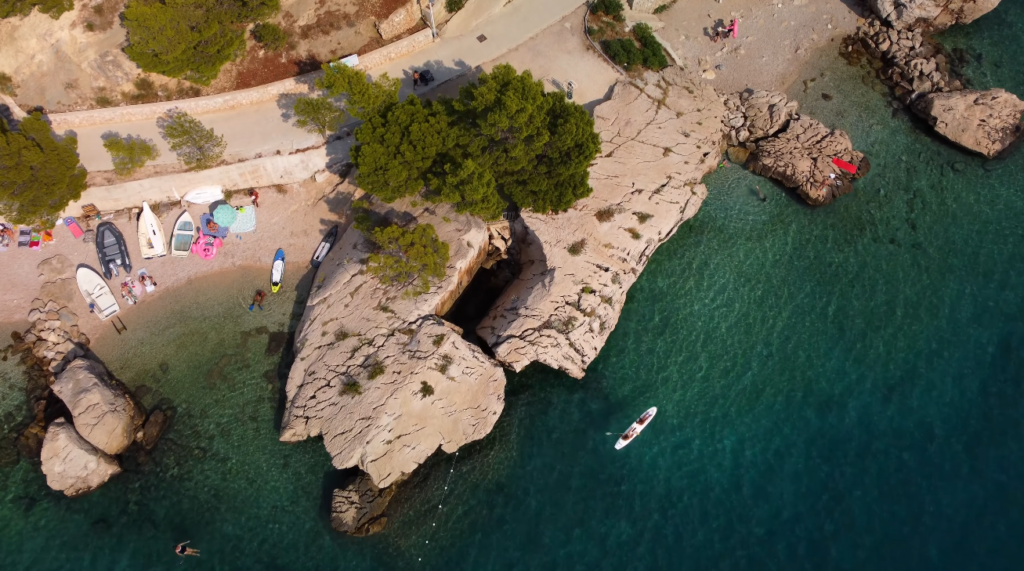
Further north along the coast, offering more secluded swimming spots and fewer tourists.
Biokovo Nature Park
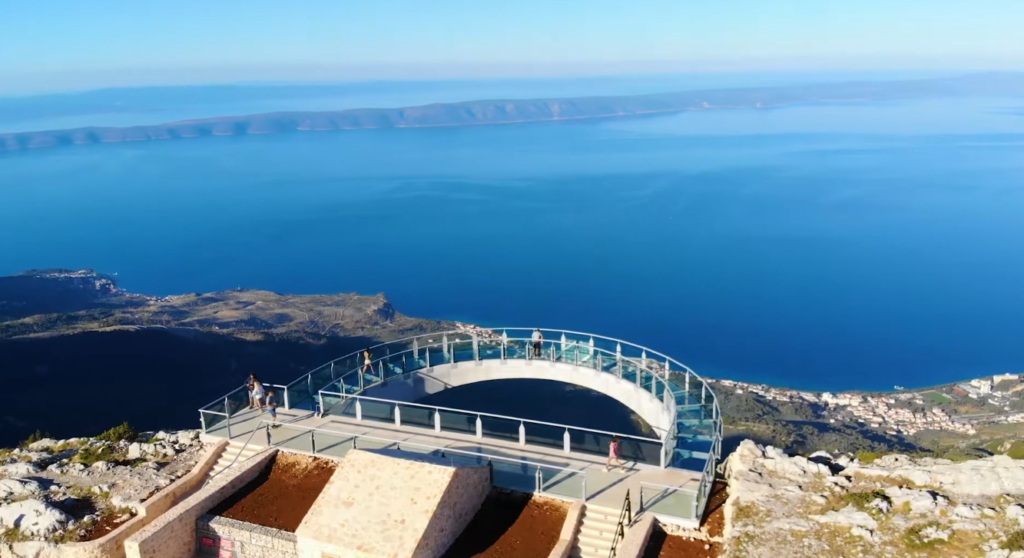
Biokovo Mountain is an awesome spot for outdoor activities beyond sunbathing and swimming. This dramatic mountain range rising behind Brela offers:
- Hiking trails with spectacular coastal views
- Vosac Peak: The most accessible summit, reachable by car most of the way with a final 30-minute walk
- Game of Thrones connection: Some filming for the show was done in the mountains over Brela and Baska Voda
- Nature observation: Endemic plant species and wildlife
Island Day Trips
Brač Island: Ferry services run from Makarska to Brač 5 times daily in high season and 3 times daily in low season. The famous Zlatni Rat beach and charming town of Bol make excellent day trips.
Hvar Island: Boat trips to Hvar and the ancient town of Jelsa are popular excursions. Full-day organized tours are available from Brela or Makarska.
Makarska (15km South)
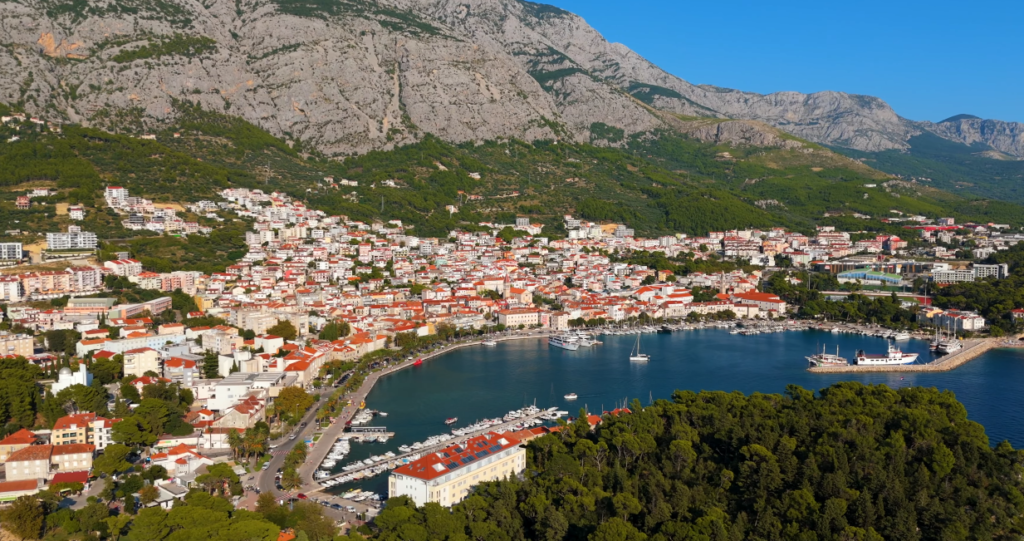
This larger town offers:
- More extensive shopping and dining options
- Historic old town with museums
- Vibrant nightlife scene
- Ferry connections to islands
- Wider variety of water sports and excursions
Omiš (25km North)
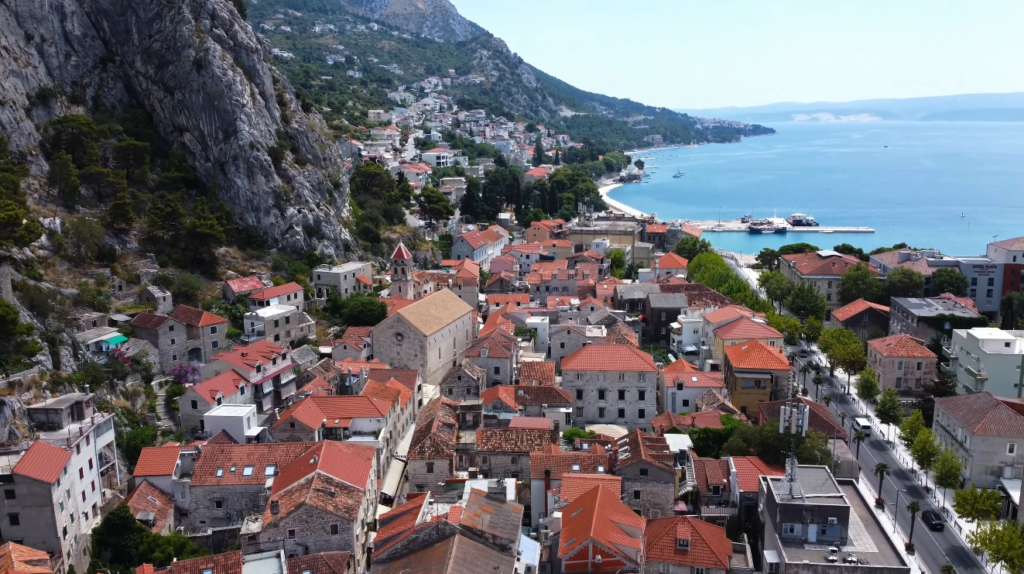
This historic town deserves at least a half-day visit. Once a pirate stronghold, Omiš now offers:
- Dramatic Cetina River canyon
- Rafting and zipline adventures
- Medieval fortress ruins
- Traditional klapa singing performances
- Charming old town streets
Split (50km North)
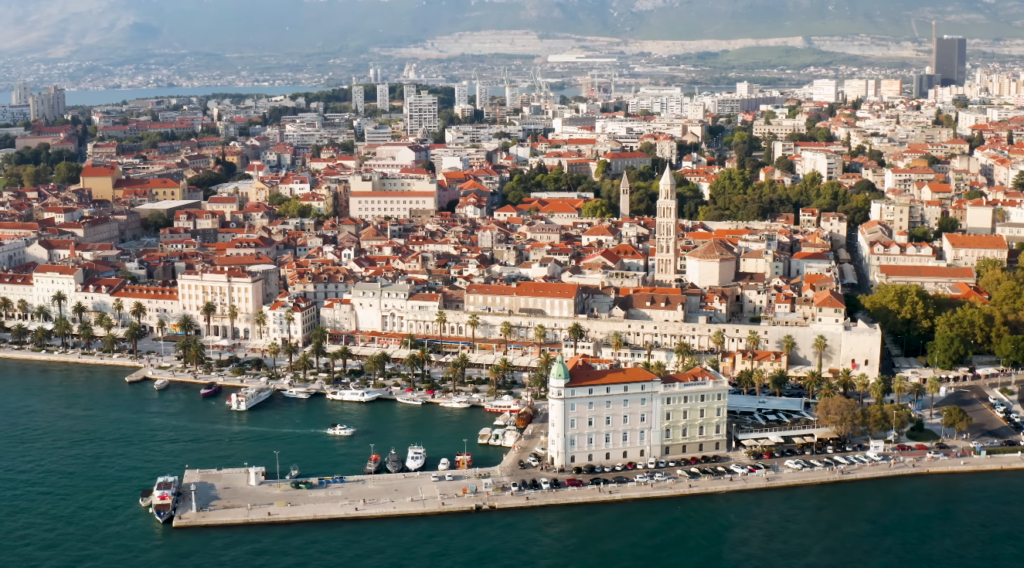
Croatia’s second-largest city features:
- UNESCO-listed Diocletian’s Palace
- Vibrant markets and waterfront promenade
- Museums and cultural attractions
- Excellent restaurants and nightlife
- Historic architecture spanning Roman to modern eras
Essential Tips from Real Visitors
These practical insights come directly from hundreds of verified visitor experiences:
Before You Go
- Water Shoes Are Essential: While the pebbles are smoother than many Croatian beaches, extended walking and water entry are more comfortable with protective footwear, especially for children.
- Bring Your Own Snorkeling Gear: The underwater visibility is excellent, making snorkeling highly rewarding. Bringing your own mask and snorkel ensures better fit and hygiene than rentals.
- Download Offline Maps: GPS navigation in this specific coastal area can be unreliable. Save offline maps and use satellite view to identify parking areas and beach access.
- Check the Weather: While summer is generally reliable, occasional storms can create rough seas. Check conditions before committing to a beach day.
During Your Visit
- Arrive Before 9:00 AM in Summer: This single tip appears in nearly every experienced visitor’s advice. Early arrival secures parking, provides choice of beach spots, and allows you to enjoy the beach before crowds arrive.
- Claim Shade Early: If you want shade, arrive early to secure a good spot under the pine trees. Shaded areas fill first and are highly valued during midday heat.
- Bring Sufficient Water and Snacks: While facilities are available, bringing your own supplies is more economical and ensures you have exactly what you want.
- Use Eco-Friendly Sunscreen: This is a protected marine area. Choose reef-safe, biodegradable sunscreen to minimize environmental impact.
- Explore Beyond Punta Rata: There are many beautiful beaches in Brela less crowded than Punta Rata. Walk the promenade to discover quieter coves with similar beauty but fewer people.
- Watch Your Belongings: Like any popular beach, petty theft can occur. Never leave valuables unattended; use hotel safes for anything important.
For Families
- Supervise Children Constantly: The water gets quite deep quickly, requiring vigilant supervision of children and inexperienced swimmers.
- Consider Alternative Beaches for Small Children: Some visitors suggest beaches walking toward Brela port, which have more gradual depths more suitable for young children.
- Utilize the Playground: The beach features a playground with inflatable slides and trampolines, providing entertainment for children when they need a beach break.
Money-Saving Tips
- Visit During Shoulder Season: May-June or September-October offer significantly better prices for accommodation while maintaining excellent beach conditions.
- Self-Cater: Apartments with kitchenettes allow you to prepare some meals, substantially reducing vacation costs compared to eating out for every meal.
- Free Parking in Low Season: Parking is free during low season, eliminating one of the significant costs of visiting during peak summer.
Photography Tips
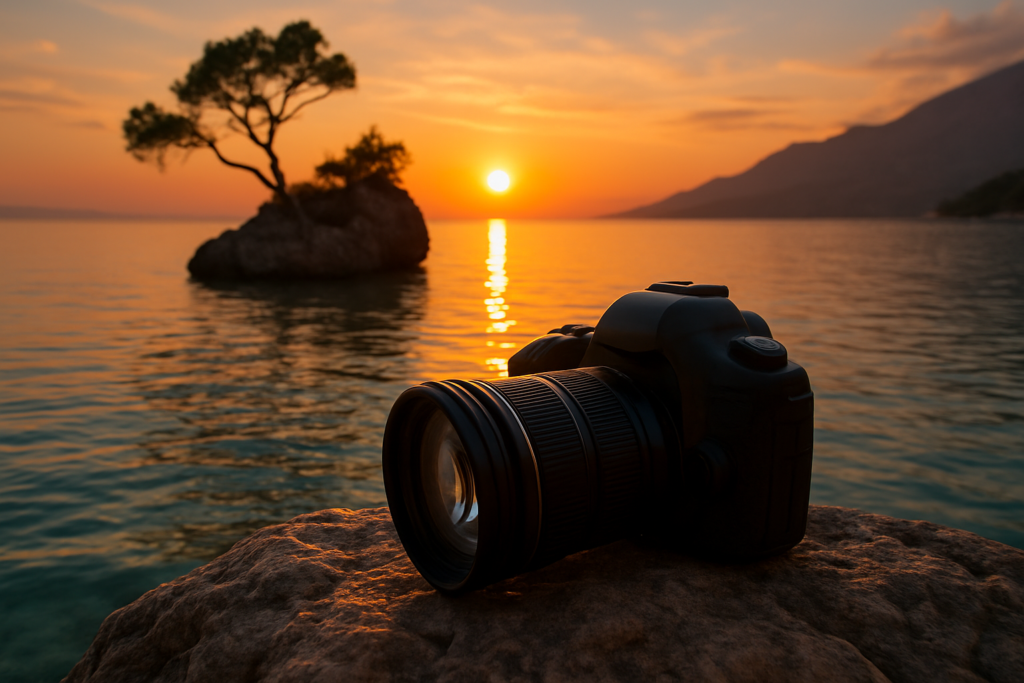
- Golden Hour Magic: Sunrise and sunset provide the most beautiful lighting for photographing the Brela Stone and coastline.
- Swim Out for Unique Angles: Some of the best photos come from swimming out and photographing the beach from the water, especially around the Brela Stone.
- Drone Regulations: Check current regulations before flying drones, as this is a protected area with specific restrictions.
Respecting the Environment
- Leave No Trace: The beach’s pebbles are prohibited from being taken as souvenirs. This protected area depends on visitors respecting its natural state.
- Proper Trash Disposal: Use provided bins and take any trash with you if bins are full. The beach’s pristine condition depends on everyone’s cooperation.
- Respect Marine Life: When snorkeling, look but don’t touch. Marine creatures and plants are protected in this conservation area.
Final Thoughts: Is Punta Rata Beach Worth Visiting?
After reviewing hundreds of visitor experiences and examining the beach from every angle, here’s the honest verdict: Punta Rata Beach absolutely deserves its world-famous reputation, but your experience depends entirely on managing expectations and timing your visit strategically.
When Punta Rata Shines
This beach is genuinely spectacular when you:
- Arrive before 9:00 AM during peak season
- Visit during shoulder season (May-June or September-October)
- Come prepared with water shoes, snorkeling gear, and supplies
- Stay within walking distance to avoid parking stress
- Accept that natural beauty attracts crowds and plan accordingly
The crystal-clear turquoise water, smooth white pebbles, natural pine forest shade, and iconic Brela Stone create a setting that genuinely lives up to its Forbes ranking. The Blue Flag certification assures you’re swimming in scientifically verified excellent water quality. The comprehensive facilities, professional lifeguards, and well-maintained amenities justify the destination’s popularity.
When to Consider Alternatives
If you’re visiting Croatia during peak July-August and can’t arrive early, consider exploring the many other beautiful beaches along the 7-kilometer Brela coastline. Beaches like Podrace (adjacent to Punta Rata), Jakirusa, or beaches in nearby Baška Voda offer similar natural beauty with significantly fewer crowds.
The Bottom Line
Punta Rata Beach earns its place among Croatia’s most beautiful beaches. The combination of natural beauty, verifiable water quality, comprehensive facilities, and iconic Brela Stone creates an experience worth seeking out. Just approach it with realistic expectations about crowds during peak season, prepare for parking challenges, and time your visit strategically.
For first-time visitors to Croatia, Punta Rata deserves to be on your itinerary—just make it an early morning visit or schedule it during shoulder season. For beach connoisseurs, this is one of those places where the hype is justified, provided you visit on your terms rather than fighting the crowds.
The Makarska Riviera offers so much beauty that even if Punta Rata isn’t perfect on your visit day, you’re surrounded by alternatives. But when conditions align—early morning light, calm turquoise water, the Brela Stone perfectly framed against pine-covered slopes, and enough space to enjoy it all—Punta Rata delivers on every promise of Mediterranean paradise.
Plan smart, arrive early, respect the environment, and you’ll understand why Forbes ranked this among the world’s most beautiful beaches.
FAQ
Punta Rata Beach is located in Brela on the Makarska Riviera, a stunning stretch of Croatia’s Dalmatian Coast known for crystal-clear water and pine-shaded bays.
Many travelers consider Punta Rata Beach in Brela one of the nicest beaches in Croatia thanks to its turquoise water, white-pebble shoreline, and the iconic Brela Stone.
The most photographed beach in Croatia is often Punta Rata Beach, especially the famous Brela Stone, which appears in countless postcards and travel guides.
At Punta Rata Beach you can enjoy swimming, snorkeling, stand-up paddleboarding, coastal walks, sunbathing, and taking scenic photos of the Brela Stone.
Yes—Punta Rata Beach is absolutely worth visiting for its Blue Flag water quality, dramatic scenery, family-friendly atmosphere, and some of the best coastal views in Croatia.