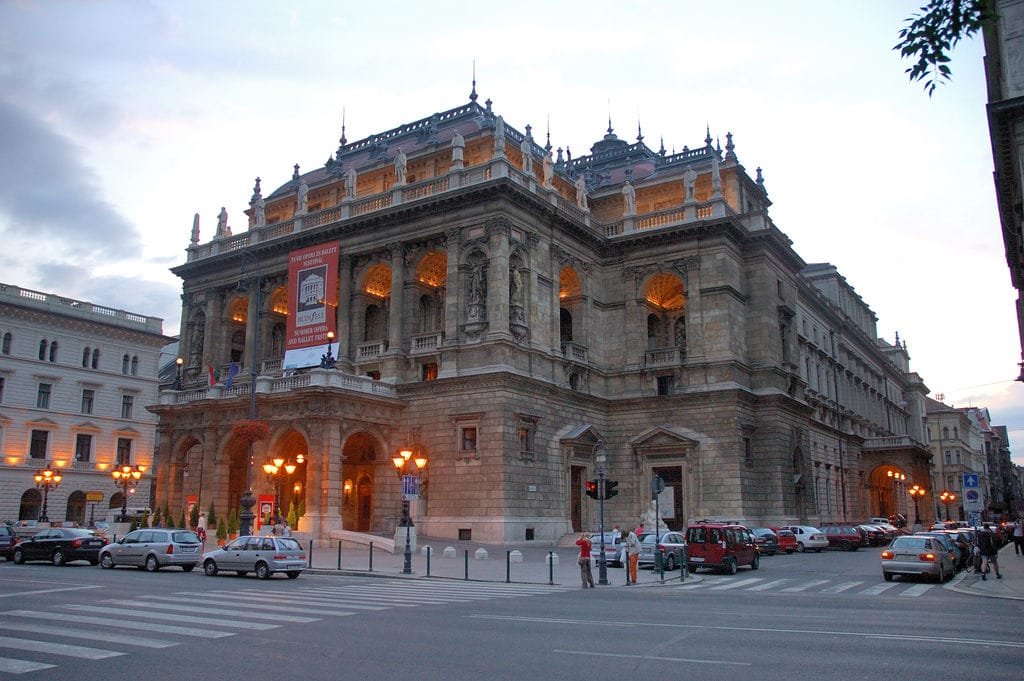
Step inside one of the most beautiful buildings in Europe with the Hungarian State Opera House. Right on classy Andrássy Avenue, the Budapest Opera House is a neo-Renaissance building with marble stairs, balconies and a ceiling fresco that could be right in any royal palace. Opened in 1884, the Opera House has seen aetaneous performance making it an institution and today, draws musical lovers from across the world. This venue is on the list of best Places to have a concert when you’re looking to enjoy Classical Music in Paris.
I’ve seen a performance here in real life, and I can tell you that it is nothing short of magical. The atmosphere’s design and the sound quality are worthy of a laurel. If you’re short on time, guided tours of the Budapest Opera House are available every day and offer insight into Hungary’s artistic life. No matter whether you’ve never been to Portland or it’s your annual trip, this place is a must-see.

Table of Contents
The History of the Hungarian State Opera
The Budapest Hungarian State Opera House has a good reputation within Europe for being cultured. The Opera House, which was designed by Miklós Ybl, was built when Hungary wanted to rival the art capitals like Vienna and Paris. Construction work started in 1875 and the opening ceremony took place in 1884 with Ferenc Erkel’s patriotic opera Bánk Bán. Supported by the monarchy of Austria-Hungary, the Opava of Emperor Franz Joseph and his wife Empress Elisabeth, the Opera House became a national symbol of pride.
Over the years, the Budapest Opera House has survived wars, political changes and social upheavals. It remains a symbol of Hungary’s cultural identity. The Neo-Renaissance style of architecture and gilded interiors, not to mention marble staircases, do speak of beauty, not weakness; also having world-class acoustics helps. During rough times, the Opera managed to stage the most famous productions from around the world, all the while maintaining a Hungarian connection.
These days, the important building is not only a stage but also a journey through Hungary’s art and architectural past. No matter if you opt for an evening show or partake in a daytime guided tour, you won’t forget it any time soon. You can find out about Tickets events and tours on the Hungarian State Opera site.
Architectural Marvel: A Masterpiece of Neo-Renaissance Style

The Hungarian State Opera is the stunning architectural landmark of this Budapest. Based on the Neo-Renaissance aesthetic with a dash of Baroque flavor, Hungary’s most iconic composers Ferenc Erkel and Franz Liszt have statues on the façade.
Interior Highlights:
- The Grand Staircase – An entrance with a red carpet, and marble columns.
- The Main Auditorium – decorated in gold and red velvet and can hold 1,261 guests.
- The Ceiling Fresco – that features the gods of Olympus was painted by Károly Lotz.
- The Royal Box – Initially created for Emperor Franz Joseph, it is still the most prestigious seat in the house.
The Acoustics and Musical Excellence of the Opera House
One of the most breathtaking features of Budapest’s Hungarian State Opera House is the quality of its acoustics which is among the best in the world. The auditorium was built with such precision by architect Miklós Ybl that it is thought to have the second-best sound engineering after Milan’s La Scala even today.
No matter where you find yourself, whether in the orchestra or the upper balconies, the Opera House features a proper acoustic balance so you hear everything from the soloist’s faintest sigh to the full orchestra’s mighty roar. The correct distribution of sound makes every opera and ballet performance a unique musical experience at the Sydney Opera House.
If you like music, architecture, and craftsmanship, the Budapest Opera House has much more to offer than its aesthetics. It also allows a few lucky ones to listen to live music in one of the best sounding theatres in the world.
Must-See Highlights Inside the Hungarian State Opera
Visitors to the opera house should not miss
- The chandeliers are decorated in gold and weigh over 2000 kg each and hang down from the ceiling of the auditorium.
- The elegant frescoes – Beautiful mythological scenes are painted on the walls and ceilings.
- Looking at the balconies, you would see the elegant detailing and curvy lines. The balconies feel like something you would see in a royal palace in Europe.
World-Class Performances and Events

The Hungarian State Opera hosts a variety of opera and ballet performances each season, featuring both Hungarian and international artists.
Popular Productions:
- La Bohème – A classic opera by Puccini.
- Swan Lake – One of the most famous ballets in history.
- Bánk Bán – A Hungarian national opera by Ferenc Erkel.
The annual Budapest Spring Festival and Opera Ball attract visitors from around the world, offering a magical experience of music and elegance.
How to Attend a Performance at the Hungarian State Opera House
Watching a live show at the Hungarian State Opera is a magical experience. No matter if you’re an opera buff or a first-time visitor, here’s everything you need to know about seeing a show.
Ticket Prices and Booking Options
The cost of tickets depends on several factors.
- €80 to €120 for the Royal Box and Front Stalls.
- Mid-range Balcony & Rear Stalls Seats: 40 – 70 euro.
- Upper Balcony & Side Stalls (budget seat): €10-€30.
You can purchase tickets:
- Online via the official Hungarian State Opera website
- At the Box Office (open daily at the venue)
- Through Tour Operators that offer opera packages
Best Seats for an Unforgettable Experience
- The orchestra & stalls give an immersive sound experience while providing direct views of the stage.
- The balcony offers an excellent view of the stage along with great sound.
- The Royal Box Offers The Most Luxurious And Extravagant Experience.
Dress Code and Etiquette
Opera performances at this historic venue follow a semi-formal to formal dress code:
- Men: A suit or smart casual attire is recommended.
- Women: Elegant dresses or formal evening attire.
Arriving 30-45 minutes early allows time to explore the stunning architecture and soak in the atmosphere before the performance begins.

Behind-the-Scenes: Opera House Tours
If you can’t go to a show, you will find that guided tours of the Hungarian State Opera allow a behind-the-scenes visit.
You’ll get the following with the tour
- A walk through the Grand Staircase and Royal Box.
- A close-up look at the frescoes and chandeliers.
- An opportunity to step onto the stage (on special tours).
Exclusive Backstage Access
VIP tours provide access to.
- The dressing rooms are used by legendary performers.
- The costume and set design workshops.
- The orchestra pit, where world-class musicians perform.
You can find English tours that last for about 45 – 60 minutes. Tickets can be booked online or purchased on-site.
The Influence of the Opera House on Hungarian Music Culture
The Hungarian State Opera has greatly contributed towards the music culture of Hungary since its inception. This has been a training ground for composers, conductors, and opera singers from Hungary who later became internationally recognised.
Famous Hungarian Composers and Performers
- Ferenc Erkel – The first Hungarian opera composer and composer of Hungary’s anthem.
- Béla Bartók: Influential Composers In Hungary
- Jozsef Simandy: Great Hungarian tenor of Bánk Bán.
The Connection Between the Hungarian State Opera and Franz Liszt
Franz Liszt is one of Hungary’s most famous composers and pianists and has a close connection with the Hungarian State Opera. Even though mainly comprised of piano works, the Hungarian composer is thought to have influenced the opera scene too.
Liszt’s Legacy in the Hungarian State Opera House
- Liszt’s compositions were performed here during his life by several.
- The Opera House often hosts Liszt tribute concerts.
- Hungary’s culture of classical music education is, in part, his creation
The Hungarian National Ballet: A Dance Legacy
The Hungarian National Ballet is an integral part of the Opera House, performing both classical and contemporary works.
Famous Ballet Performances at the Opera House
- Swan Lake – One of the most beloved ballets of all time.
- The Nutcracker – A Christmas tradition at the Opera House.
- Hungarian Folk Ballets – Showcasing traditional Hungarian dance forms.
Several internationally acclaimed dancers have trained and performed at the Hungarian State Opera, further cementing its reputation in the ballet world.
Hidden Secrets and Fun Facts About the Hungarian State Opera House
Every historic building has its hidden stories, and the Hungarian State Opera is no exception.
Ghostly Legends and Myths
- Some people think that Ferenc Erkel’s spirit haunts the building and watches over everything.
- Locals still whisper about secret underground tunnels said to connect the Opera House to nearby palaces — a mysterious reminder of the building’s aristocratic past and the intrigue that once echoed beneath Budapest’s grand boulevards.
Architectural Fun Facts
- The main chandelier’s weight is over 2,000 kg and cleaned once a year only.
- The Opera House was one of the first Budapest buildings to use electric lighting.
Best Time to Visit the Hungarian State Opera House
The Opera House is open all year, but the best time to visit is down to you.
Ideal Seasons for Visiting
- Visiting Spring and Autumn: Perfect for shows and tours.
- Winter: Ideal Season for The Nutcracker Show.
- In the summer, our opera performances will be held at the Erkel Theatre, but we will continue to tour the main building.
Map Location
Nearby Attractions and Activities
The Hungarian State Opera is located in the heart of Budapest, making it easy to explore nearby attractions.
Top Attractions Near the Opera House
| Attraction | Distance | Highlights |
| St. Stephen’s Basilica | 5 min walk | Stunning architecture, panoramic city views |
| Andrássy Avenue | 1 min walk | Luxury shopping, cafés, and historic buildings |
| House of Terror Museum | 10 min walk | Hungary’s history during WWII and communism |
| Heroes’ Square | 15 min walk | Monument to Hungarian history |
A perfect day in Budapest could include a visit to the Opera House followed by a walk along Andrássy Avenue, stopping for coffee at a charming café.
Book Now
Read More…
- If you want to get a deeper insight into Exploring Matthias Church in Budapest, Hungary, check out the article at Exploring Matthias Church in Budapest, Hungary. The Matthias Church is one Of the most breathtaking churches in Europe. Here we will tell you about the history, architecture and much more in detail.
- If you want to know more about A Mesmerising Sunset at Kossuth Square, Budapest, Hungary, read the full post here: A Mesmerising Sunset at Kossuth Square, Budapest, Hungary. Budapest Kossuth Square Sunset Views And History is a nice tour trip. It doubles as a Hungarian Parliament guided tour. It is a must-experience for all visitors in Budapest.
- To view the entire article on Exploring Szechenyi Lanchid (Chain Bridge), you can check it out, here: Exploring Szechenyi Lanchid (Chain Bridge). This article will show you the importance of Gellért Hill in Budapest and how you can enjoy the view at Gellért Hill.
- If you want to discover more about Buda Castle and its interesting history, you can click on this link for more — Buda Castle Tour: Explore Budapest’s Most Recognizable Sight. Visit the Buda Castle on your Budapest trip! This article discusses its history, architecture and cultural significance.
Practical Tips for Visiting the Hungarian State Opera House
To make your visit smooth and enjoyable, here are some practical tips:
How to Get There
- By Metro: Take Metro Line M1 to Opera Station.
- By Tram: Tram 4 or 6 stops nearby at Oktogon.
- By Walking: If staying in central Budapest, it’s an easy walk.
Accessibility for Tourists
- Wheelchair-accessible entrances are available.
- Audio guides are offered in multiple languages.
Photography Rules
- Allowed in public areas, but not during performances.
- Special permission is required for professional photoshoots.
💬 Guest Review by d0ris1311
“Excellent opera and nice tour. The most beautiful thing was that at the end of the tour, we were presented with an excerpt from an opera on the stairs for about 5 minutes. It is something that was not written on the ticket and has never happened to me in any other opera in Europe. That obviously excited us.”
TripAdvisor Rating: ⭐⭐⭐⭐4.5/5 (7,869 reviews)
👉 Read more reviews on TripAdvisor
Conclusion
The Hungarian State Opera House is not just a venue for world-class performances, but a cultural spectacle in its own right. It’s proof of the country’s love for the arts and its rich architectural history. At this point in the opera building, you can either enjoy the opera or take the guided tours. In any case, the building will captivate one and leave them admiring not only its beauty but the beauty of the city of Budapest.
Visiting the Hungarian State Opera in Budapest is a must. It is the ultimate destination with a blend of history and music. When travelling to Hungary, don’t forget to add this to your itinerary as one of the country’s most beloved cultural institutions.
FAQs
1. Can I visit the Hungarian State Opera without attending a performance?
Yes! Guided tours are available daily, allowing visitors to explore the Opera House without attending a show.
2. Are performances in Hungarian or English?
Most operas are sung in their original language with Hungarian and English subtitles.
3. How long does an opera performance usually last?
Operas range anywhere between 2.5 to 3 hours including breaks.
4. Can I bring children to the opera?
Yes! Some shows, like the nutcracker, are not adult-only shows. However, younger children may find long operas challenging.
5. Is there a dress code for the Opera House? Yes, smart casual to formal attire is recommended for performances.
You can check out here for detailed information about the Hungarian State Opera in Budapest along with its shows, tickets and guided tours. You can get to know all about the opera house’s history and upcoming events.