When I found myself at the base of Szent István Bazilika which is known as St. Stephen’s Basilica Budapest I became completely awestruck. This architectural masterpiece stands as both Hungary’s largest church and the city’s most prominent landmark while delivering an unforgettable experience that lingers after your departure.
The basilica stands in the middle of the city to provide its visitors with more than just spiritual contemplation. The basilica houses multiple ornate altars and sacred artworks that reveal Hungarian historical narratives alongside the Holy Right Hand of St. Stephen which functions as the most important relic for the entire nation. People who love panoramic views should not miss climbing to the dome because the spectacular views of Budapest’s skyline will remain unforgettable forever.
The St. Stephen’s Church Basilica should be at the top of your list if you have any interest in history or architecture or want to find the best activities in Budapest. The place embodies both Hungarian heritage and divine beauty and serves as a living testament to Hungary’s national spirit.

Table of Contents
The History of St Stephen’s Church Basilica
The grand St. Stephen’s Basilica (Szent István Bazilika) stands as a national symbol because it was built through Hungarian perseverance and faith and represents the essence of Hungarian identity. King Stephen I received recognition through the Basilica because he established the Hungarian state while also being its first Christian ruler.
The construction started in 1851 but the work encountered prolonged difficulties during the following years. The original architectural design by József Hild suffered a catastrophic failure when its dome collapsed in 1868 which necessitated rebuilding the main structure of the church. The central structure of the church received its new design from Miklós Ybl after Hild’s death as he implemented Neo-Classical elements combined with Renaissance and Baroque architectural features.
József Kauser completed the Basilica after Miklós Ybl took over the project when construction lasted more than five decades until its consecration in 1905. At 96 meters the structure maintains joint status as Budapest’s tallest building with the Hungarian Parliament building which reflects the equal status of church and state in Hungarian society.
St. Stephen’s Basilica stands as a resilient monument because it endured through various wars as well as political transformations and restoration initiatives which protected Hungary’s spiritual and cultural heritage. Millions of people visit this place each year to experience its beauty as well as its story about Hungarian national pride and dedication.
Hungarian State Opera, Hungary A Timeless Masterpiece of Music
Architectural Marvel of St Stephen’s Church Basilica
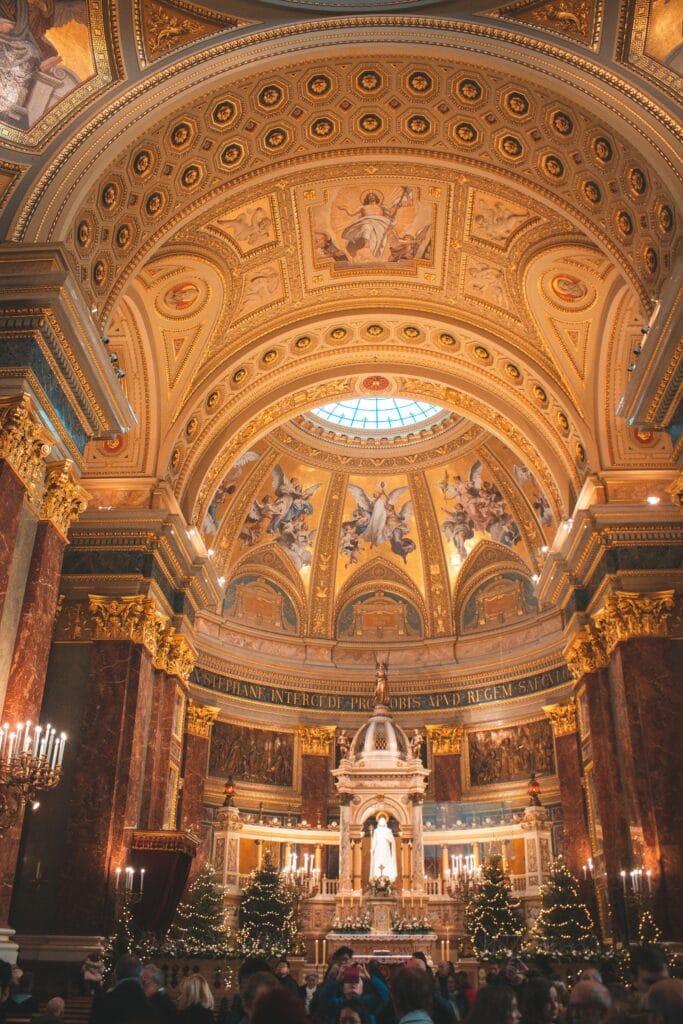
When I experienced the towering dome of St. Stephen’s Basilica in Budapest I was left speechless by its magnificence. The architectural masterpiece unites Neoclassical with Renaissance Revival and Baroque elements to become Europe’s most beautiful church and a masterpiece of Hungarian construction.
The Basilica reaches 96 meters in height which equals the height of the Hungarian Parliament building to represent the equal status of religious institutions and governmental authority. The Basilica’s dome stands out because it offers panoramic views of Budapest when visited from the top while the two bell towers create a beautiful frame around it which can be seen from numerous locations throughout the city.
Step inside, and you’re greeted by:
- The walls display extensive frescoes that portray religious and historical events.
- The centuries-old polished marble columns demonstrate their enduring strength and artistic value.
- Gold-accented interiors that shimmer in the candlelight, radiating a sacred atmosphere
The Basilica presents itself as a masterpiece through every measurement because its designers focused on creating a structure that inspires people. The breathtaking visual and spiritual encounter at St. Stephen’s Basilica will leave architecture enthusiasts as well as history buffs and photographers speechless.
Exploring Matthias Church in Budapest Hungary
Book Now
How to Get to St. Stephen’s Basilica
The location of St. Stephen’s Basilica proves simple to reach because it stands in the middle of Budapest. The Basilica surprised me with its central position during my morning city walk.
📍 Basilica Location
The Basilica stands at Szent István tér which offers easy walking distance to Andrássy Avenue and the Hungarian Parliament.
🚇 By Metro
The most efficient route to reach the Basilica involves taking Metro Line M3 (Blue Line) to Arany János utca. The Basilica’s main square becomes accessible through a 2-minute walk from this location.
🚌 By Bus
Several city buses stop nearby. You can take:
- Bus 9 – Runs through the city center.
- Bus 15 or 115 – Stops just around the corner from the square.
🚶 On Foot
If you’re already in the city center, walk! It’s just:
- 10 minutes from the Parliament Building
- 5 minutes from Deák Ferenc tér (a major transport hub)
Strolling through the charming streets that lead to the Basilica offers a great way to experience Budapest’s Old Town atmosphere.
Ticket Information for St. Stephen’s Basilica
Entry Fees:
- 🆓 General Entry to the Basilica’s main interior: Free (donations are appreciated).
- 🎫 Panoramic Dome Access (includes elevator + stairs):
- Adults: 2,000 HUF (~€5)
- Students/Older People: 1,500 HUF (~€3.75)
- 🧤 The Holy Right Hand Chapel is accessible for free but visitors can give donations.
Opening Hours:
- Monday–Friday: 9:00 AM – 5:00 PM
- Saturday: 9:00 AM – 1:00 PM
- Sunday: 1:00 PM – 5:00 PM
🕊️ The church holds regular masses while photography remains prohibited during worship services.
✅ Pro Tip: Visit the site during early morning or late afternoon to avoid crowds and get the best light for photography, especially if you’re heading to the dome.
Map Location
The Holy Right Hand – Hungary’s Sacred Relic
Basilica visitors become fascinated by the Holy Right Hand which remains the preserved right hand of King St. Stephen. A glass case in the Basilica contains this holy artifact which many people consider to have sacred healing abilities.
Every year on St. A procession bearing the Holy Right Hand travels through Budapest streets on August 20th to welcome thousands of believers along with tourists.

What You Can See from the Dome: Top Nearby Landmarks Around St. Stephen’s Basilica, Budapest
You can climb the dome of St. From the dome of St. Stephen’s Basilica you will get panoramic views of Budapest that are breathtaking in nature. From this viewpoint, visitors can see several of Budapest’s main and historical landmarks. The following are the main attractions in the area that you should not miss:
The Hungarian Parliament

Budapest features the Hungarian Parliament Building as its most visible landmark which combines Neo-Gothic architecture with Danube Riverfront location. Parliament building finished its construction in 1904 while it serves as the seat for both the Holy Crown of St. Stephen and the National Assembly of Hungary. The Parliament building represents both the historical past of Hungary and its political power and its magnificent architectural style. The Parliament Building remains a popular attraction for visitors in the central area of the city from Kossuth Square during the day and at night.
The Buda Castle

Buda Castle (Budavári Palota) stands as Hungary’s most popular attraction on Castle Hill. The location offers beautiful views of the Danube River while facing Budapest. Throughout the Middle Ages this royal fortress served as both a palace and military fortress which survived many wars and numerous transformations in the nation. Throughout history this place has become a masterpiece of architecture.
Hungary’s monarchs previously occupied Buda Castle which serves as home to the Széchenyi Library, the Budapest History Museum and the Hungarian National Gallery. Throughout history the castle complex has been shaped by numerous kings and empires because it showcases Baroque, Gothic and Renaissance architectural elements. The 48-meter-tall dome stands tall above the Budapest skyline making it easily recognizable. The establishment remains essential to the present-day identity of the city.
Read More.
- The Buda Castle Cave Tour: Discover the Hidden Subterranean World of Buda Castle offers more information about this fascinating tour for those interested in underground exploration. This article provides background information about the caves together with an overview of their history and what visitors can expect from this unique tour.
Book Now
The Danube River

The Danube River (Duna) ranks as the second-longest river in Europe because it runs through ten countries while functioning as an essential artery of cultural and historical and commercial exchange. The river serves as a central part of Budapest as it divides the city into Buda and Pest districts while providing Europe’s most stunning river views.
The Danube River extends 2,850 kilometers (1,770 miles) from Germany’s Black Forest to the Black Sea while maintaining its status as a vital trade route and cultural connection for multiple centuries. The Danube Riverbanks in Budapest display its extensive historical significance through the UNESCO World Heritage sites that include the Hungarian Parliament, Buda Castle and Chain Bridge. These landmarks make the Danube one of the most scenic urban riverfronts in the world.
Shoes on the Danube Bank – A Haunting Memorial in Budapest
Concerts and Events at St. Stephen’s Basilica
St. Stephen’s Basilica stands as Budapest’s most beautiful church while also serving as its most important concert space. The basilica welcomes world-class musical performances because of its outstanding acoustics and its stunning interior which creates unforgettable experiences for all visitors.
What Makes These Events So Special?
Attending an evening concert at this location allows me to confirm that music resonating beneath the gilded dome creates a truly magical experience. The sacred architectural design harmonizes with classical musical compositions to produce an experience which deeply affects both cultural and spiritual aspects.
🎼 Concert Highlights:
- Mozart’s Requiem – Performed by some of Europe’s finest orchestras and choirs.
- Händel’s Messiah – A beloved Christmas tradition.
- Bach and Vivaldi Organ Concerts – Showcasing the Basilica’s majestic pipe organ.
- Easter and Advent Concerts – Seasonal performances that fill the nave with rich sound and meaning.
The evening concerts take place at the basilica where visitors can buy tickets either through online platforms or at the entrance. People should purchase their tickets in advance when visiting during holidays or cultural events since performances tend to become fully booked.
🎟️ Insider Tip: Major religious events at St. Stephen’s Basilica offer free concert admission. Check the official event calendar or reputable tour platforms for up-to-date schedules and ticket prices.
Visitors who attend concerts at St. Stephen’s Basilica in Budapest gain access to Hungarian musical traditions within this sacred building.
Visitor Tip: How to Make the Most of Your Visit to St. Stephen’s Basilica
Visitors who want to experience St. Stephen’s Basilica without crowds should visit during early morning or late afternoon because these times offer peaceful conditions and excellent photo opportunities of both the interior and dome views.
Visitors who plan to climb the dome should wear comfortable footwear since they will need to use elevators and stairs to reach the top. Booking dome tickets in advance through online channels will prevent you from waiting in long lines when visiting during peak tourist seasons and holidays.
The evening organ concerts at the basilica provide an exceptional opportunity to experience both its world-class acoustics and sacred atmosphere when your schedule permits.
Remember that the basilica functions as an active place of worship so you should maintain low noise levels and wear appropriate clothing when services are taking place.
Conclusion
St. Stephen’s Basilica stands as a living masterpiece which unites Hungarian historical roots with religious traditions and cultural sophistication into an unforgettable encounter.
Every visitor to the basilica discovers meaningful value whether they ascend to the dome for views or experience the organ concert or seek inner peace in its majestic sanctuary.
The site represents a sacred connection between faith and art while history echoes through its architectural and musical elements and Budapest’s essence emerges to life.
A visit to St. Stephen’s Basilica should be at the top of your Budapest itinerary because the experience will stay with you after your trip ends.
FAQs
1. Is it free to go into St. Stephen’s Basilica?
Visitors can enter the main hall without charge but they should consider making a donation of 500 HUF. The dome lookout and treasury require a different ticket for entry.
2. Why is St. Stephen’s Basilica famous?
The basilica stands out for its neoclassical design and its panoramic dome views of Budapest and its role as the final resting place of King Stephen I’s right hand.
3. Is it worth going inside St. Stephen’s Basilica in Budapest?
Absolutely. The interior features elaborate altars together with stained-glass windows and one of Europe’s most beautiful organs. The basilica stands as one of Budapest’s leading cultural and spiritual landmarks.
4. Whose hand is in St. Stephen’s Basilica?
The basilica safeguards the “Holy Right” which contains the mummified right hand of St. Stephen I who became the first King of Hungary and established the Hungarian state.
5. How tall is St. Stephen’s Basilica in Budapest?
The basilica stands at 96 meters tall which matches the height of the Hungarian Parliament Building. The height represents the historical balance between religious and governmental power in Hungary.