Stonehenge stands as a mystical monument on the Salisbury Plain in Wiltshire England that draws people with its enigmatic presence and its magnificent stature. This stone circle near Salisbury at a distance of 8 miles (13 kilometers) has maintained its status as a prehistoric engineering wonder and sacred site which people have studied and admired for over 4,500 years.
Stonehenge attracts historians and archaeologists and travelers since it received UNESCO World Heritage Site status while they attempt to understand its origins alongside construction techniques and cultural value. New scientific findings along with archaeological investigations have enhanced our understanding of the site by revealing the advanced engineering abilities and sacred traditions of its ancient builders.
Stonehenge enables people to directly connect with ancient British heritage by experiencing its massive size and sacred energy which made it a worldwide famous landmark.
Table of Contents
Historical Overview
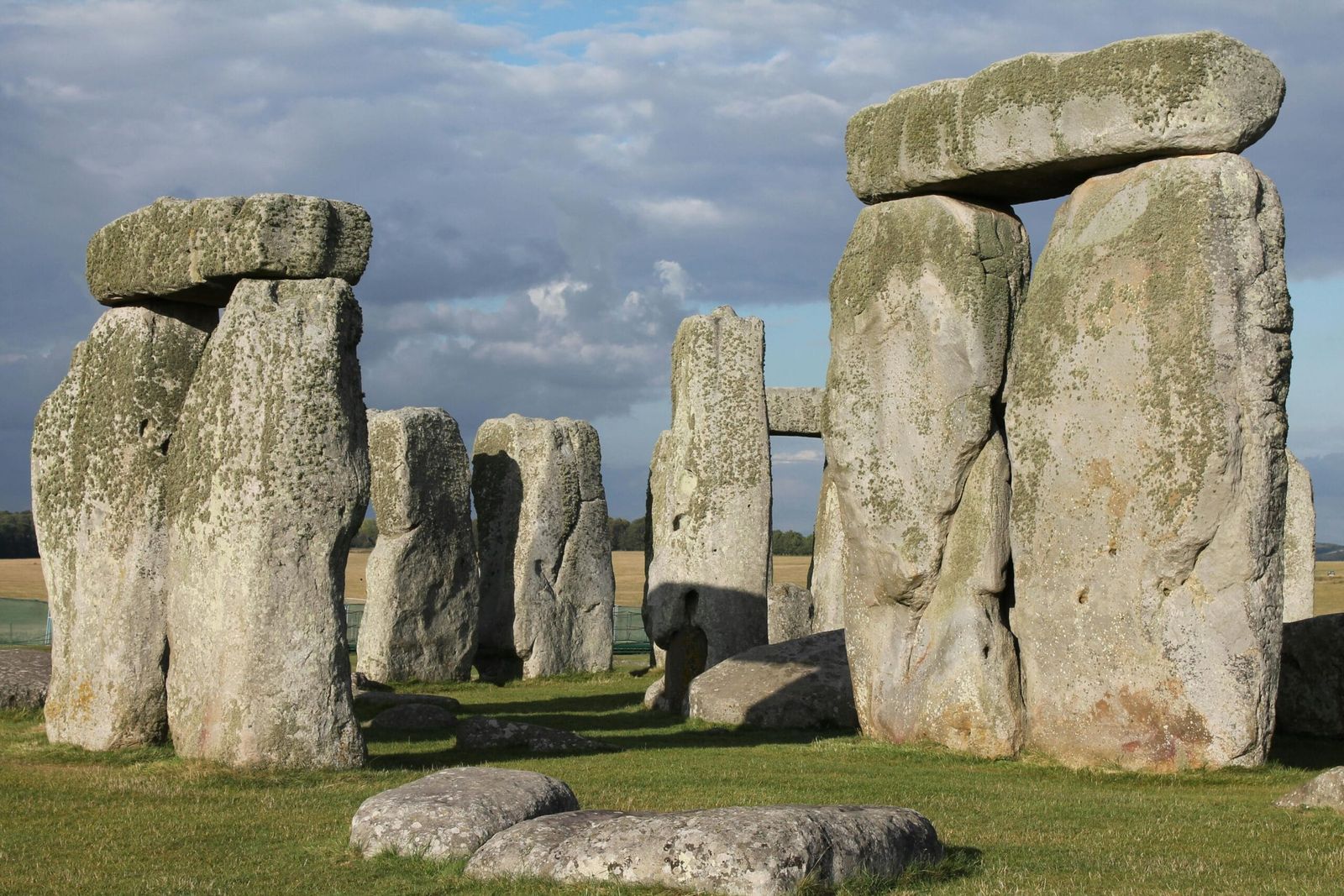
The construction of Stonehenge occurred through multiple stages between 3000 and 2000 BC when skilled communities created one of the world’s most recognized ancient monuments. The construction purposes of Stonehenge continue to fascinate historians and archaeologists which has enhanced its mystical aura.
The outer ring of Stonehenge consists of large sarsen stones that reach heights of 13 feet (4 meters) while each weighs about 25 tons. The builders placed flat lintel stones at the top of the structure which demonstrated exceptional engineering capabilities for their ancient era. The builders constructed a horseshoe arrangement of bluestones from Wales’s Preseli Hills which they transported over 150 miles to create an inner circle at the monument.
During summer solstice the monument faces the eastern sun which indicates its use as a seasonal tracker or ceremony site. Archaeologists discovered ancient graves throughout the site which demonstrates that Stonehenge served as a burial site since approximately 3000 BC.
Today visitors at Stonehenge can walk through ancient paths while experiencing traditional weight and observing how human collective effort creates lasting masterpieces.
Map Location
Stonehenge Altar Stone Discovery : New Origins Revealed from Scotland
The researchers achieved a crucial breakthrough about Stonehenge’s development in August 2024. A new research proved that the biggest bluestone at the site which they named “Altar Stone” actually originated from northeast Scotland’s Orcadian Basin instead of Wales as experts had previously believed.
This discovery marks a big shift in the story of Stonehenge. Archaeologists had believed for many years that all bluestones originated from the Preseli Hills in southwest Wales approximately 150 miles distant. The newly discovered connection reveals that prehistoric networks stretched across Britain from Scotland to southern England proving how extensive these networks were.
The research indicates that prehistoric people transferred stones and ideas and traditional practices and technological innovations across extended distances. Stonehenge functioned as an element of a broad cultural network which spanned across multiple communities stretching across hundreds of miles. The newly discovered information adds to the enigma surrounding Stonehenge construction while revealing the challenging process of moving massive stones across extensive distances during prehistoric times without contemporary equipment.
Researchers actively study the Altar Stone today because they aim to reveal more secrets hidden within Stonehenge’s ancient stone structures.
Visiting Stonehenge: What You Need to Know
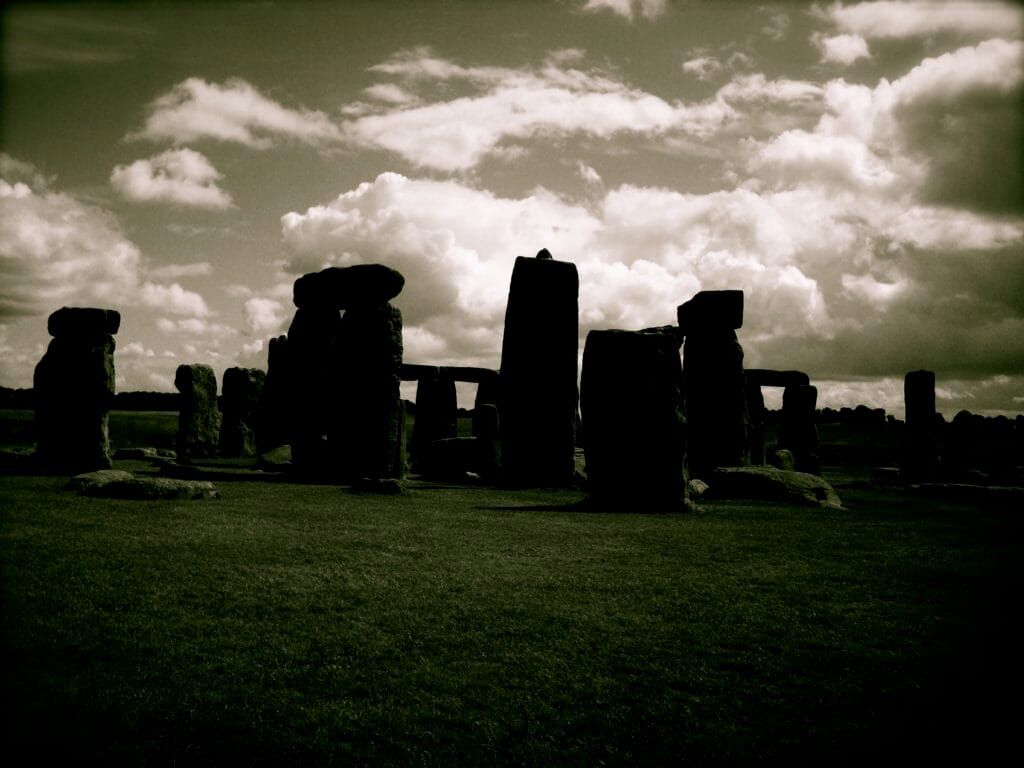
The English Heritage organization operates Stonehenge as a year-round destination for deep exploration of the world’s most enigmatic ancient site.
You need to pass through the Stonehenge Visitor Centre which is situated 2 km (1.2 miles) from the stones before you reach the famous stone circle. The center provides both interactive displays and hundreds of archaeological treasures as well as a 360-degree virtual experience that shows Stonehenge from an ancient perspective.
After the shuttle ride or walking path you will reach the monument to observe the large sarsen stones while taking in the precise layout and the Salisbury Plain’s atmospheric scenery. Audio guides provided in multiple languages enable you to move at your own speed during exploration.
- Address: Near Amesbury, Wiltshire, SP4 7DE, England
- Opening Hours: Open daily from 9:30 AM to 5:00 PM (last entry at 3:00 PM). Opening times can vary slightly during special events like the Summer Solstice.
- Book your tickets in advance through the online system because it is essential for entry. Early booking of reservations results in cost savings while English Heritage members together with National Trust members gain free admission.
Stonehenge stands as a UNESCO World Heritage Site which belongs to the Stonehenge and Avebury World Heritage Site complex allowing visitors to experience this international cultural treasure.
Travel Tip: Visitors should plan their Stonehenge visits during early morning or late afternoon to capture optimal photography conditions while enjoying a peaceful and enchanting stone environment.
Tips for an Unforgettable Visit
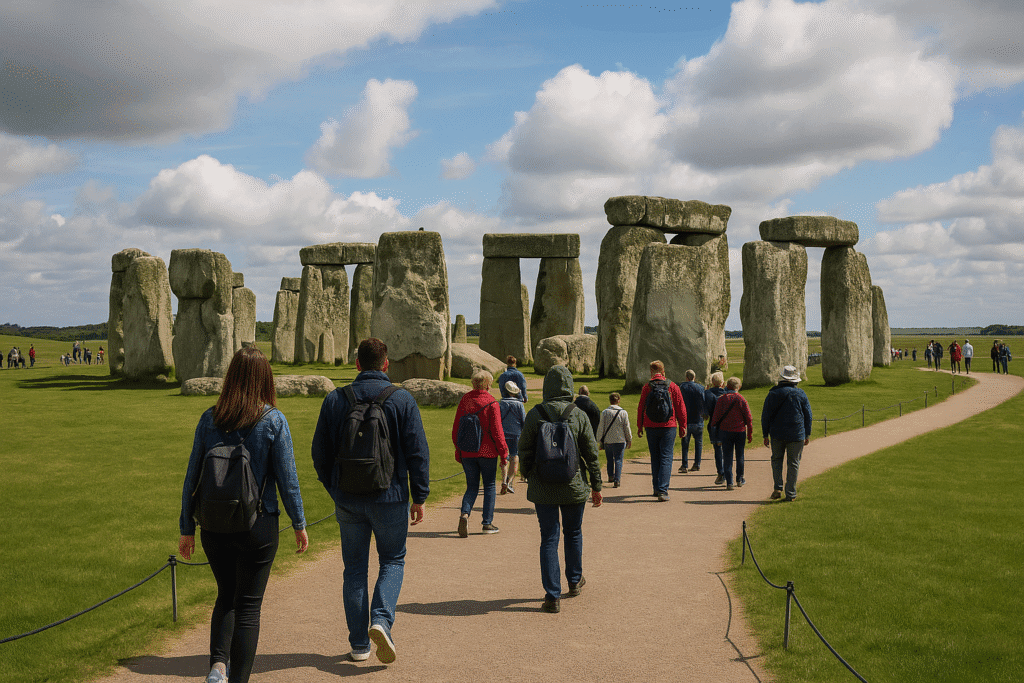
- Wear appropriate clothing for weather conditions since the Salisbury Plain experiences wind and rain. Visitors should wear comfortable walking shoes together with layers of clothing.
- Book your Stonehenge tickets through online platforms in advance because this site attracts many visitors especially during summer months and solstice events.
- Stonehenge exists as a World Heritage Site that requires visitors to follow all guidelines and stay on designated paths for preservation purposes.
- Visit Avebury stone circle and Salisbury Cathedral as part of your Wiltshire cultural tour to enhance your experience.
Top Nearby Attractions to Visit After Stonehenge
Stonehenge functions as a historical gateway to Britain’s ancient heritage even though your visit does not need to end here. The area surrounding Wiltshire includes various significant historical sites and cultural landmarks which match the grandeur of Stonehenge. You can discover several excellent destinations throughout Wiltshire after visiting Stonehenge which include both Neolithic and medieval attractions alongside peaceful natural landscapes.
1. Avebury Stone Circle
Location: Avebury, SN8 1RF – approximately 40 minutes from Stonehenge
Avebury stands as the world’s largest stone circle beneath the title of Stonehenge’s more tranquil version. The site allows visitors to move freely through its massive stone structures which creates an intensely immersive experience. A UNESCO World Heritage Site comprises an ancient circle that completely encircles the tiny village thus enhancing the site’s charm.
2. Old Sarum
Location: Salisbury SP1 3SD – about 15 minutes from Stonehenge
Old Sarum is an archaeological site that holds a number of layers of history. It started as an Iron Age hillfort, then turned into a Roman settlement, before being transformed into a Norman castle, and then into the original site of Salisbury’s first cathedral. It provides amazing views over the countryside as well as many ruins which help to tell the story of British history.
3. Salisbury Cathedral & Magna Carta
Location: The Close, Salisbury SP1 2EJ – approximately 20 minutes from Stonehenge
The Gothic architectural masterpiece of Salisbury Cathedral stands as Britain’s tallest church spire while preserving an authentic Magna Carta copy. The peaceful cloisters welcome visitors who can also climb the tower for breathtaking views and discover how this magnificent structure influenced religious and political activities during medieval England.
4. Durrington Walls & Woodhenge
Location: Amesbury SP4 8LY – just 2 miles from Stonehenge
Durrington Walls presents itself as a substantial Neolithic earthwork situated in the Stonehenge sacred landscape which possibly served as the residence of Stonehenge builders. Woodhenge provides visitors with a view of a ritual timber circle situated near the area. Both sites reveal essential details about the social and ceremonial function of Stonehenge.
5. Wiltshire Museum
Location: 41 Long St, Devizes SN10 1NS – around 50 minutes from Stonehenge
The Wiltshire Museum is a place to go if you want to know more about Stonehenge, as it contains the best Bronze Age collection, including burial riches from local graves. Archaeology enthusiasts will enjoy this site and it will help them understand the daily lives and beliefs of the first people who lived in the area.
Make the Most of Your Journey
The various attractions enable visitors to learn about the ancient landscape of England in depth, whether it is visiting stone circles, castle ruins or sacred manuscripts. Any of these sites combined with Stonehenge will give a more complete and enriching historical experience.

Conclusion
Stonehenge represents one of the most fascinating prehistoric sites which exists throughout the world. The site maintains its status as a mysterious prehistoric site because of its spiritual significance and its groundbreaking archaeological discoveries. The discovery of Stonehenge’s purpose and its builders’ identity reveals how early human innovation and cultural development evolved.
Stonehenge provides visitors with an exceptional opportunity to experience England’s ancient history whether they have an interest in history or cultural exploration or simply want to experience the enigma of ancient monuments. Stonehenge serves as more than a location because it creates an eternal connection between visitors and the ancient human narrative that spans thousands of years.
Read More…
- Berlin residents who want to experience the cultural heritage of Museum Island should visit this place to see its extraordinary exhibitions and beautiful architectural design. Museum Island offers an opportunity to learn about its unique cultural and historical significance through the detailed guide available on this page.
- The historical background and architectural significance and tourist attractions of Buda Castle in Budapest are fully discussed in this article which provides essential information for those planning to visit this famous landmark. The article delivers a detailed understanding of the castle’s importance together with practical advice for making your visit meaningful.
FAQs
1. What is the significance of Stonehenge’s alignment?
Stonehenge aligns with the sunrise on the summer solstice and the sunset on the winter solstice, suggesting its use for astronomical observations or ceremonial events.
2. How were the stones transported to the site?
The exact techniques for stone transportation remain unknown but experts propose that builders employed water-based transportation methods combined with overland routes to move stones across extensive distances through massive human work and creative solutions.
3. Can visitors access the stone circle?
The standard visitor path enables stone viewing but limited-time special access tours are available for closer stone observation outside regular operating hours.
4. Are there facilities available on-site?
The visitor center at the site contains both educational displays and dining facilities and shopping areas which improve the visit quality.
5. Is Stonehenge accessible to individuals with disabilities?
The site provides disabled-accessible walkways and facilities to help visitors with disabilities.
The official English Heritage site at Stonehenge – Official Website offers all information regarding Stonehenge including visitor information and historical background as well as ticket details.