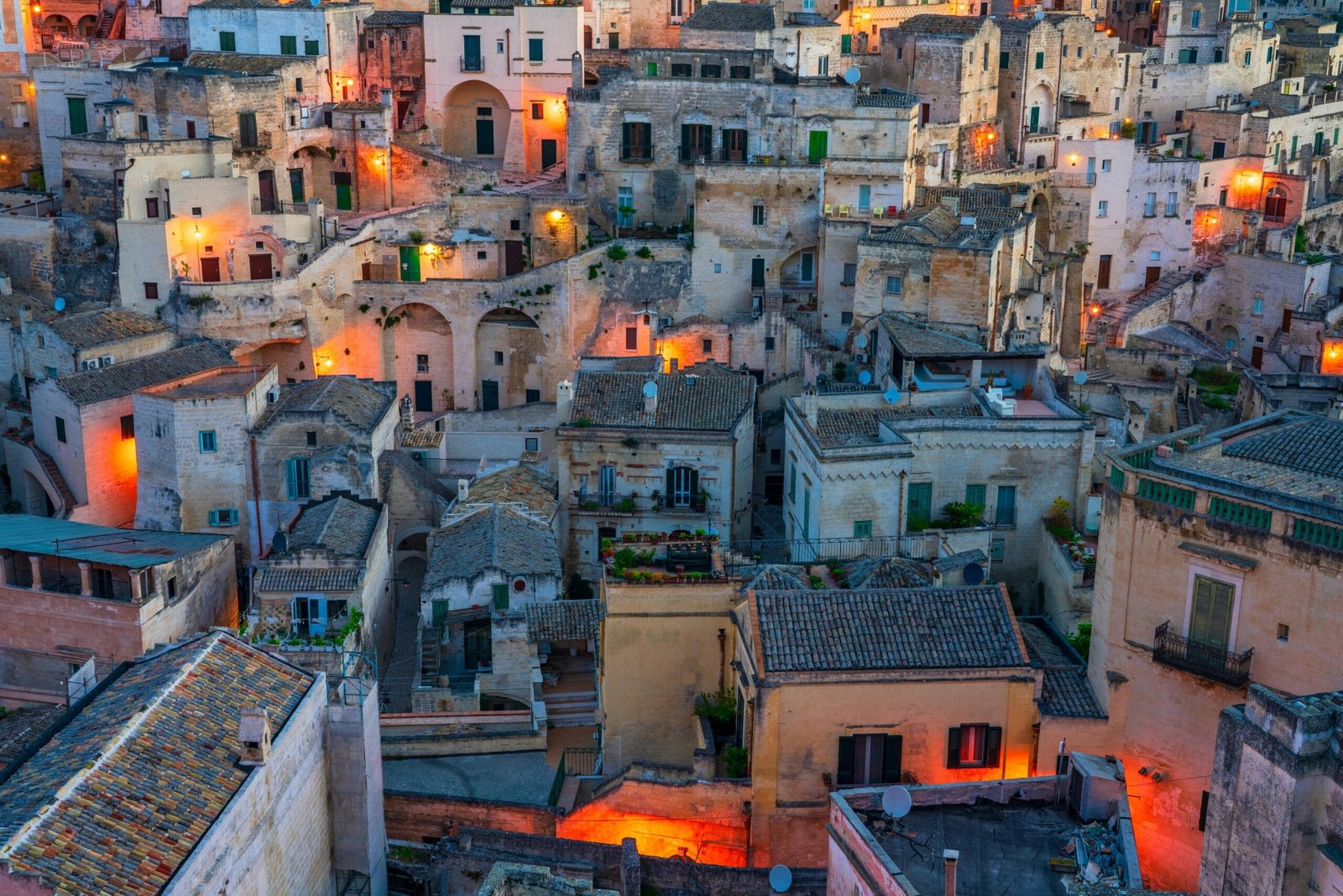
There are few places on earth where time feels both frozen and eternal — Matera, Italy is one of them. Carved from limestone cliffs in the sun-baked hills of Basilicata, Matera is often called “The City of Stone.” Its honey-colored caves tumble down a ravine like an ancient amphitheater, whispering stories that span millennia. When I first walked through the narrow alleys of the Sassi, the air was thick with history — every weathered wall, every echoing footstep, every flicker of light from a cave doorway seemed to carry the weight of centuries.
Visiting Matera Italy is not just a journey through a city; it’s a step back into humanity’s shared past. This travel guide will help you uncover Matera’s wonders — from its UNESCO-listed cave dwellings and cinematic scenery to its traditional cuisine, boutique cave hotels, and the timeless rhythm of life that continues to beat within its stone walls.
Table of Contents
Where Is Matera, Italy?

A Hidden Gem in Southern Italy’s Basilicata Region
Matera lies in the Basilicata region of southern Italy, perched on the edge of the dramatic Gravina canyon. It’s about an hour from Bari, two hours from Naples, and roughly five from Rome — yet it feels light-years away from the bustle of modern Italy.
Unlike tourist-packed cities such as Florence or Venice, Matera remains quiet and deeply authentic. Its charm comes not from grandeur but from raw beauty, carved directly into the rock itself.
Travelers often pair Matera with neighboring Puglia, visiting destinations such as Alberobello or Polignano a Mare before crossing into Basilicata. But Matera stands alone — a living archaeological site where cave dwellings, monasteries, and modern life coexist in harmony.

How to Get There
You can reach Matera Italy easily from major southern cities:
- From Bari: Frequent buses and regional trains (≈1 hr 20 min).
- From Rome: High-speed trains to Bari, then a short transfer.
- By Car: Scenic routes through olive groves and rolling hills — perfect for slow travelers.
Tip: If you enjoy road trips, the Bari–Matera–Alberobello route offers unforgettable countryside views and easy access to regional wineries and hill towns.
Map Location Matera italy
The History of Matera – From Poverty to UNESCO Glory
Few cities in the world have a story as dramatic as Matera’s. People have lived here continuously for over 9,000 years, making it one of the oldest inhabited settlements in the world.
Early inhabitants carved homes directly into the soft tufa limestone, creating the labyrinth known today as the Sassi di Matera — literally “stones of Matera.”
The Origins of the Sassi Caves
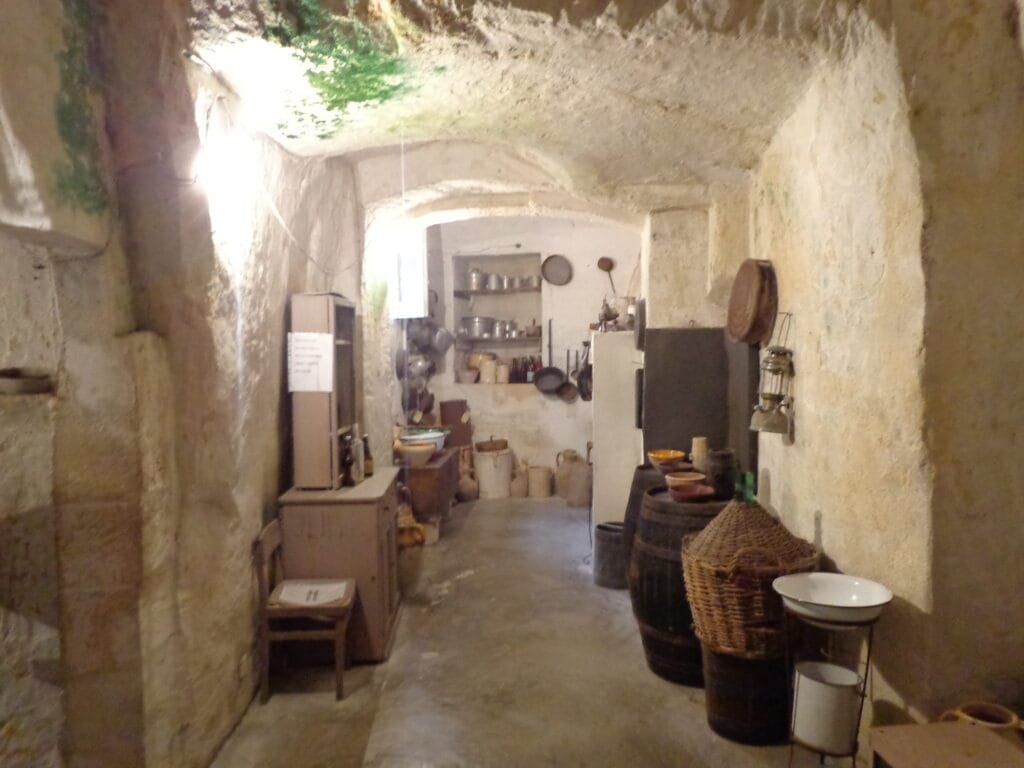
The first residents were prehistoric cave dwellers seeking shelter near water and fertile land. Over millennia, these basic shelters evolved into complex homes, chapels, and entire neighborhoods. Walking through the Sassi today, it’s easy to imagine how families, artisans, and animals all shared these stone homes, often with ingenious cistern systems that captured rainwater for survival.

The Decline and Revival
By the mid-20th century, Matera had become a national symbol of poverty. Overcrowded and unsanitary, the caves were deemed uninhabitable, and the government relocated residents to new housing districts. For decades, the Sassi sat abandoned, silent and forgotten. Then came rebirth: artists, architects, and visionaries saw beauty in the decay. In 1993, Matera earned recognition as a UNESCO World Heritage Site, praised for its “outstanding example of a rock-cut settlement adapted perfectly to its terrain.”
Today, Matera is a stunning blend of old and new. Its cave houses now host elegant restaurants, art galleries, and boutique hotels — proof that history and modern comfort can coexist without losing authenticity.
The Sassi of Matera – Exploring the Ancient Cave Dwellings
The Sassi of Matera are the city’s beating heart — a twin district of ancient cave neighborhoods that cascade down the hillside. Designated as a UNESCO World Heritage Site, they represent one of humanity’s most extraordinary urban landscapes.
Sasso Caveoso and Sasso Barisano
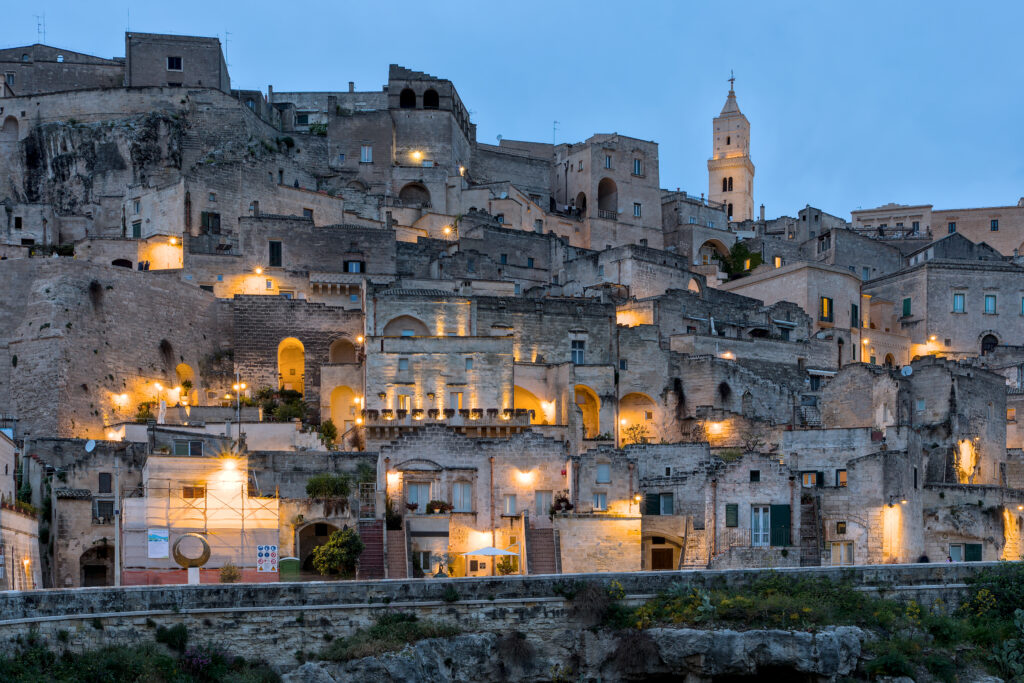
- The two main sections of the Sassi — Sasso Caveoso and Sasso Barisano — mirror each other across the ravine. Sasso Caveoso retains a raw, archaeological character, with caves that feel unchanged for centuries. Sasso Barisano, by contrast, is livelier and home to cafes, cave hotels, and artisan studios. Walking between them feels like traversing time itself — one foot in prehistory, the other in modernity.
Living History Beneath the Stone
- Every narrow lane reveals a new perspective — frescoed churches, hand-carved staircases, terraces overlooking the canyon.
- Some houses are still partly carved into rock, their interiors illuminated by soft light filtering through ancient doorways.
- In these layers of history, Matera Italy tells a story of resilience, faith, and community.
Traveler Tip
- Spend at least one night in a cave hotel to feel Matera’s rhythm after the day-trippers leave.
- At sunset, when lanterns glow and church bells echo through the ravine, the city feels suspended between worlds.
Top Things to Do in Matera
There’s no shortage of unforgettable experiences in Matera Italy — from exploring ancient caves to savoring authentic southern cuisine. Whether you’re a photographer, a history buff, or simply a curious traveler, Matera offers endless discovery.
For a complete guide to the city’s highlights, must-see spots, and insider tips, check out Things to Do in Matera
1. Explore Casa Noha – A Journey Through Time
Hidden within the Sassi, Casa Noha is more than a museum — it’s an emotional storytelling experience. Housed in a restored noble residence, it uses immersive projections and audio narratives to show Matera’s journey from prehistoric caves to modern rebirth. The storytelling is in Italian and English, making it accessible and deeply moving.
2. Visit the Cattedrale di Matera
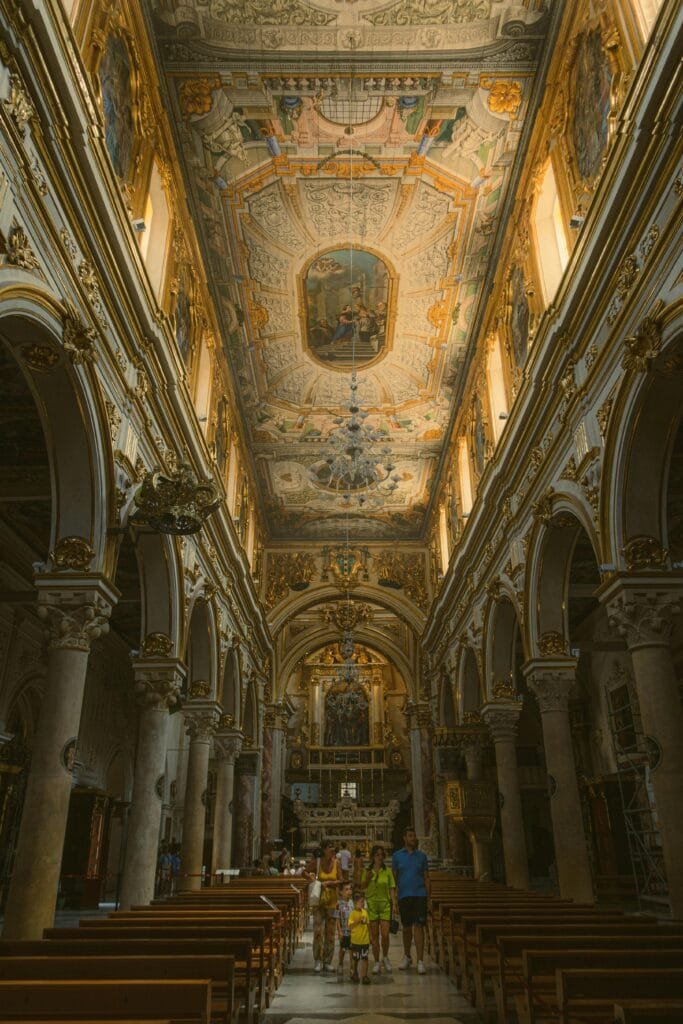
Dominating the skyline, the Matera Cathedral (Cattedrale di Matera) stands proudly between the Sassi districts.
Built in the 13th century, it blends Romanesque and Baroque architecture, and its bell tower provides one of the most stunning viewpoints in the city. Inside, golden altarpieces and frescoes reflect centuries of devotion.
💬 Guest Review by LUPOERRANTE
“The building of great importance is representation of the village. Located in one of the tops of the village with a very suggestive view. The visit includes the purchase of a ticket. Inside you can admire many in Baroque style. .”
TripAdvisor Rating: ⭐⭐⭐⭐ 4.5/5 (987+ reviews)
👉 Read more on TripAdvisor
For travelers who want to explore more of Matera’s sacred heritage, don’t miss Matera Churches and Cave Chapels: Sacred Art Beneath the Stone — a detailed guide to the hidden rupestrian sanctuaries that lie beneath the city’s sunlit cliffs.
3. Wander Piazza Vittorio Veneto
The heart of modern Matera, Piazza Vittorio Veneto connects the ancient and contemporary sides of the city. Locals gather here for evening strolls, gelato, and festivals. Beneath the square lies an underground network of cisterns — a reminder of Matera’s engineering genius. A guided tour reveals how residents once collected and stored rainwater in a sustainable, closed-loop system centuries before modern plumbing existed.
4. Step into MUSMA – Museo della Scultura Contemporanea
Located inside a 17th-century cave palace, the Museo della Scultura Contemporanea (MUSMA) is Italy’s only underground contemporary art museum. Its collection includes sculptures, installations, and light displays that merge modern art with ancient stone. The contrast between polished sculptures and rough cave walls creates a powerful visual dialogue.
5. Watch Sunset from Belvedere di Murgia Timone
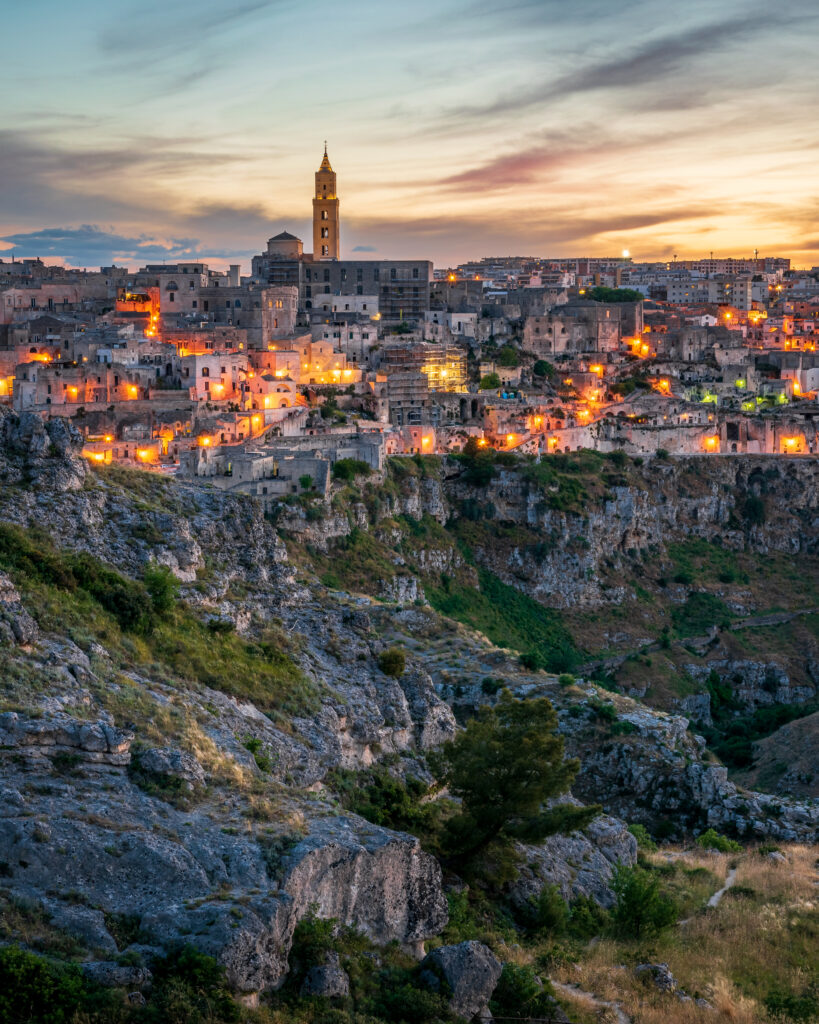
Across the canyon from the Sassi, the Belvedere di Murgia Timone viewpoint offers the most cinematic panorama of Matera.
From here, the city glows gold at dusk, and you can hear faint church bells echoing across the ravine.
It’s a magical moment — one you’ll remember long after you’ve left.
Matera Churches & Religious Sites
Faith runs deep in Matera. Beneath the city’s stone layers lies a spiritual world of rock-cut chapels, frescoed crypts, and ancient monasteries that reveal the city’s sacred past.
San Pietro Caveoso – A Church in the Rock
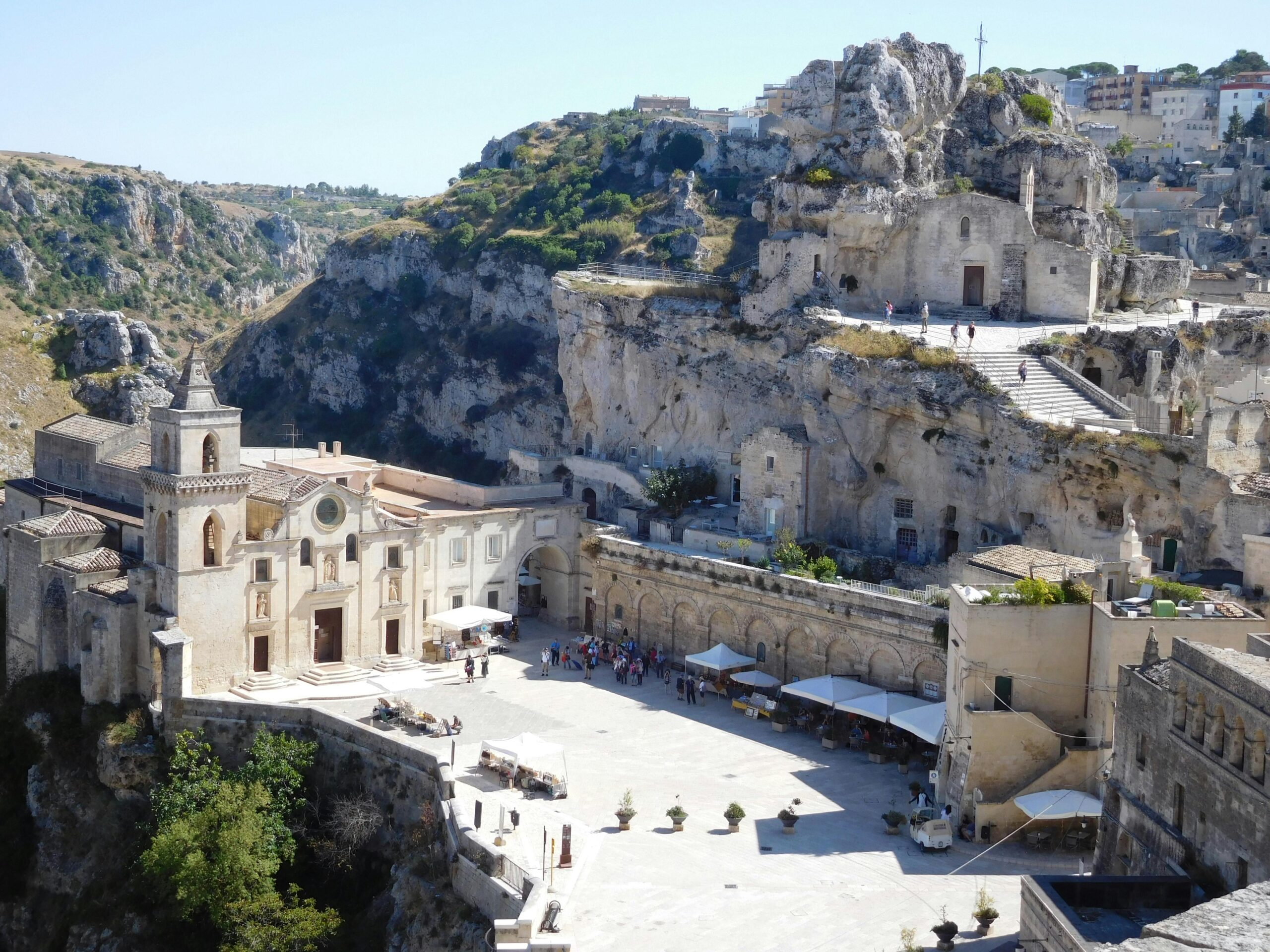
- Perched dramatically above the ravine, San Pietro Caveoso dates back to the 13th century. Its simple façade conceals a stunning interior of baroque altars and intricate frescoes, all carved into stone. Outside, the square offers a breathtaking view — one of the best photo stops in the Sassi.
Santa Lucia alle Malve – Early Christian Frescoes
- This small, rock-hewn church holds some of Matera’s oldest frescoes, dating from the 9th century. The dimly lit interiors and faded murals depicting saints give a haunting sense of devotion through time. It’s a quiet, humbling space that captures the essence of Matera’s faith.
Cattedrale di Matera – The City’s Spiritual Heart
- Revisited here as Matera’s central cathedral, it serves as both a historic monument and a living church. Each Sunday, locals still gather under its vaulted ceiling for Mass, connecting centuries of worship.
Matera and the Movies – From “The Passion” to “James Bond”
It’s no wonder directors compare Matera Italy to an open-air film set. Its labyrinthine streets, sun-baked stone, and timeless backdrop have starred in dozens of films, from biblical epics to Hollywood blockbusters.
A City Made for Cinema
- In 2004, Mel Gibson’s The Passion of the Christ introduced Matera to global audiences. The cave dwellings and natural canyon perfectly captured the essence of ancient Jerusalem. Since then, Matera has been featured in Wonder Woman, Ben-Hur (2016), and most famously, James Bond: No Time to Die (2021).
James Bond in Matera
- Fans of 007 will recognize Piazza San Pietro Caveoso and the stone bridge used in the film’s opening chase. The thrilling car sequence weaving through narrow alleys took weeks to film and showcased the city’s breathtaking views. Local guides now offer “James Bond tours,” taking visitors through these cinematic locations.
Matera’s Global Recognition
- Thanks to these films, tourism surged, but the city has managed to retain its authenticity. Locals are proud yet protective of their heritage — encouraging sustainable tourism that respects the fragility of the caves.
Where to Stay in Matera
Staying overnight is the only way to truly experience Matera. When day-trippers leave and the golden evening light hits the stone, the city transforms into a living dream.
Best Cave Hotels in Matera
Matera’s signature accommodations are its cave hotels, restored dwellings that balance ancient charm with modern comfort.
Top picks include:
- Sextantio Grotte della Civita – the most famous and luxurious option, where candles illuminate centuries-old walls.
If you’re curious about the hotel that really brings Matera’s history to life, check out Sextantio Le Grotte della Civita: Most Iconic Hotel in Matera — it’s where stone, candlelight, and centuries of stories make every stay unforgettable.
💬 Guest Review by Calum J
“Quite simply, one of the top three places that we have stayed, EVER. From the moment that you turn the corner to see the old town laid out before you, this place is utterly captivating. We stayed in a suite of four caves, and I mean caves, immensely comfortable but without any obvious “modernity”. The whole hotel is breathtaking, set in a town that is a UNESCO site – a must for everyone, before you die.”
TripAdvisor Rating: ⭐⭐⭐⭐ 4.5/5 (2,011+ reviews)
👉 Read more on TripAdvisor
- La Casa di Lucio – ideal for romantic stays, with private terraces overlooking the Sassi.
- Locanda di San Martino – affordable yet atmospheric, complete with a thermal cave spa.
If you’re ready to experience the magic firsthand, take a look at Best Cave Hotels in Matera: Sleep Inside History — it’s a complete guide to the most authentic cave stays that make you feel like you’re living in centuries of history.
Boutique & Family-Friendly Options
For travelers who prefer above-ground comfort, Matera’s boutique hotels and guesthouses combine elegance with local character. Options like Palazzo del Duca and Aquatio Cave Luxury Hotel & Spa offer breathtaking views and regional design.
Where to Stay: The Best Neighborhoods
- Sassi di Matera – immersive, historic, and unforgettable.
- Centro Storico – convenient for cafes and shops.
- Murgia Plateau – quieter, with panoramic views.
Each offers a unique perspective of the city, but the Sassi remain unmatched for atmosphere.
Food, Wine & Culinary Traditions

Eating in Matera Italy is an experience that feels both humble and heavenly. The city’s cuisine is a reflection of its history — shaped by poverty, resourcefulness, and deep connection to the land. Every dish tells a story of the farmers and families who once lived in the Sassi.
The Bread of Matera – Symbol of the City
- You can’t understand Matera without tasting its bread.
- Made from local semolina flour and natural yeast, Pane di Matera is famous across Italy for its thick crust, fragrant aroma, and mountain-shaped loaf.
- Baked in communal ovens since medieval times, it once sustained entire families.
- Today, you’ll find it served with olive oil, soups, and cheeses in nearly every restaurant.
Local Dishes You Must Try
- Orecchiette con Cime di Rapa: ear-shaped pasta with broccoli rabe, garlic, and chili.
- Crapiata: a rustic legume soup once shared by neighbors during harvest festivals.
- Peperoni Cruschi: sun-dried sweet peppers fried until crisp — Basilicata’s pride.
- Lamb Stew with Potatoes: slow-cooked in clay pots, seasoned with rosemary and olive oil.
Wines of Basilicata
- The volcanic soil of Basilicata produces rich, full-bodied wines.
- The most famous is Aglianico del Vulture, often called “the Barolo of the South.”
- Pair it with local cheese or grilled lamb for an unforgettable meal.
- Vineyards such as Cantine del Notaio and Carbone Vini offer tastings just a short drive from Matera.
Traveler Tip
- Book a food & wine tour that explores both Matera’s traditional kitchens and surrounding countryside farms. It’s the perfect way to combine culture, flavor, and local connection.
Day Trips from Matera & Nearby Attractions
While Matera alone could fill your itinerary, its surroundings are equally enchanting. From medieval towns to ancient ruins and scenic countryside, the Basilicata region offers unforgettable day trips.
Altamura – City of Bread and Architecture
- Only 30 minutes from Matera, Altamura is renowned for its golden bread and Romanesque cathedral. Stroll its cobblestone streets and visit Forno Antico Santa Chiara, one of Italy’s oldest bakeries still using wood-fired ovens.
Explore Altamura on google maps
Gravina in Puglia – Bridges and Views
- Just across the regional border lies Gravina in Puglia, a dramatic town built along a deep gorge. Its famous stone bridge offers panoramic views that rival Matera’s own canyon. The city also appeared in No Time to Die, adding a cinematic touch for James Bond fans.
Explore Gravina in Puglia on google maps
Metaponto – The Greek Legacy
- An hour southeast, Metaponto reveals Basilicata’s ancient Greek roots. Its Tavole Palatine temple ruins, dating back to the 6th century BC, are among Italy’s most overlooked treasures. The nearby beach offers a tranquil contrast after Matera’s rugged landscapes.
Explore Metaponto on google maps
Murgia Materana Park – Nature & Adventure
- Across the canyon lies Parco della Murgia Materana, a UNESCO-protected area of limestone cliffs, caves, and trails.
- You can hike between ancient cave churches and panoramic viewpoints — some trails even lead directly to the Belvedere di Murgia Timone.
Explore Murgia Materana Park on google maps
Traveler Tip – For adventure lovers, consider guided e-bike or hiking tours that connect Matera’s natural and cultural landmarks. They’re ideal for photographers and eco-travelers.
Hidden Gems Around Matera
Even after exploring the Sassi and main attractions, there’s another side of Matera Italy waiting to be uncovered.
Beyond the tourist routes lie small villages, forgotten monasteries, and local stories that capture Basilicata’s authentic soul.
Craco – The Ghost Town of Basilicata
- About an hour’s drive from Matera lies Craco, a hauntingly beautiful abandoned hill town. Once home to 2,000 residents, it was deserted after landslides in the 1960s. Its eerie silence and crumbling buildings make it a photographer’s dream — and a frequent film location.
Miglionico – Castles and Legends
- This small town near Matera is home to Castello del Malconsiglio, a medieval fortress with panoramic views of the Bradano valley. According to legend, it hosted the infamous “Conspiracy of the Barons” in 1485, a pivotal moment in southern Italian history.
Montescaglioso – The Hill of Monasteries
- Known as “La Città dei Monasteri,” Montescaglioso is famous for its Abbey of San Michele Arcangelo, a vast complex blending Romanesque and Baroque design. Few tourists make it here, yet it’s one of the most peaceful spiritual sites in Basilicata.
Local Legends & Folk Traditions
- Ask any local, and you’ll hear tales of saints, spirits, and hidden treasures buried under the caves. Matera’s folklore is deeply intertwined with its faith — from protective amulets carved into doorways to candlelit processions that illuminate the Sassi at night.
Traveler Reflection – It’s often in these lesser-known corners that you feel Matera’s true heart — raw, humble, and endlessly fascinating. Here, the past isn’t gone; it simply lives quietly in the stones.
Explore Hidden Gems Around Matera on google maps
Best Time to Visit Matera
Each season in Matera Italy paints the stone city in a different light. Whether you love colorful festivals or quiet streets, the best time to visit depends on the kind of experience you want.
Spring (March – May) – Bloom and Balance
- Spring is arguably the most beautiful season in Matera.
- The weather is mild (15–22 °C), and the Sassi come alive with greenery and flowers.
- Outdoor cafés open their terraces, and crowds are still manageable.
- It’s ideal for photographers and hikers exploring the Murgia Materana Park.
Summer (June – August) – Festivals and Evening Magic
- Summers are hot but vibrant, averaging 30 °C during the day.
- Locals celebrate the Festa della Bruna on July 2 — a spectacle of fireworks, processions, and tradition dating back centuries.
- Book hotels early and plan midday breaks in shady cafés or museum interiors.
Autumn (September – November) – Wine & Golden Light
- Fall brings cooler days and harvest season in Basilicata.
- Vineyards around Matera welcome visitors for grape picking and wine tastings.
- Photographers love this season — the stone walls glow amber in the soft light.
Winter (December – February) – Quiet and Spiritual
- Winter is Matera’s secret season.
- The streets are peaceful, the air crisp, and nativity scenes set in caves create a magical atmosphere.
- It’s perfect for travelers who prefer reflection over crowds.
Matera Photography Guide
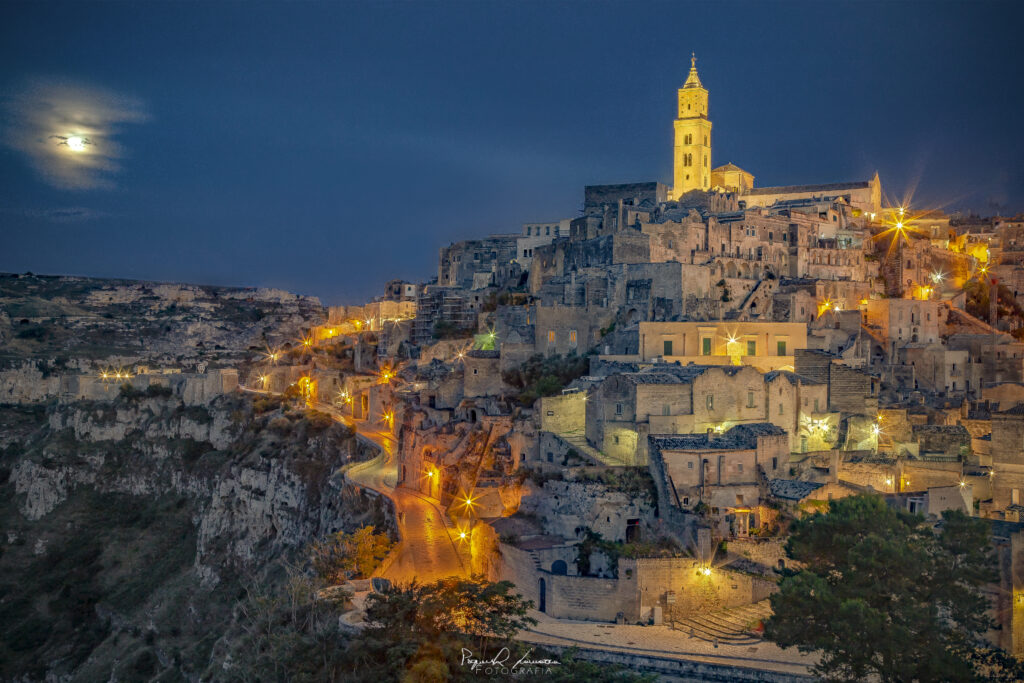
Few places on earth reward the lens like Matera Italy. Every corner is a composition — from morning mist over the ravine to golden evenings on the terraces of Sasso Caveoso.
Best Viewpoints
- Belvedere di Murgia Timone – for panoramic sunrise shots.
- Piazzetta Pascoli – frames the cathedral against the sky.
- Piazza San Pietro Caveoso – for night photography when lanterns light the Sassi.
Golden and Blue Hours
- Matera’s stone facades reflect light beautifully around sunrise and sunset.
- Use these hours to capture textures and shadows that reveal depth in the city’s architecture.
Photography Etiquette
- Always ask before photographing locals or private homes in the Sassi.
- Respect quiet spaces such as churches and monasteries.
Matera Itinerary – 3 Days of Discovery
If you have three days in Matera Italy, you can immerse yourself in its culture, history, and flavors without rushing.
Day 1 – Ancient Origins & Sassi Exploration
- Morning: Start with a walking tour of Sasso Barisano and Casa Noha.
- Afternoon: Visit Cattedrale di Matera and MUSMA museum.
- Evening: Dinner at a cave restaurant and sunset at Piazza Pascoli.
Day 2 – Culture and Cuisine
- Morning: Join a cooking class or food tour.
- Afternoon: Discover rock-cut churches and Santa Lucia alle Malve.
- Evening: Wine tasting and live folk music in a local enoteca.
3rd Day – Nature and Nearby Adventures
- Morning: Hike through Murgia Materana Park to the Belvedere viewpoint.
- Afternoon: Day trip to Altamura or Craco ghost town.
- Evening: Return to Matera for a farewell dinner with Aglianico wine.
Downloadable Planner →Matera 3-Day Itinerary
Practical Travel Tips for Matera
Traveling in Matera Italy is easy once you understand its unique layout and terrain.
What to Pack
- Comfortable walking shoes — the Sassi’s cobblestones are uneven.
- Light layers for temperature shifts between day and night.
- A reusable water bottle and sunscreen for summer exploration.
Accessibility & Safety
- The Sassi areas have many stairs and steep paths, so wear grip-soled shoes and avoid heavy luggage.
- Matera is extremely safe, even at night; locals are welcoming and helpful.
Language & Currency
- Italian is widely spoken, but tourist staff understand English.
- Currency is the euro (€). Credit cards are accepted almost everywhere.
Connectivity & Transport
- Free Wi-Fi is common in cafés and hotels.
- Taxis and shuttles are available, but most of Matera is best explored on foot.
Conclusion
Standing on a balcony in Matera, Italy, as the sun melts into the honey-colored stones, you begin to understand why this city leaves a mark on every traveler’s heart. It’s more than its cinematic beauty or UNESCO status — it’s the way Matera connects time itself, where ancient cave dwellings meet quiet modern life in perfect harmony.
Matera reminds us that true civilization isn’t measured by skyscrapers or speed, but by patience, craftsmanship, and community. Here, every stone tells a story of resilience — and every sunset invites reflection. Whether you’re wandering through the Sassi di Matera, savoring local Lucanian dishes, or simply pausing to breathe in the golden silence, you realize that this isn’t just a place to visit — it’s a place to feel.
So if you ever find yourself craving authenticity, history, and raw human beauty, Matera is waiting to change the way you see the world — one timeless moment at a time.
FAQ
Honestly, it’s hard to describe until you’re standing there. Matera feels ancient — like the earth itself carved a city out of stone. The Sassi cave dwellings are over 9,000 years old, yet people still live in them. You walk those narrow alleys and it hits you — this place is alive with history, not frozen in it.
Yep! Parts of No Time To Die (the Daniel Craig one) were filmed right in Matera’s old town. When you see Bond racing an Aston Martin through those tight stone streets, that’s not CGI — that’s the real deal. Walking there later, you half expect him to drift around the corner.
The nearest airport is Bari Karol Wojtyła Airport (BRI) — about an hour and a half drive away. It’s an easy trip; you can grab a rental car or take a shuttle straight into Matera. Trust me, the drive’s gorgeous — olive trees, limestone cliffs, the works.
Pretty much, yeah. Matera is considered one of the oldest continuously inhabited cities on the planet — older than Rome, even. People have lived here since the Stone Age. You can still feel that timeline under your feet — it’s wild.