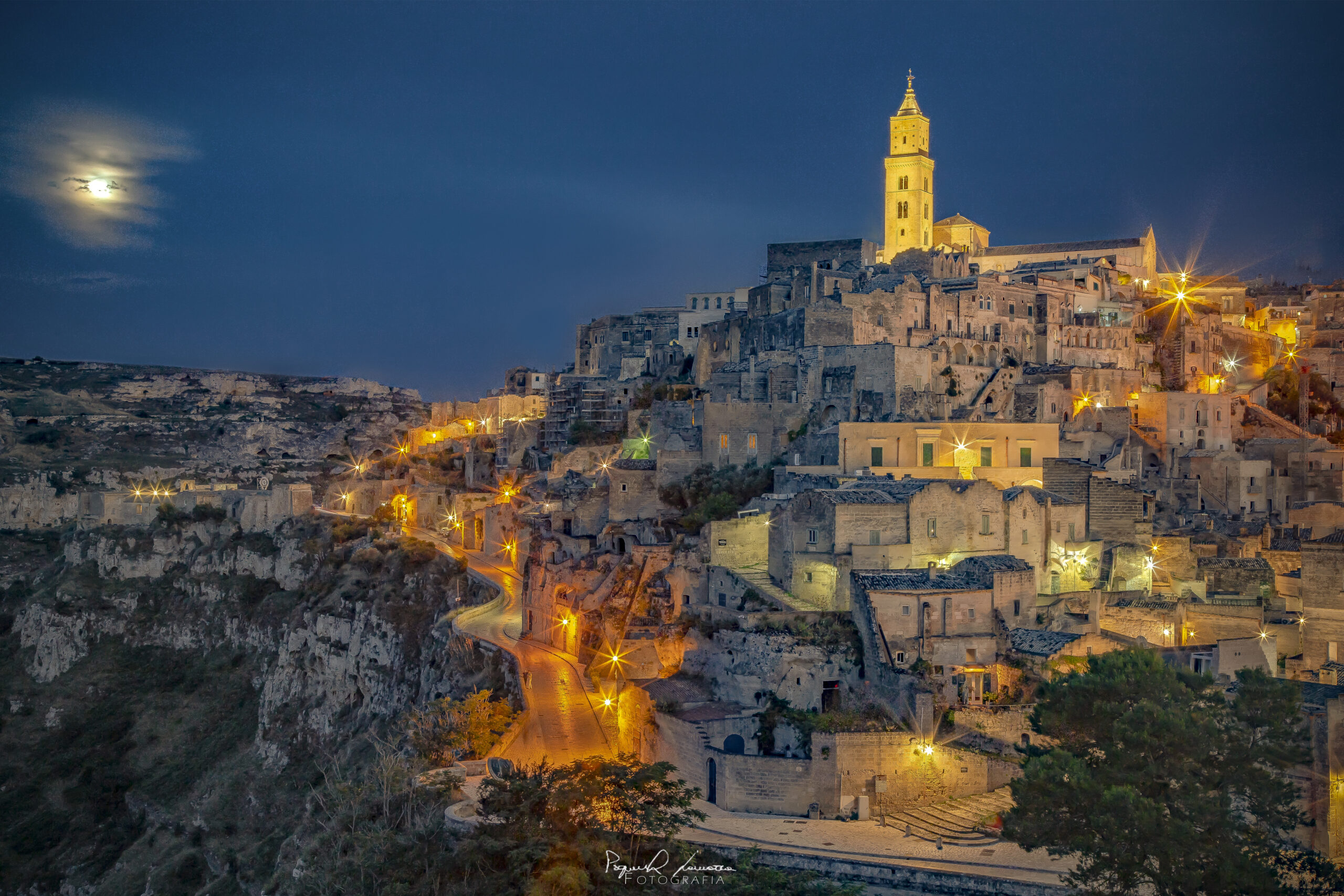
It’s hard to imagine that the dazzling stone labyrinth known as the Sassi di Matera was once called “the shame of Italy.” Today, these ancient Matera cave dwellings, carved from limestone cliffs, stand as a breathtaking symbol of endurance, creativity, and rebirth.
The first time I wandered into Sassi di Matera, Italy, the morning mist hung low over the Gravina Canyon, softening the edges of sunlit caves. Church bells rang from unseen chapels, and the comforting scent of wood-fired bread drifted through narrow alleys where time seemed to hold its breath. It wasn’t just a place to see — it was a place to feel.
Every stone step whispered stories of families who once lived in carved homes, prayed in hidden grottoes, and watched the same golden light spill across the ravine. What was once poverty is now poetry in stone — a living museum of resilience.
In this guide, we’ll explore Sasso Caveoso and Sasso Barisano, visit Casa Grotta nei Sassi di Matera, uncover centuries of history, and see how this once-forgotten cave city rose to become one of Europe’s most magical UNESCO World Heritage Sites.
Table of Contents
What Are the Sassi of Matera?
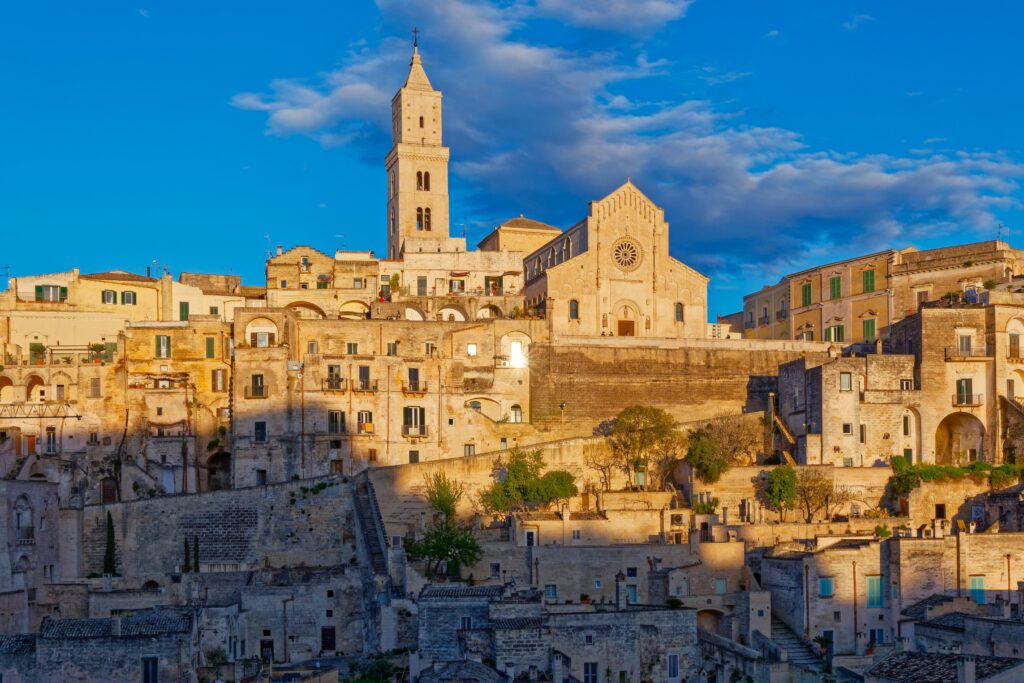
The word “Sassi” literally means “stones” — a fitting name for the ancient cave districts of Matera, Italy, where entire neighborhoods were carved directly into the limestone hillsides. The Matera cave dwellings represent one of the oldest human settlements which people have lived in since prehistoric times.
The Sassi di Matera consist of two primary sections which include Sasso Caveoso and Sasso Barisano. The two areas form a complex network of narrow streets that run through rock-cut buildings and religious spaces and water storage facilities which resemble honeycombs across the canyon walls. Stone structures have served as shared spaces for families and animals and artisans throughout centuries while nature became the foundation of their architectural design.
The Sassi experienced a mass exodus of residents during the mid-20th century because of excessive population and poverty which turned the area into an abandoned ghost town. The government performed a remarkable restoration of the caves which led UNESCO to designate the Sassi di Matera as a World Heritage Site in 1993 because of their exceptional human settlement of the environment.
The Sassi di Matera in Italy presents a unique experience where visitors can walk through ancient cave dwellings known as Casa Grotta nei Sassi di Matera which share space with modern boutique cafes and artisan workshops and the hotel Sassi di Matera that unites traditional heritage with contemporary comfort.
💡 Traveler Tip: The Sassi are divided by the Civita hill: to the south lies Sasso Caveoso (traditional and intimate), to the north Sasso Barisano (livelier and more developed).

A Walk Through History – From Poverty to UNESCO Pride
The story of the Sassi di Matera is as layered as the city itself. These Matera cave dwellings began in prehistoric times, when families carved homes, granaries, and chapels into soft limestone cliffs. Over centuries, the Sassi expanded like a honeycomb — a testament to human ingenuity in adapting to the rugged terrain.
By the mid-20th century, life in the caves had grown incredibly harsh. Families lived without running water or electricity, often sharing cramped spaces with livestock. Writer Carlo Levi famously called Matera “the shame of Italy.” The government relocated residents in the 1950s, leaving the Sassi empty for decades — ghost neighborhoods frozen in time.
The revival began in the 1980s, when visionaries, artists, and locals returned to restore the caves. Abandoned dwellings became boutique hotel Sassi di Matera, museums, and artisan workshops. Streets once silent now resonate with daily life, music, and hospitality.
UNESCO World Heritage Status — From Ruin to Recognition
In 1993, UNESCO recognized the Sassi as a World Heritage Site, praising their adaptation to environment and continuity of human settlement. Today, walking through the Sassi is walking through 9,000 years of history — from survival and poverty to art, faith, and global admiration. Every corner tells a story of resilience and rebirth, making Matera a living museum you’ll never forget.
FAI & Local Restoration Efforts
The Fondo Ambiente Italiano (FAI) played a key role in saving Matera’s heritage, particularly through projects like Casa Noha. Local craftsmen rebuilt with original stone, while engineers introduced subtle water and waste systems that respect ancient designs.
European Capital of Culture 2019
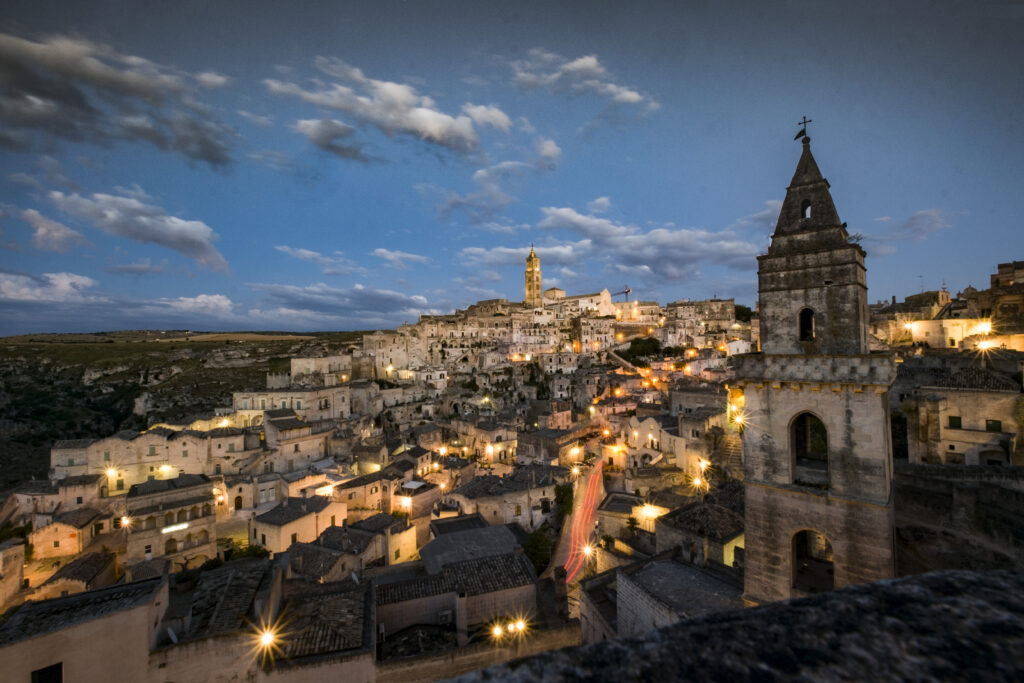
In 2019, Matera became European Capital of Culture, celebrating its transformation from neglected past to creative beacon.
The year-long events blended light projections on cave walls, open-air concerts, and international art residencies — showing the world that Matera was no longer frozen in time.
Best Viewpoints of the Sassi di Matera
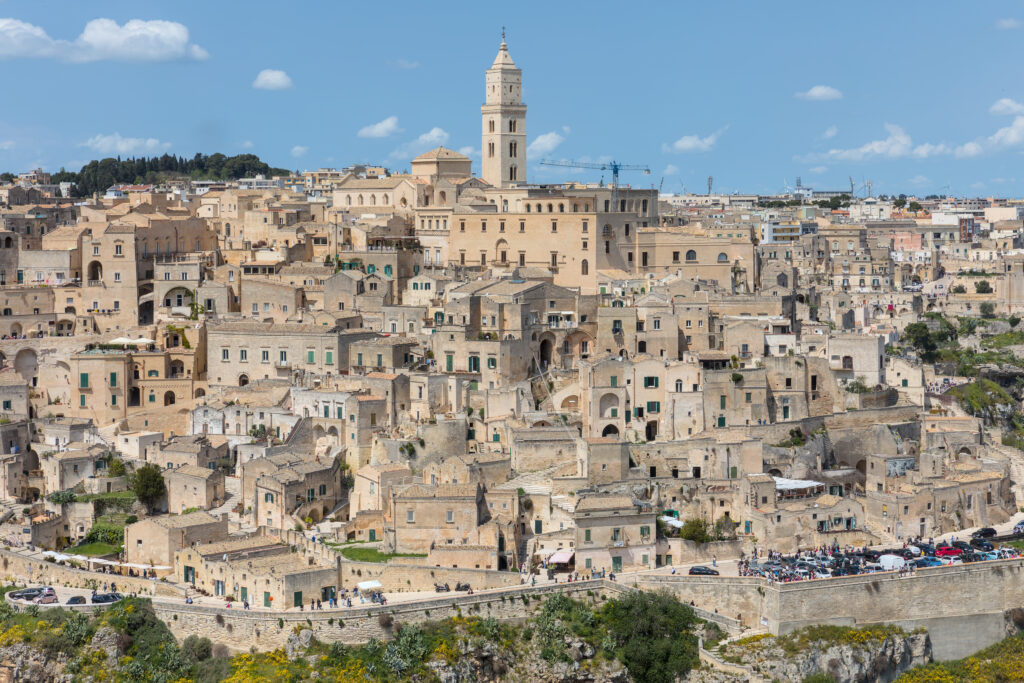
If you want to truly feel the soul of Sassi di Matera, start with its views. Watching the sun rise or set over this honey-colored maze is an experience that stays with you forever.
Belvedere di Murgia Timone — located across the canyon inside Murgia Materana Park — offers the most cinematic perspective of Matera cave dwellings. From this natural terrace, the Sassi unfold like a golden amphitheater, their ancient facades glowing as church bells echo through the valley. Many photographers and travelers call it the best viewpoint in all of southern Italy.
Next, climb up to Piazza Duomo, near the Matera Cathedral. From here, you’ll see both Sasso Barisano and Sasso Caveoso spread beneath you — a breathtaking panorama that captures 9,000 years of human history in one glance.
For something quieter, explore the smaller terraces along Via Madonna delle Virtù or Via Fiorentini. These lesser-known corners let you absorb the scene slowly — the light, the limestone, and the living rhythm of the city.
💡 Traveler Tip: Visit Belvedere di Murgia Timone just before sunrise or during golden hour for soft light and fewer crowds — it’s when Matera’s ancient beauty shines brightest.
Architecture of the Sassi — A City Carved from Living Rock
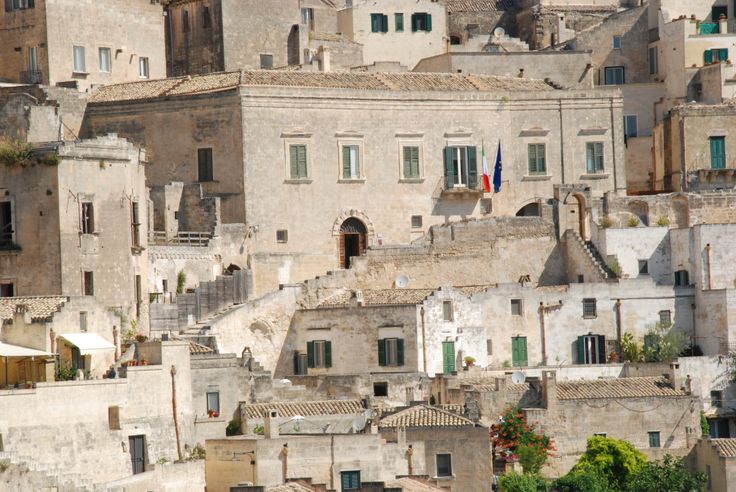
Standing on the edge of the Gravina canyon, you’ll notice that Matera doesn’t look built — it looks grown. The city’s architecture follows the land like a vine following sunlight.
Each home, carved from soft tufa limestone, merges naturally into the hillside. Roofs of one house form the street of another, creating a vertical labyrinth that blends architecture and geology.
Sasso Caveoso

The southern district, Sasso Caveoso, feels ancient and contemplative. Its houses cling to the cliffs, many still showing the original cave structures used as homes until the 1950s. Wander along Via Casalnuovo and Via Madonna delle Virtù, where restored grottos now host artisan studios and small restaurants.
Sasso Barisano
The northern Sassi district, Sasso Barisano, is more open and urban. You’ll find Palazzo Lanfranchi, MUSMA, and San Giovanni Battista, with a mix of medieval façades and hidden courtyards that still echo with children’s laughter.
💡 Traveler Tip: Climb the Civita hill between the two Sassi for panoramic views and access to the Matera Cathedral.
💬 Guest Review by Piero da Fosio
“One of the most characteristic landscapes seen in our travels, we start early in the morning walking through the alleys with a breathtaking spectacle, the sun illuminates the stones creating a breathtaking spectacle.”
TripAdvisor Rating: ⭐⭐⭐⭐ 4.8/5 (211+ reviews)
👉 Read more on TripAdvisor
Staying Inside the Sassi – Cave Hotels & Authentic Experiences
The Sassi di Matera experience offers more than accommodation because it lets you experience the actual history of the place. The Matera cave dwellings have evolved from their original limestone homes into boutique hotels which blend their historic architecture with luxurious modern amenities.
The first thing you notice when you wake up is the gentle stone archway light which enters your room. You can enjoy your espresso while sitting on the terrace which provides a view of the honey-colored ravine. The hotel Sassi di Matera properties maintain their original cave walls and vaulted ceilings and cisterns while providing guests with heated floors and designer lighting and handcrafted linens.
Top-rated stays include Sextantio Le Grotte della Civita, a world-famous eco-luxury cave hotel often featured in travel magazines. The spa area at Locanda di San Martino creates a dreamlike space which unites historical buildings with modern facilities through its extension from the rock face. Guesthouses in Sasso Caveoso offer travelers a chance to stay in smaller accommodations which provide authentic local experiences and direct contact with residents.
For more curated stays, read our in-depth guide:
👉 Cave Hotels in Matera – Where Ancient Stone Meets Modern Luxury
Cultural Experiences & Local Life
The genuine essence of Matera exists beyond its attractive residential districts. The Sassi di Matera Italy maintains its identity because its residents protect their community ties and ancient traditions while dealing with difficult times. The Casa Grotta Sassi di Matera museum-home allows visitors to experience how families used to live in caves through its authentic recreation of their daily life spaces which include basic furniture and traditional handcrafted instruments and the scent of freshly baked bread.
People from the area continue to meet at vicinati (shared courtyards) where they drink espresso and do their laundry using cobblestone lanes. The artisan workshops offer visitors a chance to witness traditional bread stamp and leather and ceramic production through methods which have remained unchanged since ancient times.
The city becomes active during evening hours. The area features street musicians who perform near Piazza Vittorio Veneto while trattorias illuminate their spaces with candlelight to serve traditional Lucanian cuisine including orecchiette pasta and lamb stew. Matera offers authentic cultural experiences through its tours and visitors can experience the city’s main event Festa della Bruna which takes place annually.
The Sassi district presents itself as a living heritage because every sound and scent and smile throughout the area demonstrates that these sites were built by people who never lost their faith in their community.
💬 The Casa Grotta Sassi di Matera, Guest Review by LUPOERRANTE
“Beautiful experience, Matera is something magical. It seems to go back in time and relive the customs and traditions of a time far from us. Really a stop to do at least once in a lifetime .”
TripAdvisor Rating: ⭐⭐⭐⭐ 4.5/5 (1,643+ reviews)
👉 Read more on TripAdvisor
Local Markets and Cafés
Stop by Piazza San Giovanni Battista for lively markets selling local cheese, peppers, and dried figs. Try a cappuccino at Caffè Tripoli, where locals gather every morning — proof that the Sassi aren’t a museum but a living neighborhood.
Museums Hidden Inside the Sassi
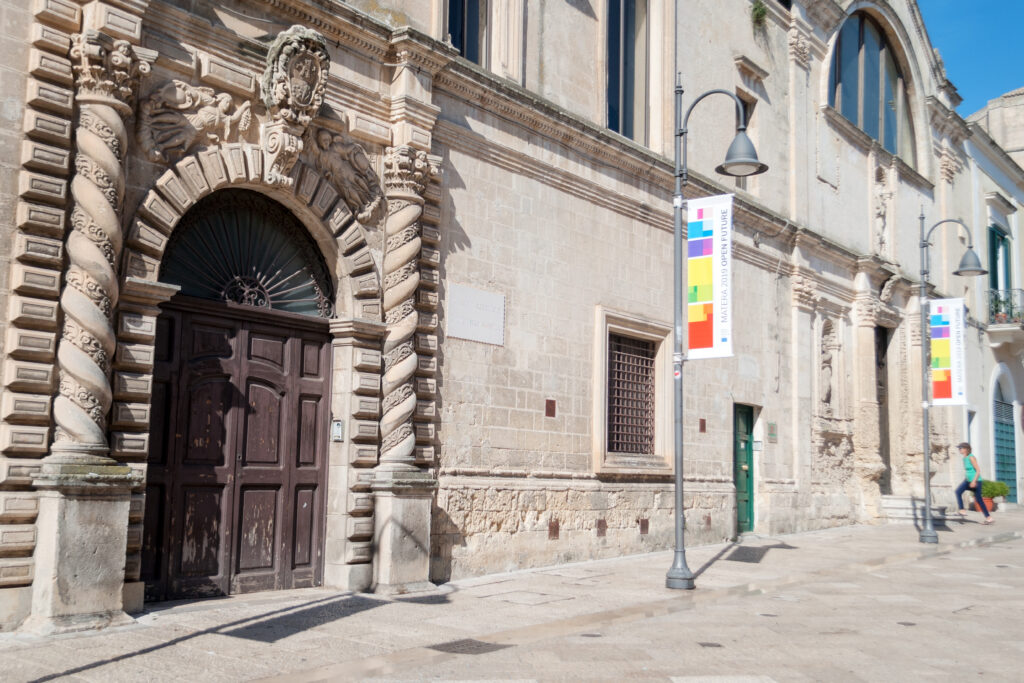
History in Matera isn’t behind glass; it’s carved into walls. The city’s museums continue this immersive experience.
MUSMA (Museum of Contemporary Sculpture)
- Located in a labyrinth of caves beneath Palazzo Pomarici, MUSMA exhibits modern sculpture alongside ancient stone walls — a dialogue between time periods. Artists like Pomodoro and Cascella created works that echo Matera’s rugged textures.
Explore MUSMA – Museum of Contemporary Sculpture Matera on Google Maps
💬 Guest Review by LUPOERRANTE
“Characteristic museum set in redeveloped premises even if carved in rock. We loved the context of the sculpture with the rocky environment of the typical village construction. Beautiful.”
TripAdvisor Rating: ⭐⭐⭐⭐ 4.5/5 (377+ reviews)
👉 Read more on TripAdvisor
Palazzo Lanfranchi Museum
- Once a seminary, this 17ᵗʰ-century palace now houses the National Museum of Medieval and Modern Art of Basilicata, including Carlo Levi’s iconic painting Lucania ’61, which helped change Italy’s perception of the Sassi.
Explore Palazzo Lanfranchi Museum on Google Maps
💬 Guest Review by LUPOERRANTE
“Very important museum to keep it inside the village. The visit does not include reservations but only the purchase of the ticket. Inside the museum you can observe works of great historical and cultural importance ranging from various historical periods.”
TripAdvisor Rating: ⭐⭐⭐⭐ 4.5/5 (109+ reviews)
👉 Read more on TripAdvisor
Casa Noha
- If the Sassi are the body of Matera, Casa Noha is its memory. Its multimedia show, The Invisible Sassi, narrates the city’s evolution through moving projections and local voices — a must-see before exploring.
Read more about Museo della Scultura Contemporanea & Matera’s Artistic Revival
Daily Life and Traditions in the Sassi
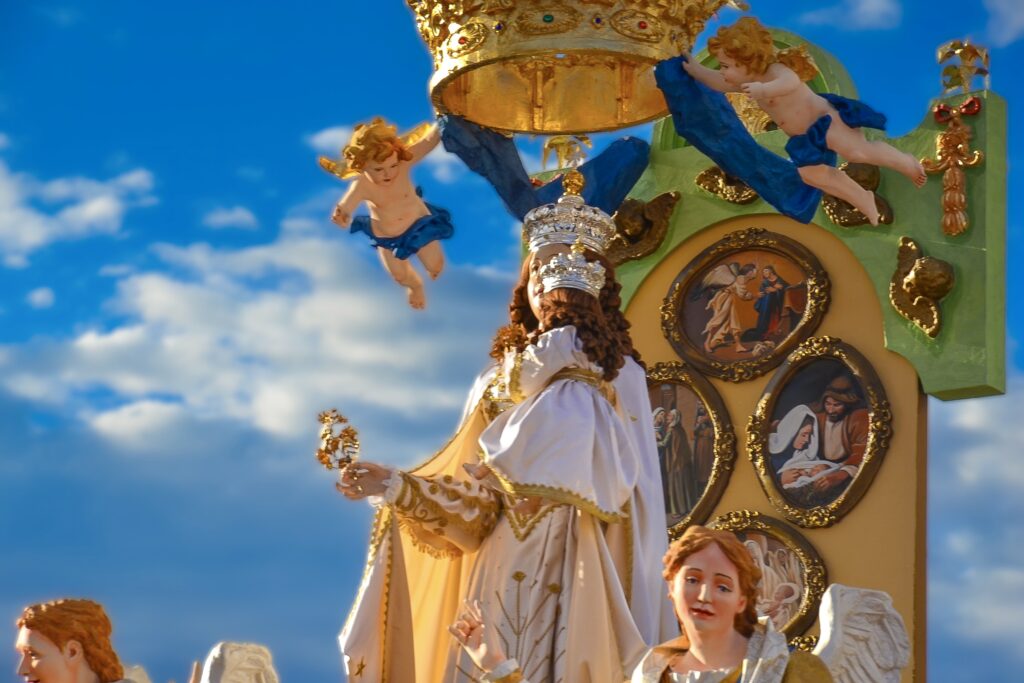
For centuries, the Sassi were more than homes — they were a rhythm of survival. Families shared courtyards, harvested olives, made bread, and prayed in the same stone halls.
The Vicinato Spirit
- Every cluster of houses centered on a vicinato, a shared square where women kneaded dough, children played, and elders traded stories. The oven was communal; the day’s news spread faster than the bread rose.
💡 Traveler Tip: Visit Vico Solitaire Casa Grotta to see furnishings and utensils that recreate this daily life.
Rural Rituals
- Residents followed a calendar tied to the land — feasts of the Madonna della Bruna, grape harvests, and livestock fairs in the Gravina valley. Even today, many traditions endure through festivals and kitchen recipes handed down from those caves.
Famous Viewpoints and Photography Spots
Few cities photograph as dramatically as Matera. Each viewpoint reveals a different century.
Belvedere Murgia Timone
- Across the canyon, this lookout offers the iconic panorama of both Sassi. At sunrise, the light turns the stone to gold — a must for photographers.
Piazzetta Pascoli
- Below Palazzo Lanfranchi, this small terrace frames Matera’s skyline perfectly. Grab gelato from a nearby café and watch twilight settle over the rooftops.
San Pietro Caveoso Square
- From here, you can photograph Matera’s vertical walls plunging into the canyon — one of the city’s most cinematic perspectives.
Matera on Screen — From Biblical Epics to James Bond
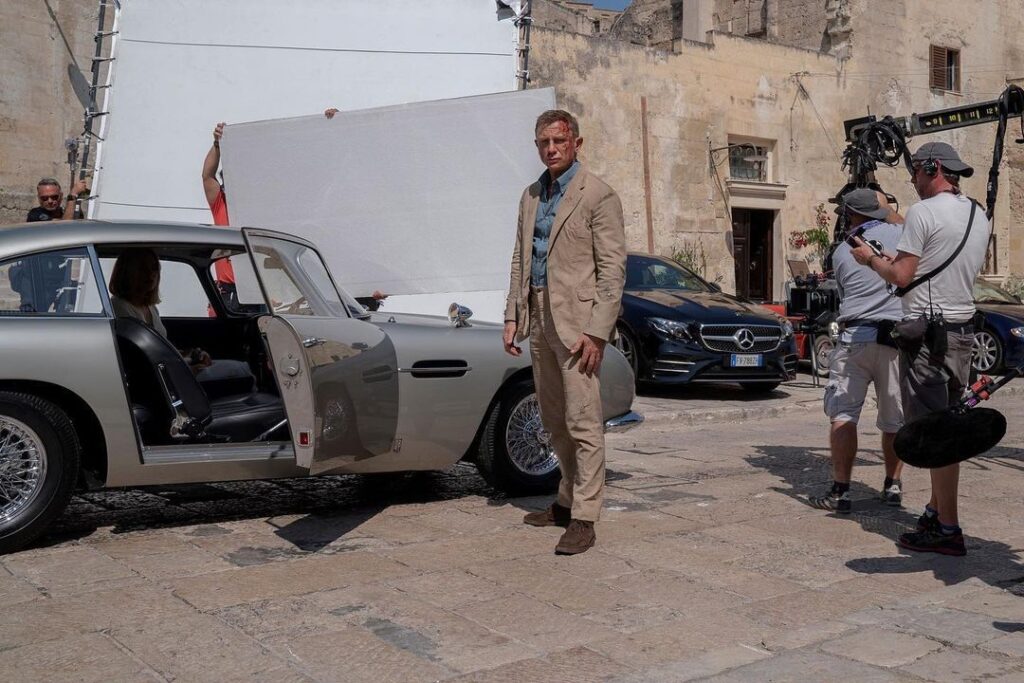
The Sassi’s timeless scenery has long captivated filmmakers.
The Passion of the Christ (2004)
Director Mel Gibson chose Matera as Jerusalem’s double, its stone alleys and caves perfectly matching the ancient world.
No Time to Die (2021)
James Bond raced his Aston Martin through Sasso Barisano in one of the film’s most thrilling openings. The movie renewed global interest in Matera, attracting visitors eager to walk in 007’s tire tracks.
Other Notable Films
The Gospel According to St. Matthew (1964) – Pier Paolo Pasolini’s minimalist masterpiece.
Wonder Woman (2017) – the Sassi served as a backdrop for the ancient world.
Responsible Exploration — Preserving Matera’s Legacy
The Sassi are fragile. Every footstep affects centuries-old stone, so travelers are urged to tread lightly.
Sustainable Travel Tips
Stay in licensed accommodations that follow UNESCO conservation rules.
Avoid climbing on unrestored roofs or walls.
Support local guides and family-run shops to keep Matera’s community thriving.
Eco-Friendly Experiences
Take walking or e-bike tours instead of cars. Join “Clean-up Matera” events organized by volunteers to protect the Murgia landscape.
💡 Traveler Tip: Bring a reusable bottle — Matera’s public fountains offer fresh drinking water.
Practical Visitor Guide to the Sassi
Visiting Sassi di Matera, Italy is like traveling through time — but a few practical tips can make your journey smoother and more rewarding.
Best Time to Visit
- The ideal months are April to June and September to October, when the weather is warm but not harsh, and the golden light enhances every photograph. Summer can be hot, while winter offers fewer crowds and a more mystical feel in the cave-lit evenings.
Getting There
- Matera doesn’t have its own airport, but it’s easily accessible from Bari, just 65 km away. You can take a train to Matera Centrale or a direct bus from Bari Airport. Renting a car gives flexibility if you plan to explore nearby Puglia and Basilicata.
Where to Stay Inside the Sassi
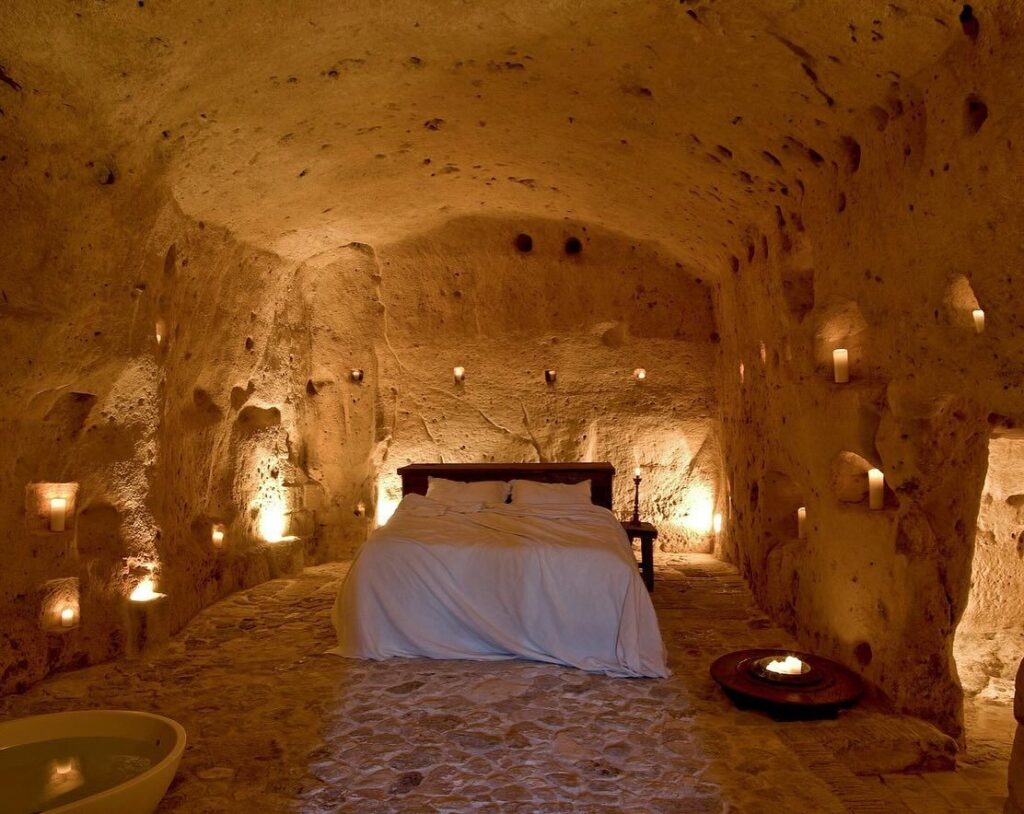
Sextantio Grotte della Civita – iconic luxury cave hotel with candle-lit rooms.
Le Dodici Lune Cave Hotel – modern comfort within Sasso Caveoso.
Locanda di San Martino – historic spa with ancient thermal caves.
Looking for a truly unique stay? Discover our full guide to Cave Hotels in Matera — where history meets modern comfort inside the ancient Sassi.
💡 Traveler Tip: Cave rooms stay cool year-round but may feel humid in winter; book places with climate control.
Exploring the Sassi
- Wear comfortable shoes — the ancient cobblestones are uneven and steep. Most sites, including Casa Grotta nei Sassi di Matera, Matera Cathedral, and MUSMA, can be reached on foot. Start early to enjoy the soft morning light.
Guided Tours & Tickets
- While wandering the Sassi is free, some attractions and museums have small entrance fees (€3–€6). Consider joining a guided walking tour to understand the hidden stories of the Matera cave dwellings and local traditions.
Three-Day Walking Itinerary Through the Sassi
| Day | Highlights | Details |
| Day 1 – Discovering the Roots | Casa Noha, Sasso Caveoso walk, San Pietro Caveoso | Begin with Casa Noha’s introductory film then wander Via Madonna delle Virtù. Enjoy lunch at Osteria Al Casale. |
| Day 2 – Faith & Art in the Caves | Santa Lucia alle Malve, MUSMA, Palazzo Lanfranchi | Explore the church frescoes and modern art exhibits; relax at Piazzetta Pascoli for sunset views. |
| Day 3 – Across the Canyon | Hike to Belvedere Murgia Timone | Cross the footbridge early morning for panoramic photography and end your trip with dinner overlooking the illuminated Sassi. |
Conclusion — A Living Museum of Human Resilience
The Sassi di Matera serve as more than architectural beauty because they show how people endure through different periods of time. These Matera cave dwellings which were once abandoned now display their beauty through the hardships they endured.
The sunlit stones of Sassi di Matera in Italy show the history of time through its ancient residential buildings which served as homes and places of worship for families who experienced the canyon’s morning sunlight. Their spirit continues to exist through the church bells which echo through time and the artisans who work with clay and the peaceful evening light that enters the cave café.
Matera exists as a place where people survived through time while the city underwent a process of rebirth. The city evolved from its previous position as “the shame of Italy” into a UNESCO World Heritage site which demonstrates that proper heritage protection leads to future understanding.
Matera attracts visitors who want to experience its sunlight and explore Casa Grotta nei Sassi di Matera and wander through its historic streets. The human spirit endures through time just like stone because Matera shows us that our essence can survive and radiate beauty.
FAQ
Absolutely. The Sassi di Matera stands as one of Italy’s most remarkable travel destinations because it presents a unique combination of ancient cave residences and Byzantine religious buildings and stone-paved streets which appear to exist outside of time. It’s also a UNESCO World Heritage Site, celebrated for its beauty and human history.
Matera is famous for its ancient cave houses (Sassi) carved into limestone cliffs, once considered the “shame of Italy” but now a symbol of resilience and rebirth. The city became known worldwide because it appeared in films such as The Passion of the Christ and No Time to Die.
Yes, many of the caves have been beautifully restored into homes, boutique hotels, restaurants, and art studios. The historic buildings function as residential spaces for people who maintain their cultural heritage while using their properties for modern business activities.
The best way is on foot — wandering through Sasso Caveoso and Sasso Barisano. You can participate in a guided walking tour to discover secret churches and cisterns and panoramic terraces which show the different stages of city development.
Spend at least two full days to explore the Sassi, visit the Casa Grotta nei Sassi di Matera, hike to Belvedere di Murgia Timo