
Few cities in the world hide their faith so beautifully within the earth as Matera, where the ancient Chiese Rupestri — cave churches — transform raw rock into sanctuaries of light and prayer. When you wander through the Sassi di Matera, every carved doorway might lead not to a house, but to a chapel where centuries-old frescoes still glow in candlelight.
My first visit to San Pietro Caveoso left me speechless. Perched on the cliff’s edge, it feels suspended between heaven and stone. From there, you can spot dozens of small openings in the rock — each one once a sacred space for monks, hermits, and pilgrims who carved Matera’s spiritual heart with their bare hands.
This guide will take you inside these silent masterpieces — the churches in Matera that turned caves into cathedrals, and darkness into devotion.
This Matera Italy Travel Guide: Discover the City of Stone and Timeless Beauty will take you inside these silent masterpieces — the churches in Matera that turned caves into cathedrals, and darkness into devotion.
Table of Contents
The Faith Carved in Stone — Origins of Matera’s Cave Churches
A City of Faith and Stone
Matera’s earliest cave churches date back to the 8ᵗʰ–9ᵗʰ centuries, when Byzantine monks fleeing persecution arrived in southern Italy. They found refuge in the tufa cliffs surrounding the Gravina canyon and began carving small sanctuaries into the limestone. These hermit chapels, or chiese rupestri, were decorated with colorful frescoes depicting saints, angels, and Christ Pantocrator — symbols of hope for isolated believers.
A Network of Hidden Sanctuaries
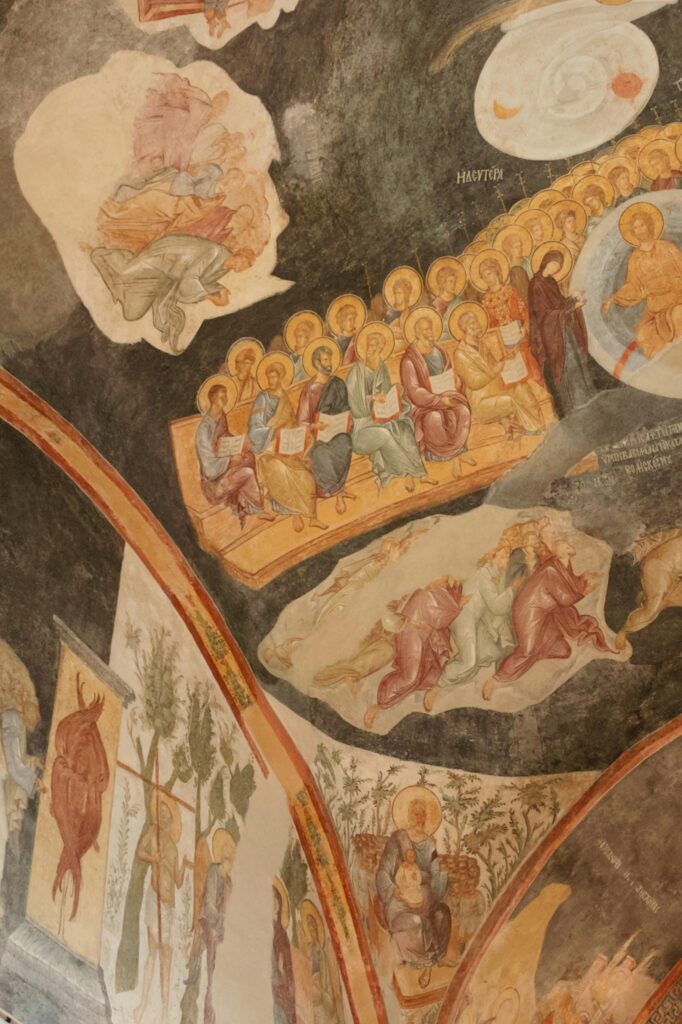
By the 12ᵗʰ century, Matera had over 150 cave churches, each connected by narrow paths through the canyon. Some served as community centers; others as monastic retreats. They blended Eastern Orthodox iconography with Western Romanesque style — a unique artistic language born in stone.

Art That Breathes — The Byzantine and Medieval Frescoes of Matera
The walls of Matera’s rock churches are more than surfaces — they’re living pages of theology. Centuries of humidity and candle smoke couldn’t erase their vibrant colors or the serene gazes of painted saints.
The Byzantine Touch
The earliest frescoes were influenced by Cappadocian monastic art. Typical scenes include the Madonna Odighitria (Our Lady Who Shows the Way), Christ Pantocrator, and rows of apostles framed by geometric borders. Blue and ochre pigments were mixed with lime and applied directly onto damp stone, merging pigment with the cave itself.
Evolution Through Centuries
As Matera’s connections with Apulia and Naples grew, later frescoes absorbed Western Latin influences — more movement, natural light, and softer human features. Each era left a layer: Byzantine solemnity, Lombard craftsmanship, and local folk devotion.
💡 Traveler Tip: Bring a flashlight or phone light — many frescoes lie deep within unlit chapels, and their details shine only when light grazes the stone.
The Most Iconic Churches in Matera
Exploring Matera’s churches is like walking through a timeline of faith — from open-air cathedrals to underground cells of solitude. Here are the most notable ones you should not miss.
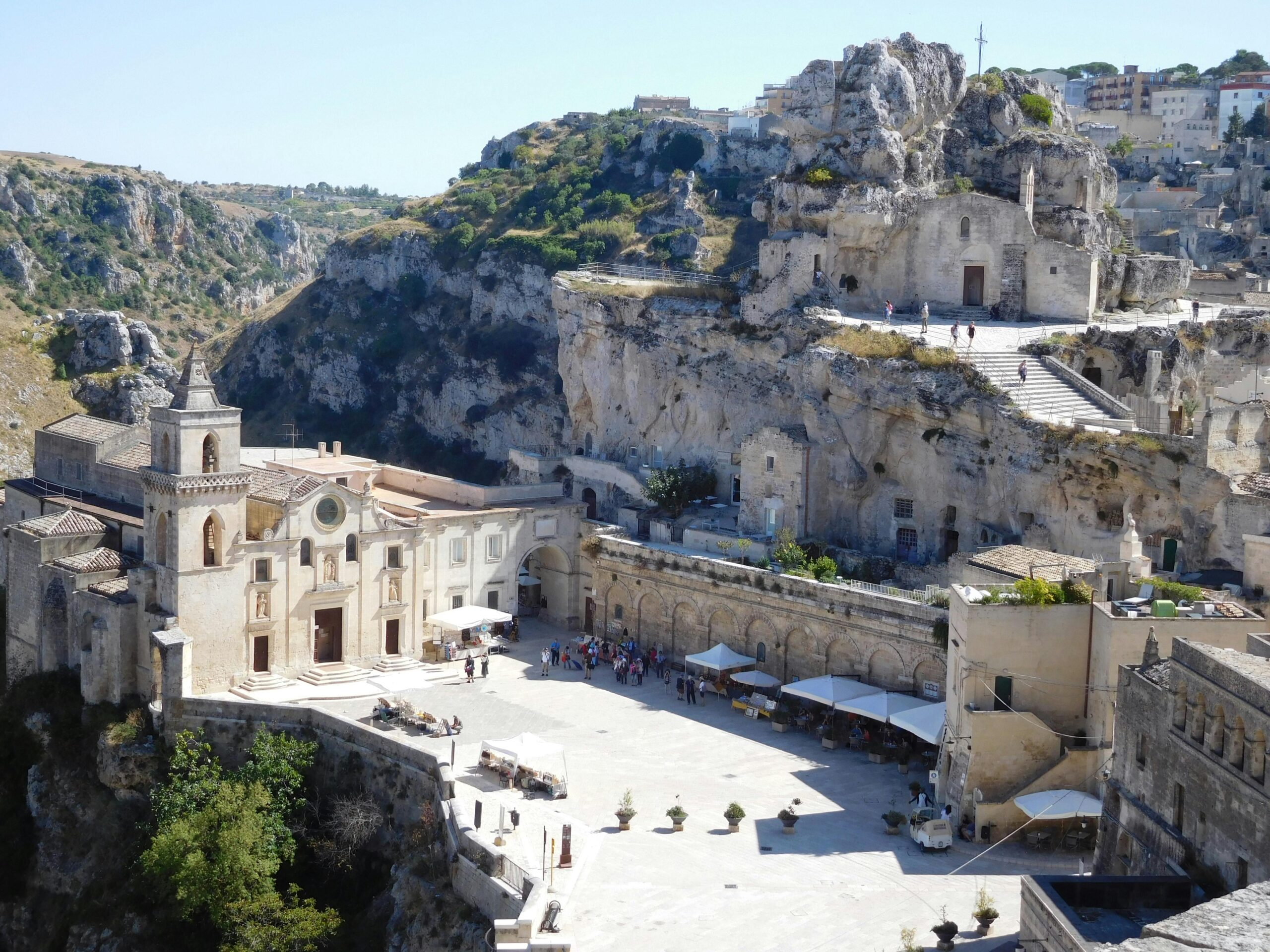
San Pietro Caveoso — The Guardian of the Canyon
![hurch on the cliff edge overlooking the Gravina Canyon in Matera Italy]](https://worldtraveleye.com/wp-content/uploads/2025/10/Matera_San_Pietro_Caveoso-1024x614.jpeg)
One of Matera’s most photographed landmarks, San Pietro Caveoso dates to the 13ᵗʰ century. Built on a rocky spur overlooking the Gravina ravine, it embodies Matera’s blend of drama and devotion.
Highlights:
Baroque façade with three stone portals
Bell towers that frame sunset views of the canyon
A small crypt below with ancient painted crosses
Regular Mass still celebrated by locals
💬 Guest Review by LUPOERRANTE
“Beautiful square within easy walking distance. We really enjoyed its extension and ease to reach it. You can admire an amazing view and the advice to go to this Square in the twilight hours. Delivered the visit of the adjacent church.”
TripAdvisor Rating: ⭐⭐⭐⭐ 4.5/5 (204+ reviews)
Madonna de Idris — Matera’s Most Photogenic Sanctuary
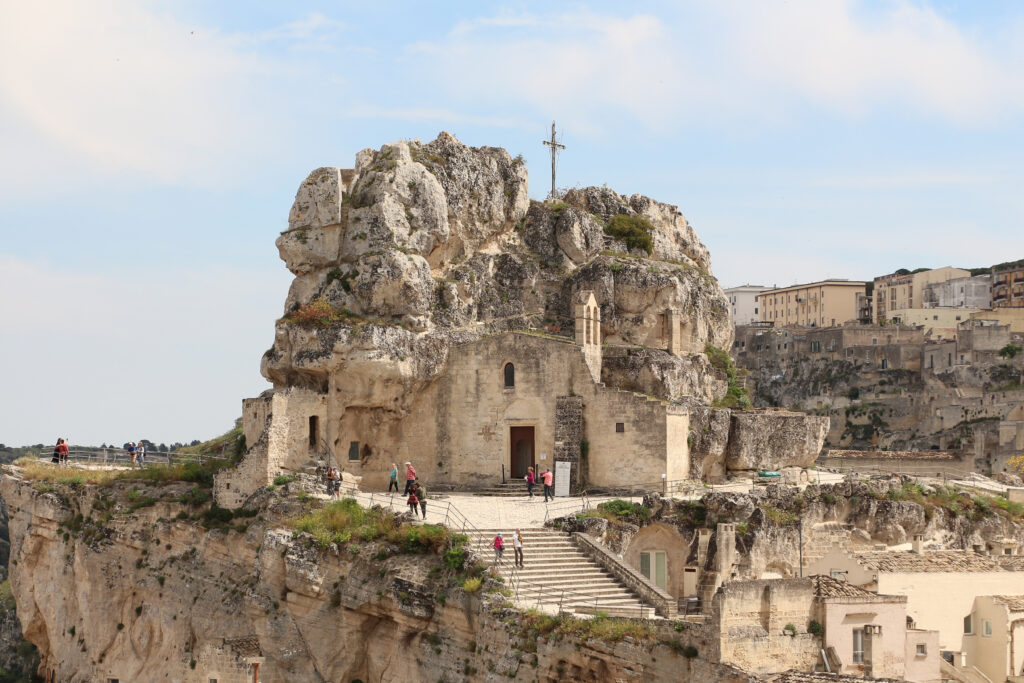
Carved directly into the rock above Sasso Caveoso, the Madonna de Idris church offers a panoramic view of the Sassi.
It’s unique because it connects internally to another cave church, San Giovanni in Monterrone, via an ancient passage.
Why Visit:
Dramatic views over Matera and the ravine
Byzantine fresco of the Virgin and Child
Hidden monastic rooms carved into stone
Santa Lucia alle Malve — Where Faith Meets Art
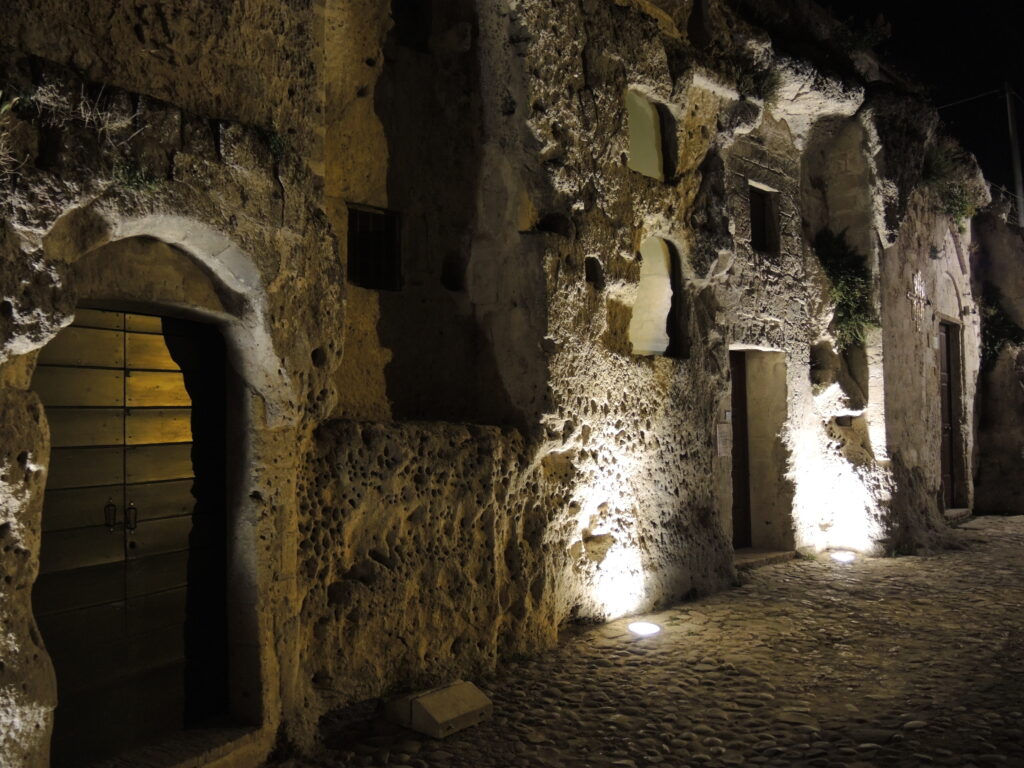
Among the oldest rupestrian churches, Santa Lucia alle Malve was founded by Benedictine nuns in the 8ᵗʰ century. It features a central nave and three semi-circular apses adorned with richly colored frescoes.
Not to Miss:
Frescoes of Saint Benedict and Saint Michael the Archangel
Ancient Greek inscriptions
Quiet stone courtyard overlooking the Sassi
💬 Guest Review by Gió
“In the tour of the rock churches must be visited, very characteristic and with frescoes still visible. Ticket purchased online and as with other attractions there is a guide in several languages. Bravo.”
TripAdvisor Rating: ⭐⭐⭐⭐ 4.5/5 (580+ reviews)
💡 Traveler Tip: Photography is limited inside; buy the official guidebook at the entrance to see the details of the frescoes later.
The Crypt of the Original Sin — The Sistine Chapel of Rupestrian Art
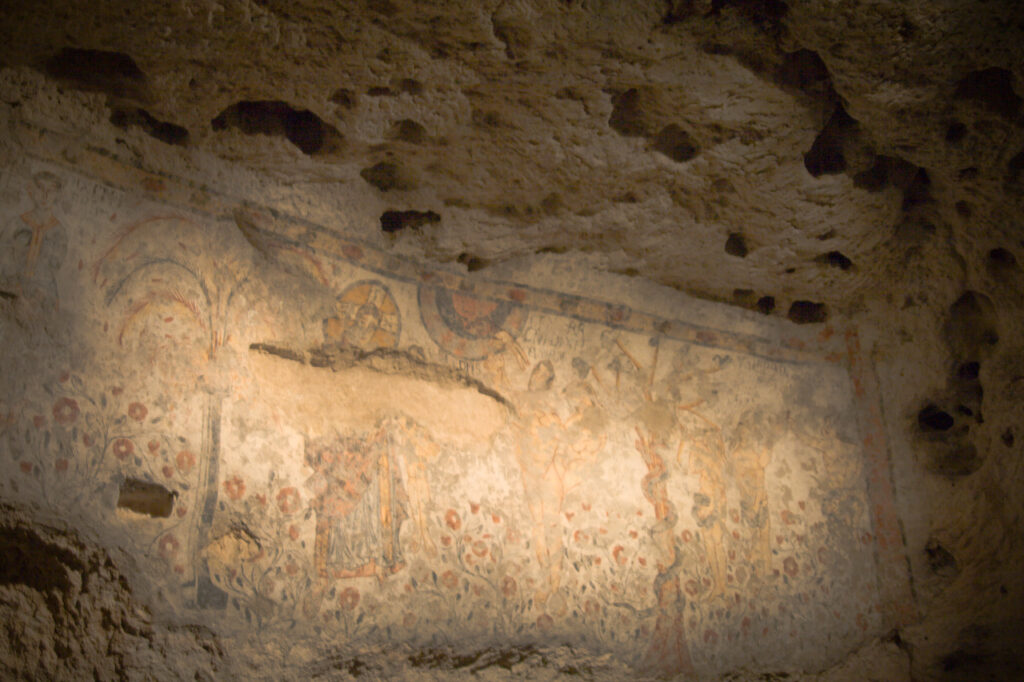
Hidden a few kilometers outside Matera, along the Gravina di Picciano, lies one of Italy’s greatest artistic treasures — the Crypt of the Original Sin (Cripta del Peccato Originale). Discovered by accident in the 1960s by local farmers, this ancient cave-church predates many of Matera’s more famous chapels and is often called the “Sistine Chapel of Rupestrian Art.”
A Sacred Discovery
When workers stumbled upon the cave, they found its walls covered in vivid frescoes dating back to the 8ᵗʰ century.
Despite centuries of isolation, the paintings were astonishingly well-preserved — scenes from the Book of Genesis, angels in motion, and a majestic Christ Pantocrator dominating the apse.
The frescoes are attributed to an unknown monk-artist now affectionately called “The Flower Painter of Matera.” His technique was simple yet profound — layering natural pigments directly on damp tufa rock, allowing the stone to absorb and illuminate the colors.
💡 Traveler Tip: Access is limited to small guided groups; advance booking through the official Cripta website or local Matera visitor centers is required.
Matera Itinerary 3 Days: A Perfect Guide for First-Time Visitors)
Biblical Art Beneath the Earth
Inside, three arched sections depict key moments of Christian faith:
Creation and the Fall — Adam and Eve under the Tree of Knowledge.
Archangels Michael, Raphael, and Gabriel — protectors of Matera’s early believers.
Christ in Glory — surrounded by apostles and seraphim in bold Byzantine hues.
The experience feels timeless. You walk not through a ruin but a living sermon — one whispered through stone and color.
💬 Guest Review by pierfranco mari… c
“Small rock church surrounded by nature. You book the visit online and access from a farm / winery. Interesting visit in a magnificent place.”
TripAdvisor Rating: ⭐⭐⭐⭐ 4.5/5 (1,160+ reviews)
Lesser-Known Cave Chapels — Hidden Sanctuaries of Matera
While San Pietro and Madonna de Idris attract crowds, Matera hides dozens of smaller chiese rupestri scattered across the canyon walls and countryside. Each one tells a different story — of solitude, devotion, and artistic endurance.
San Giovanni in Monterrone — The Cave Beneath the Church
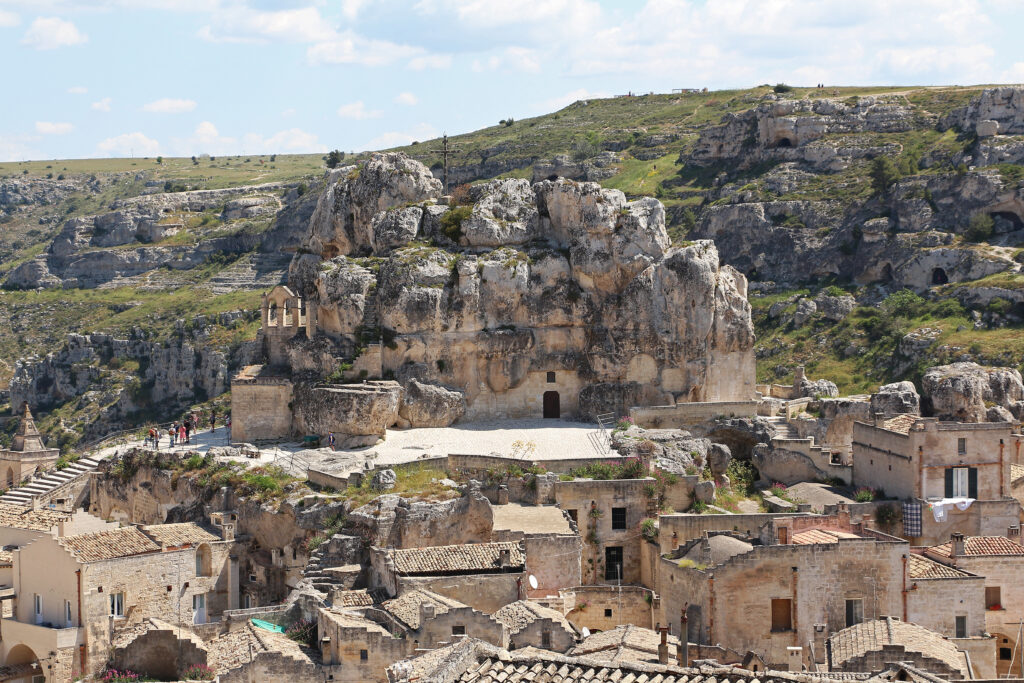
Located beneath Madonna de Idris, this hidden chapel feels almost secretive. Dimly lit and raw, it preserves ancient frescoes of saints and crosses scratched into the walls by anonymous pilgrims. The contrast between its simplicity and the grandeur above makes it one of Matera’s most spiritual places.
San Nicola dei Greci — East Meets West
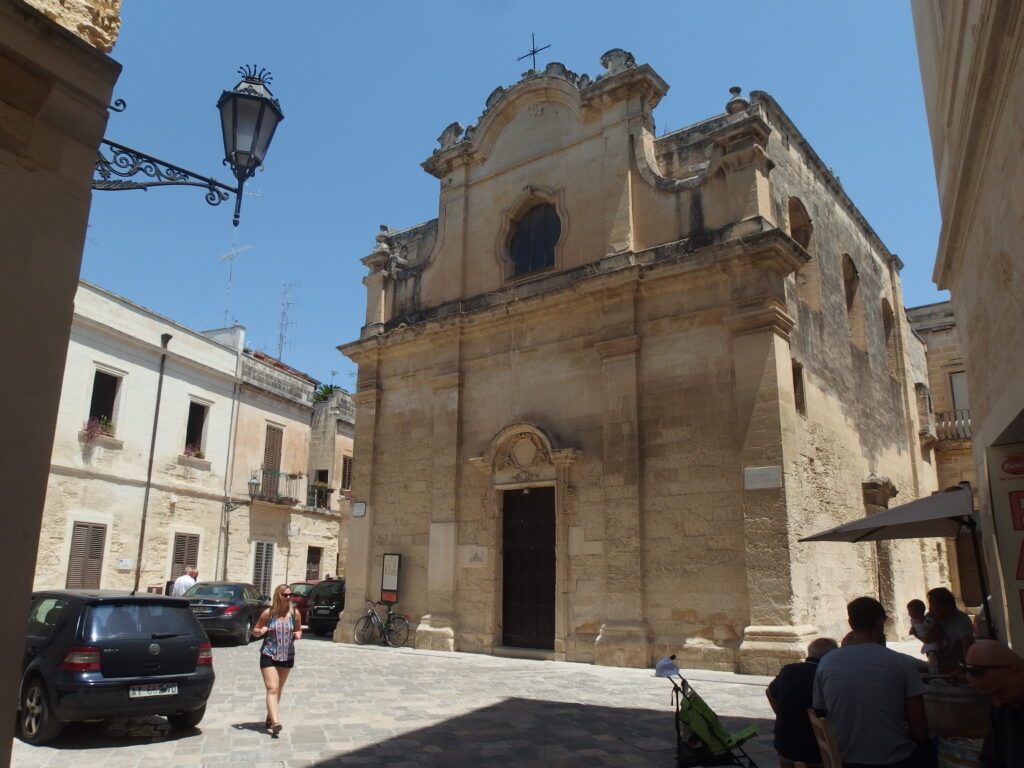
In Sasso Barisano, the San Nicola dei Greci complex blends Greek Orthodox and Latin Catholic styles — a reflection of Matera’s dual identity. Built between the 10ᵗʰ and 11ᵗʰ centuries, it features a carved dome and interlocking chambers resembling early Byzantine monasteries.
What to Notice:
Greek inscriptions above the altar
Frescoes of the Archangel Michael and local saints
Two levels of worship areas — one for monks, one for laypeople
San Giovanni Battista — The Renaissance in Stone
Though not rupestrian, San Giovanni Battista (13ᵗʰ century) deserves mention for bridging Matera’s rock-hewn past and urban rebirth. Its Gothic arches and luminous courtyard show the transition from cave to constructed stone — a metaphor for Matera’s evolution itself.
💡 Traveler Tip: Visit late afternoon; the sunlight filters through rose windows and paints golden patterns on the tufa floor.
The Spiritual Atmosphere — Faith That Endures Time
Even if you’re not religious, Matera’s churches speak to something universal — endurance.
Every fresco, candleholder, and weathered stone whispers about faith that survived darkness, abandonment, and rediscovery.
Walking through these chapels, you realize Matera’s story isn’t about grand cathedrals — it’s about people who refused to stop believing.
Families prayed in caves without light, monks sang in echoing vaults, and artists painted hope where none existed.
From Sacred Past to Cultural Future
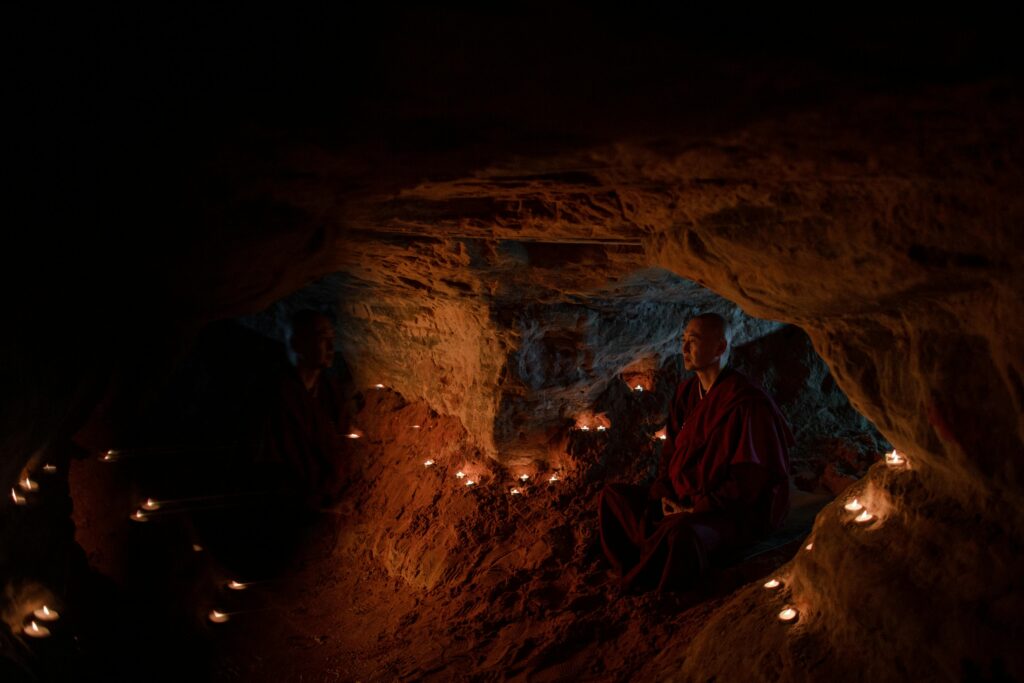
Today, many of Matera’s cave churches have been restored through the combined efforts of FAI, UNESCO, and local conservators. Visitors can now explore them responsibly, with guided routes that protect both art and environment. Matera proves that faith can outlast time — not through monuments of marble, but through whispers of color on stone.
Preservation and UNESCO Recognition — Safeguarding the Rupestrian Heritage
The beauty of Matera’s churches lies not only in their age but in their survival. For centuries, these chapels stood abandoned and forgotten, their frescoes hidden beneath dust and erosion. Everything changed after Matera’s inclusion on the UNESCO World Heritage List in 1993.
UNESCO’s Vision for the Sassi and the Churches
The UNESCO designation was not just about architecture — it was about protecting an entire cultural ecosystem. The goal was to preserve the relationship between the Sassi’s ancient homes and the sacred spaces that gave them spiritual life.
Teams of art historians, archaeologists, and local craftsmen began restoration work on the most fragile sites, like Santa Lucia alle Malve and San Nicola dei Greci.
Today, visitors can step into these same churches without risking damage to their artwork. Humidity controls, limited lighting, and small-group access keep the stone and paint alive for future generations.
The Role of Local Communities
UNESCO’s recognition inspired Matera’s citizens to reclaim their heritage. Many locals who once moved to modern housing in the 1950s now volunteer as guides or join restoration projects. Their involvement has turned preservation into a shared mission rather than a government duty.
Festivals and Faith — Living Traditions in a Stone City
Though Matera feels ancient, its faith is anything but static. The city still celebrates religious festivals that connect modern life to its rock-cut past.
The Feast of Madonna della Bruna
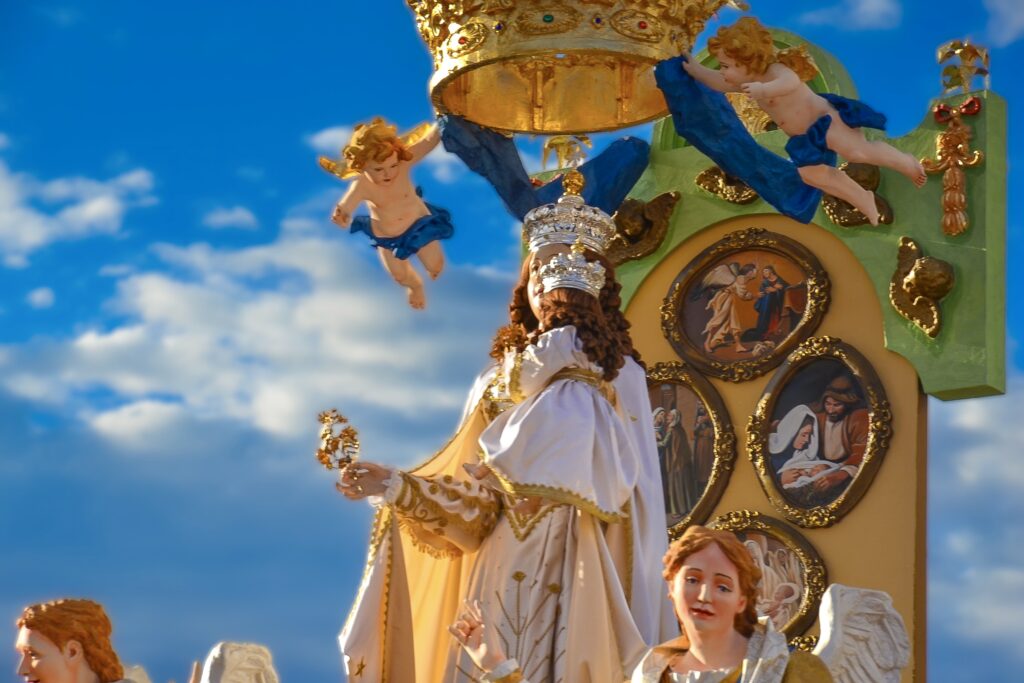
Every 2 July, Matera explodes with color and noise for its most beloved celebration — the Festa della Bruna.
The festival honors the Virgin Mary, protector of Matera, and blends pagan ritual with Christian devotion. The procession begins at the Cathedral and passes by the Sassi’s ancient churches before culminating in a spectacular firework display over San Pietro Caveoso.
Locals say Matera’s stone walls “absorb the echo of each prayer.” Even if you arrive as a visitor, you leave feeling like a participant.
💡 Traveler Tip: Book accommodation months ahead — the festival attracts crowds from across Italy.
Holy Week and Easter in Matera
During Easter, Matera’s churches become stages for drama and faith.
The Via Crucis (procession of the Cross) winds through the Sassi at night, lit only by candles. Choirs sing from within cave chapels like San Pietro Barisano, their voices echoing off the stone walls just as they did centuries ago.
Planning Your Own Spiritual Route Through Matera
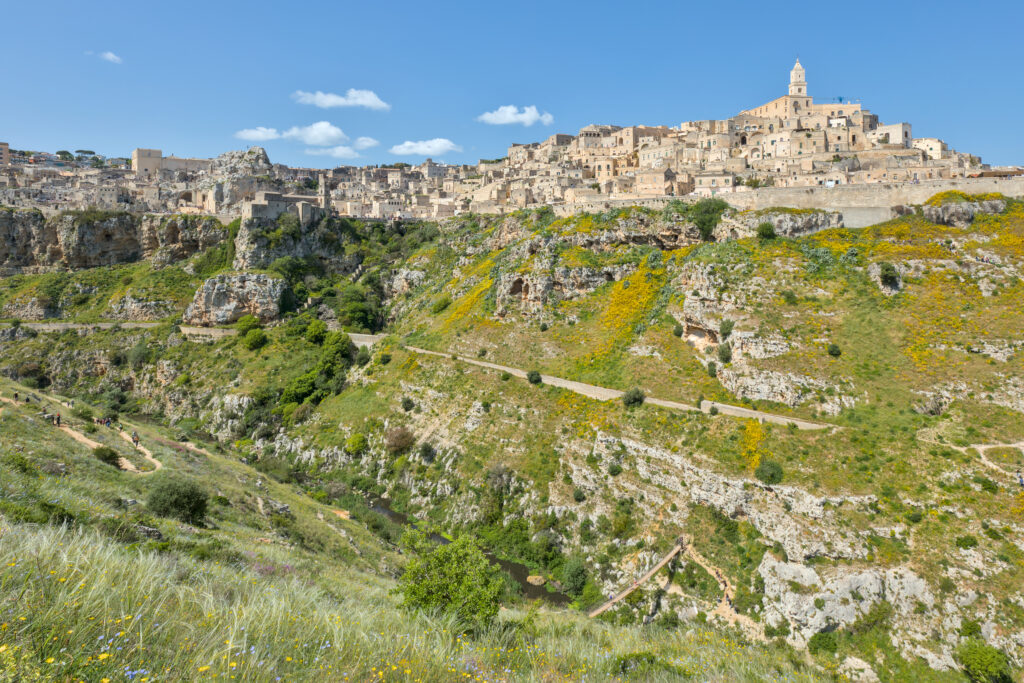
To experience Matera’s religious heritage fully, a simple walking route can connect the main churches while immersing you in the landscape of the Sassi.
Suggested Route (2–3 Hours, Moderate Walk)
Start: Casa Noha (for context and multimedia intro to Matera’s history)
San Pietro Barisano – the largest rupestrian church still used for Mass
Santa Lucia alle Malve – Benedictine art and Byzantine frescoes
San Pietro Caveoso – panoramic view of the Gravina ravine
Madonna de Idris & San Giovanni in Monterrone – two connected cave sanctuaries
End: Belvedere di Murgia Timone – cross the ravine for the best view of Matera’s church-studded cliffs
💡 Traveler Tip: Wear comfortable shoes; the stone steps can be slippery, especially after rain.
Guided Tours and Passes
Several local organizations offer combined tickets covering multiple churches. Guided tours typically last 90 minutes and include expert explanations of fresco techniques and religious iconography. For the most complete experience, book with a certified UNESCO heritage guide or through FAI (Fondo Ambiente Italiano).
Cultural Impact — Faith, Film and Modern Identity
Matera’s spiritual landscape has inspired countless filmmakers, painters, and writers. When Mel Gibson chose Matera as the setting for The Passion of the Christ (2004), the city’s ancient churches became global icons. Later, No Time to Die (2021) showcased San Giovanni Battista and the Sassi streets, merging Hollywood cinema with sacred heritage. These films did more than promote tourism — they reminded the world that Matera is a living museum of faith and art.
Modern Spirituality and Art Installations
In recent years, artists have reimagined these sacred spaces for new audiences. Temporary installations and concerts within disused chapels bring together ancient silence and modern expression. Yet each event follows strict preservation protocols — no lighting beyond set lux limits, no vibrations near fragile frescoes.
Sustainability and Responsible Visiting
Matera’s cave churches are fragile witnesses of history; their preservation depends on visitors’ respect.
Tourism has brought prosperity, but without care, light, vibration, and humidity can quickly destroy centuries-old frescoes.
Eco-Conscious Guidelines
Avoid flash photography — even a single burst can harm pigment layers.
Do not touch walls or frescoes; oils from hands accelerate decay.
Use eco-friendly transport within the Sassi (walk or electric shuttles).
Book small-group tours through FAI or UNESCO operators to limit footfall.
Support local artisans and family-run cafés around the church areas — your spending keeps the community alive.
FAI and Local Partnerships
The FAI (Fondo Ambiente Italiano) continues to train young guides and restoration students, turning Matera into an open-air school of heritage science. Annual fundraising events and volunteer days invite both locals and tourists to participate in clean-ups and conservation activities.
Practical Information for Visitors
| Detail | Information |
| Main Sites | San Pietro Caveoso, Madonna de Idris, Santa Lucia alle Malve, San Giovanni Battista, Crypt of the Original Sin |
| Opening Hours (Orari) | 10:00 – 18:00 (daily, some close at 13:00 for lunch break) |
| Combined Pass (Ticket Unico) | ≈ €8 – €10 for three churches (Sasso Caveoso route) |
| Guided Tours | Available in Italian, English, French, German |
| Recommended Visit Time | Morning light for photography; late afternoon for quiet reflection |
| Dress Code | Modest clothing (respect sacred sites); comfortable shoes for uneven terrain |
| Accessibility | Most upper levels accessible with assistance; some stairs uneven in rupestrian areas |
💡 Traveler Tip: Buy the combined ticket at Santa Lucia alle Malve first — it’s valid for multiple sites and saves time later.
Why These Churches Matter Today
The churches in Matera remind us that civilization is not built from wealth but from faith and endurance. Each arch, apse, and fresco survived because someone believed that beauty deserved to be preserved — even underground. As a traveler, you stand where monks once chanted, where families prayed in darkness, where artists painted hope onto stone.
You don’t just see history here — you inherit it.
Conclusion — A City That Prays in Silence
Few cities speak so softly yet so powerfully as Matera, Italy’s city of stone. Beneath its sunlit cliffs, the Chiese Rupestri — the ancient cave churches — remind us that faith doesn’t need marble or gold to endure. It only needs light, patience, and human hands willing to carve hope from the earth itself.
As you walk through the Sassi di Matera, echoes of prayer linger in every shadowed passage. The faded frescoes, the candlelit chapels, the scent of tufa — they all tell one story: that beauty and belief can survive even underground.
When you leave Matera at sunset, the golden cliffs seem alive — dotted with windows, crosses, and whispers of centuries past. Each opening is a reminder that people once believed light could conquer darkness. And standing there, you understand: they were right.
Matera isn’t just a UNESCO World Heritage Site — it’s a living sermon in stone, a place where history still breathes, and faith continues to shine.
FAQ
Honestly, I lost count the first time I tried — over 150, I think? And the wild part is, so many are tucked inside caves. Walking through the Sassi, you almost stumble into them like secret little treasures.
Yep, jeans are totally fine. Just cover your shoulders and avoid super-short skirts — you’ll look respectful without feeling awkward. I’ve done the same, and nobody blinked an eye.
St. Peter’s Basilica in Vatican City steals the show. I mean, it’s massive, ridiculously detailed, and impossible not to notice. But honestly? Italy’s full of churches that’ll make you stop mid-step just to stare.
Oh, the Sassi caves, hands down. Living history carved into rock — homes, churches, even little streets. It’s weird. In a good way. You wander around and suddenly you’re inside centuries of life, all around you.
Absolutely. Some are still active, others are mini-museums, but either way, stepping inside is like time-travel. You hear the echoes of old prayers, smell the stone, and feel something… kind of magical.

1 comment
Thank you for your sharing. I am worried that I lack creative ideas. It is your article that makes me full of hope. Thank you. But, I have a question, can you help me?