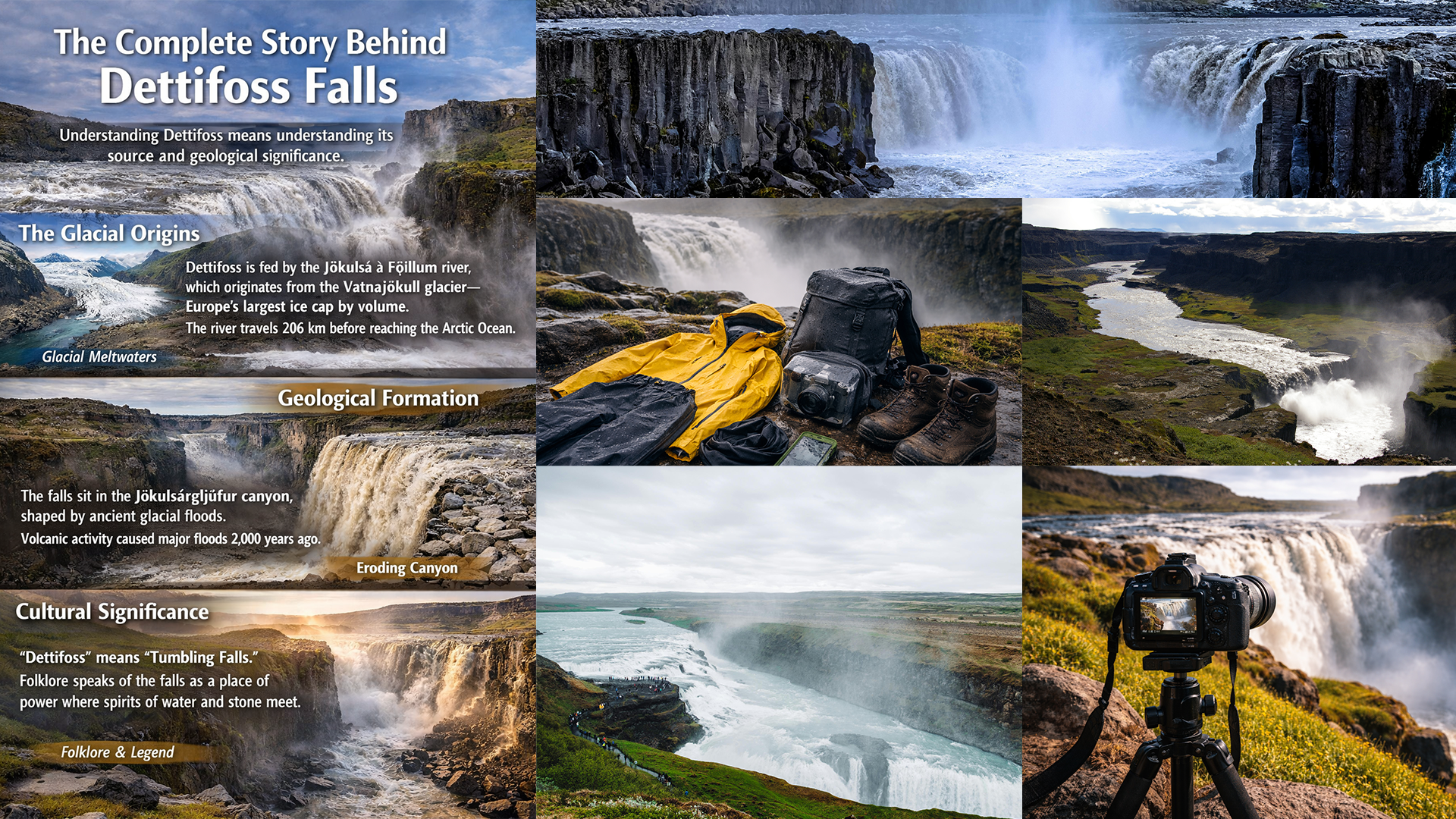
The ground trembled beneath my boots. A deafening roar swallowed every sound. Glacial mist soaked through my waterproof jacket within seconds. Standing at the edge of Dettifoss waterfall Iceland in September 2025, I realized something crucial: no photograph, no video, no article could have prepared me for this raw, primal force of nature.
Dettifoss Iceland isn’t just another Iceland waterfall—it’s Europe’s most powerful cascade, unleashing 193 cubic meters of muddy glacial water per second into a volcanic canyon. Unlike the graceful blue waterfalls you’ve seen in postcards, Dettifoss waterfall Iceland is brown, violent, and utterly mesmerizing. The earth literally vibrates from the impact. Your thoughts disappear beneath the roar. You feel incredibly, humblingly small.
But here’s what most visitors get wrong: they arrive unprepared, choose the wrong access route, miss the best viewpoints, and leave wondering why their experience felt rushed or incomplete.
This isn’t another generic travel article. This is everything I learned from my September 2025 visit to Dettifoss falls—the honest mistakes, the essential gear that actually mattered, the route secrets locals know, and the photography tricks that work in real conditions. Whether you’re planning from Reykjavik or Akureyri, driving a rental car or 4×4, visiting in summer or shoulder season, this guide gives you the complete truth about experiencing Iceland’s most powerful natural wonder.
Ready to feel the earth shake?
Table of Contents
Why Dettifoss Waterfall Deserves Your Attention
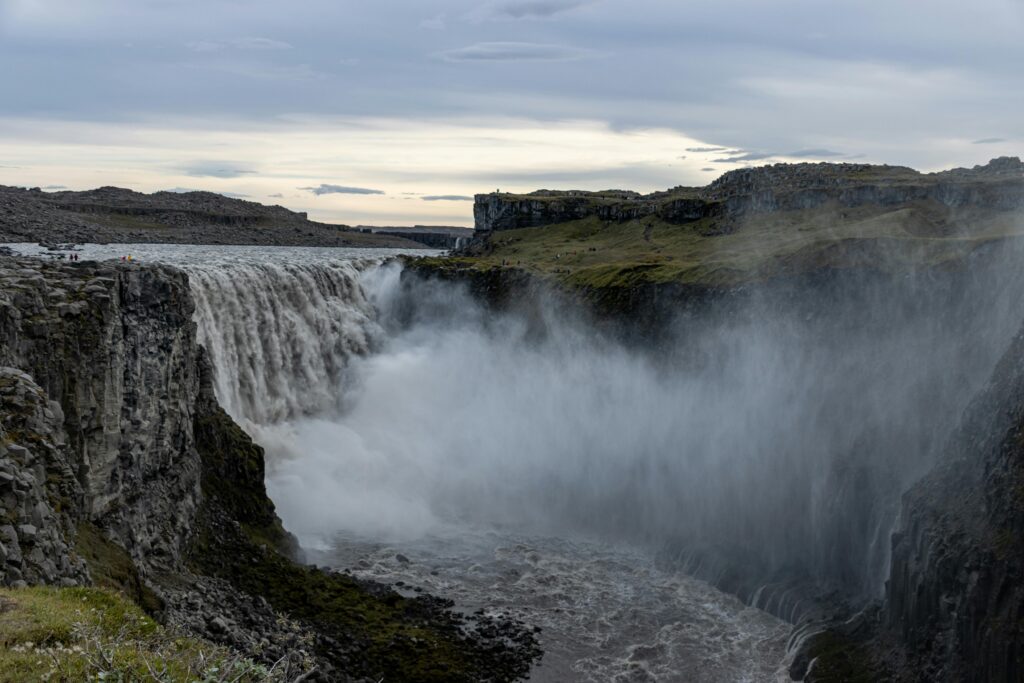
If Gullfoss impressed you, Dettifoss will humble you.
The Raw Numbers That Tell Only Part of the Story
- Height: 45 meters (148 feet)
- Width: 100 meters (330 feet)
- Average flow: 193 cubic meters per second (can reach 500+ during peak melt)
- Location: 671, Iceland
- Coordinates: 65.8158864006, -16.384668115514703
- Distance from Akureyri: Approximately 90 kilometers (2 hours drive)
- Title: Europe’s most powerful waterfall by volume
But here’s the thing—those numbers don’t capture it. Standing at Dettifoss waterfall Iceland, you FEEL the power through your feet. The ground literally vibrates from the force of water hitting rock. It’s an experience that engages all your senses in ways that statistics simply cannot convey.
The Complete Story Behind Dettifoss Falls
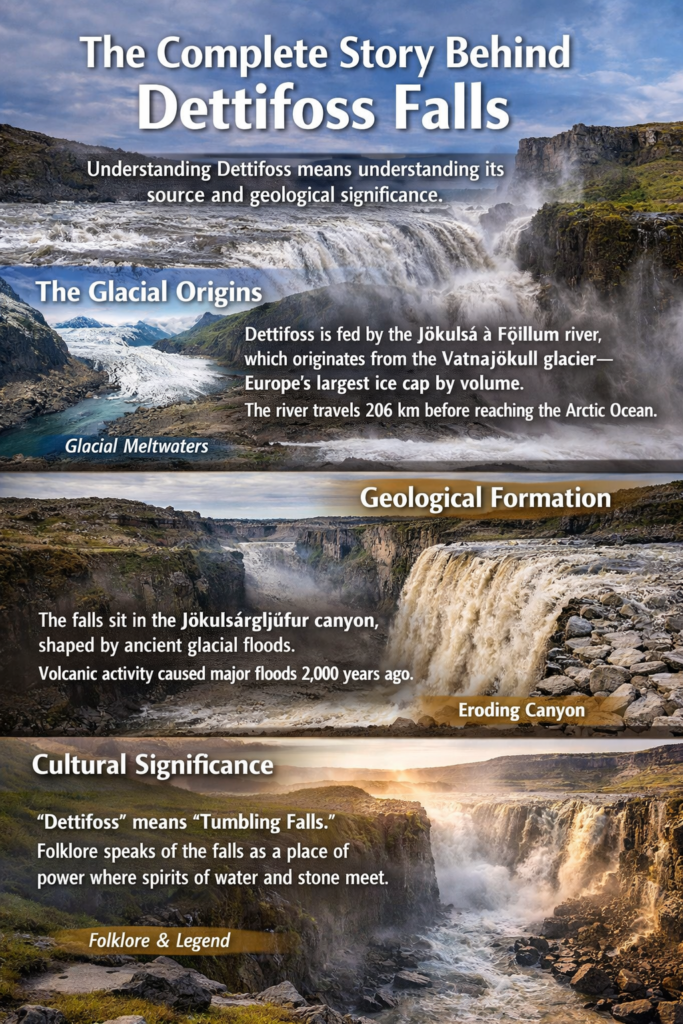
Understanding Dettifoss means understanding its source and geological significance.
The Glacial Origins
Dettifoss is fed by the Jökulsá á Fjöllum river, which originates from the Vatnajökull glacier—Europe’s largest ice cap by volume. The river travels approximately 206 kilometers before emptying into the Arctic Ocean, and Dettifoss sits roughly at its midpoint.
The water you see thundering over the falls has spent centuries as ice, compressed under immense pressure. When it melts, it carries with it fine glacial sediment—rock flour ground down by the glacier’s movement. This is why Dettifoss waterfall appears brown or grey rather than crystal clear.
Geological Formation
The falls sit within the Jökulsárgljúfur canyon, formed by catastrophic glacial flooding events over thousands of years. The most recent major flood occurred approximately 2,000 years ago when volcanic activity beneath Vatnajökull caused massive meltwater releases.
The canyon continues to erode at a measurable rate. Scientists estimate Dettifoss Iceland erodes its bedrock by several millimeters per year. You’re witnessing active geological processes that have been shaping Iceland for millennia.
Cultural Significance
The name “Dettifoss” translates roughly to “tumble falls” or “collapsing falls” in Icelandic. Local folklore speaks of the falls as a place of power, where spirits of water and stone meet. While modern tourism has made it accessible, the Icelandic people still hold deep respect for natural formations like Dettifoss falls.
Getting There: Detailed Route Planning
From Reykjavik (Approximately 6-7 hours)
If you’re starting from Iceland’s capital:
- Take Route 1 (Ring Road) heading north
- Continue past Akureyri
- Turn onto Route 85 heading northeast
- Follow signs to Route 862 (west side) or Route 864 (east side)
Important note: This is a full day’s drive. Most visitors split the journey with an overnight stay in Akureyri or near Lake Mývatn.
From Akureyri (Approximately 2 hours)
This is the most common starting point for visiting Dettifoss waterfall Iceland:
- Take Route 1 heading east
- Turn onto Route 85 near Goðafoss waterfall
- Continue through the highlands
- Choose Route 862 (west access) or Route 864 (east access)
The landscape changes dramatically on this drive. You’ll pass through lava fields, see distant mountains, and experience Iceland’s vast, empty interior.
From Lake Mývatn (Approximately 45-60 minutes)
Many visitors base themselves near Lake Mývatn, making Dettifoss an easy day trip:
- Take Route 1 heading east
- Turn onto Route 862 or Route 864
- Follow signs to Dettifoss parking areas
East Side vs. West Side: The Complete Breakdown
This decision significantly impacts your Dettifoss waterfall experience.
West Side (Road 862) – Detailed Analysis
Road Conditions: Route 862 is fully paved and well-maintained. Any rental car can access it safely. During my September visit, the road was in excellent condition with clear signage.
Parking: The west side parking area accommodates approximately 50 vehicles. It includes:
- Designated parking spaces
- Accessible parking near facilities
- Tour bus parking area
- Information boards with maps
Facilities:
- Modern toilet facilities (maintained regularly)
- Information center with displays about the falls
- Viewing platforms with safety railings
- Marked walking paths
- Emergency phone
Walking Distance: From parking to main viewpoint: approximately 600 meters (about 10-15 minutes walk). The path is well-maintained with some gentle slopes.
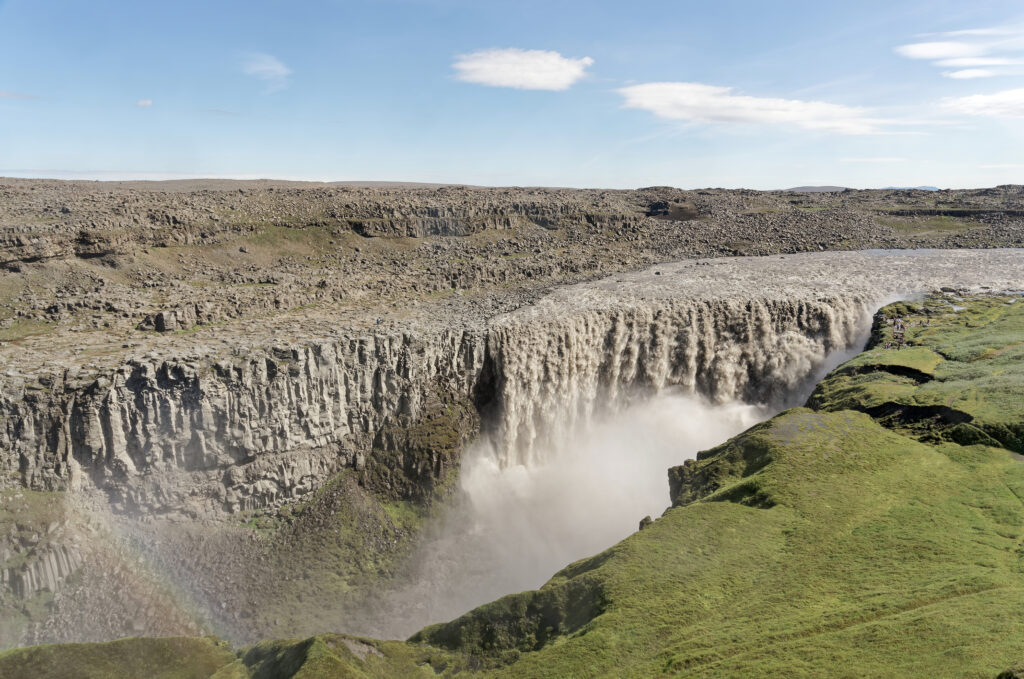
Viewing Experience: You’re viewing Dettifoss falls from slightly downstream and across the canyon. The perspective is impressive, though you’re farther from the falling water itself. The spray reaches you in favorable wind conditions.
Best For:
- Families with children
- Visitors with mobility limitations
- Those traveling in regular rental cars
- First-time visitors to Iceland
- Rainy or windy conditions (better shelter)
Crowds: More visitors choose this side due to accessibility. During my September visit, I counted approximately 40 people at peak viewing time (around 2 PM).
East Side (Road 864) – Detailed Analysis
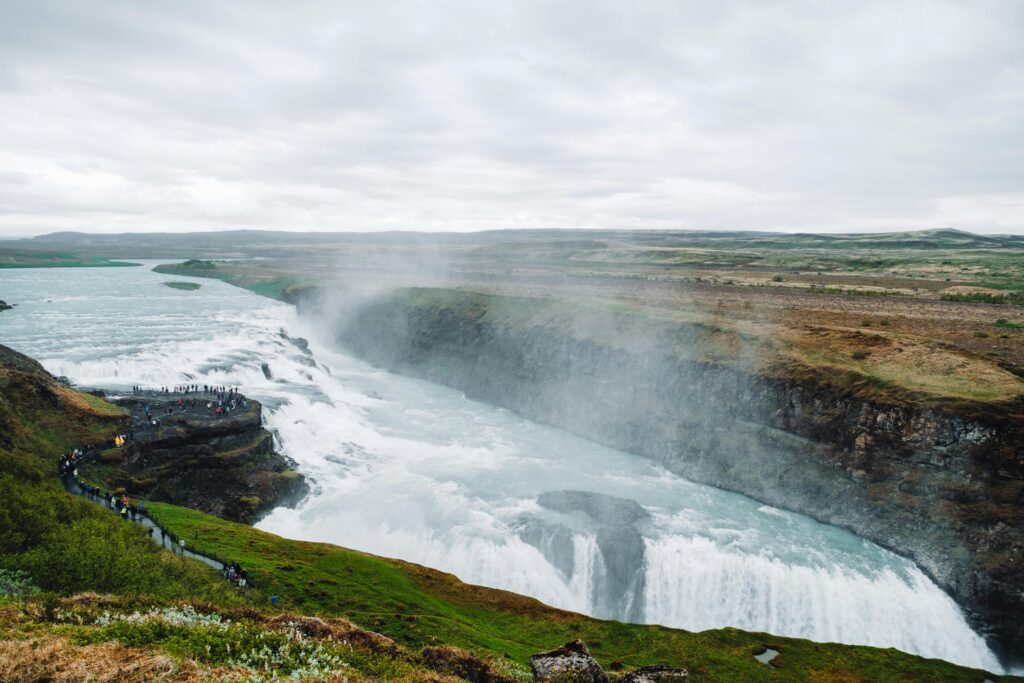
Road Conditions: Route 864 is a gravel F-road with significant potholes, river crossings (shallow but present), and rough sections. A 4×4 vehicle is strongly recommended. I witnessed a regular car struggle significantly, and the rental company would not cover any damage on F-roads.
Parking: More basic parking area accommodating about 30 vehicles:
- Gravel parking lot
- Less defined spaces
- No tour bus access
- Minimal signage
Facilities:
- Basic pit toilet only
- No information center
- Minimal infrastructure
- No emergency services nearby
Walking Distance: From parking to viewpoint: approximately 400 meters. The path is rougher, with loose rocks and no official trail marking. Requires sturdy footwear.
Viewing Experience: This is where Dettifoss Iceland truly shines. You’re standing at the edge of where water plunges into the canyon. The spray hits you directly. The roar is deafening. The perspective makes you feel the scale in a way the west side cannot match.
The photographer I spoke with said: “West side shows you the waterfall. East side makes you feel it.”
Best For:
- Photographers seeking dramatic angles
- Adventure travelers with 4×4 vehicles
- Those wanting fewer crowds
- Visitors who want the most intimate experience
- Experienced hikers comfortable with rough terrain
Crowds: Significantly fewer visitors. During my comparable time frame, perhaps 10-12 people maximum.
My Honest Recommendation
If you have a 4×4 and feel comfortable with rough roads: Choose the east side. The experience is more intimate, more powerful, and more memorable.
If you’re traveling in a regular car, have children, or prefer easier access: The west side is excellent. Don’t feel like you’re missing out—it’s still an incredible experience.
If time allows and you have appropriate vehicle: Visit both sides. They offer genuinely different perspectives on Dettifoss waterfall Iceland.
What to Expect When You Arrive at Dettifoss Waterfall
The Sensory Experience
- Sound: Before you see Dettifoss, you hear it. The roar carries across the landscape, growing progressively louder as you approach. At the viewing area, conversation requires shouting. The sound isn’t just noise—it’s a physical pressure you feel in your chest.
- Sight: The first glimpse is always striking. The muddy brown water contrasts sharply with Iceland’s typically pristine blue waterfalls. The width surprises people—100 meters is much wider than most imagine.
- Touch: The mist reaches you within minutes. On the east side, it’s constant and drenching. On the west side, it depends on wind direction. The ground vibration is real and measurable—you’ll feel it through your shoes.
- Smell: Fresh, mineral-rich water mixed with wet rock. It’s clean but earthy, reminding you this water was recently ice.
Weather Considerations at Dettifoss Falls
September (My Visit):
- Temperature: 4-10°C (39-50°F)
- Wind: Moderate, 15-25 km/h
- Precipitation: Light rain showers
- Daylight: Approximately 13 hours
- Crowd Level: Medium-low
Summer (June-August):
- Temperature: 8-15°C (46-59°F)
- Best weather conditions
- Highest visitor numbers
- Longest daylight (midnight sun period)
- Higher water flow
Winter (November-March):
- Temperature: -5 to 0°C (23-32°F)
- East side often closed
- Ice formations create unique beauty
- Very few visitors
- Limited daylight
- Requires extreme caution
Spring (April-May):
- Peak water flow from snowmelt
- Most powerful period for Dettifoss waterfall
- Unpredictable weather
- Roads may still have winter conditions
Fall (September-October):
- Beautiful autumn colors
- Moderate crowds
- Good weather windows
- Shoulder season pricing
Essential Gear and Packing List for Dettifoss Iceland
Based on my experience and mistakes, here’s what you actually need:
Absolutely Essential
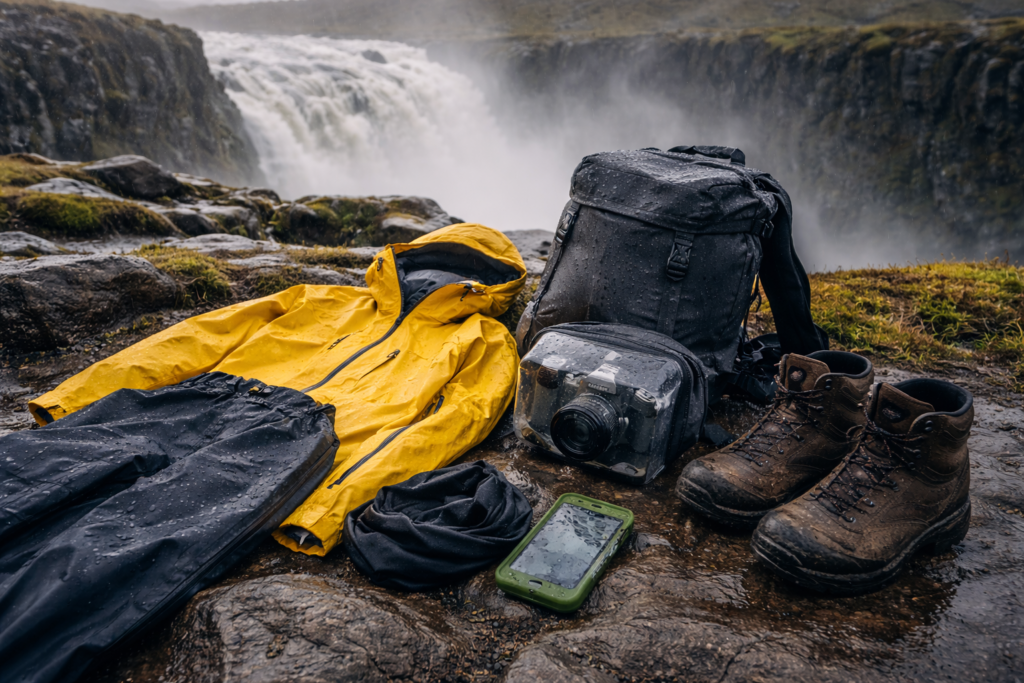
- Waterproof outer layer: Not water-resistant—waterproof. The mist at Dettifoss falls defeats anything less. I wore a Gore-Tex rain jacket and it barely kept up.
- Waterproof pants: Your legs will get soaked from mist alone. Waterproof pants over your regular clothes are essential.
- Sturdy waterproof boots: The terrain is wet, rocky, and uneven. Hiking boots with ankle support and waterproof membranes are ideal. Running shoes or sneakers will leave you with wet, cold feet.
- Neck covering: A buff, scarf, or high collar prevents water from running down your neck—my biggest mistake was not bringing this.
- Waterproof bag/cover for electronics: Your camera and phone need protection. I used a dry bag for my camera and a waterproof case for my phone.
Highly Recommended
- Multiple layers: Temperature drops near the falls. I wore: thermal base layer, fleece mid-layer, rain jacket. All were necessary.
- Gloves: Even in September, my hands got cold from the combination of water and wind.
- Hat or hood: Keeps your head dry and warm.
- Sunglasses: Bright days create intense glare off the water and mist.
- Microfiber towel: To dry your face, camera lens, and hands.
For Photographers
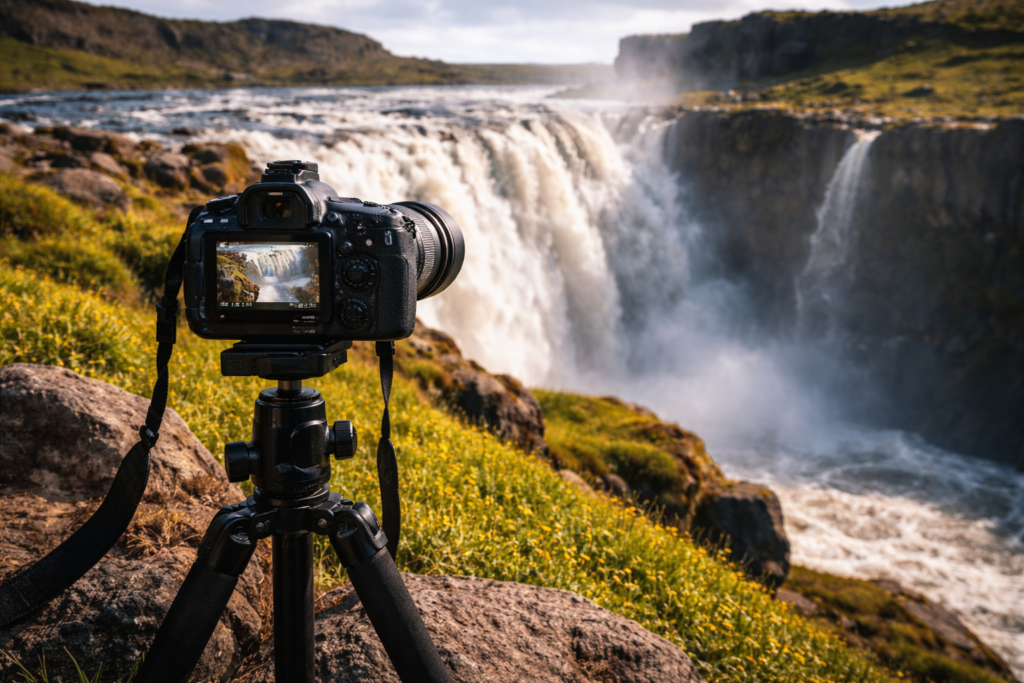
- Weather-sealed camera body: Essential for Dettifoss waterfall photography.
- Lens cloth and protection: You’ll constantly wipe spray from your lens.
- Neutral density filters: For long-exposure shots of the water movement.
- Tripod with good grip: The ground is wet and sometimes uneven.
- Polarizing filter: Helps cut through mist and enhance the water’s texture.
Photography Tips for Capturing Dettifoss Waterfall Iceland
Best Times for Photography
Morning (8-10 AM):
- Softer light
- Fewer people
- Calmer winds often mean better mist control
Late Afternoon (4-6 PM):
- Golden hour lighting
- Dramatic shadows in the canyon
- Beautiful for landscape compositions
Overcast Days:
- Actually excellent for waterfalls
- Even lighting without harsh shadows
- Mist shows up better in photos
Technical Settings That Worked
For the main waterfall shot:
- Shutter speed: 1/4 to 2 seconds for silky water effect
- Aperture: f/11 to f/16 for maximum depth of field
- ISO: 100-200 to maintain quality
- Use ND filter to allow longer exposures in brighter conditions
For capturing the raw power:
- Shutter speed: 1/500 or faster to freeze the water
- Aperture: f/5.6 to f/8
- ISO: Adjust as needed
- Continuous shooting mode to capture the perfect spray moment
Composition Ideas
- Include scale: Wait for people at the edge to show the massive size
- Capture the canyon: Wider shots showing Dettifoss within its geological context
- Detail shots: Close-ups of water texture and rock formations
- Sequential panning: Multiple shots stitched for a panorama
Protecting Your Gear
I learned this through near-disaster: keep your camera bag closed and use a rain cover. Have lens cloths accessible in waterproof pockets. Change lenses only with your back to the falls, creating a shelter with your body.
Nearby Attractions Worth Visiting
Selfoss Waterfall (1 km upstream)
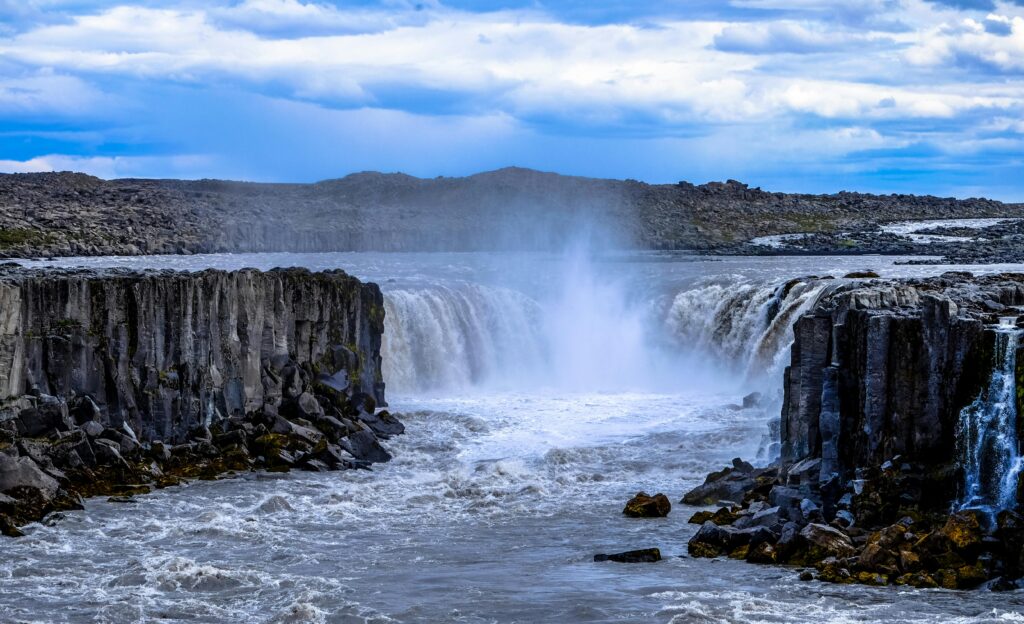
Walk 10-15 minutes upstream from Dettifoss to find Selfoss—a stunning horseshoe-shaped waterfall that’s criminally undervisited. It’s gentler, more delicate, and provides beautiful contrast to Dettifoss falls. Many visitors don’t realize it exists.
My take: Don’t skip this. It’s an easy walk and the combination of both waterfalls makes the journey even more worthwhile.
Hafragilsfoss (2 km downstream)
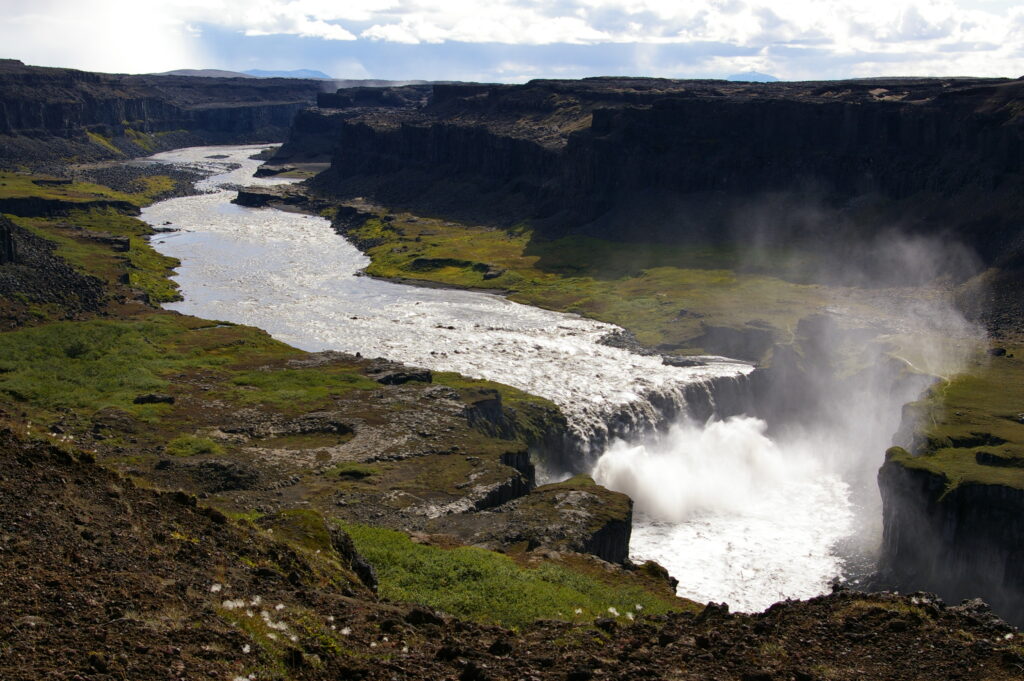
Located downstream from Dettifoss waterfall Iceland, Hafragilsfoss plunges into an incredibly narrow canyon. The walls are vertical and dramatic. Less crowded than Dettifoss, it offers unique photographic opportunities.
Ásbyrgi Canyon (30 minutes north)
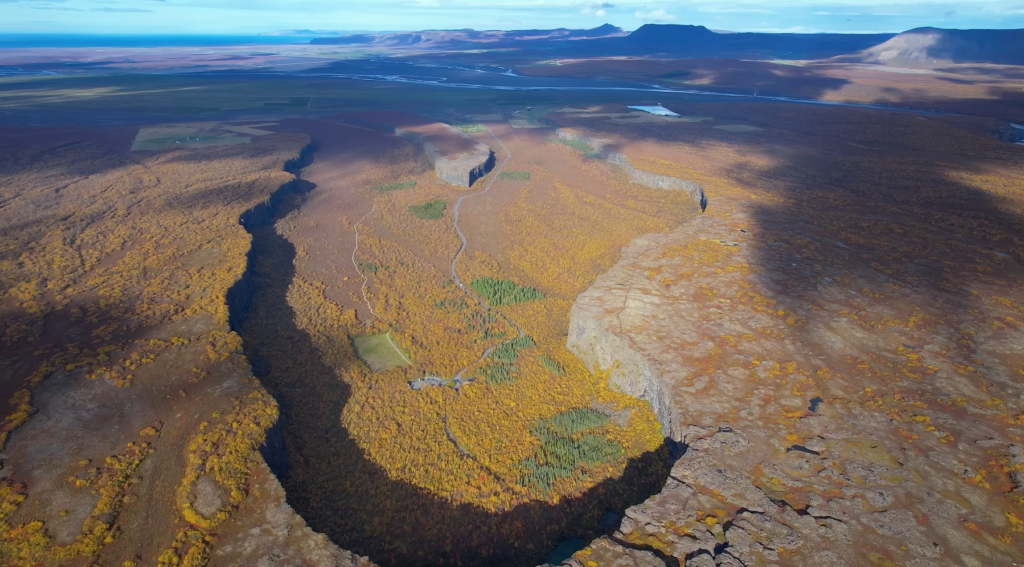
A horseshoe-shaped canyon carved by the same catastrophic floods that created Dettifoss Iceland—though Norse legend claims it’s Odin’s eight-legged horse’s hoofprint. The aerial view reveals nature’s perfect symmetry: towering cliffs embrace a lush birch forest floor painted in autumn gold and green. Where Dettifoss waterfall roars with violence, Ásbyrgi whispers peace. Complete silence replaces the deafening roar, birds sing where water once thundered. After experiencing Dettifoss falls, this serene oasis feels like nature’s gentle embrace—same geological forces, opposite emotions.
Lake Mývatn Area (1 hour west)
- Geothermal areas at Námafjall
- Pseudo-craters at Skútustaðir
- Dimmuborgir lava formations
- Mývatn Nature Baths
Practical Information for Planning Your Dettifoss Visit
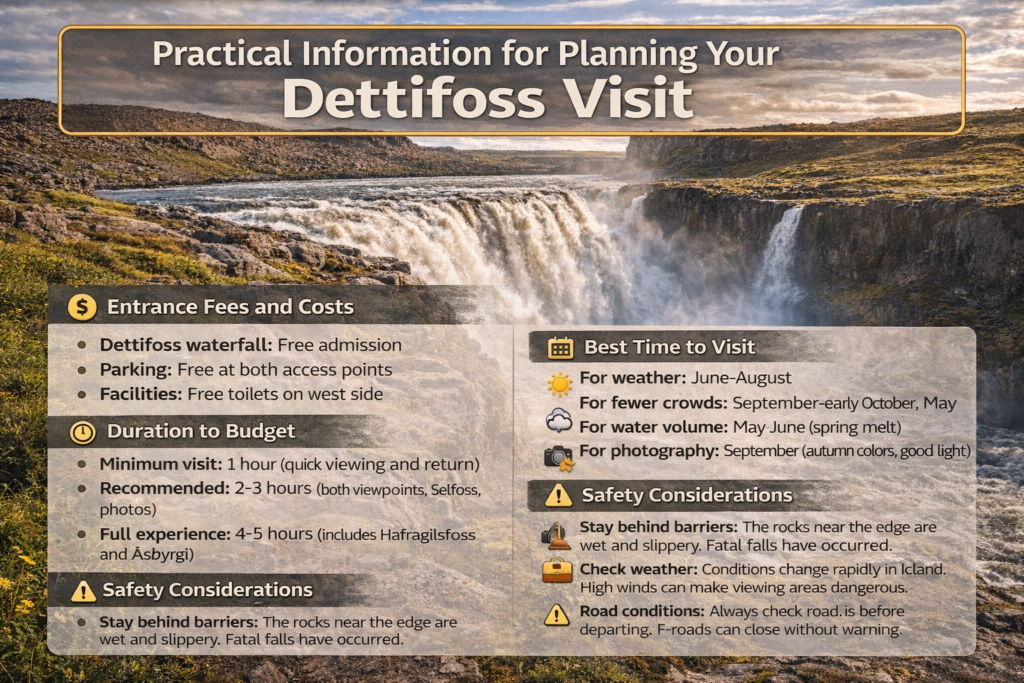
Entrance Fees and Costs
- Dettifoss waterfall: Free admission (as of September 2025) P
- arking: Free at both access points
- Facilities: Free toilets on west side
Duration to Budget
- Minimum visit: 1 hour (quick viewing and return)
- Recommended: 2-3 hours (both viewpoints, Selfoss, photos)
- Full experience: 4-5 hours (includes Hafragilsfoss and Ásbyrgi)
Best Time to Visit
- For weather: June-August
- For fewer crowds: September-early October, May
- For water volume: May-June (spring melt)
- For photography: September (autumn colors, good light)
Safety Considerations
- Stay behind barriers: The rocks near the edge are wet and slippery. Fatal falls have occurred.
- Watch children closely: The power of Dettifoss falls can be mesmerizing, and children may not understand the danger.
- Check weather: Conditions change rapidly in Iceland. High winds can make viewing areas dangerous.
- Have emergency supplies: Cell service is limited. Carry water, snacks, and basic first aid.
- Road conditions: Always check road.is before departing. F-roads can close without warning.
Accommodation Options Near Dettifoss Waterfall
Nearby Options (Within 1 hour)
Fosshóll Guesthouse:
- 15 minutes from west side entrance
- Basic but clean rooms
- Restaurant on-site
- Good base for early morning visits
Reykjahlíð (Lake Mývatn):
- Multiple hotels and guesthouses
- Full services and restaurants
- Approximately 45 minutes from Dettifoss
- Best infrastructure in the region
Kelduhverfi Area:
- Farm stays and rural accommodations
- 30-40 minutes from falls
- More isolated but authentic experience
Budget-Friendly Options
Camping:
- Ásbyrgi campground (30 minutes north)
- Facilities include toilets, showers, cooking areas
- Must book in advance during summer
Final Thoughts: Is Dettifoss Waterfall Iceland Worth It?
After visiting dozens of Icelandic waterfalls, I can say without hesitation: Yes, absolutely.
Dettifoss waterfall isn’t just another checkbox on your Ring Road itinerary—it’s a genuine encounter with nature’s power. It’s not the tallest waterfall in Iceland. It’s not the prettiest. But it is, without doubt, the most humbling.
When you stand at the edge and feel the earth shake beneath you, when the mist soaks through your layers, when the roar drowns out every other sensation—that’s when you understand why travelers consistently rank Dettifoss Iceland as one of the country’s most memorable natural wonders.
The detour is worth it. The rough roads are worth it. Even getting soaked is worth it.
It’s raw. It’s powerful.So It’s exactly what Iceland is all about.
Dettifoss falls reminds you that humans are small, nature is vast, and some experiences cannot be conveyed through photographs or words—they must be felt.
FAQ
It depends on what you want—Dettifoss is more powerful and dramatic, while Goðafoss is more photogenic and calmer, so both offer very different waterfall experiences.
Dettifoss is Iceland’s most powerful waterfall, located in the Jökulsárgljúfur canyon, fed by glacial meltwater from Vatnajökull.
Yes—Hengifoss is worth visiting for its striking red-layered basalt cliffs, scenic hiking trail, and geological uniqueness compared to other Iceland waterfalls.
The west side offers safer access and better views of the waterfall’s power, while the east side is rougher but more dramatic for photography.
Most travelers spend 1–2 hours exploring viewpoints, photographing the canyon, and walking the short trails around the falls.