When I first saw photos of Iceland waterfalls, I honestly thought they were edited. No place could have that many massive, powerful waterfalls in such a small country, right? Then I spent two weeks driving around Iceland in September 2025, and I realized something: those photos don’t even capture how incredible these waterfalls really are.
Standing at Gullfoss with glacial mist soaking my face, walking behind the curtain of water at Seljalandsfoss, hearing the earth-shaking roar of Dettifoss—these moments changed how I think about nature’s power. Iceland isn’t just “a country with some nice waterfalls.” It’s genuinely the waterfall capital of the world.
This guide covers everything I learned visiting Iceland waterfalls in September 2025—the famous ones, the hidden gems, the practical tips nobody tells you, and the honest truth about what to expect. Whether you’re planning your first trip or your fifth, I’ll help you experience these natural wonders the right way.
Table of Contents
Why Iceland is the Ultimate Waterfall Destination
How Iceland Got 10,000+ Waterfalls (The Real Story)
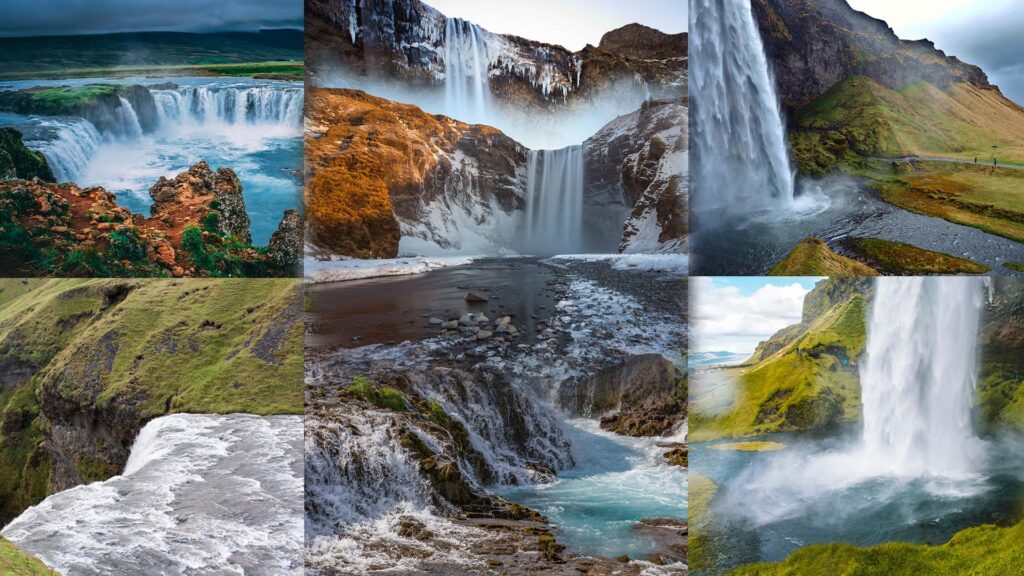
Here’s a number that sounds impossible: According to the Icelandic Tourism Board, Iceland has over 10,000 waterfalls. That’s not an estimate—it’s reality. Some sources say there could be even more, but many are so remote that they’ve never been officially counted or named.
For perspective, that’s roughly one waterfall for every 37 people living in Iceland. The entire country is basically a waterfall playground.
But why? What makes this small island nation such a waterfall paradise?
What Makes Iceland Waterfalls Different from Anywhere Else
Glaciers Meet Volcanic Rock – Nature’s Perfect Recipe
Iceland sits on the Mid-Atlantic Ridge, where the North American and Eurasian tectonic plates are literally pulling apart. This creates a landscape of dramatic cliffs, deep valleys, and elevated plateaus—perfect conditions for waterfalls.
Add to this Iceland’s massive glaciers. Vatnajökull, Europe’s largest glacier, along with other major glaciers like Langjökull and Eyjafjallajökull, constantly melt during warmer months. This meltwater has to go somewhere, and it rushes down mountainsides, over cliffs, and through canyons at incredible force.
The volcanic bedrock—primarily basalt and lava flows—creates the distinct dark cliffs you see at many Iceland waterfalls. This combination of glacial meltwater and volcanic rock produces some of the most visually striking waterfalls on Earth.
The Power Behind Iceland’s Most Dramatic Falls
What surprised me most wasn’t just the number of waterfalls—it was the sheer power. Many Iceland waterfalls carry glacial meltwater that contains fine particles called glacial flour, giving the water a milky, turquoise appearance. The volume of water flowing over these falls, especially in summer when glaciers melt rapidly, creates a thunderous roar you can hear from hundreds of meters away.
At Gullfoss, according to the Environment Agency of Iceland, approximately 140 cubic meters of water crash over the falls every second during summer. That’s enough to fill an Olympic swimming pool in under 20 seconds. Standing near that kind of power is humbling in a way that’s hard to describe.
The Two Most Iconic Iceland Waterfalls You Can’t Miss
Gullfoss Waterfall – The “Golden Falls” That Nearly Disappeared
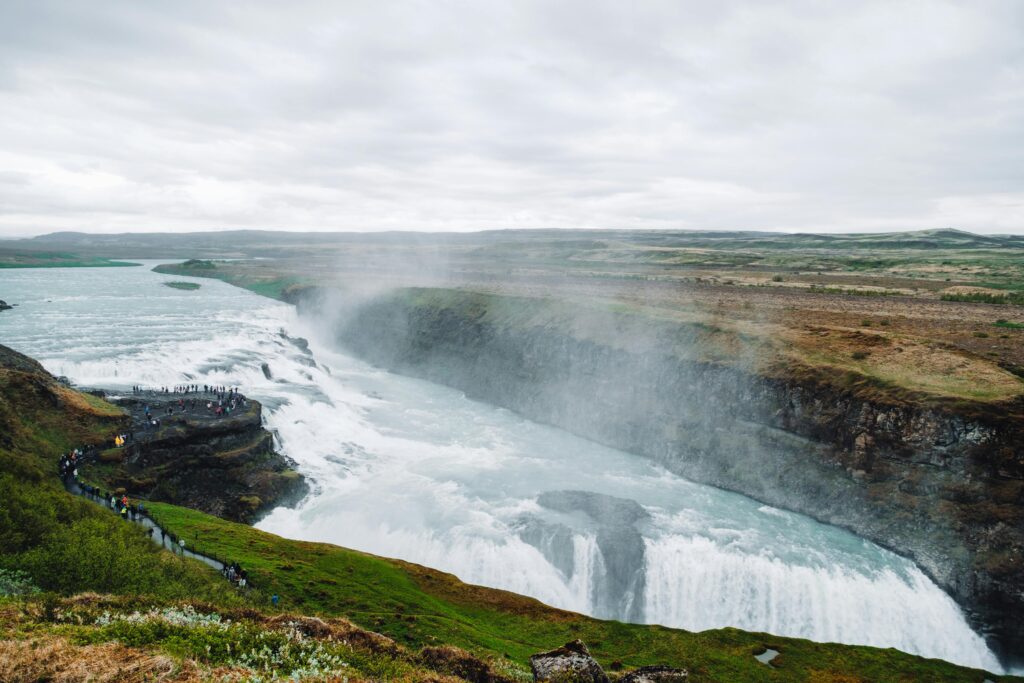
If you only see one waterfall in Iceland, make it Gullfoss. But honestly? You won’t want to stop at just one.
Gullfoss waterfall Iceland is part of the famous Golden Circle route, making it one of the most visited natural attractions in the country. And despite the crowds, it absolutely lives up to the hype.
The Numbers: Height, Power & Flow Rate
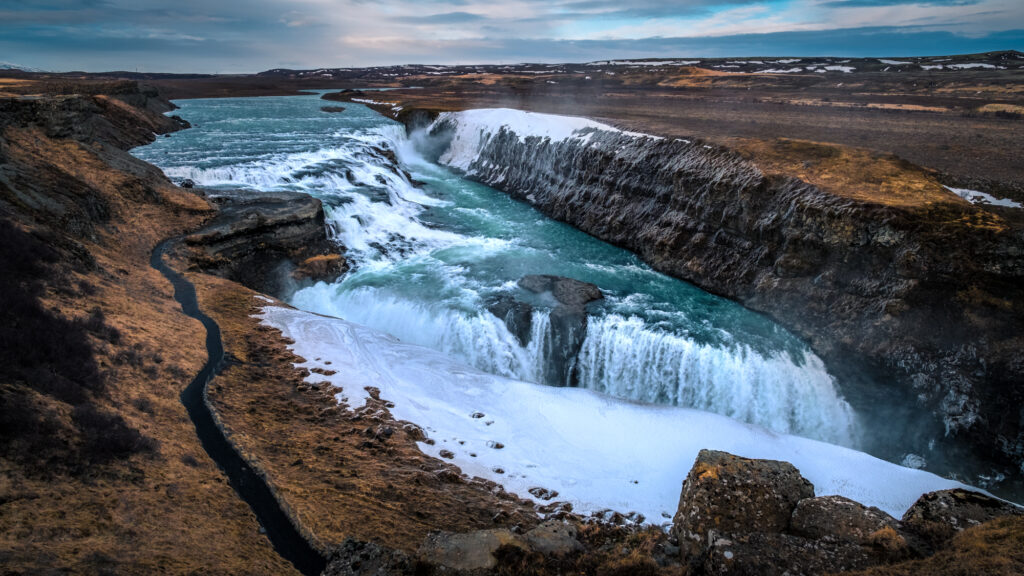
Gullfoss isn’t a single drop—it’s a two-tiered cascade that’s even more impressive because of how it’s structured:
- First drop: 11 meters (36 feet)
- Second drop: 21 meters (69 feet)
- Total height: 32 meters (105 feet)
- Average water flow: 140 cubic meters per second (summer)
- Canyon depth: Up to 70 meters (230 feet)
What makes Gullfoss special isn’t just its height—it’s the way the water plunges into a narrow, rugged canyon. The Hvítá River takes a sharp turn before cascading down those two dramatic steps, creating an almost otherworldly scene.
Why It’s Called the “Golden Waterfall”
Gullfoss translates to “Golden Falls” in Icelandic, and there are several theories about the name:
Some say it comes from the golden light that reflects in the water at sunset, especially when the sun hits the glacial sediment in the water. Others believe it’s inspired by the rainbows that frequently appear in the mist. There’s even a legend about a farmer named Gýgur who threw a chest of gold into the falls so no one else could have his treasure after he died.
During my visit, I saw exactly why people call it golden. In late afternoon sun in mid-September, the mist creates this glowing effect, and if you’re lucky, you’ll catch a rainbow arching over the falls. It’s genuinely magical.
The Brave Woman Who Saved Gullfoss from Destruction
Here’s a story that needs to be told: Gullfoss almost didn’t exist.
In the early 20th century, foreign investors wanted to build a hydroelectric plant at Gullfoss. The waterfall’s massive power made it perfect for electricity generation, and they pressured the landowner, Tómas Tómasson, to sell.
Tómas refused, reportedly saying: “I do not sell my friends.”
But the investors persisted. They eventually secured a rental agreement to develop the land. That’s when Tómas’s daughter, Sigríður Tómasdóttir, stepped in.
Sigríður had no formal education and was up against wealthy, powerful men—both domestic and foreign. But she was determined. She walked over 120 kilometers to Reykjavík multiple times—often barefoot on treacherous terrain—to protest the development. She hired a lawyer with her savings and fought for years to have the contract voided.
The story goes that she even threatened to throw herself into the waterfall if construction began.
Fortunately, the investors failed to make rent payments, the contract was canceled, and Gullfoss was eventually sold to the Icelandic government. In 1979, it was declared a nature reserve, protected forever.
Today, there’s a memorial stone near the falls with Sigríður’s profile, honoring her as Iceland’s first environmentalist. The lawyer who helped her, Sveinn Björnsson, later became the first president of Iceland.
Standing at Gullfoss knowing this history makes the experience even more powerful.
How to Visit Gullfoss: Location & Practical Info
Gullfoss waterfall Iceland is located about 90 minutes drive from Reykjavík (roughly 110 km). It’s easily accessible as part of the Golden Circle route, which also includes Geysir and Þingvellir National Park.
Explore the Gullfoss waterfall Iceland Location On Google Map
- Parking: Free, with a large lot that can accommodate tour buses and private vehicles
- Facilities: Visitor center with café, restrooms, and gift shop (open year-round)
- Accessibility: Short, paved walk (about 5-10 minutes) from parking to viewing platforms
- Best time: Early morning (before 9 AM) or evening (after 6 PM) to avoid tour bus crowds
- How long: Plan for 45 minutes to 1 hour to see the falls from multiple viewpoints
What It’s Really Like Standing at Gullfoss
Let me be honest about what to expect: you will get wet. Very wet.
The mist from Gullfoss doesn’t just hover near the falls—it travels. On the breezy September day I visited, you could be 50 meters away and still get soaked from the spray. My camera lens was constantly covered in water droplets, and I had to keep wiping it clean.
There are multiple viewing platforms at different levels. The upper platform gives you a panoramic view of the entire two-tiered cascade and the canyon. It’s perfect for photos showing the scale of the falls.
The lower platform brings you closer to the action. This is where you feel the raw power—the ground literally vibrates under your feet from the force of water hitting rock. The roar is so loud that you have to raise your voice to talk to someone standing next to you.
I spent about an hour at Gullfoss, moving between viewpoints and just watching the water. Some visitors rush through in 15 minutes, but I think that’s a mistake. Take your time. Let the power of this place sink in.
Photography Tips for Gullfoss
- Best angles: The lower viewpoint gives dramatic close-ups; the upper platform offers wide shots showing both tiers
- Rainbow timing: Late morning to early afternoon on sunny days—the mist creates frequent rainbows
- Bring: Lens cloth (you’ll need it constantly), waterproof camera bag, lens hood to minimize water spots
- Settings: Use faster shutter speeds (1/500 or faster) to freeze the powerful water action, or slow it down (1-2 seconds with ND filter) for silky water effects
Seljalandsfoss – Walk Behind Iceland’s Most Photogenic Waterfall
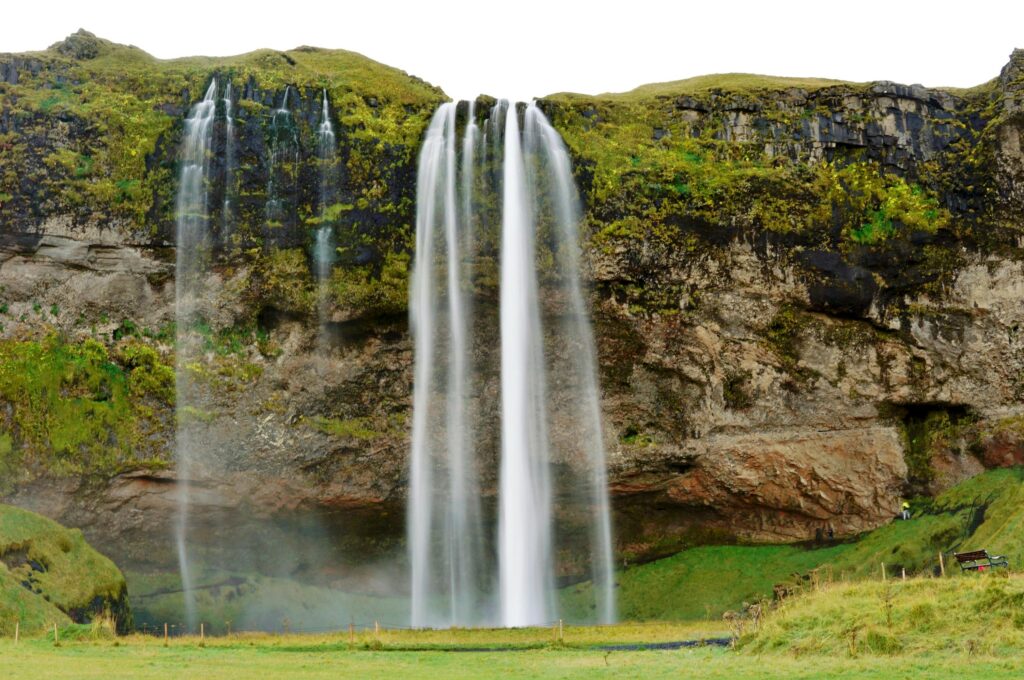
If Gullfoss impressed me with raw power, Seljalandsfoss won me over with something completely different: accessibility and unique perspective.
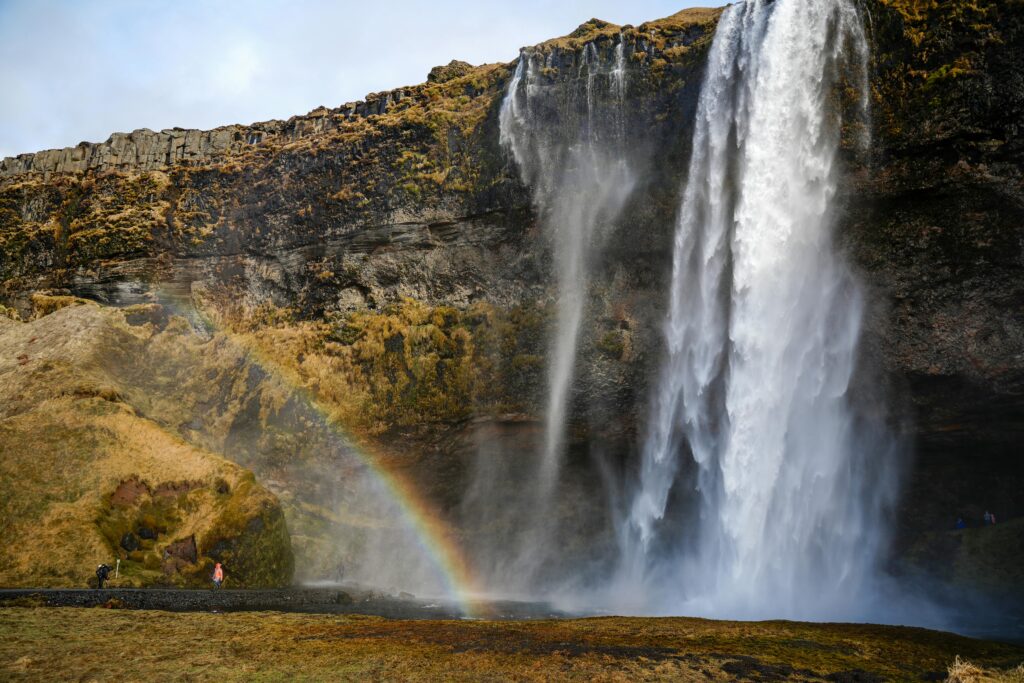
Seljalandsfoss Iceland waterfalls is the only waterfall in the country where you can walk behind the falling water. And trust me, that experience alone makes it worth the visit.
The Only Waterfall in Iceland You Can Walk Behind
Located along Iceland’s South Coast, about 120 kilometers from Reykjavík, Seljalandsfoss is one of the first major waterfalls you’ll encounter if you’re driving the Ring Road clockwise.
You can actually spot it from the highway—a tall, elegant curtain of water dropping from cliffs that used to be Iceland’s ancient coastline.
What makes Seljalandsfoss special is the path that takes you behind the waterfall. Over time, the water’s erosive power carved out space behind the falls, creating a shallow cave where visitors can walk.
Seljalandsfoss Facts: Height, Origin & Power
- Height: 60 meters (197 feet)
- Width: Relatively narrow compared to its height, creating an elegant appearance
- Origin: Eyjafjallajökull glacier—yes, the volcano that erupted in 2010 and disrupted European flights
- River: Seljalands River
- Type: Plunge waterfall
Explore the Seljalandsfoss waterfall Iceland Location On Google Map
The water originates from the Eyjafjallajökull glacier-volcano, flows through the Seljalands River, and drops straight down from towering cliffs that mark Iceland’s former coastline. The power of the cascade has gradually eroded the rock behind it, creating the accessible space that makes Seljalandsfoss so unique.
What to Expect When You Visit
The Path Behind the Waterfall
Here’s what actually happens when you walk behind Seljalandsfoss: You’ll follow a path that curves around and behind the falls. The path is relatively short—maybe a 10-15 minute walk at a slow pace if you stop for photos (which you will).
But here’s the reality: you’re going to get absolutely soaked.
I’m not talking about a light mist. I mean drenched. Water comes at you from multiple directions—from the falls themselves, from wind blowing spray, from water dripping off the rock ceiling above you. Within 30 seconds of entering the path behind the falls, my waterproof jacket was completely soaked on the outside (thankfully dry inside).
How Wet Will You Get? (Honest Answer)
On a scale of 1-10, where 1 is “light mist” and 10 is “jumped in a pool fully clothed,” walking behind Seljalandsfoss is about an 8.
- What stayed dry: Items in my waterproof backpack
- What got soaked: My pants (should have brought waterproof pants), my shoes, my camera (protected by rain sleeve but still got wet), my face, my hair, everything
The spray is intense enough that some people turn back halfway. Others, like me, embrace it and just accept you’re going to look like you went swimming.
My advice: Wear full waterproof gear (jacket AND pants), waterproof hiking boots, and bring a dry bag for electronics. Some visitors buy cheap plastic ponchos at the gift shop, which work okay but aren’t perfect.
Gljúfrabúi – The Hidden “Secret” Waterfall Next Door
Here’s something most visitors don’t know: there’s a second stunning waterfall literally 5 minutes walk from Seljalandsfoss, and it’s arguably even more impressive in its own way.
Gljúfrabúi (also called Gljúfrafoss) translates to “canyon dweller,” and the name is perfect. This waterfall is partially hidden inside a narrow canyon, with a huge rock almost completely concealing it from view.
How to Find It
From the Seljalandsfoss parking area, walk along the path to the left (if facing the main waterfall). After about 5-10 minutes, you’ll see a small stream flowing out from what looks like a solid rock wall. Look closer—there’s a narrow opening in the rock.
Wading Through the Canyon
To see Gljúfrabúi properly, you need to wade into this opening through shallow water. The stream is usually ankle to mid-calf deep, and the rocks are extremely slippery.
Once inside, you’re standing in a natural amphitheater with a 40-meter waterfall pouring down surrounded by moss-covered walls. The setting is incredibly atmospheric—almost mystical.
Essential gear for Gljúfrabúi: Waterproof boots or Wellington boots, trekking poles for balance (the rocks are seriously slippery), waterproof jacket
Many visitors skip Gljúfrabúi because they don’t know about it or don’t want to get wet. Their loss—it was one of my favorite discoveries in Iceland.
Essential Safety Tips for Seljalandsfoss
Winter Dangers: Falling Icicles
In winter, the path behind Seljalandsfoss is often closed for safety. This isn’t just a suggestion—it’s for your protection, as confirmed by local park officials and tour operators.
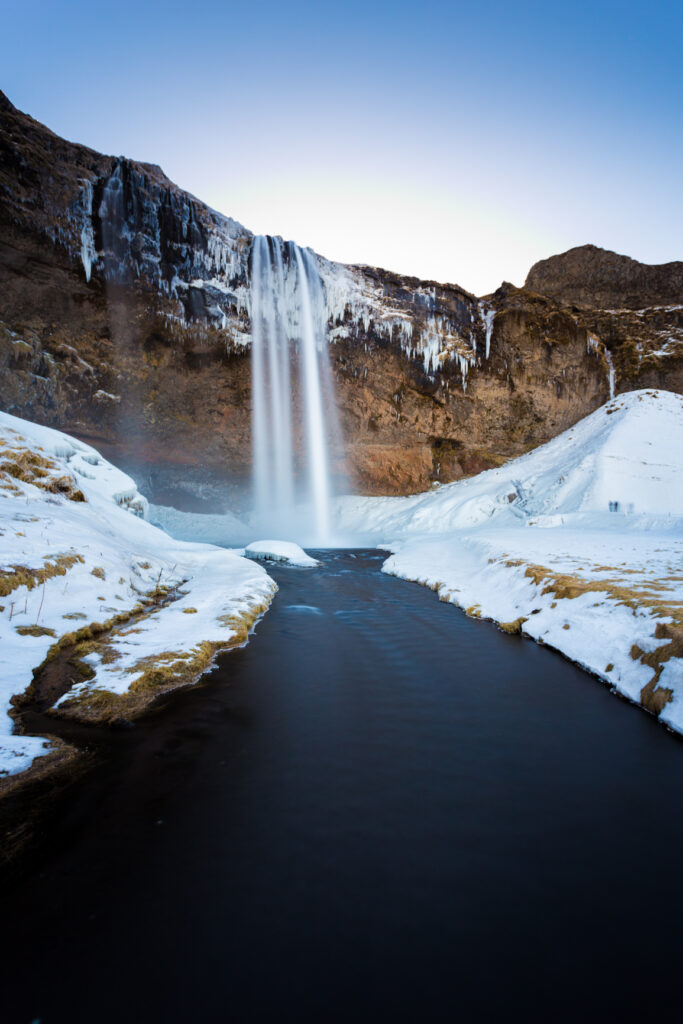
The mist from the waterfall freezes, creating massive icicles on the cliff and ceiling of the cave behind the falls. When temperatures rise even slightly, these icicles fall—and a falling chunk of ice from 60 meters up can be deadly.
According to Icelandic news reports from 2016, a huge icicle fell inches from a woman who ignored her guide’s warnings and went behind the falls when the path was closed. Ice splashed on her and she was covered in ice fragments. She narrowly escaped serious injury or death.
The signs saying “path closed” are there for a reason. Please respect them.
Slippery Path Warnings
Even in summer, the path behind Seljalandsfoss is extremely slippery from constant water spray. Walk slowly, watch your footing, and consider bringing trekking poles for stability.
The path has been improved with better walkways in recent years, but it’s still slick. I saw several people slip (no injuries, thankfully, just wet bottoms and bruised egos).
Location, Parking & Visitor Facilities
- Location: Just off Ring Road (Route 1), about 30 km west of Skógar
- Distance from Reykjavík: 120 km (about 1.5-2 hours drive)
- Parking fee: 800-1,000 ISK (pay at machine, card accepted)
- Facilities: Gift shop, café with snacks and hot drinks, clean restrooms
- Accessibility: Very easy—5 minute flat walk from parking to waterfall
Best Times to Visit & Avoid Crowds
Seljalandsfoss is hugely popular, which means crowds—especially from 10 AM to 4 PM when tour buses arrive.
Best times for fewer crowds:
- Before 9 AM: Practically empty, beautiful morning light
- After 7 PM: Most tourists have moved on, gorgeous evening light
- Midnight sun (June-July): Visit at 11 PM or midnight for magical golden light and almost no crowds
Best times for photography:
- Late afternoon/evening: Sun illuminates the falls from the west
- After rain: More dramatic water flow
- Sunny days: Rainbow opportunities in the mist
I visited at 8 AM and had the place almost to myself for about 20 minutes before others arrived. It was absolutely worth the early wake-up.
Four More Iceland Waterfalls You Shouldn’t Miss
After visiting Gullfoss and Seljalandsfoss, I continued my waterfall journey and discovered four more cascades that each offered something completely different. These aren’t as famous as the “big two,” but honestly? Each one deserves your time.
Skógafoss – The Waterfall of Endless Rainbows
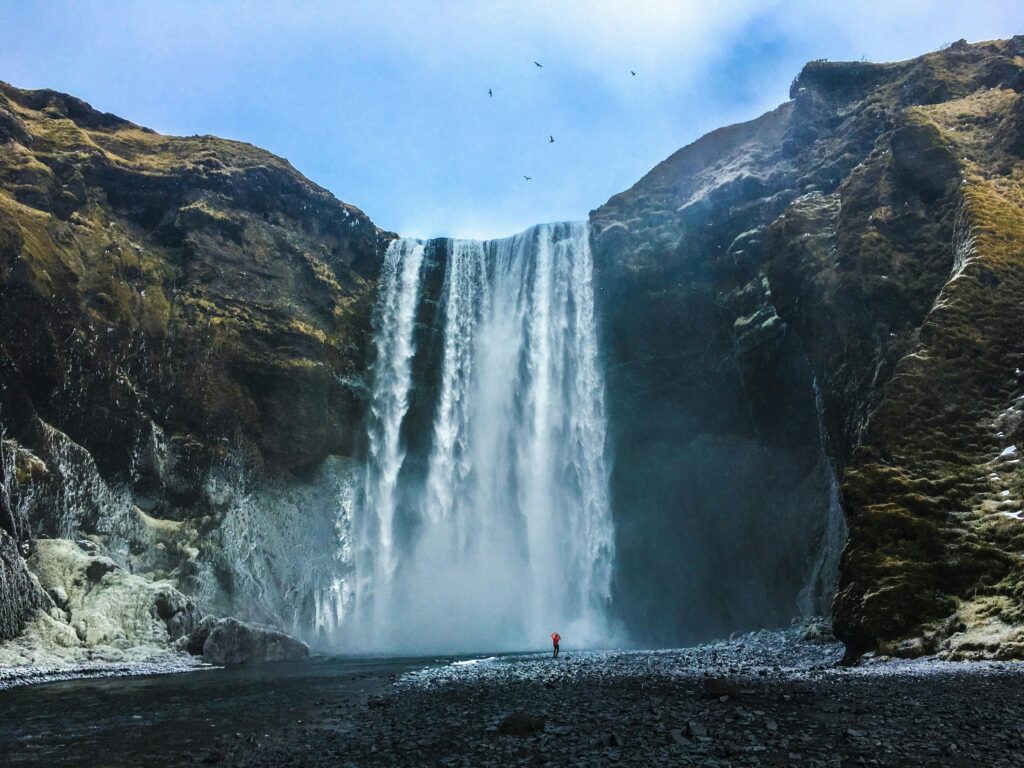
Skógafoss surprised me. I’d seen photos, sure, but nothing prepared me for the sheer width and power of this beast.
The Facts That Matter
- Height: 60 meters (197 feet) – same as Seljalandsfoss
- Width: 25 meters (82 feet) – much wider than most Iceland waterfalls
- Location: Right off Ring Road, 30 km east of Seljalandsfoss
- Parking: Free
- Accessibility: 2-minute walk from parking – incredibly easy
What makes Skógafoss special isn’t just its size—it’s that you can walk right up to the base. And I mean RIGHT up. Within 10 meters of where thousands of gallons of glacial water crash down every second.
What It’s Actually Like
The roar hits you first. Even from the parking lot, you hear it—this deep, constant thunder. Then you see the mist rising like smoke, and if the sun’s out, there are rainbows. Sometimes double rainbows. Sometimes you’re standing IN the rainbow.
I got absolutely drenched at the base, but I didn’t care. The power of that much water falling from that height is mesmerizing. The mist soaked through my “waterproof” jacket in about 90 seconds. My pants were wet. My boots were wet. So My soul was wet. Worth it.
The Stairs to Heaven (Or at Least to the Top)
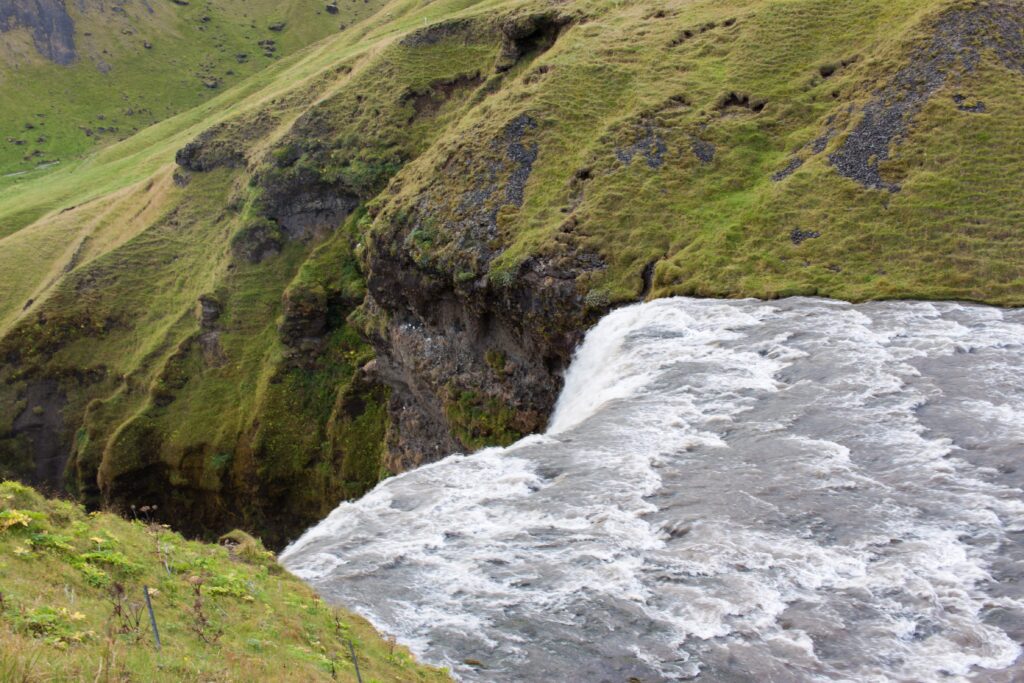
Here’s what many visitors don’t do: climb the stairs next to the waterfall. There are about 370 steps up to a viewing platform at the top. My legs burned, my lungs complained, but the view from above?
You’re standing at the edge where the water plunges off the cliff. You can see the ocean in the distance, the black sand coastline, and the river winding through green fields below. On a clear day, you can spot Eyjafjallajökull glacier in the background.
Pro tip: The stairs are on the right side if you’re facing the waterfall. Do this after viewing from the base, not before—you’ll want to end on that high note.
The Legend Nobody Tells You
There’s a local legend that a Viking settler named Þrasi hid a treasure chest behind Skógafoss. The story goes that someone once found the chest and grabbed the ring on its side, but the chest disappeared back into the waterfall, leaving only the ring behind.
You can see that ring today at the Skógar Museum, right next to the waterfall. Real ring, probably made-up story, but it adds to the magic.
Dettifoss – Europe’s Most Powerful Beast
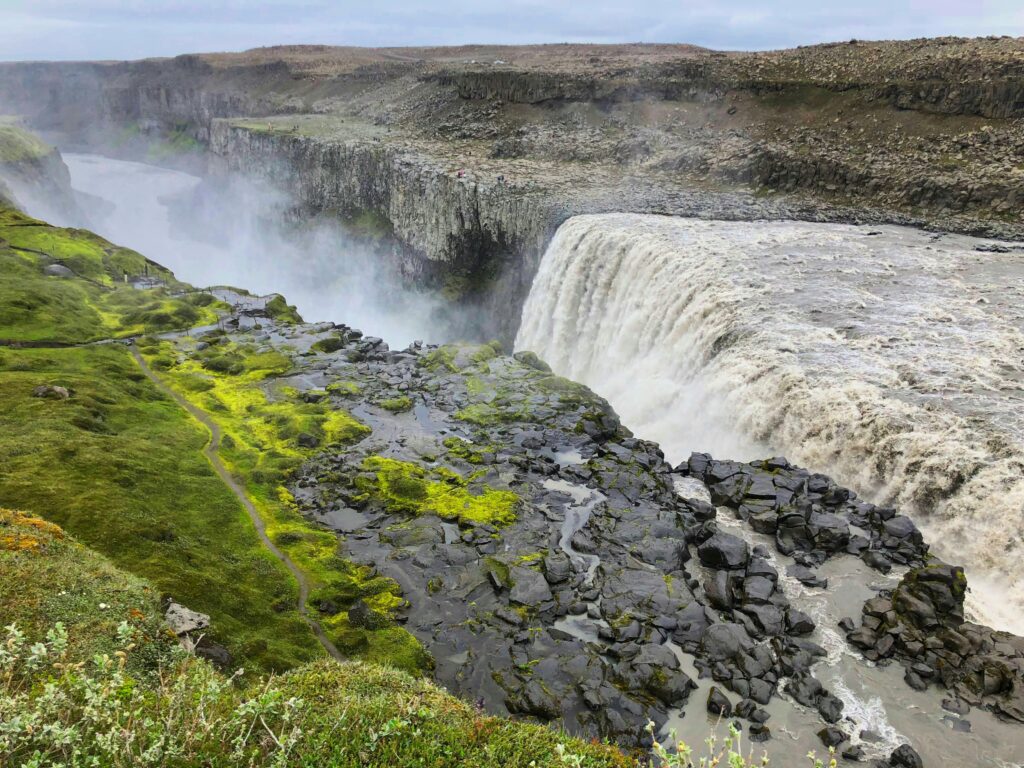
If Gullfoss impressed you, Dettifoss will humble you.
The Raw Numbers
- Height: 45 meters (148 feet)
- Width: 100 meters (330 feet)
- Average flow: 193 cubic meters per second
- Location: Northeast Iceland, about 2 hours from Akureyri
- Title: Europe’s most powerful waterfall by volume
Those numbers don’t capture it. Standing at Dettifoss, you FEEL the power through your feet. The ground literally vibrates from the force of water hitting rock.
Getting There: East vs. West
Here’s what confused me: there are two sides to Dettifoss, and which one you choose matters.
West Side (Road 862):
- Paved road, accessible by regular car
- Easier parking
- More developed paths
- Slightly farther from the falls
East Side (Road 864):
- Rough gravel F-road (4×4 recommended)
- Closer to the waterfall
- More dramatic views (in my opinion)
- Less crowded
I went to the west side in my regular rental car. It worked fine, and the views were spectacular. But I talked to a photographer who’d been to both sides, and he said the east side is worth the rough road if you have a 4×4.
What Makes Dettifoss Different
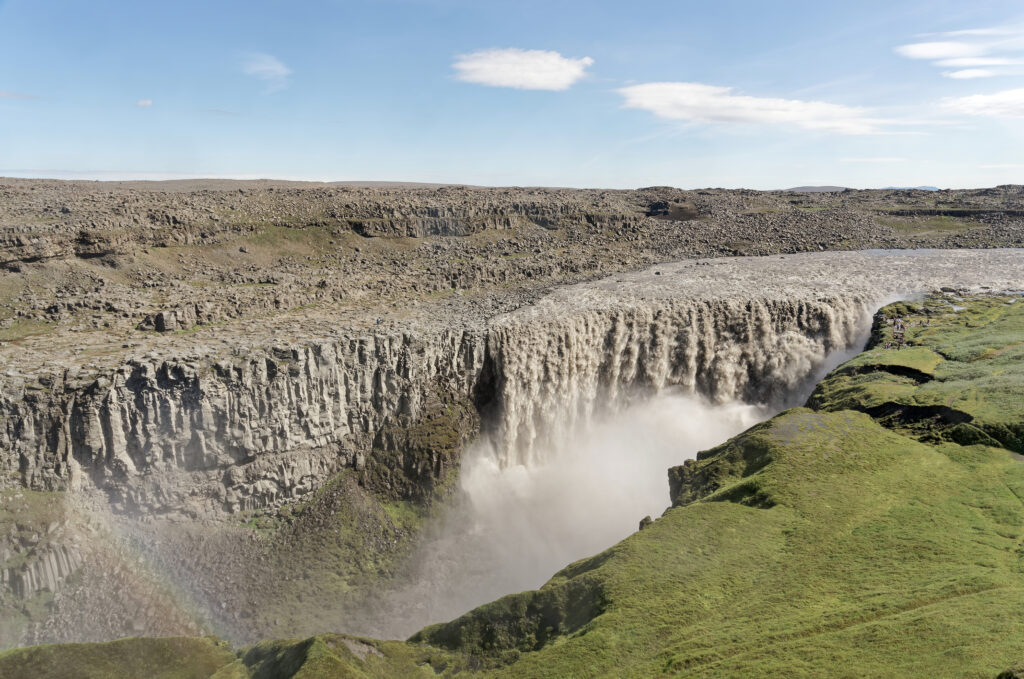
The water at Dettifoss isn’t clear blue-green like at Gullfoss. It’s brown, muddy, filled with glacial sediment. This makes it look even more powerful—like the earth itself is bleeding into the canyon.
The mist here doesn’t gently spray you. It ATTACKS. I was wearing full rain gear and still got soaked through the neck opening. Bring a buff or scarf to cover your neck—learned that the hard way.
The sound is overwhelming. Not just loud—it drowns out everything else. Thought. Conversation. Your own heartbeat. Standing there, you understand why ancient people believed in gods.
Bonus: While you’re there, walk 10 minutes upstream to see Selfoss, a beautiful multi-tiered waterfall that’s often overlooked. It’s gentler, wider, and a nice contrast to Dettifoss’s power.
Svartifoss – The Black Falls of Basalt Columns
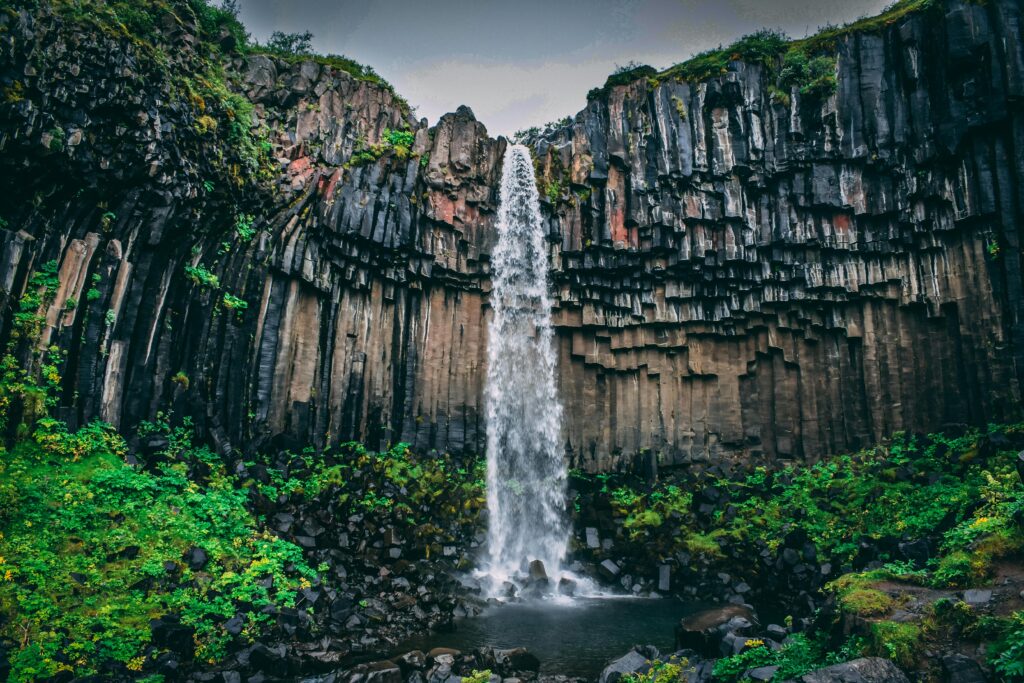
Svartifoss is completely different from every other waterfall I’ve mentioned. It’s not about power or size—it’s about pure geological beauty.
The Unique Feature
Svartifoss means “Black Falls,” and when you see it, you understand why. The waterfall is framed by dark hexagonal basalt columns that look almost artificial, like something from a sci-fi movie.
- Height: 20 meters (65 feet)
- Location: Skaftafell, part of Vatnajökull National Park
- Parking: At Skaftafell visitor center
- Access: 45-minute hike (moderate difficulty)
These basalt columns formed when lava cooled slowly, creating perfectly geometric hexagonal shapes. You’ll recognize them if you’ve seen photos of Giant’s Causeway in Northern Ireland—same geological process.
The Hike Is Part of the Experience
Unlike the other waterfalls, you can’t drive to Svartifoss. You hike. About 3.5 km round trip, mostly uphill on the way there.
The trail is well-maintained but rocky. Proper hiking boots are essential—I saw people in flip-flops struggling. The path winds through birch forests and past smaller waterfalls before you reach the main attraction.
When you round the final bend and see Svartifoss with its black column backdrop, it’s worth every step. The contrast between white water and black rock is stunning.
Photography Challenge
Svartifoss is tricky to photograph. The canyon is narrow, so getting the full scene in frame requires a wide-angle lens. The columns above the falls are the key—make sure they’re visible in your composition, not just the water.
Best time? Overcast days, actually. Direct sunlight creates harsh shadows on the columns. Cloudy light brings out the texture and detail.
” Warning: Sharp rocks from fallen columns litter the base area. Watch your footing. One photographer I met slipped and cut his hand on the basalt—it’s sharp stuff.”
Goðafoss – The “Waterfall of the Gods”
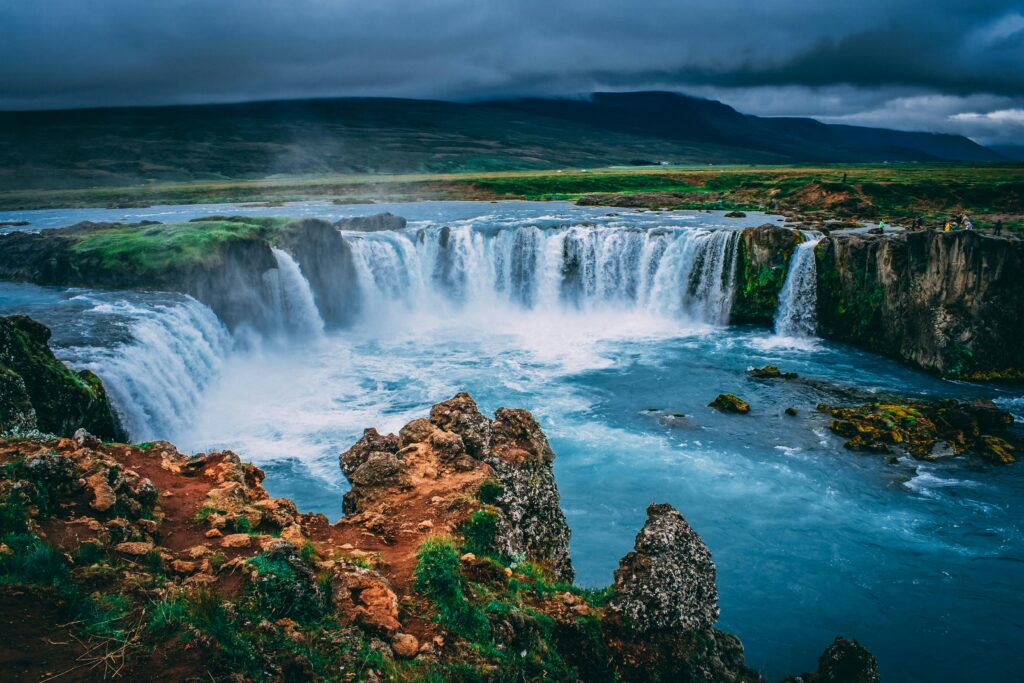
Goðafoss might not be the tallest or most powerful, but it has something the others lack: deep historical significance.
The Stats
- Height: 12 meters (39 feet)
- Width: 30 meters (98 feet)
- Location: Ring Road, between Akureyri and Mývatn
- Parking: Free on both sides
- Accessibility: 5-minute walk from parking
The Story That Matters
The name “Goðafoss” means “Waterfall of the Gods,” and there’s a powerful reason for that name.
In the year 1000 AD, Iceland’s parliament debated whether to adopt Christianity or keep the old Norse gods. Þorgeir Ljósvetningagoði, the law speaker, was chosen to make the decision. After meditating for 24 hours under a fur cloak, he decided Iceland would become Christian.
To symbolize this choice, he threw his statues of the Norse gods into this waterfall. Hence the name.
True story or legend embellished over time? Historians debate it, but Icelanders believe it, and standing there knowing this history adds weight to the experience.
Two Viewpoints, Two Experiences
Goðafoss is unique because you can view it from both sides of the river, and each side offers a different perspective.
East Side:
- Closer to the main drop
- Better for close-up photos
- Easier to see the full width
West Side:
- More panoramic view
- Less crowded in my experience
- Better for sunset shots
I visited both sides and recommend doing the same if time allows. The walk between them is maybe 10 minutes around the rim of the canyon.
Why It Surprised Me
I almost skipped Goðafoss. “Only 12 meters? That’s tiny compared to the others,” I thought. But size isn’t everything.
The shape of Goðafoss is what makes it special—it’s a perfect horseshoe, with water cascading over a wide arc. The blue of the water against the dark rock creates this gorgeous color contrast. And because it’s right on the Ring Road, there’s no excuse not to stop.
I spent 30 minutes there and left feeling it was one of the most photogenic waterfalls I’d seen. Not the most powerful, not the tallest, but beautifully proportioned and rich with history.
Which Waterfalls Should You Prioritize?
After visiting all these Iceland waterfalls in September 2025, here’s my honest recommendation based on time constraints:
- If you have 1 day: Gullfoss + Seljalandsfoss (Golden Circle)
- If you have 2-3 days: Add Skógafoss (South Coast is worth exploring)
- If you have 4-5 days: Add Goðafoss (easy Ring Road stop)
- If you have a week+: Add Dettifoss and Svartifoss (worth the detours)
Each waterfall offers something unique. Gullfoss and Dettifoss for raw power. Seljalandsfoss for the walk-behind experience. Skógafoss for accessibility and rainbows. Svartifoss for geological beauty. Goðafoss for history and perfect proportions.
You can’t go wrong with any of them, honestly. But if I had to pick favorites? Skógafoss for pure joy, Dettifoss for humbling power, and Seljalandsfoss for uniqueness.
Iceland Waterfalls Quick Comparison Guide
To help you plan which Iceland waterfalls to prioritize, here’s an honest comparison of the top falls:
| Waterfall | Height | Accessibility | Unique Feature | Crowds | Best For | Parking |
|---|---|---|---|---|---|---|
| Gullfoss | 32m (105 ft) | Easy – 10 min walk | Most powerful, Golden Circle | Very High | First-timers, power | Free |
| Seljalandsfoss | 60m (197 ft) | Easy – 5 min walk | Walk behind it | Very High | Photography, unique experience | 800-1000 ISK |
| Skógafoss | 60m (197 ft) | Very Easy – 2 min | Double rainbows, climb stairs | High | Close viewing, photos | Free |
| Dettifoss | 45m (148 ft) | Moderate – 30 min walk | Europe’s most powerful | Moderate | Raw power, remote feel | Free |
| Svartifoss | 20m (65 ft) | Moderate hike – 45 min | Black basalt columns | Low | Unique geology, hiking | Free |
| Goðafoss | 12m (39 ft) | Easy – 5 min walk | Historical significance | Moderate | Easy stop on Ring Road | Free |
Planning Your Iceland Waterfall Adventure
Best Time to Visit Iceland Waterfalls
Summer (June-August): Pros & Cons
Best months in 2025: June, July, and August offer the most reliable waterfall-viewing conditions with maximum water flow.
Pros:
- Maximum water flow from glacial melt
- Midnight sun provides incredible photography light at all hours
- All roads and paths accessible
- Warmest weather (though still cool—10-15°C/50-59°F)
- Green landscapes
Cons:
- Peak tourist season = maximum crowds
- Higher prices for accommodation and car rentals
- Popular waterfalls can be packed with tour buses
- Need to book everything well in advance
While summer offers peak conditions, I found September 2025 to be the perfect balance—still accessible but with significantly fewer crowds.
Winter (December-February): What Changes
Pros:
- Frozen, otherworldly landscapes around waterfalls
- Dramatic icicle formations
- Northern Lights opportunities
- Far fewer tourists
- Lower prices
Cons:
- Some waterfalls closed or unsafe (paths behind Seljalandsfoss, for example)
- Reduced daylight hours (4-5 hours in December)
- Dangerous driving conditions—4×4 essential
- Very cold and potentially harsh weather
- Some roads closed entirely
Winter visits require serious preparation, but the photos I’ve seen are absolutely stunning. Just be honest about your winter driving skills.
Shoulder Seasons (April-May, September-October)
My recommendation for best balance in 2025:
September-early October is the sweet spot, and this is exactly when I visited in September 2025. You get:
- Moderate crowds (significantly less than summer)
- Still decent weather (cool but manageable—I experienced 8-12°C/46-54°F)
- Fall colors in some areas
- Northern Lights starting to appear (I caught glimpses on clear nights)
- Most waterfalls still accessible
- Lower prices than summer
April-May is trickier—weather is very unpredictable, some roads still closed, but you avoid summer crowds.
According to the , September is increasingly popular for visitors seeking the best balance of accessibility and fewer crowds. Based on my experience, they’re absolutely right.
What to Pack for Iceland Waterfall Visits
Waterproof Gear (Absolutely Critical)
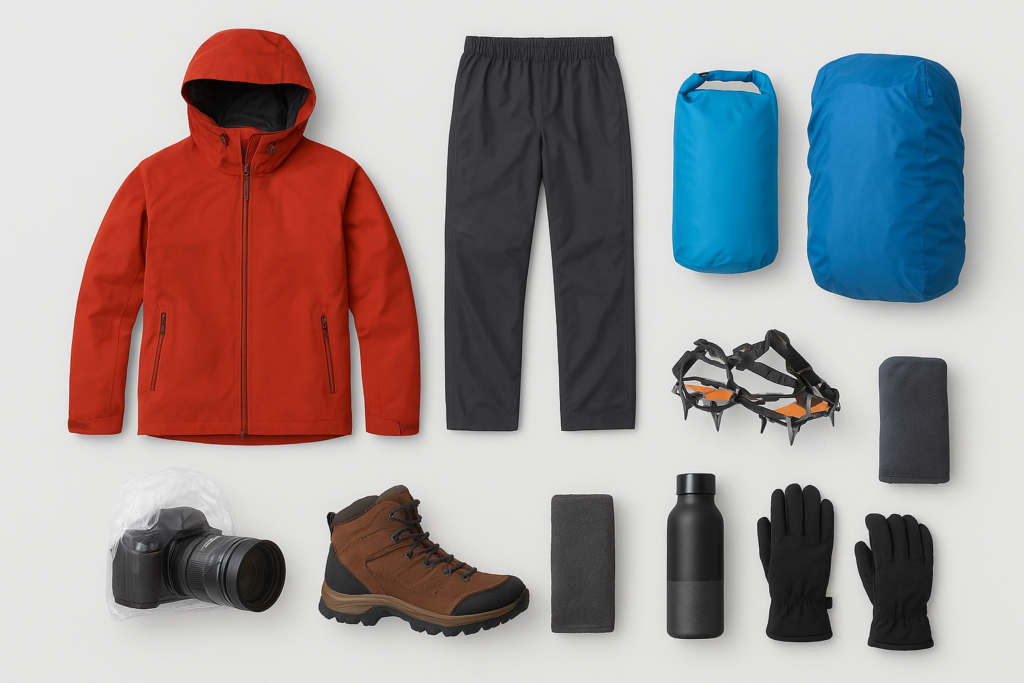
Let me be very clear: you need waterproof gear, not water-resistant. There’s a huge difference.
Essential waterproof items:
- Waterproof jacket: Proper rain jacket with sealed seams, not just “water-resistant” windbreaker
- Waterproof pants: I regret not bringing these—my jeans were soaked at Seljalandsfoss
- Waterproof camera protection: Rain sleeve, waterproof bag, or underwater housing
- Dry bag: For electronics, extra clothes, anything that must stay dry
- Waterproof backpack cover
I thought my “water-resistant” jacket would be enough. It wasn’t. I ended up buying a proper waterproof jacket in Reykjavík for about 15,000 ISK (~$110 USD). Worth every króna.
Footwear Matters More Than You Think
- Summer: Waterproof hiking boots with good ankle support and excellent grip. The paths around waterfalls are constantly wet and slippery.
- Winter: Same boots PLUS crampons or microspikes. Ice is everywhere, and without these, you’re risking serious injury.
I saw multiple people in sneakers struggling on wet rocks at Gullfoss. Don’t be that person.
Critical Safety Rules for Iceland Waterfalls
The Dangers Everyone Underestimates
- Slippery paths are no joke: I watched someone fall at Skógafoss. They were okay but shaken. The combination of water spray, algae, and worn rock creates surfaces slicker than ice.
- Falling icicles in winter: As mentioned with Seljalandsfoss, this is a real, documented danger. Respect closed signs.
- Never turn your back on water: At coastal waterfalls or anywhere near the ocean, rogue waves can appear suddenly.
- Stay behind barriers: They exist for a reason. The ground near waterfall edges can be unstable.
Weather in Iceland is Brutally Unpredictable
The saying “if you don’t like the weather in Iceland, wait five minutes” is absolutely true.
During my visit, I experienced sun, light rain, strong wind, and temperatures ranging from 8-12°C all in one day at Gullfoss. The weather can change from beautiful to challenging incredibly quickly.
Park officials and experienced guides recommend always checking:
- Road.is – Iceland’s official road condition website with real-time updates
- Vedur.is – Icelandic Meteorological Office weather forecasts
- SafeTravel.is – Official safety information and emergency contacts
Don’t assume a sunny morning means a sunny day. Carry layers and waterproofs always.
How to Get Stunning Iceland Waterfalls Photos
Camera Settings That Actually Work
For silky, smooth water effect:
- Shutter speed: 1-2 seconds
- Use ND (neutral density) filter to reduce light
- ISO: 100-200
- Aperture: f/11-f/16 for sharp focus throughout
For frozen water droplets:
- Shutter speed: 1/500 or faster
- ISO: Adjust as needed for proper exposure
- Aperture: f/5.6-f/8
I used both techniques depending on the waterfall and conditions. Dettifoss looks incredible with frozen water showing its raw power. Seljalandsfoss from behind works better with slower shutter for dreamy effect.
Pro tip from my September visit: Bring a polarizing filter to reduce glare from wet rocks and enhance the blue tones in glacial water.
Best Times of Day for Photography
- Golden hour (hour after sunrise, hour before sunset): Soft, warm light that makes waterfalls glow
- Overcast days: Actually great for waterfalls! Clouds diffuse harsh sunlight, preventing blown-out highlights in white water
- Midnight sun (summer): Shoot at 10 PM-midnight for magical light and zero crowds
The worst time? Midday in bright sun. Harsh shadows, blown highlights, and maximum crowds.
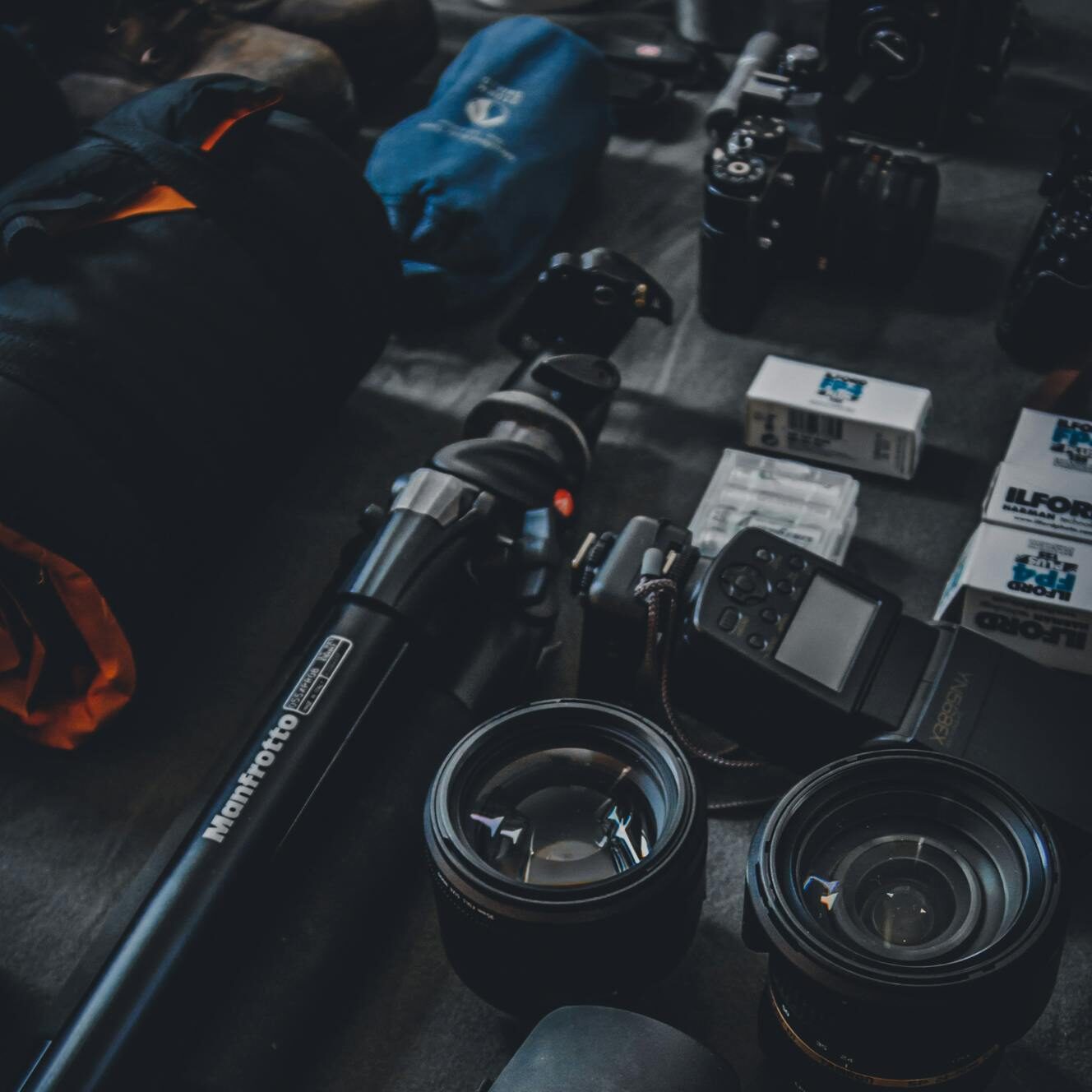
Protect Your Camera or Lose It
Water spray destroyed two smartphones belonging to people I met. Don’t let this happen to you.
Protection methods:
- Rain sleeve (cheap, effective)
- Waterproof camera housing (expensive but worth it for serious photographers)
- Large ziplock bags (budget option that actually works)
- Lens hood to minimize direct spray on lens
- Bring multiple lens cloths—you’ll need them constantly
I went through three lens cloths in one day. They got soaked immediately.
Transportation: Getting to Iceland Waterfalls
Do You Need a 4×4 Vehicle?
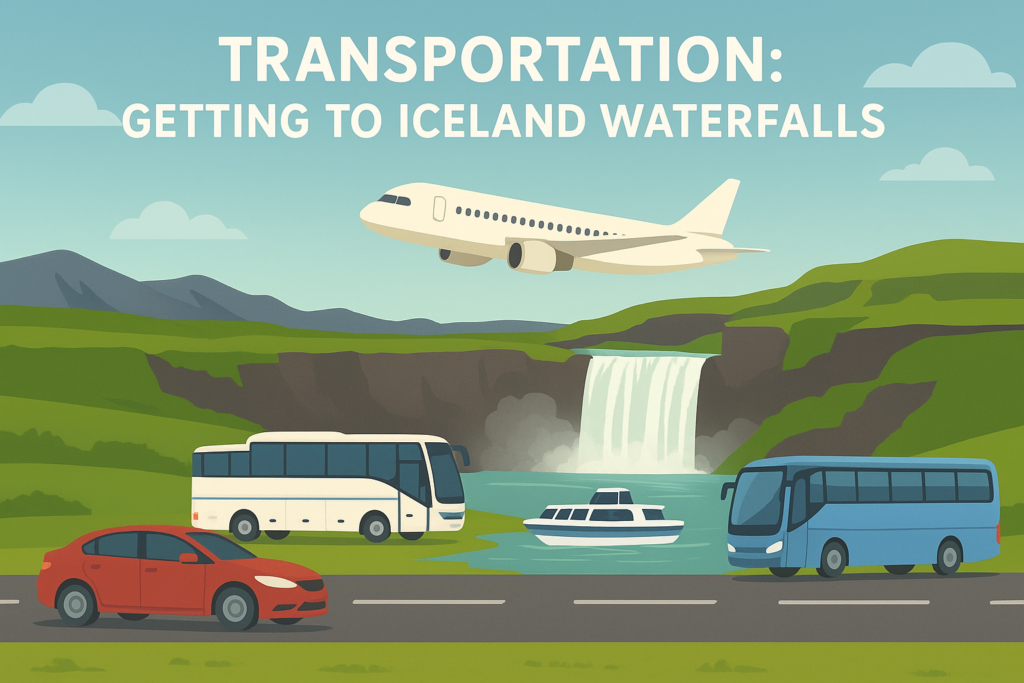
Short answer: Not for the main waterfalls, but highly recommended for some.
Accessible with regular car (summer):
- Gullfoss
- Seljalandsfoss
- Gljúfrabúi
- Skógafoss
- Goðafoss
- Svartifoss (parking is accessible; the hike is on foot)
Require 4×4 or are much easier with one:
- Dettifoss (east side)
- Dynjandi (rough roads in Westfjords)
- Highland waterfalls
- Many waterfalls in winter
In winter: 4×4 is essentially mandatory for any serious waterfall exploration. Roads can be icy, snowy, and treacherous.
I rented a regular car in September for summer conditions and reached all the main waterfalls fine. The roads were mostly paved and well-maintained during this time. But if I return in winter or want to explore more remote falls, I’ll definitely get a 4×4.
Guided Tours vs Self-Drive
Self-drive pros:
- Total freedom with timing and pace
- Can visit at optimal times (early morning, late evening)
- Can spend as long as you want at each waterfall
- Often cheaper for 2+ people
Self-drive cons:
- You handle all navigation and logistics
- Parking can be tricky at popular spots
- Weather and road condition management is your responsibility
- Miss out on local knowledge and stories
Guided tour pros:
- Someone else drives (especially valuable in winter)
- Guides share fascinating history and stories
- Guaranteed to hit all major spots efficiently
- No parking stress
Guided tour cons:
- Fixed schedule—can’t linger if you love a place
- Visit waterfalls during peak crowd times
- More expensive for groups
- Can feel rushed
For first-time visitors, a Golden Circle day tour is honestly a great option to hit Gullfoss and other highlights stress-free. For more experienced travelers or those spending a week+, self-driving offers much better flexibility.
You can find reputable tour operators through the official Visit Iceland website.
Final Thoughts: Why Iceland Waterfalls Changed Me
Standing at Gullfoss with glacial spray soaking my face in September, I felt something shift. These aren’t just “pretty waterfalls” to check off a list. They’re forces of nature that have been carving Iceland’s landscape for millennia.
Walking behind Seljalandsfoss on that cool September morning, feeling the thunderous power of water crashing just inches away, I understood why Sigríður Tómasdóttir fought so hard to save Gullfoss. These places deserve protection. They’re treasures.
Iceland waterfalls taught me to slow down. To stop rushing from place to place trying to see everything, and instead spend time at each waterfall actually experiencing it. Watching how light changes on the water. Feeling the vibration in the ground. Hearing the roar that drowns out everything else.
Whether you visit Gullfoss waterfall Iceland, Seljalandsfoss, or any of the other thousands of cascades across this incredible country, I hope you take time to really be present. Put the camera down for a moment. Feel the spray. Listen to the power.
These Iceland waterfalls have been here for thousands of years and will be here long after we’re gone. But in the moment you’re standing there, soaked and freezing and absolutely amazed, they’re yours to experience.
And trust me—that experience will stay with you forever.
Frequently Asked Questions About Iceland Waterfalls
Skógafoss is often considered the most beautiful waterfall in Iceland thanks to its perfect shape, easy access, and frequent rainbow views.
Yes — Iceland at Christmas is magical, with snowy landscapes, festive markets, northern lights, and a cozy holiday atmosphere.
Icelandic waterfalls are called “foss” in Icelandic, and popular ones include Gullfoss, Skógafoss, Seljalandsfoss, Dettifoss, and Goðafoss.
Yes, Gullfoss is absolutely worth visiting; it’s powerful, easy to access, and offers dramatic views of two-tier golden cascades.
Dettifoss has brown, sediment-filled glacial water, while Gullfoss features a clear blue-green color typical of clean glacial meltwater.